Shopping for a compact luxury SUV but don’t want something the size of a small apartment? You’re in the right place. The answer to “what is the smallest Lexus SUV” isn’t as simple as it sounds — it actually splits into two different answers depending on your market. Keep reading, and we’ll break down exactly what’s available, what fits where, and whether the smallest Lexus SUV is actually worth buying.
The Global Answer vs. The U.S. Answer
Here’s the honest split: globally, the smallest Lexus SUV is the LBX. In the United States, it’s the UX 300h.
The Lexus LBX is a B-segment subcompact built for the tight streets of Europe, Japan, and Australia. It measures just 165.0 inches long — shorter than some economy hatchbacks from the 1990s. It runs a 1.5-liter hybrid engine, and its wheelbase is a tiny 101.6 inches.
Sounds great, right? The catch: Lexus never brought it to North America. The LBX’s snug cabin and short dimensions don’t match what American buyers expect from a luxury brand. So if you’re shopping in the U.S., the LBX simply isn’t an option.
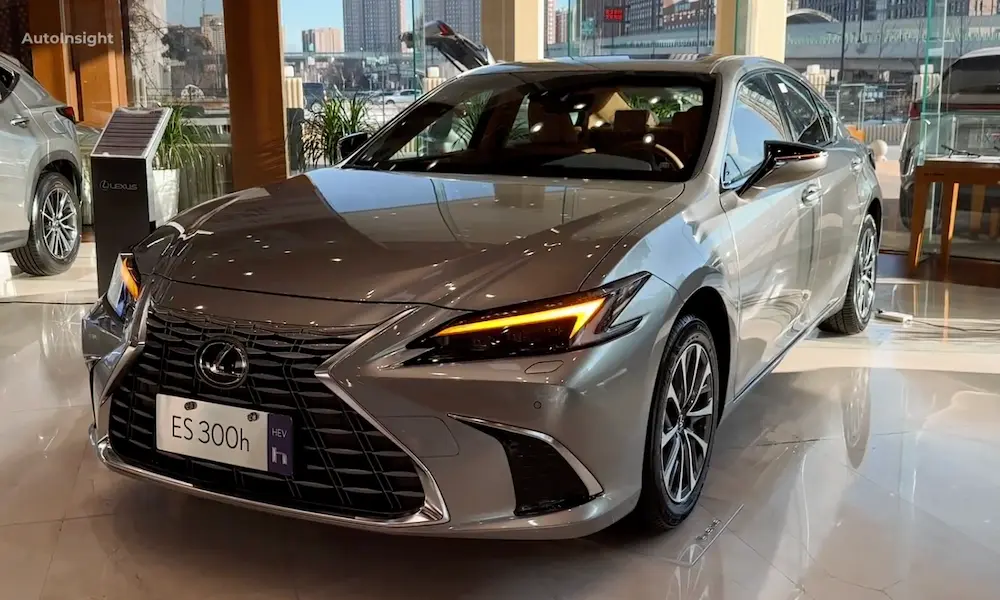
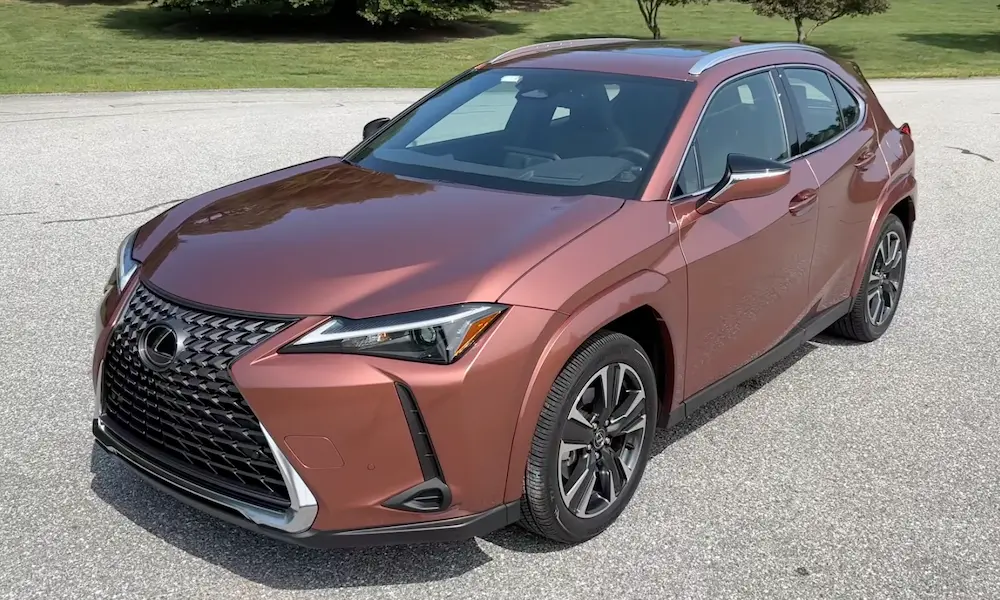
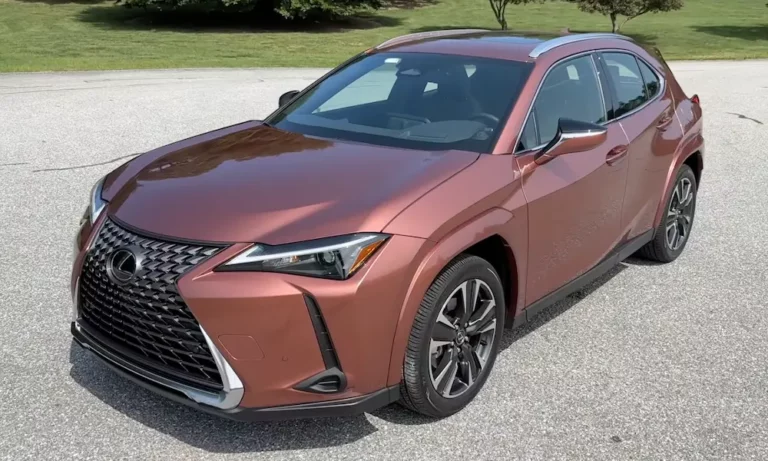
That makes the Lexus UX 300h the definitive answer for American buyers. It’s the brand’s entry-level urban crossover and the starting point for the entire U.S. Lexus SUV lineup.
Meet the Lexus UX 300h: America’s Smallest Lexus SUV
The UX launched in 2019. For 2025 and 2026, Lexus dropped the old UX 250h and UX 200 names entirely and rebranded everything as the UX 300h — a hybrid-only model powered by a brand-new fifth-generation hybrid system.
It’s officially a C-segment vehicle, which places it in the “small family car” category. Lexus markets it as the “Urban Crossover,” which is basically their way of saying: this thing is built for city life.
Exterior Dimensions
The UX 300h is compact — genuinely compact. Here’s what you’re working with:
- Overall length: 177.0 inches
- Overall width: 72.4 inches (body only, no mirrors)
- Overall height: 60.6 inches
- Wheelbase: 103.9 inches
- Turning circle: just 34.2 feet
That turning circle is key. Urban drivers deal with U-turns, tight parking garages, and narrow residential streets daily. A 34.2-foot turning radius makes all of that feel easy. According to Edmunds’ full spec sheet, the UX also sits low to the ground — just 60.6 inches tall — which is more hatchback than traditional SUV in terms of profile.
Ground Clearance: Honest About Its Limits
The UX offers 6.3 inches of ground clearance. That’s enough to handle parking blocks, city ramps, and speed bumps without scraping the bumper. But don’t take it trail riding.
For context, Road & Track’s review notes the Toyota Prius has roughly 6.0 inches of clearance — so the UX isn’t significantly higher. It’s an urban tool, not an off-roader. Its approach angle of 14.0 degrees confirms it: the UX is built for city curbs, not mountain passes.
Interior Space: Cozy Up Front, Tight in Back
The UX is a genuine five-seater on paper. In practice, the front seats are where you want to be.
| Measurement | Front Row | Rear Row |
|---|---|---|
| Headroom | 37.2–38.6 inches | 36.2–36.4 inches |
| Legroom | 42.0–42.1 inches | 33.1 inches |
| Shoulder Room | 55.0 inches | 52.9 inches |
| Hip Room | 53.8 inches | 52.3 inches |
That 33.1 inches of rear legroom is the UX’s biggest interior compromise. Tall adults will find the back seat uncomfortable on long trips. Short commutes? Fine. Cross-country road trip with four adults? Not ideal.
Cargo space behind the rear seats comes in at 17.1 cubic feet — workable for groceries, a weekend bag, or a single set of golf clubs, but nothing close to the bigger Lexus models.
The Powertrain: Fifth-Gen Hybrid Makes a Real Difference
The jump from the old UX 250h to the new UX 300h isn’t just a name change. It’s a meaningful engineering upgrade.
What Changed Under the Hood
The UX 300h runs a 2.0-liter Atkinson-cycle four-cylinder paired with electric motors — all managed by the fifth-generation Lexus hybrid system. The big upgrade: Lexus swapped the old Nickel-metal hydride battery (180 cells, 216 volts) for a lighter Lithium-ion pack (60 cells, 222 volts).
What does that mean in practice?
- Total system output: 196 horsepower (up from 181 hp — an 8% increase)
- 0–60 mph: approximately 7.7–8.1 seconds (front-wheel drive)
- Quarter mile: 15.8 seconds at 90 mph
- EPA fuel economy: 45 city / 41 highway / 43 combined mpg (FWD)
That fuel economy is genuinely impressive for a luxury SUV. You’re not compromising efficiency to get the Lexus badge.
The E-Four All-Wheel Drive System
Want AWD? The UX uses E-Four — an electronic system with a dedicated rear electric motor. There’s no mechanical driveshaft connecting front to rear. The rear motor activates instantly when traction drops, without any parasitic power loss from a traditional AWD setup. It’s cleaner, lighter, and smarter for an urban vehicle.
The AWD variant runs 0–60 in approximately 7.9 seconds. The fuel economy dips slightly to around 41–42 mpg combined.
UX 300h Trim Levels and Pricing
Lexus offers four trim grades for the 2026 UX 300h, all available in FWD or AWD:
| Trim | Starting MSRP (approx.) | Key Highlights |
|---|---|---|
| Base UX 300h | ~$38,350 | 8″ touchscreen, Apple CarPlay, Safety System+ 3.0 |
| Premium | ~$40,425–$41,820 | Heated/ventilated seats, 12.3″ instrument display, power liftgate |
| F SPORT Design | ~$40,990–$42,185 | Sport bumpers, unique wheels, aggressive styling |
| F SPORT Handling | ~$45,575–$48,340 | Sport-tuned suspension, Sport S/S+ drive modes |
The Premium trim is the sweet spot. You get ventilated seats, the larger instrument screen, and the hands-free liftgate without paying for suspension upgrades you may never use on city streets.
One pricing note worth flagging: the fully loaded F SPORT Handling at ~$48,000 starts overlapping with the base Lexus NX Hybrid at around $46,570. At that point, you’re paying near-NX money for a subcompact. We’ll dig into that comparison next.
How the UX Stacks Up Against the Rest of the Lexus Lineup
The UX is genuinely small compared to everything else Lexus sells in the U.S. Here’s the full Lexus SUV lineup by size, smallest to largest:
| Model | Length (in.) | Height (in.) | Wheelbase (in.) | Cargo (cu. ft.) | Ground Clearance (in.) |
|---|---|---|---|---|---|
| UX 300h | 177.0 | 60.6 | 103.9 | 17.1 | 6.3 |
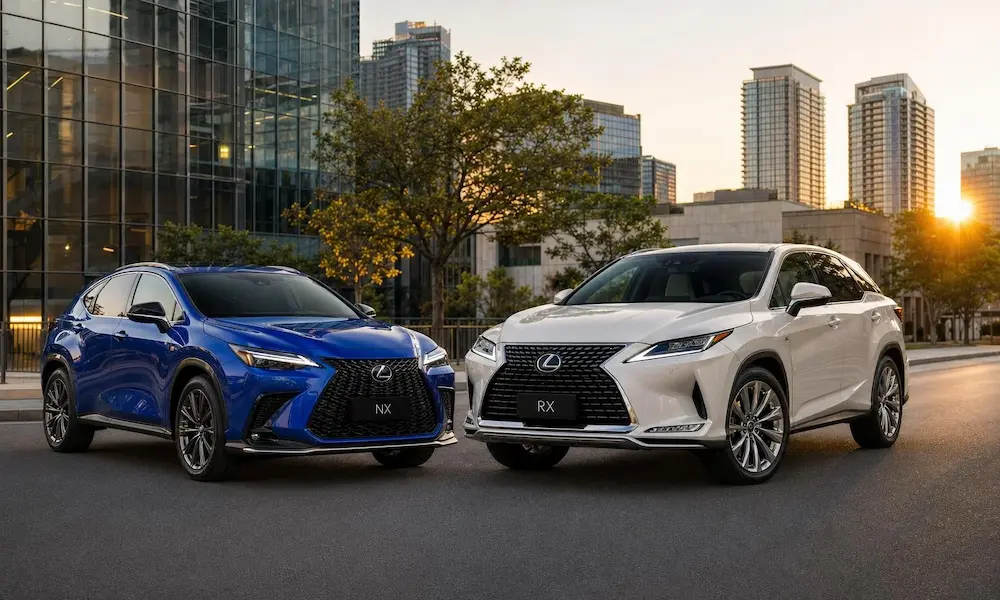
| NX | 183.5 | 65.4–66.1 | 105.9 | 22.7 | 8.1 |
| RZ (EV) | 189.2 | 64.4 | 112.2 | 34.1–34.9 | 7.9 |
| RX | 192.5 | 67.3 | 112.2 | 29.6 | 8.1–8.2 |
| GX | 197.1 | 75.6–77.2 | 112.2 | varies | 8.7–9.8 |
| LX | 200.5 | 74.2–74.6 | 112.2 | varies | 8.1 |
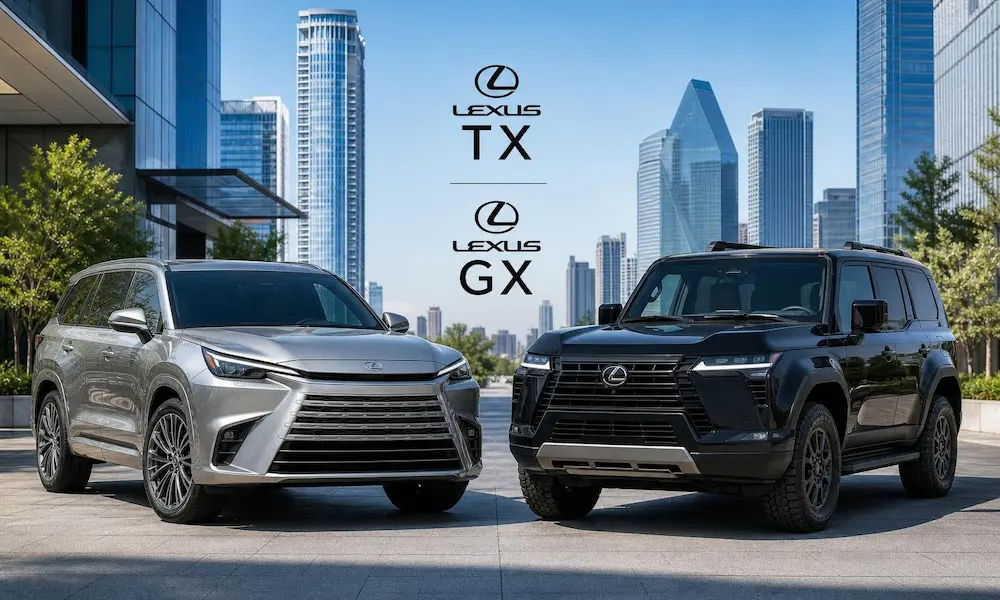
| TX | 203.1–203.5 | 70.1 | 116.1 | 97.0 (max) | 7.9 |
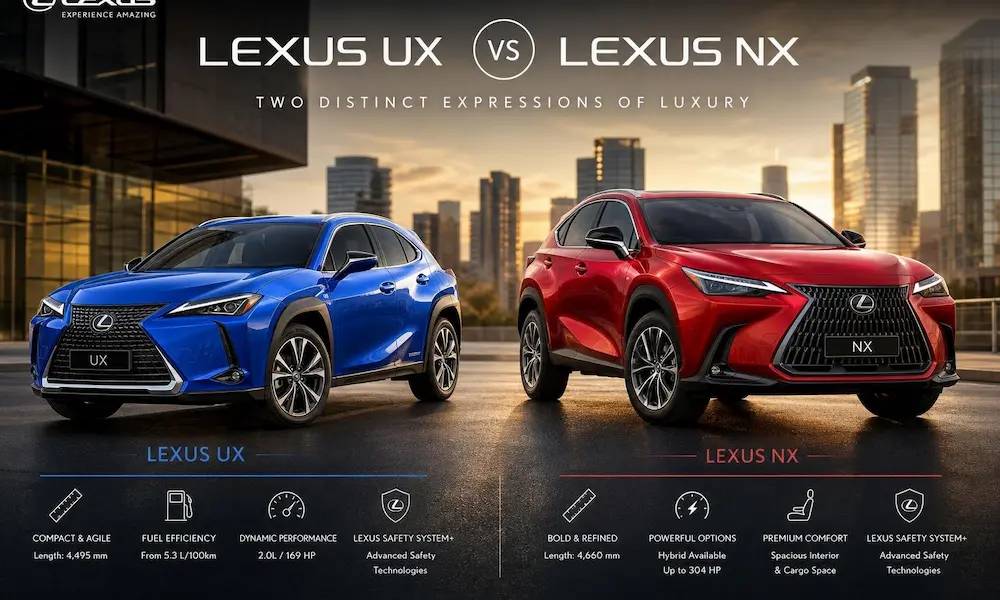
The UX is a full 6.5 inches shorter than the NX, over 15 inches shorter than the RX, and nearly 26 inches shorter than the flagship TX. That’s not a subtle size difference — it’s a completely different vehicle category.
UX vs. NX: The Most Common Comparison
The UX vs. NX decision comes down to one question: do you need rear-seat space?
The NX gives you 33% more cargo room (22.7 vs. 17.1 cu. ft.), 4.3 more inches of rear legroom, and a taller ride height that feels more traditionally “SUV.” It also has 8.1 inches of ground clearance versus the UX’s 6.3 inches, making it genuinely better in snow.
If you live alone, commute solo, or mostly carry one passenger, the UX makes sense. If you regularly carry adults in the back seat, the NX is worth the extra spend.
Is the UX 300h Worth Buying?
The UX 300h is essentially a Lexus-badged hybrid hatchback that refuses to admit it’s a hatchback. And that’s not a criticism — it’s the whole point.
Road & Track calls it “a Prius for people who don’t want a Prius,” which is accurate. It shares hybrid architecture with the Toyota Prius, which starts several thousand dollars cheaper. What you’re paying extra for: superior sound deadening, a more refined suspension tune, white-glove dealership service, and a spindle grille that announces you didn’t buy a Prius.
Buy the UX 300h if:
- You park in tight urban garages
- You commute solo or with one regular passenger
- Fuel economy matters to you
- You want the Lexus brand at the lowest possible entry price
Consider the NX instead if:
- You regularly seat adults in the rear
- You need more cargo space
- You live somewhere with serious winter weather
- Your budget can stretch to the NX’s starting price
The UX 300h starts at roughly $38,350 and delivers 43 mpg combined with 196 horsepower. For a subcompact luxury SUV, that’s a genuinely strong package — as long as you understand what you’re getting: a city car wearing an SUV badge, built to conquer parking structures, not mountain trails.