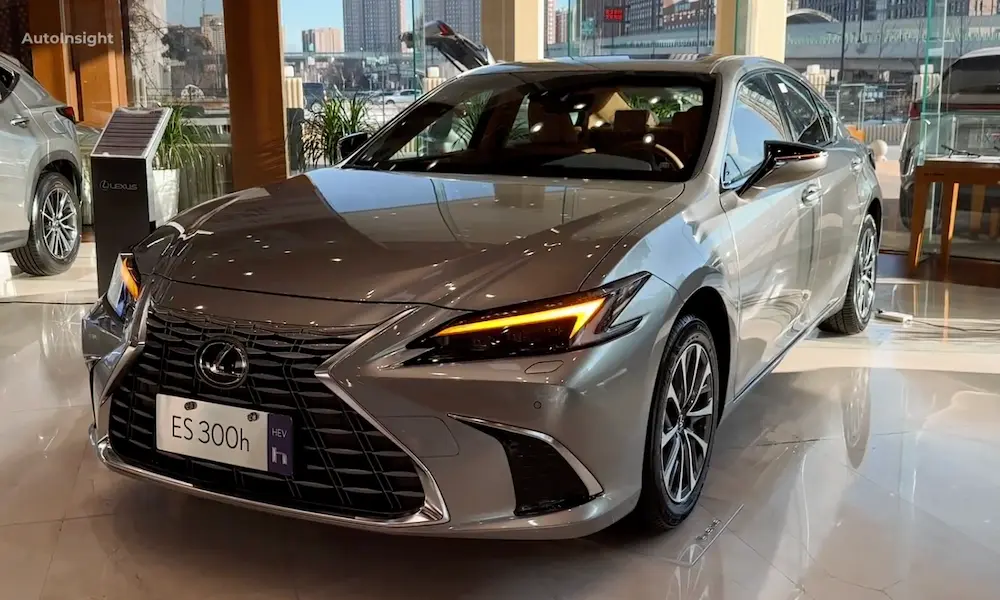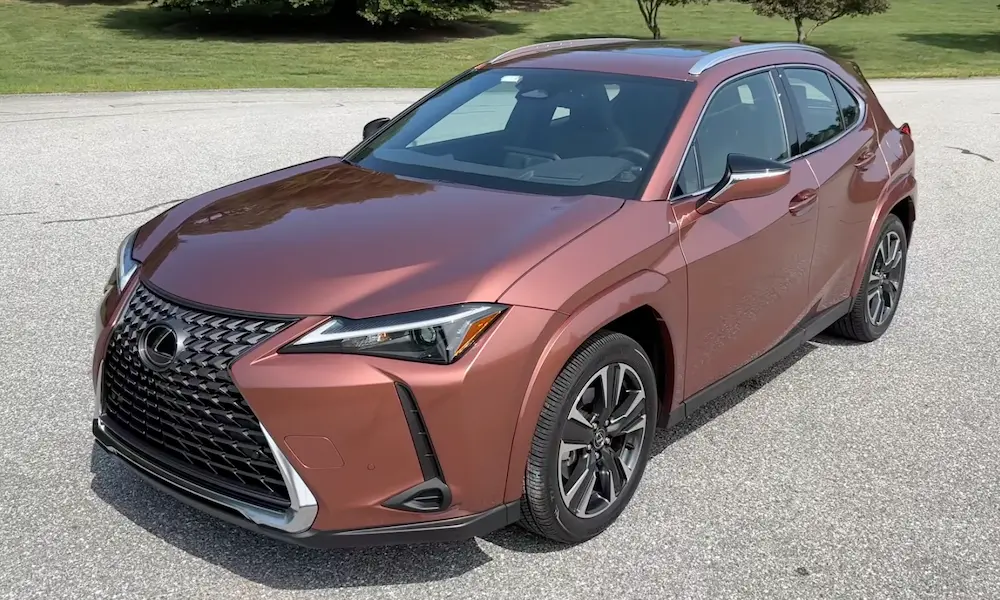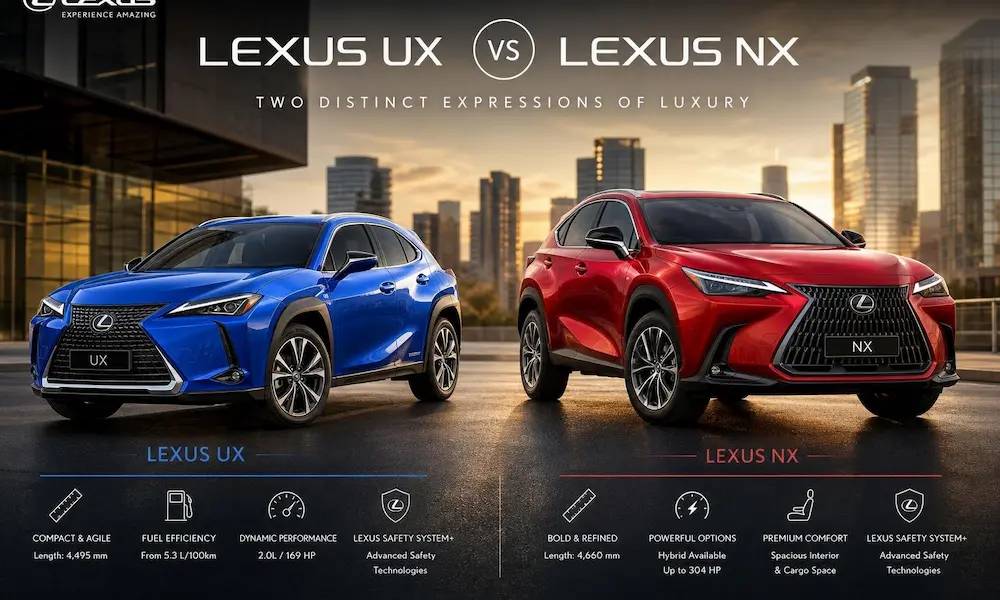
Choosing between the Lexus UX and NX isn’t as simple as picking the bigger one. Both crossovers share hybrid DNA, luxury finishes, and the same safety tech — but they’re built for very different lives. This guide breaks down exactly what separates them so you can stop second-guessing and start driving.
They’re Built for Different Buyers
Let’s get this straight from the jump: the Lexus UX vs NX debate isn’t about which car is better. It’s about which one fits your life better.
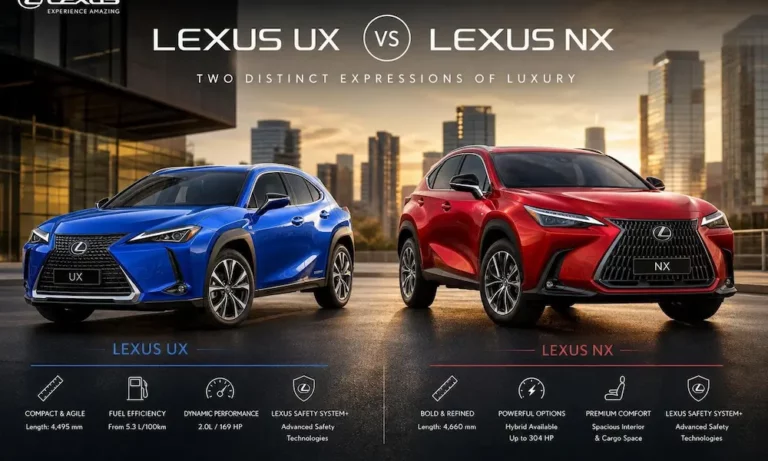
The UX 300h is Lexus’s entry-level subcompact crossover — agile, efficient, and purpose-built for city driving. The NX is a step up in every direction: more space, more power options, and more versatility for families or active lifestyles.
Both sit in the luxury crossover segment, but they serve completely different purposes. Here’s where they stand today:
| Feature | Lexus UX 300h (2026) | Lexus NX Series (2026) |
|---|---|---|
| Lifecycle Status | Recently Updated Powertrain | Approaching Mid-Cycle Facelift |
| US Market Position | Entry-Level Subcompact Luxury | Premium Compact Crossover |
| Starting MSRP | ~$38,550 | ~$47,220 |
| Core Strength | Urban Agility & Efficiency | Versatility & Performance Range |
That’s roughly an $8,700 gap right out of the gate. Whether the NX earns that premium depends entirely on what you need.
Powertrain Options: Simple vs. Stacked
The UX 300h: One Powertrain, Done Right
The 2026 UX keeps it simple. There’s one powertrain for the US market — a fifth-generation hybrid system pairing a 2.0-liter four-cylinder with an electric transaxle. Total output: 196 horsepower.
That system delivers:
- 43 MPG combined (FWD) or 41–42 MPG combined (AWD)
- Near-instant torque from the electric motor
- A rear electric motor on AWD models for better grip in slick conditions
- Regular 87-octane fuel — no premium required
It’s not the quickest crossover on the road (0–60 in about 7.9–8.0 seconds), but it’s smooth, efficient, and cheap to run day-to-day.
The NX: Three Ways to Go Fast (or Save Fuel)
The NX lineup dropped its base naturally aspirated engine for 2026, leaving a cleaner, more performance-focused range:
| NX Variant | Engine | Horsepower | 0–60 MPH | Fuel Economy |
|---|---|---|---|---|
| NX 350 | 2.4L Turbocharged | 275 hp | 6.6 sec | ~24 MPG combined |
| NX 350h | 2.5L Hybrid | 240 hp | 7.2 sec | 39–40 MPG combined |
| NX 450h+ | 2.5L Plug-In Hybrid | 304 hp | 6.0 sec | 37 mi electric range |
| UX 300h | 2.0L Hybrid | 196 hp | 7.9–8.0 sec | 43–44 MPG combined |
The NX 450h+ plug-in hybrid is the standout. Its 18.1-kWh battery gives you an estimated 37 miles of all-electric driving — enough for most daily commutes without burning a drop of gas. When the battery drains, it switches to hybrid mode seamlessly. No range anxiety. Just smart engineering.
Worth noting: the NX 350 requires premium fuel. That adds up over time compared to the UX’s regular-grade appetite.
Size Matters: Here’s What You’re Actually Getting
This is where the decision gets real for most buyers.
Exterior Dimensions and Maneuverability
The UX is noticeably smaller — and that’s the point. At 177 inches long with a 34.2-foot turning radius, it slips into tight parking spots and narrow city streets without breaking a sweat.
The NX stretches to 183.5 inches with a turning circle closer to 38 feet. In a crowded urban garage, you’ll feel that difference.
| Dimension | Lexus UX 300h | Lexus NX 350h |
|---|---|---|
| Overall Length | 177.0 inches | 183.5 inches |
| Overall Height | 60.6 inches | 66.1 inches |
| Ground Clearance | 6.3 inches | 8.1 inches |
| Wheelbase | 103.9 inches | 105.9 inches |
| Turning Circle | ~34.2 feet | ~38.0 feet |
The NX’s 8.1 inches of ground clearance also gives it a genuine edge in heavy snow or rough roads — nearly two full inches more than the UX.
Rear Seat and Cargo Space
Three inches of rear legroom doesn’t sound like much until you’re stuck in the back of an UX on a three-hour drive. The NX offers 36.1 inches of rear legroom versus the UX’s 33.1 inches. Adults notice immediately.
Cargo tells the same story:
- UX 300h: 17.1–17.2 cubic feet behind the rear seats
- NX: 22.7 cubic feet behind the rear seats, expanding to 46.9 cubic feet with seats folded
The NX can also tow up to 2,000 pounds. The UX? Not rated for towing at all.
If you haul bikes, strollers, or gear regularly, the NX wins this round without argument.
Inside: Screens, Sound, and Luxury Touches
Infotainment Displays
Both models run the Lexus Interface multimedia system with wireless Apple CarPlay and Android Auto. The “Hey Lexus” voice assistant handles climate, navigation, and audio without you touching the screen.
Screen sizes differ though:
- UX 300h: 8.0-inch standard, 12.3-inch available on higher trims
- NX: 9.8-inch standard, up to a 14.0-inch touchscreen on upper trims — one of the largest in its class
Both support connected services including:
- Drive Connect for cloud-based real-time navigation
- Remote Connect for remote start and door locking via smartphone
- Safety Connect for emergency assistance with trial periods up to 10 years
Audio: Good vs. Great
This gap is harder to ignore if you care about sound quality.
| Audio System | UX 300h | NX Series |
|---|---|---|
| Standard | 6-Speaker Lexus Audio | 10-Speaker Lexus Audio |
| Premium Upgrade | 10-Speaker Lexus Audio | 17-Speaker Mark Levinson |
| Peak Power Output | Not Specified | 1,800 Watts |
| Special Features | Bluetooth, Wireless App | Clari-Fi, QuantumLogic Surround |
The NX’s optional 17-speaker, 1,800-watt Mark Levinson system uses Clari-Fi technology to restore detail lost in digital compression and Unity speakers for a more natural soundstage. It’s genuinely impressive — and it’s not available on the UX.
Safety Tech: Both Are Excellent
Good news: you don’t have to spend more to get safe. Both the UX and NX come standard with Lexus Safety System+ 3.0, covering:
- Pre-Collision System with pedestrian and cyclist detection
- All-Speed Dynamic Radar Cruise Control (works down to a full stop)
- Lane Tracing Assist for centered lane keeping
- Proactive Driving Assist for curve and distance support
- Safe Exit Assist to prevent door opening into passing traffic
The NX adds available extras like Lane Change Assist and Front Cross-Traffic Alert.
On crash ratings, the UX earned a five-star overall NHTSA safety rating. The NX earned the IIHS Top Safety Pick+ award — the highest honor the institute gives.
Looking ahead, the 2027 model year may bring Lexus Safety System+ 4.0, already debuting on the 2026 ES. That next-gen system features an ultra-high-resolution camera and enhanced radar sensors that better detect motorcycles and pedestrians in low light.
Driving Feel: Urban Nip vs. Highway Comfort
The UX drives more like a sport hatchback than an SUV. Its low center of gravity and stiff chassis make it nimble and engaging, especially in tight conditions. Add the F SPORT Handling trim with Adaptive Variable Suspension and performance dampers, and it’s genuinely fun to throw around.
The NX feels bigger, more composed, and more settled on highways. It’s not dull — especially the turbocharged NX 350 — but it prioritizes ride comfort over sporty feedback. Its F SPORT Handling trim also gets AVS, 20-inch dark-finish wheels, and bolstered sport seats.
Both use an electric “E-Four” AWD system on hybrid models — an independent rear electric motor that responds nearly instantly. The NX 350 gas model uses a traditional mechanical AWD system, which handles heavier-duty situations slightly better.
What’s Coming in 2027
The NX Gets a Facelift
Spy shots from the Nurburgring confirm a mid-cycle refresh for the 2027 NX. Expect:
- Updated headlights with dual daytime running lights
- Revised front bumper with a more aggressive intake design
- Repositioned rear reflectors and updated taillight graphics
- Possible fully digital instrument cluster inside
- Rumored discontinuation of the NX 350 gas engine in favor of a full hybrid lineup
Reddit threads in the LexusNX community are buzzing with speculation about an NX 500h variant with more power and better efficiency.
The UX’s Future Is Less Clear
The UX 300h’s powertrain is still fresh, but Reddit discussions in the Lexus community point to potential changes — possibly a move toward the global LBX platform or a facelift similar to the NX. Nothing’s confirmed yet. If you’re considering the UX, 2026 is a solid time to buy.
One More Thing: The 2027 Lexus TZ
The all-new 2027 Lexus TZ arrives as a fully electric three-row SUV — 402 horsepower, dual-motor AWD, and an estimated 300 miles of range. It’s not replacing the UX or NX, but it shows where Lexus is heading fast.
Warranty and Running Costs
Both vehicles carry the same Lexus warranty package:
- Basic: 4 years / 50,000 miles
- Powertrain: 6 years / 70,000 miles
- Hybrid Components: 8 years / 100,000 miles
- Hybrid Battery: 10 years / 150,000 miles
- Roadside Assistance: 4 years, unlimited mileage
Lexus also covers your first two scheduled maintenance visits — the first year or 10,000 miles.
On fuel costs, the UX wins clearly. At 43 MPG combined on regular gas, it’s the most affordable Lexus crossover to run daily. The NX 350h is close behind at 39–40 MPG on regular fuel, but the NX 350 drops to around 24 MPG and requires premium — that’s a noticeably higher operating cost over time.
So Which One’s Right for You?
Pick the UX 300h if you:
- Live in a city and deal with tight parking daily
- Drive mostly alone or with one passenger
- Want the best fuel economy in the Lexus lineup
- Need luxury without the higher price tag
- Don’t require towing capacity or serious cargo space
Pick the NX if you:
- Need real rear-seat space for adults or kids
- Want cargo room for gear, strollers, or luggage
- Prefer a plug-in hybrid option (NX 450h+) for electric-first daily driving
- Value the Mark Levinson audio and larger 14-inch display
- Want more ground clearance for winter driving or light trails
Both cars deliver an excellent luxury experience. But the right choice comes down to how you actually use a vehicle every day — not just how it looks in the driveway.