So you’re eyeing a Husky toolbox at Home Depot and wondering if it’s actually worth your money — or just a pretty box that falls apart after a year. Good news: the answer isn’t as simple as yes or no, and that’s exactly why this post is worth reading. By the end, you’ll know exactly which Husky box fits your needs and which ones to skip.
What Is Husky, Anyway?
Husky isn’t just some random store brand slapped together overnight. It’s a brand with real history. Founded in Milwaukee in 1924 by Sigmund Mandl, Husky built its reputation on simple, tough tools for industrial workers. Over the decades, it changed hands several times before landing with The Home Depot in the early 1990s.
Today, Husky is Home Depot’s exclusive house brand. That setup lets the retailer control pricing without the middleman markup — which is a big reason Husky boxes often cost 70–80% less than premium alternatives with similar specs.
Where Are Husky Tool Boxes Made?
Here’s the part that surprises most people. Husky toolboxes are manufactured in China, Taiwan, Vietnam, and Thailand. The “Made in America” era ended around the early 2000s as the whole industry shifted to offshore production to stay price-competitive.
That said, going overseas doesn’t automatically mean lower quality. Many Husky products come from large-scale factories — including the Apex Tool Group — that also produce tools for other well-known brands. These facilities use automated powder coating and precision ball-bearing slide assembly. The manufacturing process is legit.
| Product Category | Where It’s Made |
|---|---|
| Standard Duty Storage | China, Vietnam |
| Heavy Duty Storage | China, Taiwan |
| Professional Duty Storage | China, Taiwan |
| Hand Tools | China, Taiwan, India, Vietnam |
The Three Tiers: Not All Husky Boxes Are Equal
This is the most important thing to understand before you buy. Husky divides its tool storage into three tiers, and each one targets a completely different user. Buying the wrong tier is where most people go wrong.
Standard Duty: Built for the Occasional User
Standard Duty boxes use 20–22 gauge steel and carry a 3-year limited warranty. They’re fine if you pull out a wrench twice a month. They’re not fine if you’re loading them with heavy impact sockets and air tools every day.
A few things to watch:
- Drawer slides can feel “notchy” under full load
- Plastic casters can develop flat spots under heavy weight
- Individual drawers are rated for around 100 lbs
These boxes make sense for homeowners who want organized storage at a low price. At Home Depot, they’re among the most affordable options in the category.
Heavy Duty: The Sweet Spot for Serious DIYers
This is where Husky really shines. The Heavy Duty series uses 18–19 gauge steel, which gives it noticeably more rigidity than the Standard line. These boxes are the most popular tier for a reason.
Key specs:
- Weight capacity: 3,000–3,800 lbs
- Drawer slides: Rated for 120 lbs, often with soft-close
- Drawer depth: 21.5–24 inches — deep enough for tall socket organizers
- Warranty: 5-year limited
- Finish: Matte powder coat that resists oils and chemicals
The Heavy Duty drawer layout is a common reason buyers choose Husky over competitors — the drawers are deep enough to stand socket organizers upright, which Kobalt and Craftsman equivalents often can’t match.
One heads-up: in unheated garages during cold winters, the soft-close mechanism can stiffen up. The grease in the damper thickens, making drawers harder to open. Some users have found ways to disable the soft-close feature when this becomes an issue.
Professional Duty: Serious Hardware for Serious Work
The Pro Duty line is a completely different animal. ToolGuyd’s early review called it a legitimate competitor to premium industrial brands — at a fraction of the price.
| Feature | Professional Duty Spec |
|---|---|
| Frame Steel | 16 gauge |
| Base Frame | 9 gauge |
| Total Weight Capacity | 6,000 lbs |
| Drawer Slide Rating | 220 lbs (400 lbs on double slides) |
| Work Surface | 18-gauge stainless steel |
| Lock | Kwikset SmartKey (rekeyable) |
| Warranty | Limited Lifetime |
The 9-gauge base prevents sagging on uneven floors. The four-caster design with shock absorbers keeps all wheels planted even on rough surfaces. This is a modular workstation system — you can add top hutches, side lockers, and overhead cabinets to build a full shop setup.
Husky vs. the Competition
Husky vs. US General (Harbor Freight)
This debate is everywhere on tool forums, and the Reddit community is deeply split. Here’s the honest breakdown:
| Metric | Husky Heavy Duty | US General Series 3 |
|---|---|---|
| Overall Feel | Feature-rich, smooth drawers | Heavy, industrial, “tank-like” |
| Steel Weight | Lighter overall | Often 100–200 lbs heavier |
| Soft-Close | Standard | Not standard on all models |
| Built-in Power Strip | Yes on many models | No |
| Drawer Layout | Deep, tall drawers | Many shallow drawers |
| Casters | Decent, varies by model | Generally praised as more robust |
US General boxes often feel more solid because of their raw weight. Husky wins on convenience features. If you want a garage setup with USB charging ports and a built-in power strip, Husky is hard to beat at the price.
Husky vs. Kobalt and Craftsman
Kobalt is Lowe’s house brand. Craftsman is sold at various retailers. Both are solid options, but Husky’s drawer depth consistently gives it an edge for users who need vertical storage space. If drawer depth matters to you — and it should — Husky usually wins this comparison.
Known Issues to Watch Before You Buy
Shipping Damage Is a Real Problem
This isn’t an engineering flaw — it’s a logistics issue. Multiple users report receiving dented or racked boxes due to rough shipping handling. The 18–22 gauge steel dents more easily than you’d hope during transit.
What to do: Always inspect a floor model or boxed unit before you buy. Check that the drawers open squarely and the frame isn’t twisted. Don’t assume the box is fine just because the outside of the packaging looks okay.
Overloading Thin-Gauge Drawers
Standard Duty drawers are rated for 100 lbs. That sounds like plenty until you’re stacking heavy impact wrenches, ratchet sets, and breaker bars in one drawer. When overloaded, the drawer bottom can bow, causing the ball-bearing slides to bind or fail early.
The Professional Duty’s 220–400 lb drawer ratings solve this completely. If you’re a working mechanic, don’t mess with Standard Duty.
Surface Rust in Uncoated Areas
Some long-term owners have noted bare metal spots inside drawers where the powder coating didn’t fully reach. A light coat of spray wax or oil on those spots prevents rust. It’s a minor fix, but good to know going in.
Warranty and Repairs
Husky hand tools carry a lifetime warranty — you can swap them at any Home Depot, no questions asked. Toolboxes work differently:
| Series | Warranty | How to Claim |
|---|---|---|
| Standard Duty | 3 years | Return to Home Depot with receipt |
| Heavy Duty | 5 years | Return to Home Depot with receipt |
| Professional Duty | Limited Lifetime | Often full unit replacement |
The catch is that you need to haul the box back to the store yourself. That’s annoying with a large cabinet. Premium “tool truck” brands send a rep to your shop — but you pay a huge premium for that service. Husky’s trade-off is lower price, slightly more hassle.
If you need replacement parts outside the warranty, Repair Clinic and eReplacementParts both carry Husky components. For a lost key, check the lock code on your box (something like A15 or A16) and order a replacement through EasyKeys. Husky’s customer service line (1-888-434-8759) can also help identify parts for older models.
So, Are Husky Tool Boxes Good? Here’s the Real Answer
It depends on who you are:
Home DIYer or hobbyist? Yes — Husky Heavy Duty is one of the best options at the price. You get soft-close drawers, built-in power, solid warranty, and features that used to cost twice as much.
Full-time mechanic or shop tech? Standard and Heavy Duty won’t cut it long-term. Go straight to the Professional Duty line. It holds 6,000 lbs, uses 16-gauge steel, and carries a lifetime warranty.
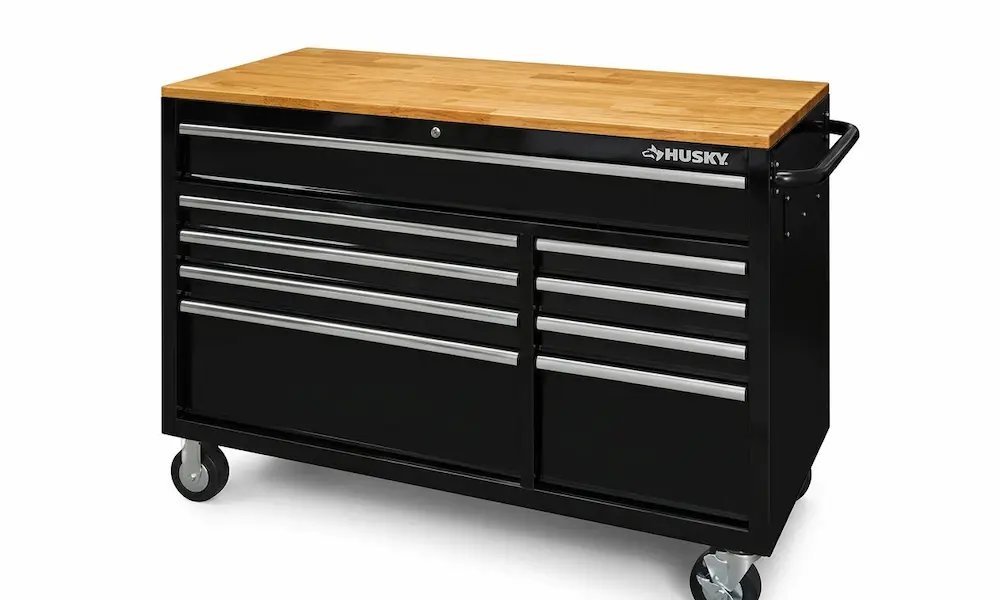
Specialty contractor needing organized stationary storage? The 46-inch and 52-inch Husky workbenches work well in warehouses and trailers. Plenty of size options, durable work surfaces, and a price that doesn’t hurt.
The biggest mistake buyers make is grabbing a Standard Duty box because the price tag looks great — then being surprised when it struggles under real shop use. Match the tier to your workload and Husky delivers solid value every time.