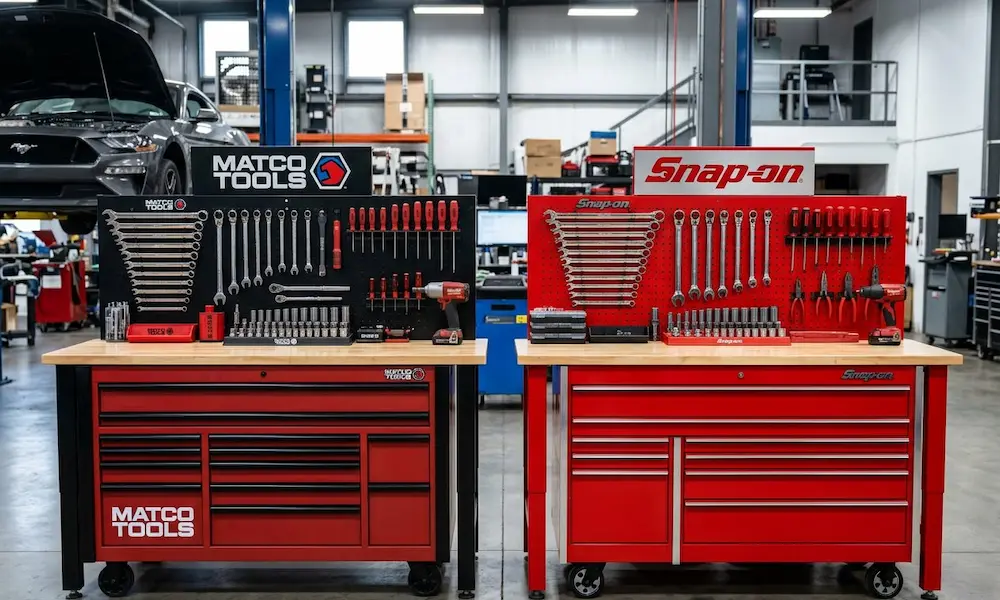
You’re staring down two of the biggest names in the trade, and your wallet is already nervous. This breakdown cuts through the hype on Matco tools vs Snap-on so you can make a smart call — not just an expensive one. We’re covering tools, toolboxes, financing, warranties, and the franchise side too. Stick around to the end before you sign anything or swipe anything.
A Quick Look at Where Each Brand Came From
These two brands didn’t end up on the same shop floors by accident.
Snap-on launched in 1920 in Milwaukee with one brilliant idea: interchangeable sockets. Ten sockets, five handles — “five do the work of fifty.” That concept alone built a brand that now pulls over a billion dollars in annual net income and holds a dominant 60% share of the mobile van market.
Matco Tools has a different origin story. Founded in 1946, it spent decades as a tool storage manufacturer before becoming a standalone mobile franchise in 1979. Today, Matco sits under Vontier, a publicly traded company focused on mobility, diagnostics, and EV infrastructure. That corporate backing means Matco’s future isn’t just about hand tools — it’s tied to where the entire vehicle service industry is heading.
| Historical Milestone | Snap-on | Matco Tools |
|---|---|---|
| Year Founded | 1920 | 1946 (mobile sales since 1979) |
| Headquarters | Kenosha, Wisconsin | Stow, Ohio |
| Current Parent | Standalone public (SNA) | Vontier (VNT) |
| Core Philosophy | Vertical integration | Strategic sourcing & innovation |
| Mobile Van Network | 4,500+ globally | ~1,900 |
The difference in philosophy matters more than most techs realize. Snap-on controls everything from raw steel to scanner software. Matco moves faster by sourcing the best tech globally and getting it to your truck sooner.
The Mobile Franchise Model: How the Tool Truck Actually Works
Both brands use the same fundamental sales model. A franchisee drives a rolling store to your shop every week. They swap broken tools on the spot, manage informal credit accounts, and build real relationships over years — sometimes decades.
That personal service is why you pay tool truck prices instead of going to a hardware store. The truck doesn’t just sell tools. It sells instant warranty swaps, trusted credit, and someone who knows your name and your bay.
Franchise Costs: Snap-on vs Matco
If you’re thinking about owning the truck instead of just buying from it, the numbers look very different between the two brands.
A Snap-on franchise runs from $200,000 to over $500,000 to start. The average lands around $300,000. You’ll also pay a monthly license fee of roughly $1,620 plus ongoing royalties. That’s a real cost of doing business that eats into your margin every single month.
Matco’s entry point is lower — minimum around $80,000 and average closer to $200,000. And here’s the key difference: Matco charges no royalty fees. For a franchisee trying to grow, that gap compounds fast.
| Franchise Metric | Snap-on | Matco Tools |
|---|---|---|
| Average Startup Cost | ~$300,000 | ~$200,000 |
| Monthly License/Royalty | Yes (~$1,620) | No royalties |
| Classroom Training | 80 hours | 65 hours |
| On-the-Job Training | 135 hours | 160 hours |
| Customer List | Protected (200 names) | Exclusive (325 names) |
| Veteran Incentive | $20,000 inventory gift | Comparable programs |
Matco also gives franchisees an exclusive route list of up to 325 customers, compared to Snap-on’s protected list of around 200. More potential customers, no royalties — Matco’s franchise comparison chart makes a strong case for the entrepreneurial side of this equation.
Hand Tools: Where the Steel Actually Meets the Job
This is where the Matco tools vs Snap-on debate gets most heated in every shop.
Snap-on’s Flank Drive Technology
Snap-on’s biggest hand tool innovation is the Flank Drive system. Standard wrenches load force onto the corners of a fastener — which rounds them off under high torque. Flank Drive shifts contact points to the flat sides of the fastener instead, dramatically reducing rounding risk and boosting grip on already-damaged hardware.
The “Flank Drive Plus” version adds small serrations inside the open jaw, giving even more bite on rusted or stubborn fasteners. It’s a real-world advantage, not just marketing language.
Snap-on ratchets also carry a well-earned reputation for feel. The chrome finish is smooth, durable, and easy to wipe down in a greasy environment. Technicians consistently point to hand feel and finish quality as reasons they stay loyal to the brand despite the price.
Matco’s Opti-Torque and Ratchet Advantages
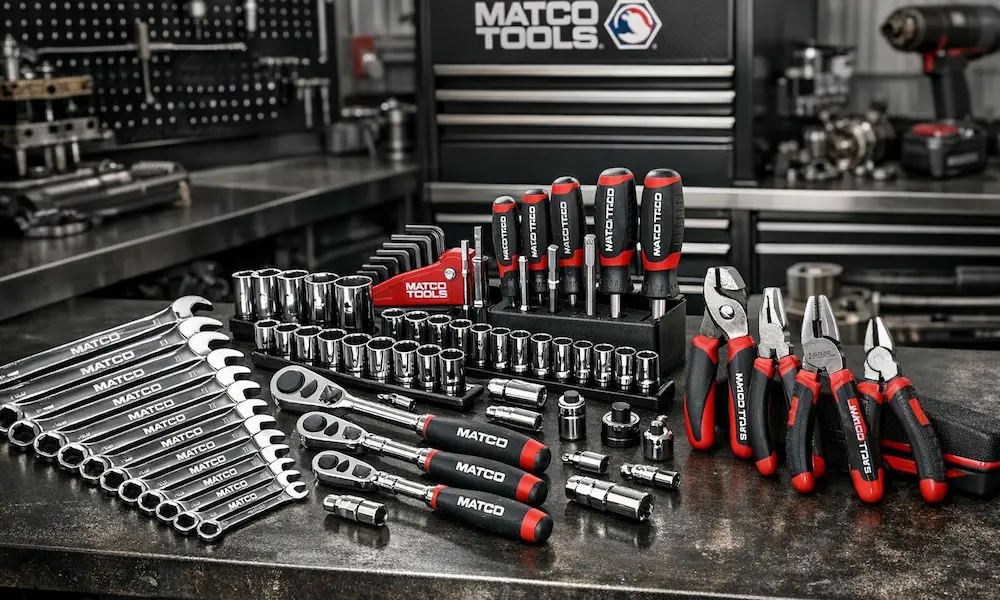
Matco’s answer is the Opti-Torque system — same concept as Flank Drive, loading fasteners on the flanks rather than the corners. In everyday use, both systems perform similarly well. The real difference often comes down to specific tool design.
Where Matco shines is ratchet versatility. Matco’s flex-head ratchets tend to have smaller, thinner heads — a genuine advantage in tight modern engine bays. Techs who work on late-model vehicles with cramped underhood spaces often prefer the Matco reach and articulation over Snap-on’s raw torque capacity.
Snap-on’s “Dual 80” ratchet mechanism provides an extremely fine swing arc. Matco counters with creative design choices — more flex points, longer reach options — that some techs find more practical for daily use.
Bottom line on hand tools: Snap-on wins on raw prestige, chrome quality, and brand consistency. Matco wins on design innovation and accessibility in tight spaces. Neither brand will let you down on a well-maintained professional tool.
Tool Storage: The Box You’ll Use for 20 Years
A toolbox is long-term infrastructure. You don’t want buyer’s remorse on a purchase you’ll be paying off for years.
Snap-on’s Three Storage Tiers
Snap-on organizes its storage into three clear levels:
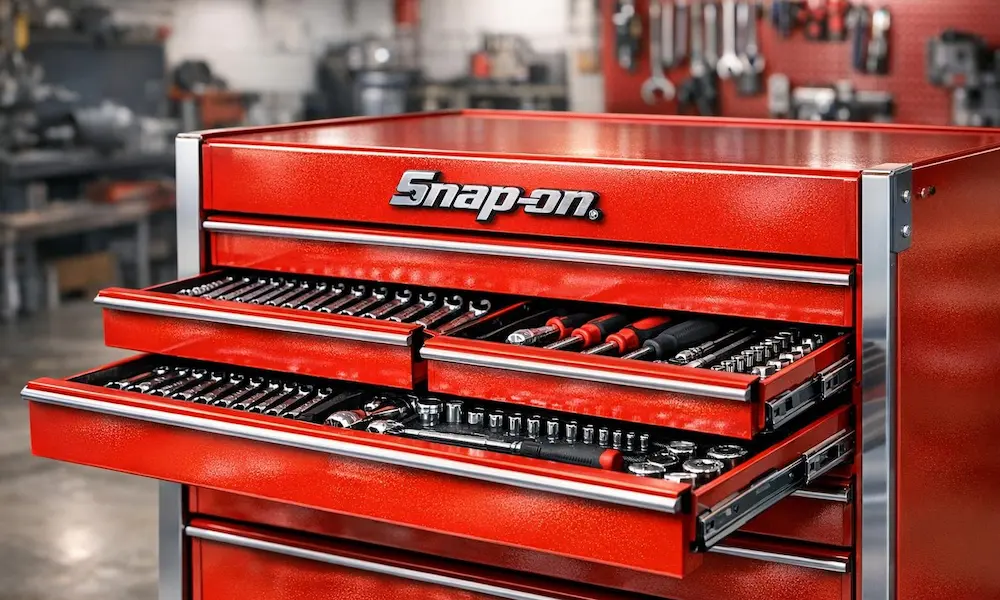
- EPIQ Series — The flagship. Features “InPulse” drawers that require a deliberate pull to open, “ISO-Ride” suspension casters for moving a fully loaded box across uneven floors, and a modular design that lets you expand the system over decades.
- Master Series — The serious professional standard. Deep 29-inch drawers, boxed frame construction, and high weight capacity without the EPIQ price tag.
- Classic Series — Entry-level professional storage with a shallower 24-inch depth and lower weight ratings.
Snap-on’s “boxed frame” construction is self-supporting across the full span of the cabinet. That matters when you’re loading thousands of pounds of tools into a single unit.
Matco’s RevelX: Built in the USA with Real Innovations
Matco’s RevelX line is manufactured in Jamestown, New York, using unibody rectangular beam construction. This design resists racking — the twisting stress that develops when a heavy box is loaded unevenly over time.
What makes the RevelX stand out practically:
- Built-in power junction box consolidates all internal cords to a single external outlet
- Front-facing AC outlets and USB ports for charging tablets and devices
- More drawer variety in terms of sizing — better organization for techs with specific tool layouts
The RevelX is a legitimate competitor to Snap-on storage. Some techs do note that longer Matco boxes can need a middle wheel set for support — a structural consideration Snap-on’s boxed frame avoids.
| Storage Feature | Snap-on EPIQ (68″) | Matco RevelX |
|---|---|---|
| Depth | 30 inches | 25–28 inches |
| Construction | Boxed frame / double wall | Unibody beam / fully welded |
| Max Weight Rating | ~8,000 lbs | ~8,000 lbs |
| Power Integration | PowerCab (internal) | Junction box (internal/external) |
| Drawer Slide Rating | 227 lbs | 140–200 lbs |
| Manufacturing Location | USA (Algona, Iowa) | USA (Jamestown, NY) |
Power Tools: The Battery Platform War
Once you commit to a cordless battery platform, switching brands gets expensive fast. This decision deserves more thought than most techs give it.
Snap-on MonsterLithium and MicroLithium
Snap-on’s cordless tools come out of their Murphy, North Carolina facility. The 18V MonsterLithium platform handles heavy-duty impact work. The 14.4V MicroLithium covers smaller, ergonomic tools for interior and detail work.
The biggest selling point isn’t just the tools — it’s the service. If your impact wrench dies on a Tuesday, your Snap-on driver swaps it on Wednesday. No shipping. No waiting. That instant warranty exchange keeps tools out of the service queue and keeps you working.
Matco Infinium: Raw Performance Numbers
Matco’s Infinium platform — available in 16V and 20V — competes hard on pure output. Real-world testing by working techs shows Matco’s 20V impact drivers can maintain higher torque as battery charge drops, outperforming some Snap-on equivalents under sustained load.
Matco’s ability to source cutting-edge motor and battery technology from specialized global partners lets them iterate faster. The trade-off is a less tightly controlled ecosystem compared to Snap-on’s domestic production — but for raw performance per dollar, Matco’s power tools are worth serious consideration.
Diagnostics: The Most Important Tool in the Shop
Modern vehicle repair lives and dies on scan tool capability. This segment generates over $1.2 billion annually for Snap-on’s Repair Systems division — and for good reason.
Snap-on’s “Intelligent Diagnostics” platform doesn’t just pull codes. It pulls from a database of millions of completed repairs to guide techs toward the most likely failed component. Snap-on also manufactures factory scan tools for several major OEMs, which gives them first-access to vehicle software on new model years. That head start in coverage is a real competitive advantage.
Matco’s “Maximus” diagnostic line earns strong marks for hardware durability and user interface. Matco targets techs who want powerful coverage without a steep learning curve. It’s a strong product — but in diagnostics, Snap-on’s OEM relationships are genuinely hard to match.
Financing and Debt: Know What You’re Actually Paying
The tool truck model runs on credit. Most techs carry more tool debt than they’d like to admit.
The Informal Truck Account
For smaller purchases — usually under $500 to $1,000 — both brands use informal weekly payment accounts. You get the tool immediately, pay $20 to $50 per week until it’s settled. Zero interest, no paperwork. It’s simple, and it works well when you have a driver you trust.
Formal Financing: Read the Fine Print
Big purchases — a $10,000 toolbox, a $5,000 scanner — go through formal credit programs. Interest rates run from 9.9% to 28.9% depending on your credit profile. Snap-on uses a simple interest model, which means paying extra principal when you have cash actually saves you real money in future interest charges.
Both brands offer student programs with discounts of 50% or more on starter sets and toolboxes. If you’re new to the trade, ask about these programs before you buy anything at full price.
| Financial Plan | Snap-on | Matco |
|---|---|---|
| Informal Account Limit | ~$1,300 | Varies by franchisee |
| Short-Term Interest | 0%–1% | 0% |
| Formal Financing Rate | 9.9%–28.9% | Competitive (high-end) |
| Student Discount | ~50% | ~50%–60% |
| Interest Type | Simple interest | Installment |
Warranty: What “Lifetime” Actually Means
Both brands promise lifetime warranties on hand tools. The reality depends heavily on your local franchisee.
In a good scenario, your driver swaps a broken ratchet on the spot, no questions asked. That’s the warranty working as designed. But franchisees are independent business owners. Some hesitate to warranty tools bought from a previous driver or picked up secondhand — because the replacement cost comes directly out of their inventory.
If your franchisee quits or your shop loses truck service, you’re dealing with a mail-in warranty process. Submit a claim online, get an authorization number, ship the tool, and wait weeks for a replacement. That’s not what working techs need in the middle of a busy week.
One critical point: toolbox and electronics warranties are often non-transferable. If you buy a used tool truck box from a classified listing, you may have no warranty coverage at all. Verify this before purchasing any secondhand tool truck equipment.
The Competition: Why Harbor Freight Icon Changes Everything
The Matco tools vs Snap-on conversation doesn’t happen in a vacuum anymore. Harbor Freight’s Icon line directly targets the professional market with tools designed to mirror Snap-on ergonomics at a fraction of the price.
Some torque tests have shown Icon tools matching or outperforming premium truck brands in specific categories. Younger techs with less brand loyalty are taking notice. Harbor Freight’s retail locations also offer an “instant warranty” via in-store exchange — which in some scenarios is more reliable than waiting for a once-a-week tool truck visit.
Milwaukee, GearWrench, and similar brands are pulling market share on the power tool and ratcheting wrench side, often at 30%–50% of the tool truck price. This forces both Snap-on and Matco to compete on service, financing, and relationships — not just steel quality alone.
Matco Tools vs Snap-on: The Real Decision
Here’s the honest breakdown:
Choose Snap-on if:
- You want the strongest brand recognition and resale value on individual tools
- Your shop has a reliable, responsive Snap-on franchisee
- OEM-level diagnostic coverage matters to your daily work
- You want the widest tool selection with domestic manufacturing behind it
Choose Matco if:
- You want newer ergonomic ratchet and flex-head designs
- The RevelX storage features — built-in power, drawer variety — fit your workflow
- You want stronger cordless performance at a lower entry cost
- Your shop values franchisee accessibility and no-royalty business support
The truth most experienced techs already know: the brand matters less than the driver. A great Matco rep beats a bad Snap-on rep every single week. Build a relationship with someone who shows up consistently, warrants your tools without a fight, and knows what you actually need in your bay.
That’s the deal that matters more than any brand comparison chart ever will.