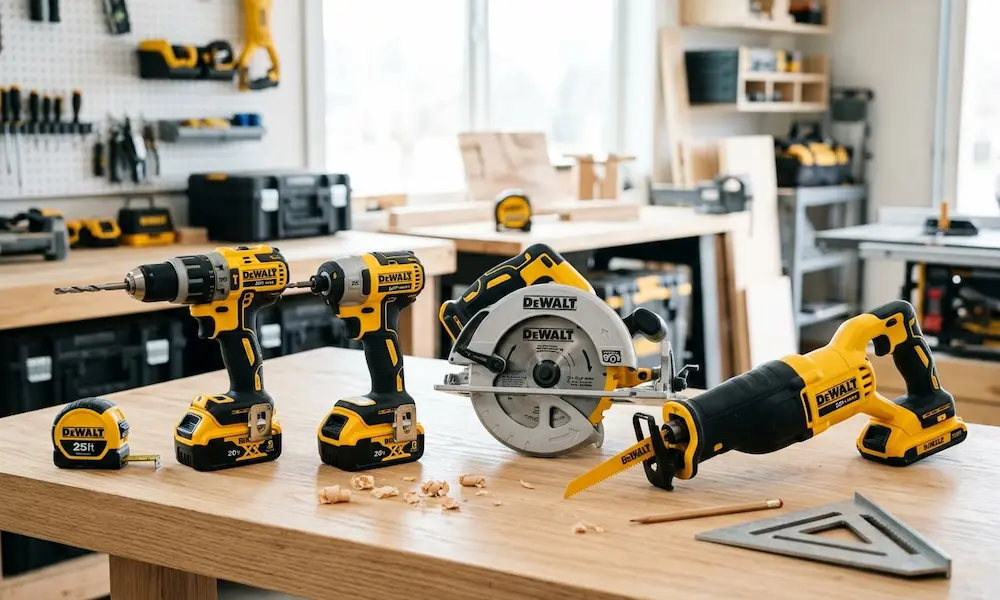
Thinking about buying DeWalt but not sure if the yellow-and-black hype is real? You’re asking the right question before spending serious money. This post breaks down DeWalt’s real performance, battery systems, reliability issues, and how it stacks up against Milwaukee, Makita, and Bosch. Stick around — there’s a lot worth knowing before you commit to a platform.
DeWalt’s Reputation Isn’t Just Marketing
DeWalt didn’t land the #1 spot in the 2025 America’s Most Trusted Power Tool Study by accident. It scored a Net Trust Quotient Score of 120.2 — the fourth year in a row at the top. That score measures how well a brand delivers on its promises, not just how popular it is.
That’s a meaningful distinction. It means pros who use DeWalt daily aren’t feeling let down.
Here’s how the major brands ranked:
| Brand | 2025 Trust Rank | NTQS Score | Market Focus |
|---|---|---|---|
| DeWalt | 1 | 120.2 | Premium Professional |
| Craftsman | 2 | 115.0 | Homeowner / DIY |
| Bosch | 3 | 113.1 | Engineering / Trade |
| Milwaukee | 4 | 112.3 | Heavy-duty Industrial |
| Makita | 6 | 110.8 | Professional Woodworking |
| Ryobi | 8 | 105.4 | Budget Enthusiast |
DeWalt also reported continued brand growth in Q3 2025, even with a soft consumer market. That’s not a brand coasting — that’s one actively holding its ground.
Understanding DeWalt’s Battery Lineup (It’s Not as Confusing as It Looks)
One of the biggest sources of confusion for new buyers is DeWalt’s sub-brand system. Here’s the short version.
20V Max vs. XR: What’s the Actual Difference?
The “20V Max” label refers to the peak unloaded voltage of a fresh battery. The tool runs at 18V under normal conditions — same as most competitors. The slide-style battery pack that came with this platform improved handle ergonomics by removing the bulky battery post from the grip area.
The “XR” (Extreme Runtime) tier is the professional level. XR tools use brushless motors, which skip the carbon brush friction found in cheaper tools. That means less heat, less wear, and up to 57% more runtime compared to brushed versions. If you’re on a job site for eight hours, that matters.
The Atomic Series: Small but Serious
The Atomic line targets compact work — electrical cabinets, tight framing bays, overhead installs. These tools are brushless and genuinely powerful, but they’re optimized for size and weight rather than peak torque. If your wrists ache by noon, the Atomic series is worth a hard look.
FlexVolt: The Real Game-Changer
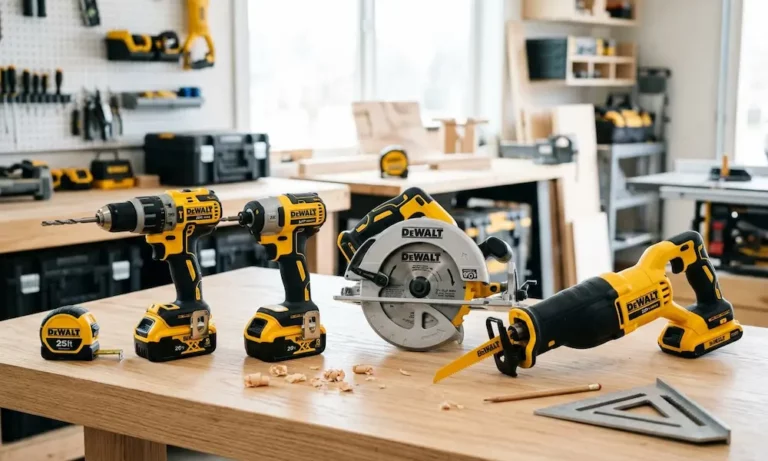
The FlexVolt system uses a single battery that automatically switches between 20V and 60V depending on the tool. That means one battery pack powers your standard drill and your heavy-duty grinder or large circular saw. No second platform. No extra cost.
In heavy structural work, FlexVolt tools maintain speed under load more effectively than rival 18V high-output systems, which tend to overheat and cut out when pushed. That backward compatibility — 60V batteries working in 20V tools — makes the investment a lot easier to justify.
| Series | Motor Type | Best For | Battery Voltage |
|---|---|---|---|
| 20V Max Standard | Brushed | Light assembly, basic tasks | 20V |
| 20V Max XR | Brushless | Professional framing, daily use | 20V |
| 20V Max Atomic | Brushless | Tight spaces, overhead work | 20V |
| FlexVolt | Brushless | Demolition, concrete, heavy cuts | 20V / 60V |
How Do DeWalt Tools Actually Perform?
Impact Drivers and Drills
The DCF860 impact driver delivers 282 Newton-meters of torque in a compact 123mm frame. That bridges the gap between a standard impact driver and a mid-torque wrench — useful when you’re driving long screws into pressure-treated lumber without swapping tools mid-task.
The DCD1007 hammer drill features an all-metal chuck and machined pinion gear for better heat management and long-term durability. Its “E-Clutch” system monitors the motor for sudden resistance spikes and cuts power before the tool spins out of your hand. That’s a genuine safety feature, not just a selling point.
Miter Saws and Table Saws
DeWalt arguably dominates the benchtop category more than any other. The DWS780 12-inch double-bevel sliding miter saw consistently ranks as the best overall saw for construction professionals. Its XPS cross-cut positioning system casts a shadow of the blade directly onto the workpiece. Unlike laser guides that drift out of alignment or cloud with dust, the shadow line stays accurate because the blade creates it.
The DWE7491RS jobsite table saw uses a rack-and-pinion fence system. Macro and micro adjustments stay parallel to the blade, which matters when you’re ripping hardwood or sheet goods. The rolling stand lets crews break it down and set it up fast — without sacrificing stability under heavy use.
| Tool | Model | Key Feature | Avg. Rating |
|---|---|---|---|
| Impact Driver | DCF860 | 282 Nm / 3-speed | 4.9/5 |
| Hammer Drill | DCD1007 | Anti-rotation clutch | 4.8/5 |
| Miter Saw | DWS780 | XPS shadow line | 4.8/5 |
| Table Saw | DWE7491RS | Rack-and-pinion fence | 4.7/5 |
DeWalt’s Design Goes Beyond Just Power
DeWalt’s Perform and Protect initiative focuses on three things: dust containment, vibration reduction, and user control. That’s not marketing language — it reflects real occupational health research.
Vibration Control
Prolonged tool vibration causes nerve and circulation damage over time. DeWalt’s “Shocks Active Vibration Control” system uses internal counterweights to absorb kinetic energy before it reaches your hands. In their SDS Max rotary hammers, the handle is physically decoupled from the motor housing, so you can hammer into concrete all day without your arms paying the price later.
Grip and Handle Design
DeWalt tools use bi-material over-mold grips — high-friction for control, cushioned for palm comfort. Their Ergo Aviation Snips reduce handle span to cut the muscle effort needed for repeated cuts through aluminum or vinyl siding. These aren’t cosmetic details — they’re the difference between finishing the day fine and finishing it with aching hands.
Real Talk: Where DeWalt Falls Short
No brand is perfect, and DeWalt has genuine weak spots worth knowing before you buy.
Trigger Issues in Brushless Tools
Some users of the DCF887 and DCF845 report a “stuck” trigger or delayed motor engagement — especially after the tool sits idle. It’s debated whether this is a designed sleep mode to protect internal electronics or a manufacturing defect. Either way, it’s disruptive on a fast-moving job site.
Some pros have gone back to older models specifically because the trigger response felt more immediate and predictable. That’s not a ringing endorsement for newer “smart” electronics.
Benchtop Quality Control
The DWS780 is a flagship product, but some units arrive with misaligned fences or faulty sliding rails. DeWalt’s warranty covers these issues, but a professional spending top dollar shouldn’t need to calibrate a tool straight out of the box.
Cold Weather and PowerStack Batteries
Lithium-ion batteries lose peak output in cold conditions — that’s chemistry, not a brand flaw. But the newer PowerStack batteries, with their stacked internal structure, show faster capacity loss if they take repeated heavy drops. The standard cylindrical cells handle physical abuse better.
Potted Electronics = Harder Repairs
Many brushless DeWalt tools seal their circuit boards in protective resin to block dust and moisture. That helps on site, but if one transistor fails, you can’t repair the board — you replace the whole module. Replacement parts are accessible through ToolServiceNet, but the cost of an electronic module can approach the price of a new tool. It’s a trade-off worth knowing.
DeWalt vs. Milwaukee vs. Makita vs. Bosch
Here’s a straight comparison of the four major players:
| Feature | DeWalt | Milwaukee | Makita | Bosch |
|---|---|---|---|---|
| Power Density | Very High | Exceptional | High | High |
| Ergonomics | Excellent | Good | Exceptional | Good |
| Ecosystem Size | 250+ Tools | 300+ Tools | 350+ Tools | 150+ Tools |
| Innovation | FlexVolt | One-Key | AVT | AmpShare |
| US Trust Rank | #1 | #4 | #6 | #3 |
Milwaukee often edges DeWalt in raw peak torque for specialized trades — plumbing, electrical, mechanical work. But DeWalt wins on general construction ergonomics and benchtop tools. And DeWalt’s FlexVolt system handles heavy-duty 60V work better than Milwaukee’s 18V high-output batteries, which can struggle with heat management under sustained load.
Makita tools are lighter with lower vibration, which woodworkers love. But Makita’s newer 40V XGT platform isn’t compatible with its older 18V LXT tools, forcing users to pick a side. DeWalt’s 20V and 60V platforms work together seamlessly.
Bosch builds excellent rotary hammers and laser tools and its AmpShare batteries work across multiple brands. But Bosch’s US retail presence is thinner than DeWalt’s, which makes sourcing service and parts harder for American contractors.
Warranty and Repairability
DeWalt backs professional tools with a 3-year limited warranty and a 1-year free service contract — covering worn parts like brushes, seals, and o-rings at no cost during year one. For framing crews or masonry contractors running tools hard, that free service year has real value.
The ToolServiceNet platform gives you access to exploded diagrams and part lists for nearly every tool in the catalog. You can order down to individual springs and motor assemblies. That’s a serious advantage for shops that want to repair rather than replace.
So, Are DeWalt Tools Good?
Yes — for most professionals and serious DIYers, DeWalt tools are a genuinely strong investment.
Where DeWalt clearly wins:
- The FlexVolt system is the most practical dual-voltage solution on the market
- Miter saws and table saws set the standard for jobsite accuracy
- Safety features like anti-rotation clutches and active vibration control come standard
- Parts access and service infrastructure support long tool life
Where you should stay alert:
- Electronic trigger issues in some brushless models are real and reported widely
- Some benchtop tools need calibration out of the box — check alignment before you cut
- Potted circuit boards make self-repair harder when electronics fail
- Heavier than some competitors in the same performance class
The brand earned its #1 trust ranking for a reason. DeWalt tools deliver consistent performance across a broad ecosystem, and they stay in service longer than budget alternatives. If you’re buying into a battery platform you’ll use for years, the yellow-and-black is still a very safe bet.