Your dashboard just flashed a “B1” alert and now you’re wondering if it’s serious or just another way for the dealership to take your money. It’s actually both important and manageable — and this guide breaks down exactly what happens during an Acura B1 service, what you’ll pay, and how skipping it can cost you way more later.
What Does the Acura B1 Service Code Actually Mean?
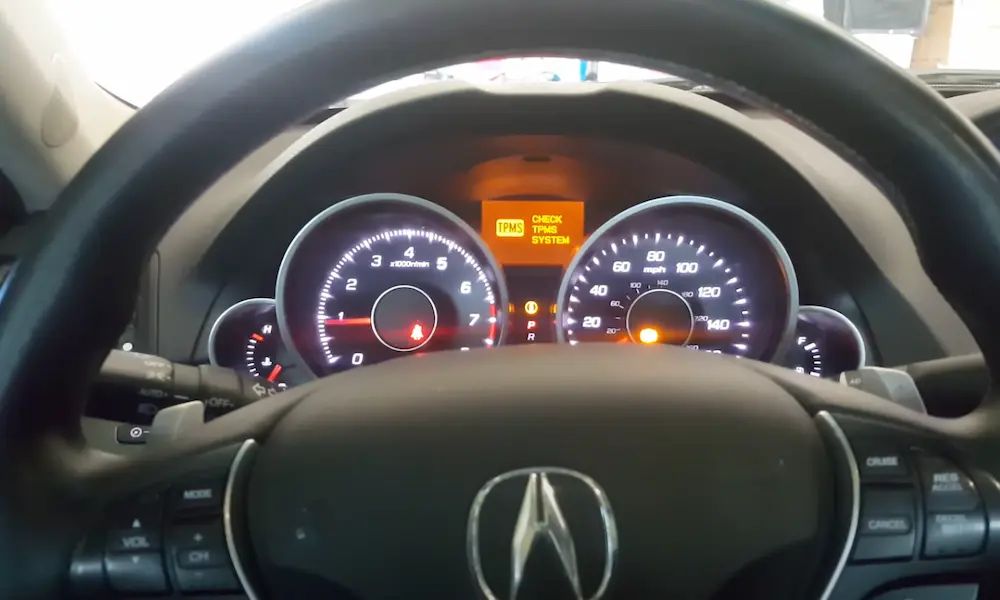
The B1 code isn’t random. It’s generated by Acura’s Maintenance Minder™ system, which tracks real driving conditions — not just mileage — to tell you precisely when your car needs attention.
The code breaks into two parts:
- “B” = Engine oil change, oil filter replacement, and a full multi-point inspection
- “1” = Tire rotation
So when you see B1, your car is asking for an oil service plus a thorough mechanical check-up plus a tire rotation. It’s not just an oil change.
How the Maintenance Minder Decides When to Trigger B1
This is where Acura gets clever. Instead of a rigid every-5,000-miles rule, the Maintenance Minder algorithm reads your actual driving habits and adjusts accordingly.
Here’s what it monitors:
| Sensor Variable | Impact on Service Interval | Why It Matters |
|---|---|---|
| Engine Temperature | High | Cold starts cause oil to accumulate moisture and sludge |
| Engine Load/RPM | High | Towing or high RPM accelerates oil breakdown |
| Ambient Temperature | Moderate | Extreme heat degrades synthetic additives faster |
| Vehicle Speed | Moderate | Stop-and-go driving wears oil faster than highway cruising |
| Total Run Time | Low | Idling degrades oil without adding mileage |
The system counts down your oil life from 100% to 0%. You’ll see a “Service Due Soon” alert at 15%, then “Service Due Now” at 5%, and finally “Service Past Due” once you hit 0% — at which point it starts tracking negative mileage. That last part should make anyone nervous.
What Happens During the “B” Inspection
The oil change is the easy part. The real value in the B1 service is the comprehensive multi-point inspection that comes with Code B. Think of it as a full health check for the systems you never see until they fail.
Brakes and Safety Systems
Technicians check your front and rear brake pads, rotors, and calipers — measuring rotor thickness and looking for scoring or cracking. They also verify the parking brake adjustment, typically checking that it engages within five to seven clicks.
The ABS and Vehicle Stability Assist (VSA) lines and wiring get checked too. These systems rely on precise hydraulic pressure and fast data signals. Any degraded hose or corroded connection can slow emergency response times.
Steering, Suspension, and CV Boots
Technicians shake down your steering components — tie-rod ends, the steering gearbox, and all associated boots. Any play in these joints leads to steering drift and uneven tire wear.
The CV (Constant Velocity) boots get special attention. If a boot tears, grease flies out and road grime gets in, which quickly destroys the axle joint. Catching a torn boot during B1 service costs you a boot replacement. Missing it costs you an axle replacement. That’s a big price difference.
Fluids and Exhaust
The B inspection covers transmission fluid, coolant, and differential fluids — not just levels but also color and clarity, which signal internal issues like overheating or moisture contamination. The exhaust system and fuel lines get checked for leaks, corrosion, and loose mounting points too.
What Sub-Code 1 Means: Tire Rotation Done Right
Tire rotation isn’t just spinning your wheels to a new corner. The rotation pattern depends on your drivetrain, and getting it wrong can actually cause problems.
| Drivetrain | Rotation Pattern | Why |
|---|---|---|
| AWD / SH-AWD | Crisscross | Keeps rolling diameters matched to protect differentials |
| FWD | Fronts straight back; rears cross to front | Compensates for steering and torque stress on front tires |
| RWD | Rears straight forward; fronts cross to rear | Addresses drive wheel wear while redistributing steering tires |
If you drive an Acura with Super Handling All-Wheel Drive (SH-AWD), this matters even more. SH-AWD uses electromagnetic clutches to shift torque between rear wheels. If front and rear tires wear unevenly, those clutches slip constantly to compensate — wearing them out prematurely and hurting fuel economy.
B1 vs. B2 Service: What’s the Difference?
People mix these up constantly, so here’s the clear breakdown:
| Component | B1 Service | B2 Service |
|---|---|---|
| Engine Oil & Filter | ✅ Included | ✅ Included |
| Multi-Point Inspection | ✅ Included | ✅ Included |
| Tire Rotation | ✅ Included | ❌ Not standard |
| Engine Air Filter | ❌ Not standard | ✅ Included |
| Cabin Air Filter | ❌ Not standard | ✅ Included |
| Drive Belt Inspection | ❌ Not standard | ✅ Included |
The B2 service typically shows up around 30,000 miles — or sooner if you drive in dusty or high-pollution environments. It swaps the tire rotation for air filtration maintenance and a drive belt inspection.
How Much Does Acura B1 Service Cost?
Here’s where it gets real. Prices vary quite a bit depending on who does the work.
| Provider | Estimated Cost | Key Advantage | Key Disadvantage |
|---|---|---|---|
| Acura Dealership | $129–$170 | Certified techs; digital service records | Higher labor rates; possible upsells |
| Independent Shop | $90–$110 | Lower cost; direct tech relationship | Manual records; may lack specialized tools |
| Honda Dealership | $110–$210 | Familiar with core mechanics | Variable pricing; may lack Acura-specific parts |
| DIY | $40–$60 (parts only) | Zero labor cost | No digital record; requires tools and space |
Acura dealerships offer 60-minute turnarounds, OEM-certified fluids, and automatic service record uploads to the Acura national database. Independent shops can do the mechanical work well, but you need to confirm they’re actually completing the full “B” inspection — not just an oil change and tire swap.
Does the B1 Service Affect Your Warranty?
Here’s good news most people don’t know: under the Magnuson-Moss Warranty Act, Acura can’t force you to use their dealership to keep your warranty valid. You can use any qualified shop or even do it yourself.
But — and this is important — the burden of proof sits with you. If your engine seizes and you can’t show documented proof that B1 services happened on schedule, Acura can legally deny the warranty claim.
What to Keep If You Go Independent or DIY
- Itemized receipts showing the specific oil grade used (0W-20 full synthetic, for example)
- Date and mileage at time of service
- Written confirmation that the full “B” inspection items were completed
Acura also offers a goodwill repair policy for issues just outside the warranty window. A consistent dealership service history is often the primary factor they consider for eligibility.
B1 Service and Your Car’s Resale Value
This is the angle most owners overlook. Consistent B1 service records directly affect whether your Acura qualifies for the Precision Certified Pre-Owned program, which requires a 182-point inspection by a factory-trained technician.
CPO certification brings serious financial benefits:
- Powertrain warranty extended to 7 years or 100,000 miles
- Non-powertrain coverage: 2 additional years or 100,000 miles
- Fully transferable warranty — a real selling point for private buyers
An Acura with gaps in its B1 service history may fail the CPO inspection entirely, forcing a sale as a non-certified used car at a lower market value. That’s a hit that easily exceeds years of service costs.
Where B1 Service Is Headed with Electric Acuras
As Acura rolls out electrified models like the ZDX, the B1 code is evolving. EVs don’t need oil changes, but the Maintenance Minder still tracks critical systems. Expect B1-style inspections to shift toward:
- Battery thermal management systems — coolant loops for the high-voltage battery pack
- Regenerative braking health — evaluating whether regen is doing its job or traditional pads are compensating
- Electric drivetrain seals and boots — same concept as CV boots, different components
AcuraLink® telematics are also getting more integrated with the Maintenance Minder. Modern Acuras can already transmit service codes directly to your preferred dealership, allowing for remote diagnostics and proactive scheduling before you even notice the alert.
The B1 Service Timeline Over 100,000 Miles
Here’s how the Maintenance Minder typically layers maintenance across a vehicle’s life:
| Mileage Range | Expected Code | Main Focus |
|---|---|---|
| 7,500–10,000 | A1 | First oil change and tire rotation |
| 15,000–20,000 | B1 | First structural audit; brakes, boots, suspension |
| 30,000–35,000 | B12 | Structural audit plus air filter maintenance |
| 45,000–50,000 | B16 | Differential service added for AWD models |
| 60,000–70,000 | B13 | Transmission fluid refresh with B inspection |
| 90,000–100,000 | B14 | Major service — spark plugs, timing belt |
The pattern is clear: the B-level inspection repeats roughly every 15,000 to 20,000 miles to catch structural problems before they become expensive failures. That’s intentional engineering, not a upsell strategy.
The Acura B1 service is a smart, data-driven maintenance event that protects your brakes, suspension, drivetrain, tires, and long-term resale value all at once. Whether you go to a dealership, an independent shop, or handle it yourself, the key is doing it on time and keeping the paperwork.