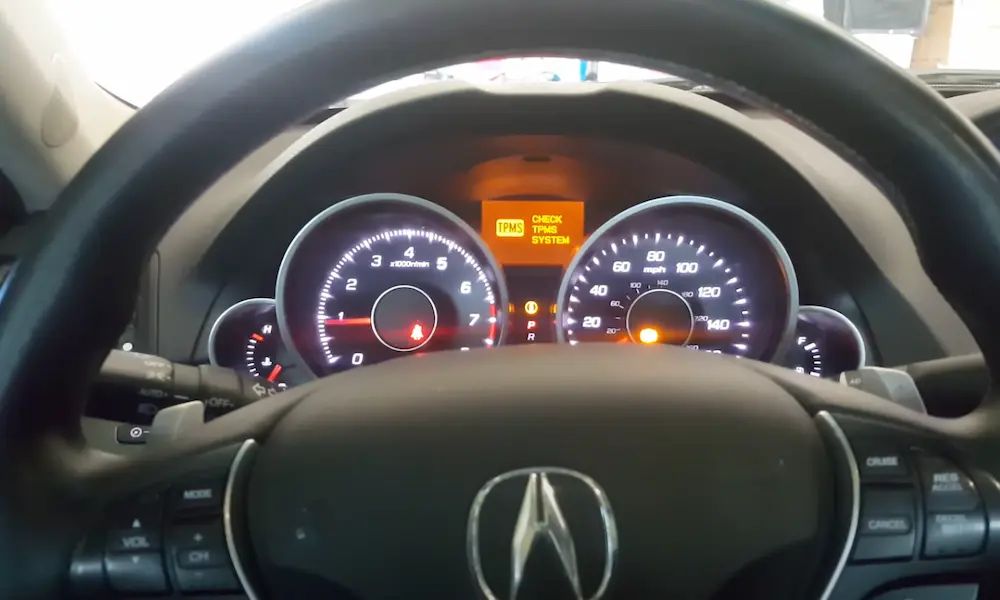
Your dashboard just flashed a B12 code and you’re not sure what it means or how worried to be. Good news — it’s not a crisis. But it’s not something to ignore either. This post breaks down every part of the Acura B12 service, what it costs, and whether you can tackle any of it yourself.
What Is the Acura B12 Service?
The Acura B12 service is a specific maintenance alert from Acura’s Maintenance Minder system. It’s not a random timer. The system tracks engine revolutions, operating temperatures, trip length, and vehicle speed to decide exactly when your car needs attention.
The B12 code breaks down like this:
- B = Oil and filter change + a full mechanical inspection
- 1 = Tire rotation and tire condition check
- 2 = Engine air filter, cabin air filter, and drive belt inspection
Three service items. One alert. Makes sense to bundle them.
The B12 alert typically appears between 15,000 and 30,000 miles, depending on how hard you drive the car. City driving, short trips, and extreme temperatures burn through oil life faster than steady highway miles.
How Urgent Is the B12 Alert?
Here’s a quick breakdown of what the numbers on your dashboard actually mean:
| Oil Life % | Dashboard Message | What You Should Do |
|---|---|---|
| 15% | Service Due Soon | Start scheduling now |
| 5% | Service Due Now | Book it immediately |
| 0% | Service Past Due | Overdue — increased wear risk |
| Negative mileage | Overdue Distance | You’ve driven past the zero threshold |
Don’t let it hit zero. Driving on degraded oil accelerates wear on your camshafts, cylinder walls, and turbocharger bearings — especially in RDX models.
The “B” Code: Oil Change and Full Inspection
Why the Oil and Filter Both Get Replaced
Over time, engine oil breaks down through oxidation and picks up combustion byproducts — soot, fuel residue, moisture. When the filter gets saturated, it enters bypass mode. That means unfiltered oil circulates through your engine, dragging abrasive particles along for the ride. Replacing both the oil and the filter together isn’t upselling. It’s the only way the job actually works.
What the Mechanical Inspection Covers
The “B” inspection is the part most owners underestimate. A technician physically checks every major system under the car. Here’s what that includes:
| Component | What Gets Checked | Why It Matters |
|---|---|---|
| Brake pads and rotors | Pad thickness, rotor scoring | Stopping power and heat management |
| Parking brake | Pedal firmness, 5–7 click adjustment | Holds the car on inclines |
| Tie rod ends and steering | Play, leaks, boot condition | Steering feel and tire wear |
| Driveshaft boots | Tears, cracks, grease seepage | Protects CV joints from contamination |
| Brake hoses and lines | Bulges, cracks, corrosion | Prevents hydraulic pressure failure |
| Exhaust system | Rust, loose heat shields | Prevents carbon monoxide intrusion |
| Fuel lines | Seepage, loose connections | Fire risk and delivery integrity |
That last column is why you don’t skip the inspection. Brake hoses handle over 1,000 PSI during hard stops. A bulge in that hose isn’t cosmetic — it’s a warning sign of structural failure.
CV Boots: The Small Part With Big Consequences
Driveshaft boots are easy to overlook. They’re just rubber covers. But they seal the grease inside your CV joints — the joints that let power reach your wheels while the suspension moves. If a boot splits and no one catches it, grease flies out and grit gets in. Catch it at a B12 inspection and you’re looking at a boot replacement. Miss it, and you’re replacing the entire axle.
The “1” Code: Tire Rotation and Inspection
Tire rotation moves each tire to a different position so wear distributes evenly. Front tires take more load during braking and steering. Rear tires on AWD models handle more torque stress. Leave them in place too long and you get cupping or feathering — wear patterns that cause road noise and kill traction.
The inspection also checks tread depth and cold inflation pressure. Both matter more than most people think:
- Under-inflation generates sidewall heat and increases rolling resistance
- Over-inflation shrinks the contact patch and extends braking distance
For Acura models with SH-AWD (Super Handling All-Wheel Drive), uneven tread depth across all four tires puts extra stress on the torque-vectoring differentials. The clutch packs wear out faster when tires spin at different speeds. Consistent rotation protects the whole drivetrain, not just the rubber.
The “2” Code: Filters and Drive Belt
Engine Air Filter
Your engine needs roughly 10,000 gallons of air for every gallon of fuel it burns. A clogged air filter chokes that intake, drops fuel efficiency, and can push the air-fuel mixture rich — potentially fouling spark plugs and overheating the catalytic converter. Swapping the filter during a B12 service keeps the engine breathing cleanly.
Cabin Air Filter
The cabin air filter cleans every breath of air that enters your car through the HVAC system. Neglecting it causes three distinct problems:
- Restricted airflow — The blower motor works harder, drawing more current. This can burn out the resistor or the motor itself
- Mold and bacteria growth — Trapped moisture in a dirty filter creates musty odors and triggers allergic reactions
- Poor defrosting — Blocked airflow slows windshield clearing in winter, which is a safety issue — not just an inconvenience
High-end cabin filters use activated carbon layers that also neutralize odors and gaseous pollutants. Worth the upgrade if you spend a lot of time in traffic.
Drive Belt (Serpentine Belt)
The drive belt sends power from the crankshaft to the alternator, power steering pump, and AC compressor. Modern Acura models use EPDM belts, which resist heat better than older neoprene belts. The catch? EPDM belts don’t show classic cracking. Instead, they lose material from the ribs — a condition called “pilling” that’s easy to miss.
During the B12 service, technicians check for:
- Cracking or fraying — More than four cracks per inch means the belt’s integrity is gone
- Glazing — A shiny surface means the belt has been slipping and losing friction
- Tensioner condition — A belt that deflects more than half an inch under thumb pressure is too loose
What Does Acura B12 Service Cost?
Acura B12 service costs between $200 and $400 at a dealership, depending on the model and location. Independent shops typically come in lower. DIY cuts the cost significantly but requires tools and time.
| Service Item | Dealership | Independent Shop | DIY (Parts Only) |
|---|---|---|---|
| Oil and filter change | ~$100 | $60–$80 | $35–$50 |
| Tire rotation | $30–$35 | $20–$30 | $0 (needs equipment) |
| Engine air filter | $50–$60 | $40–$50 | $15–$30 |
| Cabin air filter | $60–$70 | $50–$60 | $10–$40 |
| Multi-point inspection | Included | $50–$100 | Not applicable |
| Total estimate | $245–$400 | $180–$300 | $60–$120 |
Dealership vs. Independent Shop
Dealerships charge more, but factory-trained technicians focus exclusively on Acura and Honda architecture. They’re more likely to catch model-specific issues — like particular suspension bushing failures or pending software updates. All work gets logged in the official Acura database, which can add to resale value.
Independent shops offer competitive labor rates and a more personal relationship. And here’s the thing — using an independent shop doesn’t void your factory warranty, as long as the work is documented and meets factory specifications. That’s protected under the Magnuson-Moss Warranty Act.
Can You DIY Any of the B12 Service?
Yes — with limits. The cabin air filter and engine air filter are both accessible for most owners. Tire rotation is doable but needs proper equipment.
DIY Cabin Air Filter Replacement
On most Acura models — RDX, MDX, TLX — the cabin filter sits behind the glove box. Here’s the process:
- Empty the glove box and unhook the damper arm on the side
- Squeeze the sides of the glove box to bypass the stops and let it drop down
- Remove the access panel to reach the filter cartridge
- Slide out the old filter, insert the new one
Don’t skip this step: Check the airflow direction arrows on the new filter. Installing it backwards reduces efficiency and can cause improper seating. Also, vacuum or wipe out the housing before inserting the new filter. Leaves and debris sitting in the housing can fall straight into the blower motor.
DIY Tire Rotation
Tire rotation at home needs a hydraulic floor jack, jack stands, and a torque wrench. The most common and dangerous mistake? Not torquing lug nuts to the factory specification — typically 80 to 100 lb-ft. Under-torqued lug nuts cause vibration. In worst-case scenarios, the wheel detaches at speed. Use a torque wrench. Every time.
Resetting the Maintenance Minder After B12 Service
Once the service is done, reset the Maintenance Minder to restart the calculation cycle. On models with a touchscreen, go to Vehicle Settings → Maintenance Info and follow the prompts. If you don’t reset it, the “Service Past Due” message stays on even though the work is complete — and the system won’t start tracking your new oil life.
For DIY owners, keep your receipts and log the date and mileage. This protects your powertrain warranty and proves the car was maintained to spec if you ever sell it.