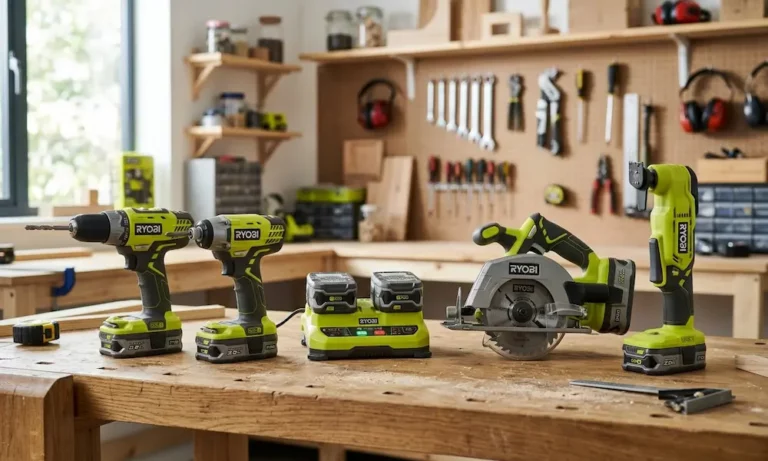
Thinking about buying Ryobi tools but worried you’ll regret it? You’ve probably heard mixed opinions — some people swear by them, others write them off completely. The truth is more nuanced than either camp admits. This post breaks down exactly what Ryobi tools are good for, where they fall short, and whether the ecosystem is worth your money right now.
Who Actually Makes Ryobi Tools?
Ryobi isn’t some budget brand slapped together in a warehouse. It’s owned by Techtronic Industries (TTI) — the same parent company behind Milwaukee Tools. Yes, the brand that professionals rave about shares a corporate roof with Ryobi.
TTI uses a smart strategy: technologies tested under Milwaukee’s demanding conditions often filter down into Ryobi’s High Performance line once manufacturing costs drop. That means you’re not buying throwaway tools — you’re buying refined technology at a lower price point.
Ryobi has a 1 million square foot manufacturing facility in Anderson, South Carolina, plus global production hubs in Japan and Asia. The brand’s been building tools since 1968. That’s not a flash-in-the-pan company.
| Corporate Attribute | Details |
|---|---|
| Parent Company | Techtronic Industries (TTI) |
| Sister Brands | Milwaukee, Ridgid, AEG, Hart Tools |
| Primary Market | DIY, Homeowners, Prosumers |
| U.S. Manufacturing | Anderson, South Carolina |
| Retail Partner | The Home Depot (Primary) |
Are Ryobi Tools Any Good for Homeowners?
Short answer: yes. Long answer: they’re excellent — if you’re using them for the right jobs.
Ryobi targets homeowners, DIYers, and what the industry calls “prosumers” — people doing serious home improvement projects without being paid professionals. For that specific audience, Ryobi delivers outstanding value.
Here’s the deal: a professional contractor uses a drill for 8 hours a day, five days a week. A homeowner might use that same drill for 10 minutes twice a month. Spending $200+ on a professional-grade tool for occasional use just doesn’t make financial sense. That’s exactly the gap Ryobi fills.
Side-by-side performance tests have shown Ryobi tools beating professional-grade competitors on specific tasks — driving lag screws, drilling through masonry — while costing 30% to 50% less.
The ONE+ Battery System Is Ryobi’s Secret Weapon
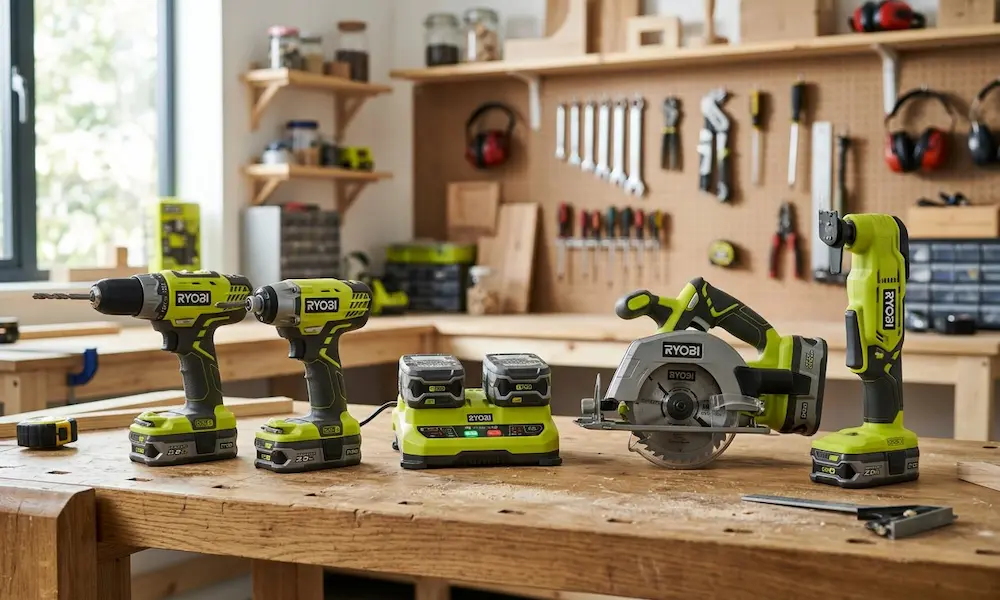
The 18-volt ONE+ battery platform launched in 1996 and it hasn’t abandoned backward compatibility since. That’s nearly 30 years of the same battery connector design. A drill you bought in 1999 still accepts a brand-new 2025 battery.
Right now, the ONE+ system supports over 300 unique tools and 490 total products. Once you own the batteries and charger, adding a miter saw, a handheld vacuum, or a nail gun means you only pay for the tool itself — no extra battery required.
Compare that to Milwaukee, which runs two separate battery platforms — the M12 and M18 — each requiring their own chargers and battery packs. Ryobi’s single-battery philosophy keeps your toolbox (and your budget) tidy.
The Four Generations of Ryobi Batteries
Not all Ryobi batteries are the same. Here’s how they stack up:
| Battery Generation | Technology | Key Benefit |
|---|---|---|
| Legacy NiCd | Nickel-Cadmium chemistry | Original platform standard |
| Standard Lithium | Lithium-ion; compact design | No memory effect; lighter weight |
| High Performance (HP) | Extra communication contacts | Enhanced power for brushless tools |
| Edge (2024/2025) | Tabless lithium cell technology | Maximum current; cooler operation |
The newest Edge batteries use tabless cell technology — a design that removes the narrow tab connecting electrodes to terminals in traditional cells. That tab creates a bottleneck for current flow and generates heat. Remove the bottleneck, and you get more power delivered faster with less heat buildup.
The High Performance batteries also feature extra contact points that communicate directly with brushless tools. When your saw hits resistance in dense wood, the battery gets a signal to push more power. In real-world testing, brushless circular saws that bogged down on standard batteries maintained full RPM with HP or Edge batteries.
Brushed vs. Brushless Ryobi Tools: Which Should You Buy?
This is where most buyers get confused. Ryobi sells both brushed and brushless tools, and the price difference can be significant.
Brushed Motors: Good Enough for Most Homeowners
Brushed motors use carbon blocks that physically press against a rotating commutator to transfer electricity. That friction creates heat and eventually wears down the brushes — meaning the motor can fail if you don’t replace them. They also run at about 70–75% efficiency.
But here’s the thing: brushed motors easily handle a thousand hours of use. If you’re drilling a few holes every weekend, you won’t hit that limit in a decade. Brushed tools cost less to manufacture, which means lower prices for you.
Brushless Motors: Worth It for Heavy Projects
Brushless motors replace the physical brushes with electronic circuitry and magnets. No friction means:
- 85–90% efficiency vs. 70–75% for brushed
- 30–50% more runtime per battery charge
- Automatic power adjustment based on resistance
- Longer overall lifespan since there’s nothing to wear out mechanically
A brushless impact driver senses how much torque a screw needs and delivers exactly that amount. That precision protects your fasteners, your workpiece, and your battery life.
Bottom line: If you’re hanging a few pictures or assembling furniture, a brushed drill works great. If you’re doing a bathroom remodel or building a deck, go brushless.
What Are Ryobi Tools Made Of?
This is where Ryobi takes the most criticism — and where some of that criticism is fair.
Professional tools from DeWalt and Milwaukee often feature all-metal gearboxes and magnesium housings designed for daily jobsite abuse. Ryobi uses high-strength polymers for outer shells and some internal components to reduce weight and cost.
Modern engineering plastics handle home-use stress just fine. But Ryobi has been increasing metal use in critical areas for the High Performance line. The PBLHM101 HP Hammer Drill features an all-metal ratcheting chuck and two-speed metal gearbox. The Gen 2 HP Circular Saw replaced plastic bevel adjustments with metal components for better accuracy over time.
So the newer, pricier Ryobi tools are genuinely better built than older budget models.
The Best Ryobi Tools Right Now (2025 Standouts)
Gen 2 ONE+ HP 7-1/4″ Circular Saw
The Gen 2 circular saw is a big step up from its predecessor. It spins up faster, cuts smoother, and includes a rafter hook and improved dust port compatible with standard shop vacs. Paired with an Edge battery, it cuts through 2×12 lumber without bogging — performance that used to require a corded saw.
AirStrike Nailers
The AirStrike series remains one of Ryobi’s best innovations. These nailers use an internal sealed air cylinder instead of fuel cells or a compressor. The 2025 updates to the 18-gauge brad nailer and 16-gauge finish nailer improved jam reduction and nail-depth consistency.
1/2″ High Torque Impact Wrench (P262)
This is a legitimate automotive repair tool. It delivers 600 ft-lbs of nut-busting torque — enough for lug nuts, suspension bolts, and heavy fastening jobs. At the Ryobi price point, it’s hard to argue against.
Specialty Cutting Tools
| Tool | Model | Key Spec | Best Use |
|---|---|---|---|
| One-Handed Reciprocating Saw | PCL510 | 3,000 SPM | Demolition; pruning; tight spaces |
| 4-1/2″ Circular Saw | PCL400 | 300 cuts/charge | Trim work; light construction |
| Cable Stapler | PCL336B | Insulated cable protection | Electrical and data cable runs |
Ryobi vs. DeWalt vs. Milwaukee: The Real Comparison
Let’s not dance around it — these brands serve different people.
| Brand | Primary User | Battery System | Relative Cost |
|---|---|---|---|
| Ryobi | Homeowners / DIYers | 18V ONE+ (one platform) | Lowest ($) |
| DeWalt | Professional Contractors | 20V Max / 60V FlexVolt | Mid to High ($$) |
| Milwaukee | Industrial Trades | 12V M12 / 18V M18 | High ($$$) |
DeWalt dominates construction sites with rugged, high-duty-cycle tools. Milwaukee leads in absolute torque and trade-specific tools for electricians and plumbers. Neither brand makes sense for someone fixing a fence on Saturday.
For homeowners, Ryobi wins on value per dollar — and sometimes wins outright on performance at prices that aren’t even close.
Outdoor Power: The 40V and 80V Systems
When 18 volts isn’t enough, Ryobi has separate platforms for heavy yard work.
The 40V HP 21-inch Self-Propelled AWD Mower (RY40HPLM03K2) handles lawns up to 3/4 acre and competes with a 196cc gas engine in thick, damp conditions. Its Cross-Cut dual-blade system mulches clippings finely for better lawn health.
Compared to EGO — generally considered the electric mower leader — Ryobi offers better value and more intuitive controls. One valid knock: Ryobi 40V batteries can overheat during extended high-demand use and need cooling time before recharging. EGO’s fan-cooled charger handles this better.
For bigger properties, Ryobi’s 80V Zero-Turn Riding Mower offers up to 2.5 hours of runtime and connects to a mobile app for battery monitoring, speed adjustment, and maintenance alerts.
The USB Lithium 4V System: Tools for Everything Else
In 2022, Ryobi launched a 4-volt USB Lithium platform for small, portable tasks. The battery charges via USB-C — the same cable as your phone. By late 2024, the lineup had grown to over 18 tools.
| USB Lithium Tool | Primary Use | Standout Feature |
|---|---|---|
| Power Cutter | Packages; leather; fabric | Replaceable self-sharpening blade |
| Rotary Tool | Engraving; sanding; polishing | Fits standard hobby accessories |
| Power Scrubber | Tile; appliances; automotive | Interchangeable heads; water resistant |
| Pruning Shears | Garden trimming | 450 cuts per charge |
It’s perfect for apartment dwellers or anyone who doesn’t need full-power tools for every task.
Warranty and What Happens When Things Break
Most Ryobi 18V tools come with a 3-year limited warranty. In Australia and New Zealand, registering within 30 days extends that to 6 years total.
The warranty covers manufacturing defects — not misuse or normal wear. Professional use of consumer-grade tools voids it.
For repairs, Ryobi’s Rapid Repair service provides a prepaid FedEx label for eligible products. Ship it in, get it back within 14 business days. It’s convenient when it works. Consumer reviews are mixed — some report frustrations with locating serial numbers and limited customer support access.
One practical tip: if a battery dies within 90 days of purchase, many Home Depot locations will exchange it in-store without shipping anything.
Lithium-ion batteries typically last 2–4 years with regular use. Store them in cool, dry places and avoid full discharges to stretch that lifespan. When they finally die, drop them in the battery recycling kiosk at Home Depot entrances — don’t toss them in the trash.
What’s Coming in 2026
Ryobi’s 2026 lineup includes some genuinely useful additions:
- 150W and 200W Power Sources — turn your 18V battery into a portable power bank for laptops and small appliances
- Solar panel compatibility — the 200W model recharges via Ryobi’s new portable solar panels for off-grid use
- 35-foot drain auger — for residential plumbing blockages
- SWIFTClean carpet washers and power spray mops — cordless deep cleaning with tool batteries
- 40V HP brushless blowers at 850 CFM — rivaling gas-powered backpack blowers
The solar + power source combination is especially interesting. It turns your existing tool batteries into a legitimate off-grid or emergency power system.
So, Are Ryobi Tools Any Good? Here’s the Verdict
For homeowners and serious DIYers, Ryobi tools are genuinely good — not just “good for the price.” The ONE+ platform’s 30-year backward compatibility is unmatched. The High Performance and Edge lines deliver real performance that bridges the gap to professional tools. And the value per dollar beats every major competitor for non-commercial use.
They’re not the right call for a contractor running tools 40 hours a week. But if your “workshop” is a garage and your busiest tool day is a weekend renovation, Ryobi tools aren’t a compromise. They’re the smart choice.