Thinking about investing in Cornwell tools but not sure if they’re worth it? You’re in the right place. This post breaks down the real quality, the product lines, the warranty, and how they stack up against the competition — so you can decide with confidence. Stick around to the end, because the answer might surprise you.
The Short Answer: Yes, But It Depends on the Line
Are Cornwell tools good? For the most part, yes — especially the USA-made hardline. Professional mechanics regularly put them in the same conversation as Snap-on, often noting they deliver about 95% of the performance at a fraction of the price.
But here’s the thing — not every Cornwell tool comes from the same place. And that distinction matters a lot.
A 100-Year Head Start: Why History Matters Here
Cornwell started in 1919 in Cuyahoga Falls, Ohio. Founder Eugene Cornwell was a master blacksmith who built hand-forged chisels, punches, and pry bars that outlasted anything mass-produced at the time.
That heritage isn’t just a marketing story. It shaped how the company approaches metallurgy even today. By the 1920s, they were advertising nationally in publications like Popular Mechanics and building sockets and wrenches for the automotive and aviation industries.
The real game-changer? In 1968, Cornwell shifted to a direct-to-technician mobile dealer model — putting their tools directly in front of the pros who use them daily. That move still defines how they operate.
Where Are Cornwell Tools Made?
This is the most common question — and it’s a fair one.
Cornwell is one of only two major tool truck companies that manufactures its own hand tools in the USA, alongside Snap-on. That’s a short list.
Here’s how the domestic manufacturing network breaks down:
| Facility Location | Role | Primary Output |
|---|---|---|
| Albion, Pennsylvania | Heavy Forging and Foundry | Raw tool forgings |
| Mogadore, Ohio | Precision Machining and Finishing | Ratchets, sockets, wrenches |
| Van Wert, Ohio | Storage Manufacturing (Kennedy Mfg.) | Tool boxes, service carts |
| Wadsworth, Ohio | Corporate HQ and Logistics | Distribution and management |
| Clearfield, Utah | Regional Distribution | Western US fulfillment |
The process starts with American-sourced alloy steel. It’s forged at the Albion plant, then shipped to Mogadore for machining, heat-treating, and finishing. That full domestic pipeline gives them tighter quality control than brands relying on overseas foundries.
Two Lines, Two Very Different Products
Here’s where a lot of buyers get tripped up. Cornwell makes two distinct product tiers, and they’re not the same thing.
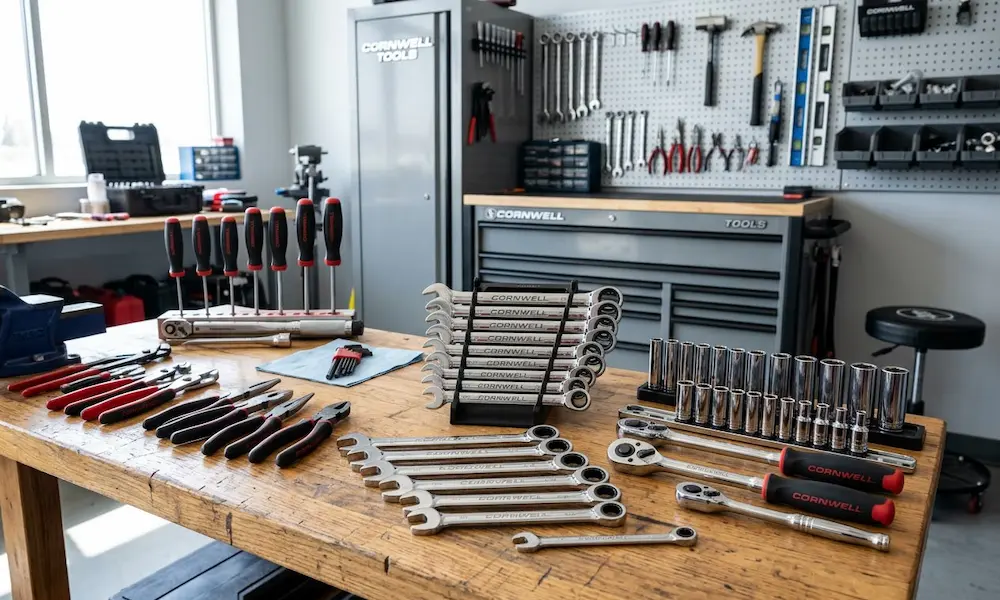
The USA Hardline (“Hard Iron”) is the flagship. These are the ratchets, sockets, and wrenches forged in Ohio and Pennsylvania from 100% American steel. Professionals call them “overbuilt” — and that’s a compliment.
The Blue Power Line is the value tier. These tools come primarily from Taiwan and are often rebranded from solid manufacturers like Sunex. They’re better than anything you’d find at a big-box retailer, but they don’t carry the same metallurgical pedigree as the domestic line.
| Category | Cornwell USA Hardline | Blue Power Line |
|---|---|---|
| Country of Origin | USA (Ohio and Pennsylvania) | Taiwan and global sourcing |
| Manufacturing Method | Hand-forged / precision machined | Industrial drop-forging |
| Primary Audience | Master technicians; heavy-duty use | Apprentices; budget-conscious pros |
| Price Tier | Premium professional | Mid-range professional |
The takeaway? The USA-made sockets and ratchets are the brand’s strongest products. Blue Power works well for specialty tools you reach for less often. Just check the label before you buy if domestic manufacturing matters to you.
Ratchets, Sockets, and Wrenches: How Do They Actually Perform?
Let’s get specific — because this is where Cornwell earns its reputation.
The JR72 Ratchet
The JR72 3/8-inch fine-tooth ratchet is probably the most talked-about tool in their lineup. It features a 72-tooth mechanism with a 5-degree swing arc. That tight arc means you can work in tight engine bays where a standard ratchet won’t budge.
Techs consistently highlight the feedback — it clicks with a crisp, confident engagement that some ultra-fine-tooth competitors can’t match. The head stays slim enough for clearance but the forged body doesn’t flex under load.
The Torque Dispersing System (TDS)
Cornwell’s TDS technology shifts contact pressure from the corners of a fastener to its flat surfaces. That means fewer rounded bolts — which matters a lot when you’re dealing with rusty or previously damaged hardware.
Professional mechanics specifically call out Cornwell’s USA-made impact sockets as a highlight, noting the beveled bottoms make fastener engagement easier in blind spots — sometimes better than Snap-on in real-world conditions.
| Tool Category | Key Technical Features | Professional Advantage |
|---|---|---|
| Ratchets (JR Series) | 72-tooth; 5-degree swing arc | Works in tight spaces; easy to clean and lube |
| Sockets (TDS) | Flat-load geometry | Reduces fastener rounding |
| Wrenches (Classic) | Thick-beam; high-strength box ends | Strong under high torque |
| Impact Sockets | Beveled bottoms; specific heat-treatment | Easier blind engagement |
| Flex-Head Tools | Adjustable tension mechanisms | Better reach in non-linear spaces |
Tool Storage: The Kennedy Acquisition Changed Everything
In 2016, Cornwell acquired Kennedy Manufacturing — a Van Wert, Ohio company with over a century of industrial storage experience. That move gave Cornwell a fully domestic tool storage line that can compete with anyone in the Big Four.
The Platinum and Pro Series cabinets are built heavy. Techs working in demanding environments like heavy-duty truck shops or machining facilities consistently describe them as more “industrial” than the competition. The ARCA line adds a customization angle, with exclusive Sherwin-Williams color options most brands can’t touch at a similar price.
| Storage Product Line | Key Feature |
|---|---|
| Platinum™ Series | Flagship high-capacity storage |
| Pro Series® | Professional cabinets and drawer carts |
| Kennedy® Brand | Legacy machinist and industrial storage |
| ARCA™ Series | Custom colors and configurations |
| Power Carts | Integrated cordless tool charging |
What About Power Tools and Diagnostics?
Cornwell doesn’t make every tool in-house — and they’re smart about that. Instead of building second-rate versions of everything, they partner with category leaders:
- Milwaukee Tool handles cordless power tools
- Ingersoll Rand supplies pneumatic impacts (often the Titanium series)
- Autel provides diagnostic scanners, including advanced tablets like the MaxiSys Ultra
The TrueSmoke Diagnostic Leak/EVAP Smoke Machine is a notable exception — it’s USA-manufactured using OEM-approved technology and gets solid marks from techs hunting stubborn vacuum leaks.
The Warranty: Lifetime Coverage With a Catch
Cornwell offers a lifetime manufacturer’s warranty on hand tools covering defects in materials and workmanship. In most cases, your local dealer handles the exchange — fast and hassle-free.
But the warranty isn’t without limits:
- Abuse or misuse voids coverage — using an air ratchet as a breaker bar, for example
- Wear items like screwdriver bits and certain power tool components may not qualify
- The “dealerless gap” is a real issue — if your local dealer retires or moves on, warranty service gets more complicated
If you lose your dealer, you’ll need to go through corporate directly:
- Phone: 800-321-8356
- Email: [email protected]
- HQ: 667 Seville Road, Wadsworth, OH
Cornwell holds an A- rating from the Better Business Bureau, and their century-long history in Ohio suggests they’re not going anywhere. But the dealer relationship truly makes or breaks the warranty experience.
How Do They Stack Up Against Snap-on, Matco, and Mac Tools?
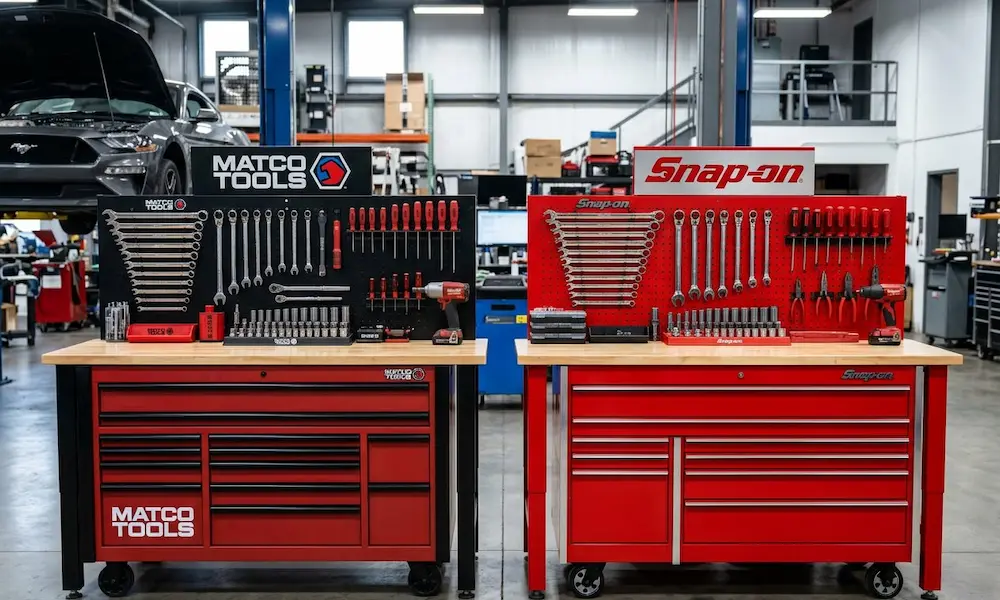
Honestly? Cornwell sits comfortably in the professional tier alongside Snap-on and Matco — but at a lower cost.
Here’s the realistic breakdown from working mechanics:
- Snap-on wins on finish, refinement, and brand prestige
- Cornwell delivers comparable real-world performance at roughly two-thirds the price
- Cornwell’s Hard Iron outlasts plenty of competing tools and often outlasts the techs using them
- Cornwell’s dealer network is smaller, which can be an issue if you’re in a remote area or relocate
The thicker wrench profiles get occasional criticism from techs who prefer slimmer European-style designs. And the diagnostic ecosystem isn’t as fully integrated as brands that build their own scanners. But for core hand tools — ratchets, sockets, wrenches — the professional consensus is clear: Cornwell Hard Iron is the real deal.
Many veteran mechanics mix their boxes — Cornwell for primary drive tools and storage, Snap-on for specialized precision items like high-end torque wrenches. That says a lot about where the brand sits in the professional world.
So, Are Cornwell Tools Worth It?
For professional technicians who want durable, USA-made hand tools without paying Snap-on prices, Cornwell is one of the best value propositions in the market.
Stick with the Hard Iron domestic line for your everyday drivers. Use Blue Power for specialty tools you pick up less often. Get to know your local dealer — because the service relationship is half the value. And if you’re in an area with solid dealer coverage, you’re getting tools built to last decades, backed by a company that’s been doing this since 1919.
That’s not a bad deal.