Picking the wrong battery for your Silverado can leave you stranded, fry your electronics, or void your warranty. This guide covers every generation, every engine, and every battery size you need — so you get it right the first time.
Why Battery Size Actually Matters for Your Silverado
Grabbing any battery that “looks about right” is a mistake you’ll regret. A battery that’s too small won’t anchor properly in the tray, causing vibration damage. One that’s too large can cause the positive terminal to arc against the hood or frame — creating a dangerous short circuit and fire hazard.
Beyond safety, today’s Silverado runs dozens of electronic modules, advanced driver assistance systems, and auto start-stop technology. The battery isn’t just a starter anymore — it’s a full-time power stabilizer.
Getting the right size means matching three things:
- BCI group size (physical dimensions)
- Cold Cranking Amps (starting power)
- Battery chemistry (AGM vs. standard flooded)
Quick Reference: What Size Battery for Chevy Silverado 1500 by Year
Here’s the fast answer by generation. Scroll down for engine-specific details.
| Generation | Years | Primary Battery Size | Chemistry Required |
|---|---|---|---|
| GMT800 | 1999–2006 | Group 75 or Group 78 | Standard Flooded OK |
| GMT900 | 2007–2013 | Group 48 (H6) | Standard Flooded or AGM |
| K2XX | 2014–2018 | Group 48 (H6) or 94R (H7) | AGM Recommended |
| T1XX | 2019–2026 | Group 94R (H7) or Group 49 (H8) | AGM Mandatory |
BCI Group Size Dimensions: The Physical Specs Explained
The Battery Council International standardizes battery dimensions across the industry. General Motors has used several group sizes across Silverado generations, shifting toward European DIN standards in newer models to source parts globally.
Here’s how those sizes break down physically:
| BCI Group Size | DIN Equivalent | Length (in) | Width (in) | Height (in) | Silverado Era |
|---|---|---|---|---|---|
| Group 75 | N/A | 9.06 | 7.06 | 7.31 | 1999–2006 |
| Group 78 | N/A | 10.25 | 7.06 | 7.31 | 1999–2013 |
| Group 48 | H6 / L3 | 11.00 | 6.93 | 7.50 | 2007–2026 |
| Group 94R | H7 / L4 | 12.43 | 6.93 | 7.50 | 2014–2026 |
| Group 49 | H8 / L5 | 13.93 | 6.93 | 7.50 | 2019–2026 (Diesel) |
Notice that Groups 48, 94R, and 49 share the same width and height. Only the length increases. That’s intentional — GM uses standardized mounting hardware across assembly lines, swapping battery lengths based on power demands.
The Three Numbers You Must Understand Before Buying
Cold Cranking Amps (CCA)
CCA measures how many amps a fully charged battery delivers at 0°F for 30 seconds while staying above 7.2 volts. This is the number that keeps your truck starting on a brutal January morning.
Cold does two nasty things simultaneously — your engine oil thickens up and resists turning, while your battery’s electrochemical reactions slow down and produce less power. Both happen at once. That’s why matching or exceeding your factory CCA rating isn’t optional.
Here’s what different Silverado engines need:
- Base V6 engines: 600–650 CCA
- 5.3L V8: 750–850 CCA
- 6.2L V8: 850 CCA (maximum available)
- 3.0L Duramax diesel: 900–950 CCA
Installing a battery with a higher CCA than factory spec is completely safe and often smart for northern climates. Going lower risks a no-start situation in cold weather.
Reserve Capacity (RC)
Reserve capacity tells you how many minutes a fully charged battery can deliver 25 amps before dropping to 10.5 volts. In older trucks, this mainly determined how long you could leave your headlights on. In a modern Silverado, it’s arguably more critical than CCA.
Here’s why: modern Silverados run heated seats, massive infotainment screens, radar sensors, and electric power steering every time the auto start-stop system kills the engine at a red light. The alternator stops spinning. The battery carries everything alone. Premium AGM batteries hitting 120–140 minutes of reserve capacity are built precisely for this.
Cranking Amps (CA)
Cranking Amps — sometimes called Marine Cranking Amps — uses the same test as CCA but at 32°F instead of 0°F. Because it’s warmer, the number is always higher. A battery rated at 800 CCA might show 1,000 CA.
Don’t get fooled by the bigger number. Always compare batteries using CCA, not CA.
Battery Chemistry: This Choice Can Kill Your Truck’s Electronics
Standard Flooded Lead-Acid
The old-school option. Lead plates sit in liquid sulfuric acid. They’re cheap and widely available. However, liquid sloshes around under rough terrain, the electrolyte evaporates in summer heat, and deep discharges cause irreversible sulfation damage.
Standard flooded batteries are only suitable for 1999–2013 Silverados that lack auto start-stop and don’t carry heavy electronic loads. Use one in a 2014+ truck and it’ll fail early — sometimes within months.
Absorbed Glass Mat (AGM)
AGM is the gold standard for any modern Silverado. The electrolyte is permanently absorbed into ultra-fine fiberglass mats packed tightly between the plates. The benefits are significant:
- Vibration-resistant — no liquid sloshing means truck use won’t crack the internal plates
- Completely sealed — no leaks, no maintenance, no adding water
- Charges up to twice as fast as standard flooded batteries
- Survives deep cycling from auto start-stop systems without degrading
Here’s the critical warning: if your Silverado came from the factory with AGM technology, do not replace it with a standard flooded battery. The vehicle’s intelligent charging system is calibrated to aggressively cycle the AGM chemistry. A standard flooded battery will overheat and fail quickly.
Lithium Iron Phosphate (LiFePO4)
The premium choice for specialized builds. A Group 94R lithium iron phosphate battery weighs under 20 pounds versus 45–50 pounds for a standard unit. That’s a meaningful weight reduction for performance-focused trucks.
These batteries also include internal battery management systems that prevent overcharge, deep discharge, and short circuits. Some premium models even have wireless jump-start capability through a smartphone app — no jumper cables needed.
The tradeoff? Prices range from $850 to $900. These batteries target a niche: performance builds, overlanding setups, and weight-obsessed street trucks.
Year-by-Year Battery Breakdown
1999–2006 (GMT800): Side-Terminal Era
The first-gen Silverado ran the 4.3L V6, 4.8L V8, 5.3L V8, and 6.0L V8. Electrical demands were modest — analog gauges, halogen lights, basic ignition. The Group 75 and Group 78 side-terminal batteries handled everything comfortably.
Side-terminal batteries use threaded receptacles in the side of the casing rather than top posts. They look clean but have a known weakness: over-tightening the bolt strips the shallow threads, causing intermittent power failures and starting issues.
Practical fix: Aftermarket dual-terminal Group 34/78 batteries solve this problem. They include both side terminals for the factory harness and standard top posts for winches, jumper cables, and auxiliary accessories.
2007–2013 (GMT900): The Transition to DIN Sizes
The GMT900 platform brought Active Fuel Management, stability control, touchscreen navigation, and early Bluetooth systems. Standard Group 78 side-terminal batteries couldn’t keep pace with the rising electrical demands.
GM switched most of this generation to the Group 48 (H6) top-post battery. Top-post designs provide far more secure connections over rough terrain and eliminate the thread-stripping problems entirely. CCA requirements typically run 615–760 CCA depending on engine and trim level.
A few base V6 and 4.8L V8 models still used the Group 78. Some lower-trim V6 trucks accepted the shorter Group 47 (H5), though Group 48 remains the dominant standard for this generation.
2014–2018 (K2XX): AGM Becomes Essential
The K2XX generation brought MyLink infotainment, heated and ventilated seats, electric power steering, lane departure warning, and multi-camera trailering systems. That’s a lot of continuous electrical load.
Two batteries dominate this era: the Group 48 (H6) and the Group 94R (H7). Trim level and engine size determine which one your truck needs. High-trim LTZ and High Country trucks with 5.3L or 6.2L V8s typically need the larger 94R, which delivers 800–850 CCA and reserve capacity exceeding 140 minutes.
AGM is strongly recommended for this generation. If you have a 2016–2018 eAssist mild-hybrid model — a rare California-market truck with a 115-volt lithium-ion pack under the center console — treat the high-voltage system with extreme caution. GM service protocols require waiting five minutes after ignition-off before working near any bright orange cabling.
2019–2026 (T1XX): AGM Is Non-Negotiable
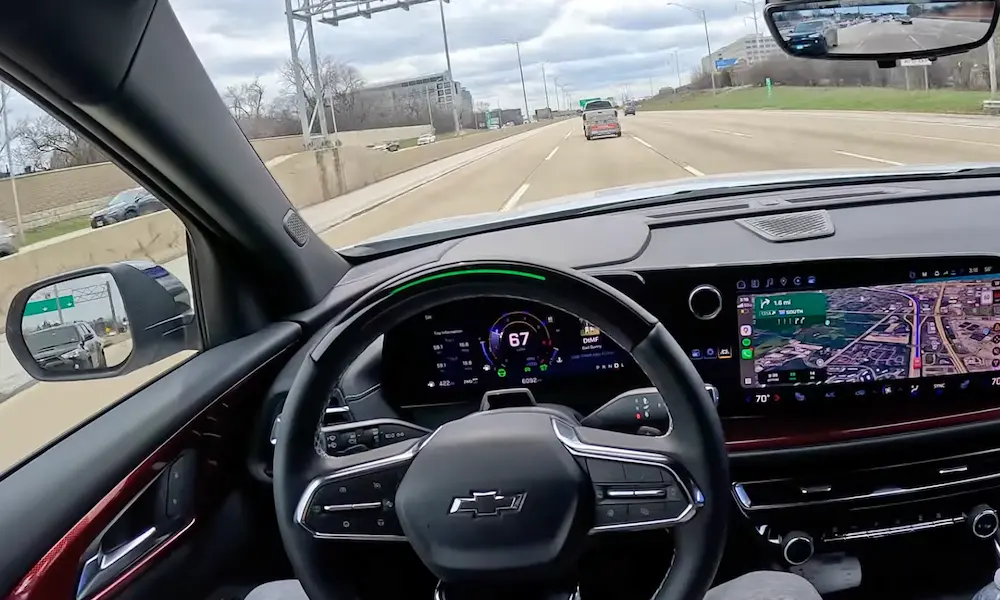
The current generation is the most electronically complex Silverado ever built. Features include 13.4-inch infotainment screens, 14-camera trailering systems, 120-volt bed outlets, and Super Cruise hands-free driving assistance.
Auto start-stop technology is standard across the powertrain lineup. In real-world city driving, the engine may cycle off and on dozens of times per commute. Every restart draws hundreds of amps from the battery. While the engine is off, the battery alone powers the AC blower, screen, LED lights, heated seats, and all radar sensors.
This is exactly why standard flooded batteries are completely obsolete in T1XX trucks. AGM is mandatory.
Many of these trucks also run a secondary auxiliary battery alongside the main unit. When the starter motor fires and causes a brief voltage drop, the auxiliary battery isolates itself to keep the infotainment screen and electronic control units running smoothly. If you’re replacing the primary battery, have a technician test the auxiliary unit too — a weak auxiliary battery will degrade the primary faster.
Engine-Specific Battery Sizes: 2019–2026
| Engine | Group Size | Min. CCA | Chemistry |
|---|---|---|---|
| 2.7L Turbo 4-Cyl (TurboMax) | 94R (H7) or 48 (H6) | 730–760 CCA | AGM |
| 5.3L EcoTec3 V8 | 94R (H7) | 800–850 CCA | AGM |
| 6.2L EcoTec3 V8 | 94R (H7) | 850 CCA (max) | AGM |
| 3.0L Duramax Diesel | Group 49 (H8) | 900–950 CCA | AGM |
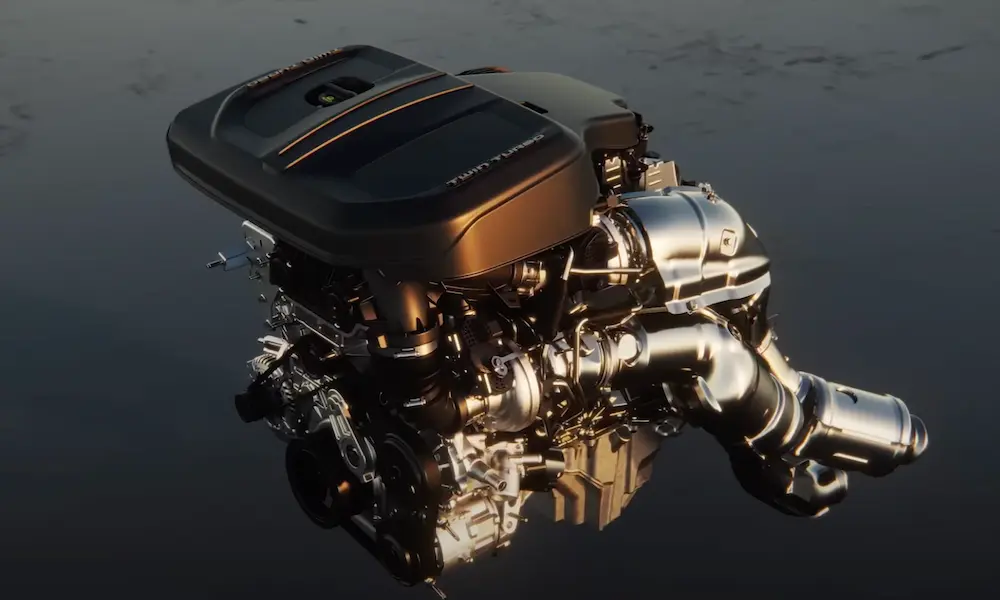
The 3.0L Duramax deserves special attention. Diesel engines compress air until it ignites spontaneously — no spark plugs involved. That requires massive compression ratios and enormous starting torque. Add electric glow plugs that pre-heat the combustion chambers before the starter even engages, and you’re drawing serious current before the engine turns over once. The oversized Group 49 at 900–950 CCA exists specifically to handle this.
Running Accessories and Dual Battery Systems
If you run a winch, LED light bars, a power inverter, or a 12-volt camping refrigerator from your Silverado, a single starting battery won’t survive it. Starting batteries deliver a burst of current for 3 seconds then recharge immediately. Deep discharging them at a campsite causes sulfation that permanently destroys their capacity.
The smart solution is a dual battery isolator system. Here’s how it works:
- Engine running: The isolator links both batteries. The alternator charges both simultaneously. High-output diesel and heavy-duty Silverado alternators can generate up to 220 amps — plenty for two batteries.
- Engine off: The isolator electronically severs the connection. You drain the secondary battery running your campsite gear. The primary starting battery stays fully charged and isolated.
The result: unlimited campsite power and a guaranteed cold start every morning.
For the secondary battery in this setup, use a true deep-cycle AGM or lithium iron phosphate battery. They’re built to survive hundreds of deep discharge cycles — standard starting batteries aren’t.
What to Expect on Price and Warranty
Not all batteries are created equal, and neither are their price tags. Here’s a realistic breakdown:
- Standard flooded (Silver/Gold tier): $180–$220. 24–36 month warranty. Fine for 1999–2013 models.
- Premium AGM (Platinum/Performance tier): $260–$400. 36–48 month warranty. Required for 2014–2026 with start-stop. Brands like Optima YellowTop, Odyssey Extreme, and X2Power lead this tier.
- Lithium iron phosphate: $850–$900. For specialized builds only.
Every retailer charges a core deposit when you buy a battery — typically $12–$22. Return your old battery and you get it back in full. It’s the industry’s way of ensuring proper recycling of lead and sulfuric acid.
Installing Your New Battery: Don’t Skip These Steps
Swapping a battery in a 1999–2006 Silverado is straightforward — two bolts, lift out, drop in. Modern trucks are different.
On 2014–2026 models, the main power distribution fuse block mounts directly on top of the battery and bolts to the positive terminal. You need to carefully unbolt and unclip this block before removing the battery. If the replacement battery’s top surface doesn’t match the exact factory specification, the fuse block won’t seat properly — and you’ll have loose connections causing intermittent failures across the entire truck.
Safety non-negotiables:
- Work in a well-ventilated space — flooded batteries vent explosive hydrogen gas during charging
- Wear safety glasses and insulated gloves
- Never lay a metal tool across both terminals simultaneously — you’ll create a dead short drawing thousands of amps instantly
Prevent the electronic headaches: Completely disconnecting the battery on a modern Silverado wipes the powertrain control module’s learned parameters, transmission adaptive data, and radio presets. The truck may idle rough for several miles after the replacement. Power windows may lose auto-up functionality until you recalibrate them.
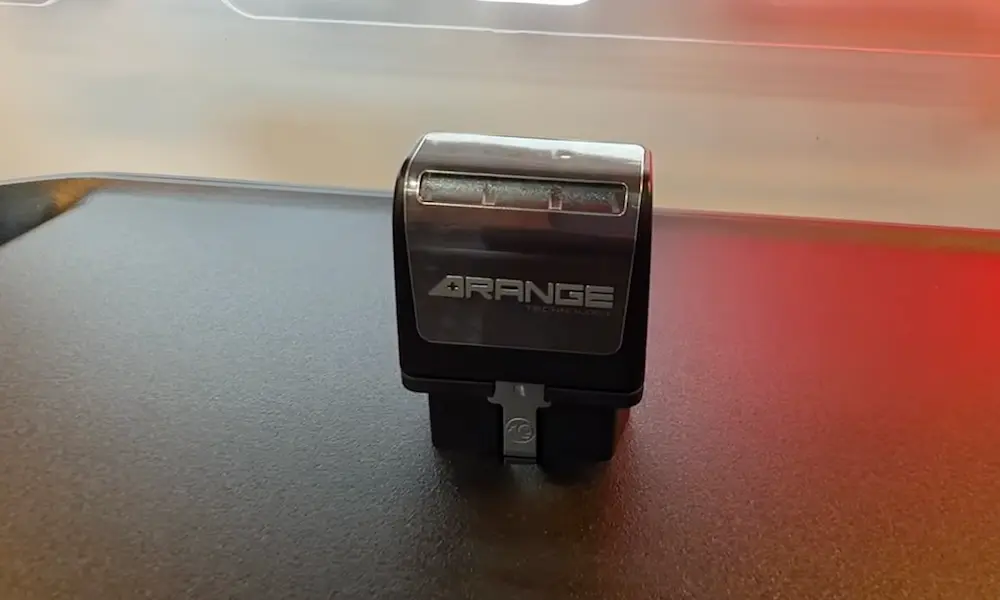
Use an OBD-II memory saver device before disconnecting. It plugs into your dash diagnostic port, trickles voltage from an external power source, and keeps all module memories intact while you swap the battery. It’s a $30 tool that saves you a lot of frustration.
Making the Right Call for Your Truck
Here’s the short version:
1999–2006 Silverado: Group 75 or Group 78 side-terminal. Standard flooded is fine. Consider a dual-terminal aftermarket battery if you run accessories.
2007–2013 Silverado: Group 48 (H6) top-post for most engines. Group 78 on some early base models. AGM recommended but not mandatory.
2014–2018 Silverado: Group 48 (H6) or Group 94R (H7) depending on engine and trim. AGM strongly recommended. Mandatory on any trim with auto start-stop.
2019–2026 Silverado: Group 94R (H7) for gas engines. Group 49 (H8) for the 3.0L Duramax diesel. AGM is not optional — it’s a requirement. Check the auxiliary battery when replacing the primary.
Match your group size exactly, hit or exceed your factory CCA rating, and choose the right chemistry for your generation. Your Silverado will start reliably, your electronics will run without issues, and you won’t be standing in a parking lot in February wondering what went wrong.