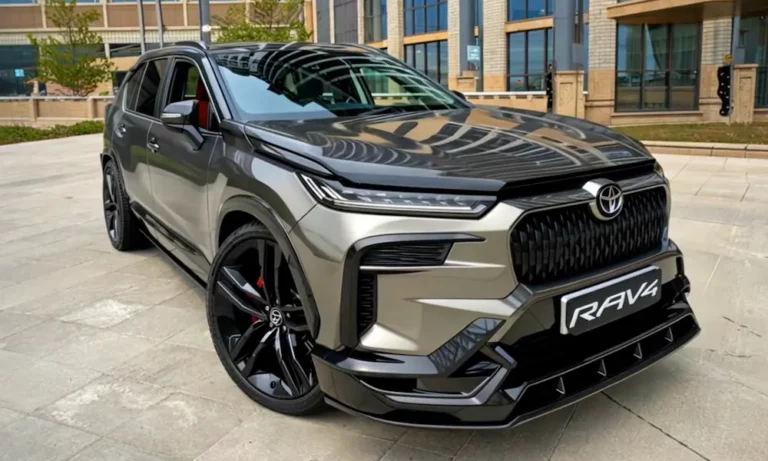
Ever wondered where your Toyota RAV4 comes from? That compact SUV parked in your driveway has quite the passport. The RAV4 has risen to become America’s best-selling non-truck vehicle, with production facilities spanning multiple continents to keep up with incredible demand.
Toyota strategically manufactures the RAV4 in different locations worldwide to better serve regional markets, minimize shipping costs, and build resilience against supply chain disruptions. Let’s explore exactly where these popular crossovers are born and how to tell which factory built yours.
Toyota RAV4 Manufacturing Locations
The RAV4 is manufactured across multiple countries, with each facility specializing in particular variants and serving specific markets.
North American Production Plants
North America represents the largest production hub for RAV4s, particularly for vehicles sold in the United States and Canada.
Canada: Woodstock, Ontario
The Toyota Motor Manufacturing Canada (TMMC) facility in Woodstock stands as a cornerstone of RAV4 production. Since 2008, this plant has focused exclusively on RAV4 assembly, handling both conventional gasoline and hybrid variants. The facility incorporates Toyota’s famous production system with cutting-edge automation – implementing over 4,600 robotic spot welds per vehicle.
With an annual capacity of around 200,000 units, the Woodstock plant employs Toyota’s New Global Architecture (TNGA) platform, which enhances manufacturing flexibility while improving vehicle performance. If you own a North American RAV4, there’s a good chance it was built here.
United States: Georgetown, Kentucky
Toyota’s Georgetown facility joined the RAV4 production lineup more recently. This plant began manufacturing hybrid RAV4 models in 2019 and now produces over two-thirds of the hybrid RAV4s sold across North America. With 7,800 employees, this facility helps Toyota meet the growing demand for electrified vehicles in the U.S. market.
Japanese Manufacturing Centers
Japan remains crucial to RAV4 production, particularly for specialized variants and certain export markets.
Takaoka Plant
Located in Toyota City, Aichi Prefecture, the Takaoka Plant produces both gasoline and hybrid RAV4 models. This facility primarily serves Asian markets but also handles specialized variants. The plant employs Toyota’s legendary production system that emphasizes quality and efficiency.
In March 2025, a notable disruption occurred when an explosion at Chuo Spring Co., a suspension spring supplier in Toyota City, temporarily halted production at the Takaoka Plant. This affected one of two assembly lines, impacting RAV4 output. However, Toyota’s diversified manufacturing network helped minimize market disruptions.
Nagakusa Plant
Located in Ōbu, Aichi, the Nagakusa Plant specializes in assembling the plug-in hybrid RAV4 Prime. Japan’s advanced hybrid technology infrastructure makes this an ideal location for producing Toyota’s most sophisticated electrified RAV4 variant.
Other Global Production Facilities
China: Changchun Factory
Toyota’s partnership with FAW Group produces RAV4s for the Chinese market at the Changchun facility in Jilin Province. This plant manufactures both gasoline and plug-in hybrid variants, tailored to meet China’s demanding emissions regulations and consumer preferences.
Southeast Asia
Toyota has expanded RAV4 production to Southeast Asia with assembly operations in Indonesia and Malaysia. The Indonesian plant, operational since 2023, produces the sporty GR Sport trim featuring a 2.5-liter plug-in hybrid powertrain. Malaysian production focuses more on conventional gasoline engines to match local market preferences.
How to Identify Where Your RAV4 Was Made
Curious about where your specific RAV4 rolled off the assembly line? The answer lies in your vehicle’s VIN (Vehicle Identification Number).
Decoding Your RAV4’s VIN
The first character of your RAV4’s 17-digit VIN reveals its country of origin:
- J: Made in Japan (Takaoka or Nagakusa plants)
- 2: Manufactured in Canada (Woodstock facility)
- 1, 4, or 5: Built in the United States (Georgetown plant)
- L: Produced in China (Changchun factory)
This identification system ensures traceability throughout the vehicle’s life. For example, if you own a RAV4 Prime, its VIN will almost certainly start with “J” since these models are exclusively produced in Japan.
Toyota’s Strategic Reasons for Global Manufacturing
Toyota’s decentralized production model for the RAV4 isn’t random – it reflects careful strategic planning to optimize both operations and market responsiveness.
Market Proximity
By manufacturing vehicles closer to where they’ll be sold, Toyota reduces shipping costs and delivery times. North American facilities supply U.S. and Canadian markets, minimizing logistical expenses and avoiding potential import tariffs.
Tax and Tariff Considerations
Local production helps Toyota avoid significant import duties. For instance, manufacturing in China circumvents that country’s 15% import duty on foreign vehicles, making the RAV4 more price-competitive in the world’s largest automotive market.
Regulatory Compliance
Different regions have varying emissions, safety, and fuel economy standards. The Georgetown plant’s focus on hybrid models aligns with U.S. Corporate Average Fuel Economy (CAFE) standards, while Japanese facilities prioritize plug-in hybrids to meet Japan’s ambitious 2030 electrification targets.
Supply Chain Resilience
The 2025 disruption at the Takaoka plant highlighted the importance of Toyota’s diversified manufacturing approach. North American plants source approximately 90% of parts locally, insulating them from overseas supply disruptions. When production paused in Japan, facilities in Canada and Kentucky could continue operating normally, minimizing market impact.
Quality Consistency Across Manufacturing Locations
A common question among RAV4 buyers is whether quality varies depending on where the vehicle was manufactured. Toyota has implemented rigorous systems to ensure consistent quality standards regardless of production location.
Standardized Production System
The Toyota Production System (TPS) is implemented across all facilities worldwide. This system emphasizes:
- Jidoka: Automation with a human touch, where machines detect problems and stop production when issues arise
- Kaizen: Continuous improvement philosophy that empowers workers to identify and implement enhancements
- Standardized processes: Ensuring that assembly procedures are identical regardless of factory location
Global Quality Monitoring
Toyota implements identical quality control protocols across all manufacturing facilities. For example:
- The Woodstock plant’s welding shop employs the same robotic welding standards as Japanese facilities
- Georgetown’s hybrid production line uses identical battery pack testing protocols as those used in Japan
- Final quality inspection processes are standardized globally
A Reddit discussion among RAV4 owners reveals minimal quality differences between production locations, confirming Toyota’s success in maintaining global standards.
Recent Challenges in RAV4 Production
Even the most sophisticated manufacturing networks face challenges. Toyota’s RAV4 production has encountered several significant disruptions in recent years.
Takaoka Plant Explosion (2025)
In March 2025, an explosion at supplier Chuo Spring Co. forced Toyota to halt 40% of Japanese RAV4 production for five days. This affected one assembly line at the Takaoka Plant, impacting RAV4 and Harrier output. However, Toyota’s diversified manufacturing base allowed for rapid recovery, with North American plants compensating for lost production.
Supply Chain Resilience Improvements
Following recent disruptions, Toyota has increased investment in supply chain resilience, including:
- Regionalizing critical component sourcing
- Investing $5 billion in North Carolina battery plants to support future electrification
- Diversifying supplier relationships to avoid single-source vulnerabilities
The Future of RAV4 Manufacturing
As the RAV4 continues to dominate global sales, Toyota is expanding and adapting its production capabilities to meet evolving market demands.
Electrification Focus
Toyota is retooling existing facilities and developing new ones to support increased hybrid and plug-in hybrid RAV4 production:
- Georgetown’s hybrid line capacity is being expanded
- Japanese facilities are increasing RAV4 Prime production
- New battery manufacturing facilities are being established to support electrified models
Technology Integration
Manufacturing facilities are implementing advanced technologies to enhance efficiency and precision:
- Increased automation and robotics
- AI-powered quality monitoring systems
- Digital twin technology for production optimization
Sustainability Initiatives
Toyota is implementing sustainable manufacturing practices across RAV4 production facilities:
- Reduced carbon footprint through renewable energy adoption
- Water conservation and recycling programs
- Zero-waste initiatives at multiple plants
RAV4 Manufacturing by the Numbers
| Production Facility | Location | Annual Capacity | Primary Models | Market Served |
|---|---|---|---|---|
| TMMC Woodstock | Ontario, Canada | 200,000 | Gas, Hybrid | North America |
| Georgetown | Kentucky, USA | 100,000+ | Hybrid | North America |
| Takaoka Plant | Aichi, Japan | 500,000* | Gas, Hybrid | Asia, Global |
| Nagakusa Plant | Ōbu, Japan | 120,000* | RAV4 Prime | Global |
| Changchun | Jilin, China | 160,000* | Gas, PHEV | Chinese market |
*Total plant capacity (includes other Toyota models)
What Your RAV4’s Birthplace Means for You
As a RAV4 owner or potential buyer, understanding manufacturing origins provides practical insights beyond just curiosity.
Recall Implications
Manufacturing location can sometimes determine whether your vehicle is included in specific recalls. For example, a component issue affecting only Japanese-made units would not impact those built in Canada. The National Highway Traffic Safety Administration tracks recalls by VIN, which includes manufacturing location data.
Parts Availability
While Toyota standardizes most components across production facilities, some regional variations exist. Understanding your RAV4’s origin can help service centers identify the exact parts needed for repairs or maintenance.
Resale Value Considerations
Manufacturing origin rarely affects resale values significantly for Toyota vehicles due to their consistent quality standards. The RAV4’s strong reliability reputation tends to transcend production location differences, unlike some other automotive brands where country of manufacture can impact perceived value.
Comparing the Toyota RAV4 to Competitors
The RAV4’s global manufacturing approach gives it certain advantages over competitors like the Honda CR-V:
- More localized production facilities mean shorter supply chains and quicker delivery to dealerships
- Greater manufacturing flexibility allows Toyota to shift production between plants when disruptions occur
- Standardized global quality controls ensure consistent product regardless of origin
This manufacturing strategy has contributed to the RAV4 becoming America’s best-selling non-truck vehicle, dethroning the Honda CR-V and maintaining a significant sales advantage.
The RAV4’s Global Production Evolution
The RAV4’s manufacturing footprint has evolved significantly since the model’s introduction in 1994. Initially produced primarily in Japan, production has steadily expanded globally to match the vehicle’s increasing popularity:
- 1994: Production begins in Japan
- 2008: Canadian production commences in Woodstock
- 2019: U.S. production begins in Georgetown (hybrids)
- 2023: Indonesian production added for Southeast Asian markets
This evolution represents Toyota’s responsive approach to meeting global demand while maintaining the quality standards that have made the RAV4 a worldwide success.
The Toyota RAV4’s sophisticated global manufacturing network exemplifies modern automotive production at its best – balancing efficiency, quality, and resilience to deliver consistently excellent vehicles regardless of where they’re assembled.