Looking for cheap tires and stumbled across Summit? You’re probably wondering who actually makes these budget-friendly tires and whether they’re worth your money. Here’s what you need to know about Summit’s manufacturing, performance, and whether these tires will leave you stranded or satisfied.
The Company Behind Summit Tires
Summit tires come from Sure Tire Co., a private branding group that’s been managing the Summit name since the early 2000s. The brand itself started back in 1974 when a group of independent tire distributors, including A to Z Tire & Battery Inc. from Amarillo, Texas, decided to create their own tire line.
Patrick McLaughlin took over as executive director in March 2002 and expanded Summit’s product lineup across North America, eventually pushing into Australia, Canada, and Latin America. But here’s the kicker: Summit doesn’t own any manufacturing facilities. They’re what the industry calls a “private label brand,” which means they contract with multiple manufacturers to slap the Summit name on tires.
This business model keeps prices low since they don’t deal with factory overhead. But it also creates inconsistency—more on that later.
Recent Business Troubles You Should Know About
Things haven’t been smooth sailing for Summit. Missouri revoked Sure Tire’s business status in late 2022, limiting them to wind-down and liquidation activities. They got warnings in June 2020 and again in June 2022 for not filing annual reports during the COVID-19 pandemic.
What does this mean for you? Well, if you’re buying Summit tires in 2025, there’s uncertainty about warranty claims and future customer support. Keep that in mind before you hand over your cash.
Where Summit Tires Are Actually Made
Most Summit tires roll out of factories in Qingdao, China. That’s where the bulk of their diverse tire lineup gets produced, thanks to low labor costs and massive manufacturing capacity. This centralized approach lets Summit pump out large volumes at rock-bottom prices.
For the North American market, Summit sources certain models from Tennessee manufacturers to dodge import taxes and keep prices competitive domestically. Some sources mention Thailand production too, but that’s unverified—neither the company website nor official docs confirm it.
The multi-source strategy isn’t random. After Goodyear discontinued several private brand lines around 2006, Sure Tire got smart and diversified their supplier relationships. They’ve worked with manufacturers including Maxxis and Cooper Tire & Rubber Co., ensuring they wouldn’t crash if one supplier bailed.
One YouTube reviewer noted tires manufactured in Cambodia, which has become a legit tire manufacturing hub. Cambodia exported car tires worth $772.5 million from January to November 2024 alone, with six tire manufacturing projects operating in special economic zones. So while Cambodian production might sound sketchy, it’s increasingly legitimate industrial capacity.
Summit’s Tire Lineup: What They Offer
Summit covers pretty much every vehicle category you can think of. Here’s the breakdown of their most popular models.
Trail Climber Series
The Trail Climber HT03 is Summit’s highway-terrain all-season tire for full-size SUVs, light trucks, and 4x4s. It features multiple 3D siping and circumferential grooves that evacuate water quickly for solid grip in wet and dry conditions. SimpleTire gives it an 8 out of 10 overall score, with fantastic traction (8) and handling (8) ratings.
You’ll get a 50,000 to 60,000 mile warranty depending on tire size. Not bad for a budget tire.
The Trail Climber SUV2 targets crossovers and SUVs specifically. It includes special noise reduction technology (SPPS) and scores an exceptional 9 out of 10 for longevity, backed by a 60,000 mile warranty. Its average SimpleScore hits 8.3, with a modern symmetrical tread design enhanced by circumferential and lateral grooves.
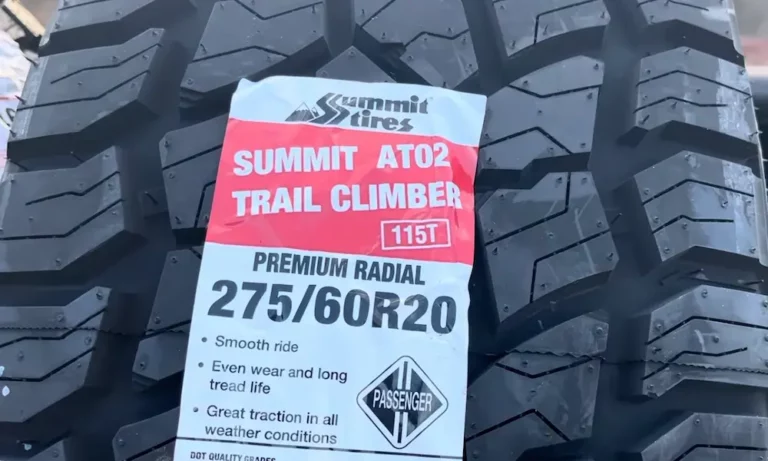
The Trail Climber AT is the all-terrain variant for SUVs, jeeps, and light trucks. It features tiered grooves for water expulsion and decent grip. SimpleScore rates it at 7.8 overall with an impressive 8.9 traction score.
Performance and Specialty Models
The Ultramax A/S balances comfort and performance for passenger cars. It uses a variable pitch sequence with a symmetric tread pattern that scores 8.1 on SimpleScore. Available in 13 to 19-inch sizes starting at $48 per tire, you get a 50,000 mile warranty.
The Ultramax HP A/S steps up to ultra-high-performance all-season territory with a silica-based rubber compound that improves wet traction and lowers rolling resistance for better fuel efficiency. Same 50,000 mile rating.
For off-road enthusiasts, the Mud Hog brings aggressive tread design and large tread elements with a remarkable 8.7 longevity score—seriously impressive for mud-terrain tires that typically wear faster.
What Real Customers Are Saying
Here’s where things get interesting. Summit tire reviews are all over the map.
The Good Reviews
On SimpleTire, the Ultramax A/S scores 8.2 overall, with customers praising exceptional value, excellent handling, and impressive durability. One satisfied customer wrote: “Amazing service and amazing tires. No complaints. Encourage all to do it this way,” giving perfect 5-star ratings across the board.
Another reviewer highlighted longevity: “Excellent tire for the price,” with ratings of 4 or 5 stars in multiple categories.
A ProductReview.com.au reviewer praised Trail Climber A/W tires after 10,000 km of rough roads and 4×4 tracks: “For the price you can’t go wrong. It handled all kinds of tracks really good like an A/T tyre would,” expecting 70,000 to 80,000 km total lifespan.
The Not-So-Good Reviews
But not everyone’s thrilled. One customer reported serious road vibration issues: “Going over bridge and road that have steel grooves my car shakes and wobbles horrible. I even stopped at tire shop thinking I was losing my rear axle… if it wasn’t for this issue I would have given them 4 out of 5 stars but because of the issue on bridges and groove roads I would not purchase again.”
YouTube reviewers provide brutally honest real-world assessments. One comprehensive 2700-mile road trip review noted Trail Climber AT tires delivered relatively good performance but proved “very noisy” for their tread pattern. The reviewer emphasized these are value tires, not premium offerings.
Another YouTube reviewer who tested Trail Climber HT03 tires on a passenger van noted “quality control on these seem to be pretty good” but expressed skepticism about production quality standards compared to other budget options.
The Ugly Truth About Durability
ProductReview.com.au reveals some concerning patterns. One reviewer reported catastrophic failure: “Belts separated on all four tires. Only drove on highway and suburban roads… No reputable dealer will sell Summit tires in this area as I’ve come to find out.”
Another Australian reviewer highlighted a critical durability concern: “Great for the first 30k then deteriorate and need full set by 50k… Where if you stuck with a better quality tyre you’re likely to get up to 100k out of them. Going back to Coopers now.”
This reviewer nailed the hidden cost: while Summit tires appear cheap initially, accelerated tread wear means higher long-term ownership costs compared to mid-tier competitors.
Warranty Coverage and Support Programs
Summit backs their tires with manufacturer warranties ranging from 40,000 to 70,000 miles depending on the model. Most highway-terrain variants offer 50,000 to 60,000 mile warranties.
Beyond tread life, Summit provides comprehensive two-year roadside assistance programs and road hazard replacement coverage. That’s actually pretty solid for budget-friendly tires and shows they’re standing behind their product—at least on paper.
The big question mark: with Sure Tire operating under liquidation protocols since 2022, will they actually honor warranties down the road? That’s the gamble you’re taking.
How Summit Stacks Up Against Budget Competitors
When compared to other budget brands, Summit occupies middle ground. Reddit discussions comparing Summit to Westlake tires show that while Summit benefits from “great reviews” and a “50k mile warranty,” some customers report mixed quality experiences.
One tire retailer characterized both brands as “private label decent tires” suitable for basic commuting but potentially problematic for drivers doing “crazy miles.”
In comprehensive tire testing evaluations, Summit tires often get omitted or placed in lower performance tiers compared to established names. They don’t compete with mid-tier brands like Cooper, Michelin, or Bridgestone in handling, comfort, and wet-weather performance.
Quality Control: The Real Issue
Here’s the fundamental problem with who makes Summit tires: because they source from multiple manufacturers across different countries, you’re essentially playing quality control roulette.
One YouTube reviewer noting Cambodia manufacturing raised concerns about production standards. However, modern Cambodian tire manufacturing represents legitimate industrial capacity producing millions of tires annually, not some sketchy operation.
The private label market faces inherent challenges. When major manufacturers like Goodyear and Michelin withdrew from private label production, companies like Sure Tire had to diversify suppliers significantly. This multi-source model creates variable quality outcomes—tires bearing the Summit name might come from different facilities with different quality control standards.
That explains why one customer gets 80,000 miles while another experiences belt separation at 30,000 miles. They’re literally different products with the same brand name.
Should You Buy Summit Tires?
Summit tires work for drivers prioritizing affordability over premium features. You’ll get genuine tread life warranties, roadside assistance, and diverse model options at entry-level prices.
But approach them with realistic expectations. The wildly variable customer experiences—from excellent durability to catastrophic failures—show quality control consistency remains a serious concern.
Best Use Cases for Summit Tires
Summit makes sense if you:
- Drive moderate mileage (under 12,000 miles annually)
- Stick to normal highway and suburban driving
- Need cheap tires for a vehicle you’re selling soon
- Want basic all-season performance without breaking the bank
- Have a tight budget and accept some risk
When to Skip Summit Tires
Look elsewhere if you:
- Plan high-mileage use or long road trips
- Drive in severe weather conditions regularly
- Prioritize consistent quality and reliability
- Want tires that last 70,000+ miles
- Need premium wet-weather performance
- Can’t afford the risk of early tire failure
For budget-conscious drivers seeking economical tires for routine commuting with moderate expectations, Summit offers reasonable value at entry-level prices. But drivers planning serious mileage or those prioritizing consistent quality should spend more on mid-tier brands like Nexen, General, or Atturo, which demonstrate more consistent quality and stronger brand continuity.