Toyota doesn’t make its own oil — and that surprises a lot of people. So who does? The answer depends on where you live, and it’s more interesting than you’d expect. This post breaks down the real manufacturers behind Toyota Genuine Motor Oil, what makes it different from the stuff on your shelf, and why any of it matters to your engine.
Toyota Doesn’t Refine Oil — Here’s What It Does Instead
Toyota’s engineers treat motor oil like an engine part. They write the recipe. Then they hand it to the best oil companies in each region and say, “Make exactly this.”
Toyota doesn’t own a single refinery. Instead, it locks in long-term technical agreements with major petroleum companies worldwide. These partners don’t just fill bottles with generic oil. They work directly with Toyota’s engineers to build a formula that matches the surface finishes, metal alloys, and clearances inside Toyota engines.
The result? Oil that looks ordinary on a shelf but performs like a custom-built component.
Who Makes Toyota Oil in North America
In the U.S., Canada, and Mexico, ExxonMobil is the manufacturer of Toyota Genuine Motor Oil. ExxonMobil blends and bottles the product at several facilities, with the Baton Rouge refinery in Louisiana serving as a primary hub.
This partnership goes deep. ExxonMobil engineers sit alongside Toyota technicians in racing programs like NASCAR through Toyota Gazoo Racing and Toyota Racing Development. The extreme engine data from those racing programs feeds directly back into the consumer oil you buy at the dealership.
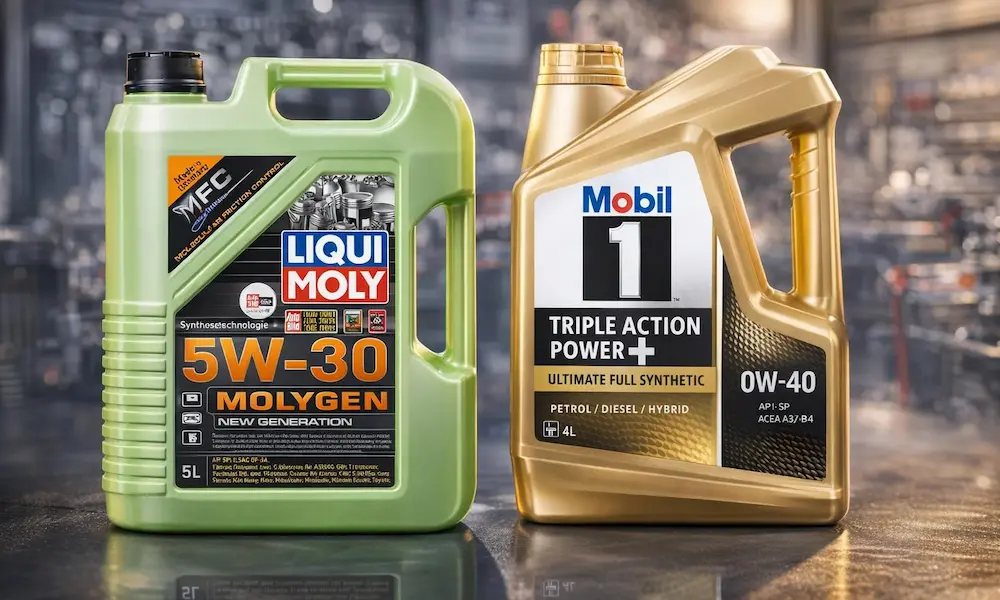
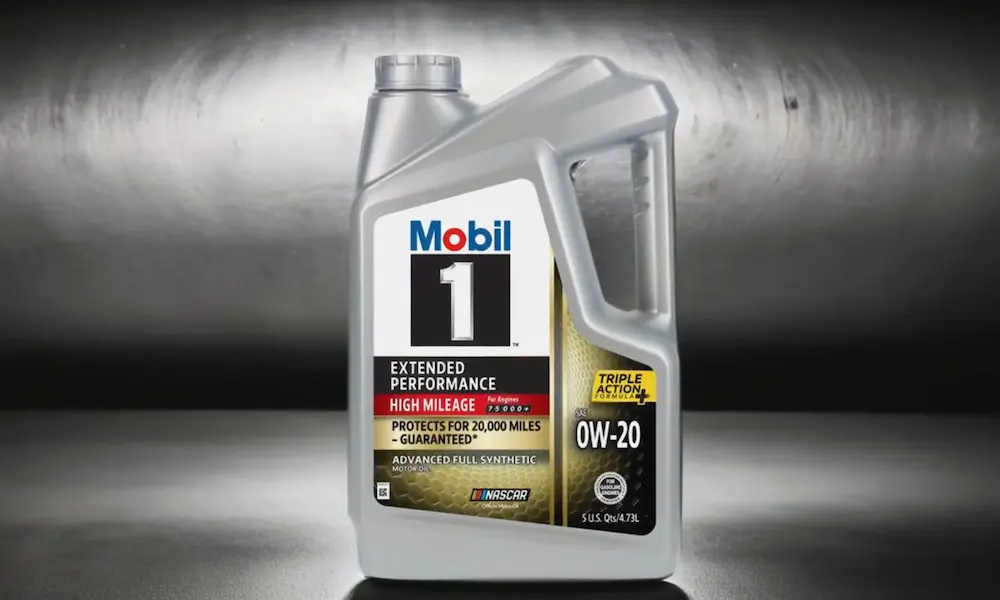
Is Toyota Oil the Same as Mobil 1?
No — and this is where it gets interesting.
ExxonMobil makes both, but they’re different products. Toyota’s version uses a unique additive package developed by Toyota’s Japanese engineering teams. The key differences:
- Molybdenum concentration: Toyota’s oil uses significantly higher levels of molybdenum, a metallic friction modifier that creates a protective film during cold starts and heavy loads.
- Boron content: Acts as a detergent and anti-wear agent, keeping the engine cleaner while adding a second layer of metal protection.
- Additive ratio: The specific balance of these two compounds doesn’t exist in standard retail Mobil 1.
Mobil 1 is excellent oil. Toyota Genuine is Mobil 1 tuned specifically for Toyota engines — different goal, different formula.
The additive packages themselves often come from Infineum, a joint venture between ExxonMobil and Shell that specializes in lubricant chemistry.
| Product | Manufacturer | Key Feature |
|---|---|---|
| Toyota Genuine Motor Oil (Full Synthetic) | ExxonMobil | 0W-8, 0W-16, 0W-20 — high molybdenum |
| Toyota Genuine Motor Oil (Synthetic Blend) | ExxonMobil | 5W-20, 5W-30 — broad protection |
| Toyota Genuine Motor Oil (Conventional) | ExxonMobil | 10W-30, 15W-40 — older engine specs |
Who Makes Toyota Oil in Japan
Japan is where Toyota’s engineering DNA lives. Two companies handle domestic production and factory fill for vehicles exported globally.
Idemitsu Kosan
Idemitsu has been a precision chemical company since 1911. They’re Toyota’s go-to partner for factory-fill oil — the oil that goes into your engine at the assembly line before your car ever reaches a dealer.
Idemitsu doesn’t just supply finished product. Their chemists collaborate with Toyota researchers on the base oils and additives themselves. This is especially important for ultra-low viscosity grades like 0W-8, designed for the latest hybrid powertrains where reducing friction by even a fraction improves fuel economy.
Idemitsu also operates a blending facility in Childersburg, Alabama, which means a Toyota built in Kentucky can receive the same factory-fill specification as one built in Japan. That’s not an accident — it’s intentional standardization.
ENEOS Corporation
ENEOS is Japan’s largest oil company, with roots going back to 1888. They operate 11 refineries and more than 12,000 service stations across Japan.
ENEOS is also a Kyohokai member — Toyota’s elite supplier association that only includes companies meeting Toyota’s strictest quality and reliability standards. This membership isn’t honorary. It means ENEOS is integrated directly into Toyota’s just-in-time manufacturing system, delivering fluids to assembly lines exactly when needed in exact quantities.
| Company | Founded | Primary Role for Toyota |
|---|---|---|
| Idemitsu Kosan | 1911 | Factory fill, ultra-low viscosity R&D |
| ENEOS Corporation | 1888 | Large-scale regional refining and supply |
Who Makes Toyota Oil in Europe
European Toyota oil faces different demands. High-speed motorway driving, gasoline particulate filters, and strict emissions rules all shape the formula. European manufacturers must meet ACEA (European Automobile Manufacturers’ Association) standards, which focus on engine durability and emissions system compatibility.
TotalEnergies and Elf
In France and parts of the UK, Toyota partners with TotalEnergies and its Elf subsidiary. These fully synthetic formulations meet Toyota’s internal NES (No Emission Standards) engineering specs. They’re built for cold northern European starts and the sustained high-speed stress of the Autobahn.
Castrol
In the UK and Baltic states, Castrol — part of the BP group — manufactures Toyota-branded engine oils, brake fluids, and coolants sold through official dealer networks.
Castrol’s involvement goes beyond standard oil. For European hybrid models like the Yaris Hybrid and Auris, Castrol and Toyota engineers worked together to ensure the oil clings properly to cylinder walls when the engine shuts down at stoplights. That “tackiness” prevents metal contact on the next restart — a specific engineering requirement that standard oil doesn’t always nail.
Who Makes Toyota Oil in Southeast Asia and Australia
Indonesia: Pertamina
Since 2012, PT Pertamina — Indonesia’s state-owned oil company — has been the official Toyota oil manufacturer for the Indonesian market. The oil is adapted for Indonesia’s heat and humidity, which accelerates oxidation. The formula includes a stronger oxidation-resistant additive package suited for Jakarta’s traffic and dusty city conditions.
Thailand: ENEOS Thailand
Thailand is a major Toyota export hub. ENEOS (Thailand) Ltd., established in 1995, uses the same Japanese base oil and additive technology to produce factory-fill oil for vehicles assembled there — including the Hilux, which ships to markets across the region.
Australia: Ampol and ExxonMobil
Australia’s supply chain recently shifted. Ampol now partners with ExxonMobil to blend and distribute Toyota-branded lubricants, replacing the older Caltex/Idemitsu arrangement. Local blending happens at Ampol facilities in Queensland and New South Wales.
| Region | Manufacturer | Local Adaptation |
|---|---|---|
| Indonesia | Pertamina | Heat and humidity resistance |
| Thailand | ENEOS Thailand | Regional export standard |
| Australia | Ampol / ExxonMobil | Mobil global technology, local blending |
Who Makes Toyota Oil in the Middle East
Temperatures hitting 50°C, blowing sand, and constant thermal stress make the Middle East one of the harshest environments for any oil.
In Saudi Arabia, Abdul Latif Jameel for Oils Company (ALJOC) has partnered with Toyota since the mid-20th century. Their formulations use highly stable synthetic base oils engineered to resist evaporation and thickening in extreme desert heat — which is a big reason Land Cruisers and Hilux pickups run for hundreds of thousands of kilometers in those conditions.
In the UAE, the Emirates National Oil Company (ENOC) operates one of the largest lubricant manufacturing plants in the Middle East and Africa in Fujairah. Fully automated blending ensures batch-to-batch consistency across high-performance synthetic oils for Lexus vehicles and heavy-duty diesel products for commercial fleets.
The Science That Makes It “Genuine”
Viscosity: Thinner Every Year
The evolution of Toyota oil viscosity tells a clear story about where engine design is heading.
| Viscosity | Best For | Why It Matters |
|---|---|---|
| 0W-8 | Newest hybrid engines | Ultra-low friction, maximum efficiency |
| 0W-16 | Late-model Camry, Corolla | Fuel economy in gasoline engines |
| 0W-20 | Most Toyotas from 2010+ | Wide-spectrum synthetic protection |
| 5W-30 | Tundra, older RAV4, Tacoma | Robust coverage for older designs |
Manufacturing 0W-8 is technically demanding. The oil must flow freely at freezing temperatures, maintain a protective film at high heat, and resist breakdown over time. That requires Group IV or Group V synthetic base stocks from advanced hydrocracking or gas-to-liquid processes — not cheap commodity oil.
Anti-Foaming and Seal Protection
At high pump speeds, oil can trap air bubbles. Foamy oil doesn’t lubricate properly. Toyota’s manufacturers include anti-foaming agents to collapse those bubbles fast.
The oil also has to play nicely with every rubber seal and plastic gasket in the engine. An overly aggressive formula causes seals to harden or shrink — leading to oil leaks over time. The genuine formulation is specifically tested for seal compatibility, which is one more reason it differs from generic alternatives.
The Kyohokai: Toyota’s Supplier Elite
Toyota manages its oil manufacturers through the Kyohokai, a formal supplier association for its most trusted partners. ENEOS and ExxonMobil’s Japan arm both hold membership.
Being in the Kyohokai means your supply chain is integrated with Toyota’s just-in-time manufacturing — right delivery, right quantity, right time. No excess inventory. No stale oil sitting in a warehouse. It also means these manufacturers participate in Toyota’s Kaizen (continuous improvement) process. If a specific engine shows higher deposit buildup in testing, the oil formula changes in the next production batch. The oil never stops evolving.
What This Means for the Future
Here’s the most unexpected part: the companies that make Toyota’s oil today are already building Toyota’s batteries for tomorrow.
In 2023, Toyota and Idemitsu announced a partnership to develop and mass-produce solid-state batteries. The connection? Solid electrolytes for these next-generation batteries use lithium sulfide — a compound derived from petroleum refining. Idemitsu’s oil refining expertise gives them a head start in producing the high-purity materials these batteries need.
Meanwhile, ENEOS is working with Toyota, Idemitsu, and Mitsubishi Heavy Industries on carbon-neutral synthetic fuels. These “e-fuels” could let existing Toyota engines run carbon-neutral without any hardware changes. Toyota’s oil manufacturers aren’t just oil companies anymore — they’re energy transition partners.
So when you buy a quart of Toyota Genuine Motor Oil, you’re not just buying a lubricant. You’re buying into a global engineering network that’s already designing what powers your next car.