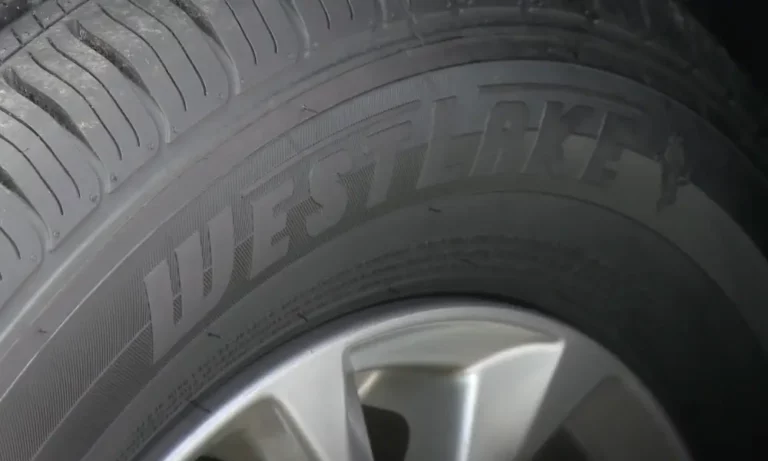
You’ve spotted Westlake tires at a bargain price and you’re wondering: who actually makes these things? It’s a smart question. The answer reveals a fascinating contradiction between global manufacturing power and budget-tier positioning. Let’s dig into who’s really behind the Westlake name and what that means for your wallet—and your safety.
The Manufacturer Behind Westlake: A Global Powerhouse You’ve Never Heard Of
Who makes Westlake tires? The answer is Hangzhou Zhongce Rubber Co., Ltd., better known as ZC Rubber. This Chinese manufacturer, headquartered in Hangzhou, isn’t some fly-by-night operation. Founded in 1958 as the Hangzhou Rubber Factory, ZC Rubber has grown into the largest tire manufacturer in China.
Here’s where it gets interesting: ZC Rubber consistently ranks among the top 10 largest tire manufacturers in the world. We’re talking global rankings that put them at No. 9 in 2024, with sales revenue hitting $5.2 billion. They’re not just punching above their weight—they’re competing with the big names you know.
The company even debuted on the Shanghai Stock Exchange in 2025, cementing its status as a major industrial player. So when you’re buying a budget Westlake tire, you’re actually getting a product from a manufacturer with serious resources, advanced R&D facilities, and global reach.
ZC Rubber’s Multi-Brand Strategy: More Than Just Westlake
ZC Rubber doesn’t put all its eggs in one basket. The company operates multiple brands, each targeting different markets:
- Westlake (since 1995) – marketed primarily for international markets
- Chaoyang (since 1958) – the flagship brand in China
- Goodride (since 1997) – international budget-tier parallel to Westlake
- Arisun (since 2011)
- Trazano (since 2009)
- Tianli (since 1985)
This multi-brand approach isn’t random. Westlake and Goodride often launch technologically similar products side-by-side. At Tire Cologne 2022, ZC Rubber unveiled the Westlake ZuperAce Z-007 and Goodride Solmax 1—both featuring identical BPOT technology and Hybrid Formula compounds.
What does this mean for you? If you’re comparing a Westlake to a Goodride tire in the same class, you’re looking at functionally identical products wearing different labels.
The North American Connection: How Westlake Reaches U.S. Customers
In the United States, Westlake tires are marketed by Tireco, Inc., a California-based company founded in 1972. This separation between the foreign manufacturer (ZC Rubber) and the domestic distributor (Tireco) is standard practice in the tire industry.
But this arrangement has real consequences. When things go wrong—and as we’ll see, they have—the importer becomes the critical link between foreign manufacturing and domestic safety standards. A massive 2007 recall was initiated by the U.S. importer at the time, not ZC Rubber itself.
Manufacturing Capabilities: State-of-the-Art Production Meets Budget Pricing
ZC Rubber operates 9 production plants across China and Thailand, selling to more than 120 countries worldwide. The company invests millions annually in advanced production equipment imported from the U.S., Germany, and Japan.
Their facilities include:
- China’s first noise test laboratory
- MTS Flat-Trac III CT Tyre Test System for advanced diagnostics
- X-ray inspection systems
- International R&D teams from China, Japan, and Korea
This creates a puzzling contradiction: a top-10 global manufacturer with cutting-edge facilities producing tires that sell for 40-50% less than premium brands. That’s a potential savings of $200-$300 on a full set.
The answer? Deliberate cost-engineering and market segmentation. ZC Rubber has the capability to compete with Michelin or Continental. They choose not to. Instead, they dominate the budget segment by leveraging massive economies of scale to offer legitimate quality at rock-bottom prices.
Westlake’s Market Position: Budget-Tier by Design
Let’s be clear about where Westlake sits in the tire hierarchy:
Premium Tier (Tier 1): Michelin, Continental, Goodyear
Mid-Tier (Tier 2/3): Cooper, Falken, Hankook, Kumho
Budget-Tier (Tier 4): Westlake, Ironman, Mastercraft
Westlake competes almost exclusively on price. They’re marketed to “cost-conscious drivers” as a “smart budget choice.” You’re not choosing between a Westlake and a Hankook—you’re choosing between two different tiers of product entirely.
The Passenger Tire Reality: A Mixed Bag Worth Considering
For standard passenger cars, SUVs, and light trucks, Westlake tires deliver a surprisingly competent product for the money.
What Drivers Actually Like
Comfort and Quietness: The standout feature. Westlake uses variable pitch technology to reduce road noise, and drivers consistently praise the smooth, quiet ride.
All-Season Traction: In moderate climates, these tires handle dry and wet roads competently. They’re not performance monsters, but they’re adequate for daily commuting.
Price: This is the main event. Saving hundreds of dollars on a tire set is real money.
The Legitimate Drawbacks
Winter Performance: Most Westlake all-season tires lack the three-peak mountain snowflake (3PMS) symbol. Translation: they’re sketchy on snow and ice.
Quality Control Lottery: Here’s the concerning part. The Westlake RP18 comes with a 45,000-mile warranty, but one buyer reported half the tread gone at 9,000 miles, calling them “absolute garbage.”
That’s not a minor discrepancy—that’s a 400% variance. It suggests manufacturing inconsistency where some batches meet specs while others don’t.
Popular Westlake Models: What You’re Actually Getting
| Model | Type | Warranty | Key Strengths | Known Weaknesses |
|---|---|---|---|---|
| Westlake RP18 | Touring All-Season | 45,000 miles | Quiet ride, good hydroplaning resistance, even wear | Poor ice traction, potential rapid tread wear (QC issues) |
| Westlake SA07 Sport | Performance All-Season | 45,000 miles | Great handling (8.5/10), sporty feel for the price | Not for winter conditions |
| Westlake SL369 A/T | All-Terrain | 40,000 miles | M+S rated, surprisingly quiet on pavement | Not for deep mud, ride comfort could improve |
The RP18 gets an 8.3/10 for handling from SimpleTire. The SA07 Sport scores even higher at 8.5/10. These aren’t terrible tires—they’re budget tires that sometimes perform above their price point.
The Dark Side: Westlake ST Tires and the “China Bomb” Reputation
Now we get to the serious stuff. While Westlake’s passenger tires are defensible budget buys, their ST (Special Trailer) tires tell a completely different—and alarming—story.
The “China Bomb” Phenomenon
Westlake ST tires are known in RV and towing communities by a specific, unflattering nickname: “China Bomb.” This isn’t casual racism or brand snobbery. It’s a descriptor for low-cost trailer tires prone to catastrophic, high-speed blowouts.
RV forum after RV forum tells the same story:
- Blowouts on brand-new equipment with minimal miles
- Tires that “self destruct” suddenly at highway speeds
- Multiple failures in a single year
- Thousands in collateral damage to RV bodies, wheel wells, and plumbing
One owner reported a blowout at just 2,500 miles. Another had a failure on a rig only six months old. Most disturbing: these aren’t careless owners. Many were “super vigilant with tire pressure and temps” and still experienced catastrophic failures.
The OEM Cost-Cutting Problem
Why are these dangerous tires so common? RV manufacturers install them as Original Equipment to save a few bucks per unit. Forum users are blunt about this practice: it puts “customers and products at risk.”
The community consensus is universal: “Get the Westlakes off your RV ASAP.” Many experienced RV owners now replace factory Westlake ST tires before their first major trip, absorbing $1,200+ in costs as a necessary safety investment.
The Smoking Gun: NHTSA Recall 07T003
The “China Bomb” reputation isn’t based on anecdotes. It’s rooted in documented history.
In 2007, a massive recall affected 255,000 to 450,000 Westlake tires sold under the Westlake, Compass, YKS, and Telluride brands. The recall covered models CR857, CR860, and CR861.
The Manufacturing Defect
The specific problem was severe and, according to the importer, deliberate. The New Jersey Attorney General reported that ZC Rubber had manufactured tires “without a gum strip or with an insufficient gum strip” between the steel belts.
A gum strip is a critical safety component that binds steel belts to each other and the tire body. Without it, tires become “susceptible to tread or belt separation”—the exact failure mode RV owners describe as “blowing up.”
The NHTSA documents explicitly warned this defect could cause “loss of control of a vehicle and personal injury.”
The Cost-Cutting Pattern
Here’s what makes this recall significant: the importer alleged ZC Rubber changed the tire’s construction to save costs without informing them. This wasn’t an accidental quality control slip—it was allegedly a deliberate manufacturing decision.
When modern RV owners experience the same type of failures (tread separation) on current ST tires from the same manufacturer, it’s rational to conclude the underlying cost-cutting philosophy hasn’t fundamentally changed.
Comparing Westlake to the Competition
The ST Tire Replacement Hierarchy
The market has spoken clearly on Westlake ST tires:
Premium/Reputable: Goodyear Endurance (the go-to replacement after Westlake failures)
Reputable Budget: Sailun S637 (Chinese-made but with better reliability track record)
High-Risk: Westlake ST tires
RV manufacturers are abandoning Westlake. Alliance RV, which previously used Westlake as OEM equipment, now installs Goodyear Endurance on the same product lines. This isn’t consumer preference—it’s an industry correction to reduce warranty claims and liability.
Interestingly, budget-conscious RV owners willingly buy Chinese-made Sailun tires. The issue isn’t country of origin—it’s Westlake’s specific track record in the ST segment.
Passenger Tire Competition
For passenger cars, Westlake isn’t competing with Cooper, Falken, or Hankook—they’re a tier below. Those mid-range brands offer noticeably better performance, durability, and peace of mind for an extra $100-150 per set.
| Brand Tier | Examples | Westlake’s Position |
|---|---|---|
| Premium | Michelin, Continental | 40-50% cheaper than these |
| Mid-Range | Cooper, Hankook, Falken | Not a direct competitor—different tier |
| Budget | Westlake, Ironman, Mastercraft | Competes here on price |
The Two Westlakes: Understanding What You’re Really Buying
Here’s the critical insight: “Are Westlake tires good?” can’t be answered with a simple yes or no. There are effectively two different Westlake products.
Westlake 1: Passenger and Light Truck Tires
Verdict: Permissible budget buy with caveats.
These tires—the RP18, SA07 Sport, SL369 A/T—are legitimate budget options. They deliver on the promise of a quiet ride, adequate all-season performance, and significant savings. The manufacturer is a global top-10 player with advanced facilities.
The risk here isn’t safety—it’s the quality control lottery on tread life. You might get 50,000 miles. You might get 9,000. That’s frustrating and expensive, but it won’t likely cause a crash.
Best for: Daily commuters in moderate climates who prioritize low cost and quiet ride, and who understand they’re gambling on longevity.
Not for: Anyone who drives in serious winter conditions or needs guaranteed long-term durability.
Westlake 2: ST (Special Trailer) Tires
Verdict: Unacceptable safety risk. Avoid or replace immediately.
These are the “China Bombs.” They have a documented history of catastrophic tread separation linked to manufacturing defects (missing gum strips). Current owner reports suggest the same failures continue on new equipment.
The minimal cost savings aren’t worth the risk of a high-speed blowout that can cause loss of control, thousands in body damage, or worse.
The expert consensus from RV communities: Replace these with Goodyear Endurance (premium) or Sailun (budget alternative with better reputation) before your first major trip.
Making the Right Choice for Your Vehicle
If you’re considering Westlake for your car or SUV, understand what you’re getting: a product from a major global manufacturer that’s been deliberately cost-engineered for the budget market. The tires work. They’re quiet. They’re cheap. Quality control is inconsistent.
If you’re looking at Westlake ST tires on your RV or trailer, the answer is simpler: don’t. The documented history of safety-critical defects and ongoing pattern of catastrophic failures make these an unacceptable risk, regardless of price.