Got a 4L80E acting up? Slipping gears, no reverse, harsh shifts — these problems have patterns. And once you know the pattern, the fix becomes obvious. This guide breaks down the most common 4L80E transmission problems, their real causes, and what actually fixes them. Stick around — the last section could save you a full rebuild.
What Makes the 4L80E Different (And Why It Still Fails)
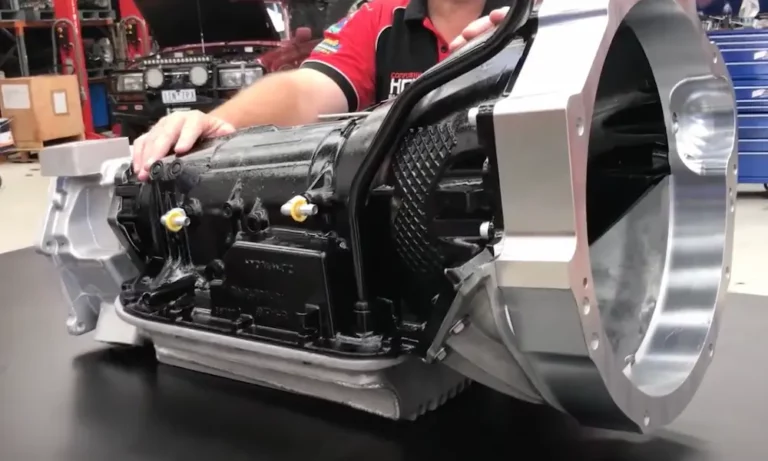
The 4L80E is GM’s heavy-duty four-speed automatic. It uses the production code MT1 and shows up in trucks, vans, and SUVs built for serious work. You can spot one by its distinctive 17-bolt oil pan. It’s bigger, heavier, and stronger than the 4L60E — and it’s not a drop-in swap.
Despite its tough reputation, the 4L80E has real weak spots. Most 4L80E transmission problems trace back to three areas: poor factory lubrication design, valve body wear, and aging electronics.
The Pre-1997 Lubrication Problem Nobody Talks About Enough
Here’s a detail that surprises a lot of people. Transmissions built before 1997 have both cooler lines at the front of the case. That layout starves the overdrive planetary gears of oil.
Low flow creates hot spots. Hot spots cause pressure drops. Over time, the center shaft cuts grooves into the drum assembly. Once that happens, you lose lubrication to the planetary gears — and they fail.
GM fixed this in late 1997 by routing the return cooler line to the rear of the case. That change sent fluid directly to the planetary gear assemblies. Problem solved — but only on the redesigned units.
The center support assembly also changed across model years, and these parts don’t interchange:
| Model Years | Center Support Height | Lubrication Hole | Notes |
|---|---|---|---|
| 1991–1996 | 4.180 in | No | Standard installation |
| 1997–1998 | 4.220 in | Yes | Taller profile required |
| 1999+ | 4.180 in | Yes | Needs a shim |
If you’re rebuilding or sourcing parts, match the year. Installing the wrong center support drops hydraulic pressure and accelerates clutch wear.
Valve Body Wear: The Hidden Cause of Most Shift Problems
The valve body controls every hydraulic action in the transmission. When it wears out, shifts get erratic, clutches burn, and eventually something breaks.
The Separator Plate Problem
The factory separator plate is thin. Under pressure, it flexes. Because the transmission case acts as the upper valve body half, a flexed plate lets high-pressure fluid bleed into low-pressure circuits. The result: flared shifts, harsh engagement, and burnt friction material.
The fix is simple — install a thicker aftermarket separator plate. It stops the flexing and eliminates cross-leaks.
AFL Valve Bore Wear: The Worst Offender
The Actuator Feed Limit (AFL) valve is the most critical wear point in the entire valve body. It limits hydraulic pressure to the shift solenoids and the Electronic Pressure Control (EPC) solenoid.
The AFL valve has a large surface area, which makes it vulnerable to side-loading. The EPC solenoid oscillates constantly as it matches line pressure to engine load. Those pressure pulses slowly wear the cast-aluminum bore. When the bore wears out, shift solenoids lose oil pressure and can’t hold their positions.
What you’ll notice:
- Wrong-gear starts
- Delayed or harsh gear changes
- Transmission trouble codes
- Clutch failure from low line pressure
Conversely, if the worn bore prevents the AFL valve from limiting pressure, solenoids flood and stick shut. That causes wrong-gear engagement or a sudden neutral while cruising.
The fix: An AFL repair kit from Sonnax requires reaming the worn bore and pressing in a wear-resistant sleeve. The replacement valve uses annular grooves and a hard-coat anodized finish, giving 54 percent more support area. This directly fixes codes P0731, P0732, P0734, P0751, and P0756.
Here are the solenoid specs you need for electrical testing:
| Component | Resistance Spec | Function |
|---|---|---|
| TCC Solenoid | 7–20 Ohms | Controls torque converter lock-up |
| EPC Solenoid | 3–6 Ohms | Sets base line pressure |
| Shift Solenoid 1 (SS1) | 12–28 Ohms | Controls 1-2 and 3-4 shifts |
| Shift Solenoid 2 (SS2) | 12–28 Ohms | Controls 2-3 shifts |
| Line Pressure (idle) | 60–70 psi | Measured in drive at idle |
| Line Pressure (throttle) | 90–120 psi | Measured under acceleration |
No Reverse? Here’s Where to Look First
Loss of reverse is one of the most reported 4L80E transmission problems. It sounds catastrophic, but the root cause is often specific and fixable.
Mechanical Causes
Engaging reverse requires two things to happen at once: the direct clutch applies and the reverse band locks. If either fails, reverse disappears.
- Broken snap ring: The direct clutch pack sits in the direct drum, held by a heavy-duty snap ring. Under high pressure, that snap ring can fracture. Without it, the clutch pack can’t compress. The friction discs burn fast.
- Worn reverse band: Under heavy loads, the reverse band friction material degrades. When it does, the servo can’t lock the planetary carrier. Reverse goes away.
Hydraulic Causes
The center support feed bolt secures the center support to the case and seals the fluid circuits feeding the direct clutch. If this bolt loosens or the sealing surface fails, fluid bypasses the circuit. Pressure drops too low to compress the clutch plates. The result is slippage or a complete loss of reverse.
Don’t Overlook the Obvious
Before you pull the transmission, check the shift cable. A worn or out-of-adjustment cable can prevent the manual valve from reaching the correct detent. This makes neutral and reverse behave like drive. It looks like an internal failure but takes five minutes to fix.
Torque Converter and Oil Pump Failures
The factory torque converter flexes under load. That flex causes a shudder during lock-up and pushes temperatures up. Under extreme pressure, the converter cover can balloon outward, hurting efficiency and damaging internal components.
There’s also a clearance issue that wrecks oil pumps. The correct converter-to-flexplate clearance is one-eighth of an inch. If someone sets it at a quarter inch during installation, the converter slides forward. It pushes the pump drive gear out of alignment with the pump stator, breaks the pump gears, and kills hydraulic pressure completely.
For towing or performance use, upgrade to a heavy-duty converter with a billet cover and anti-ballooning plate. It prevents both cover flex and heat-related expansion.
Electronic Problems and Wiring Failures
The 4L80E uses sensors and solenoids managed by a Transmission Control Module (TCM). The internal wiring harness connects everything — and it’s a common failure point.
Engine heat and vibration make the plastic insulation brittle. Fluid leaks saturate connectors. Moisture corrodes the pins in the main case connector, raising electrical resistance. Any of these faults can cause harsh shifts, intermittent engagement, or limp mode — where the TCM locks the transmission in second gear as a protective measure.
TPS and Speed Sensor Issues
The Throttle Position Sensor (TPS) tells the TCM how hard the engine is working. It should read 0.4–0.5 volts at closed throttle and rise smoothly to 4.5 volts at wide-open throttle. A faulty TPS ground or failing sensor causes the TCM to misread engine load.
If the TCM thinks load is high when it isn’t, it commands maximum line pressure. That causes harsh, clunky shifts. Sustained high line pressure can spike above 500 psi and crack the direct clutch drum.
Speed sensor compatibility also matters. In 1994, GM removed the dedicated output speed sensor on 4WD models, shifting that function to the transfer case. If you install an older transmission without the 40-tooth reluctor wheel into a 1991–1993 vehicle, the TCM gets the wrong pulse count and won’t shift properly.
Common Diagnostic Trouble Codes
| Code | Component | What It Means |
|---|---|---|
| P0712 | TFT Sensor Low | Disrupts temperature-based shift logic |
| P0730 | Incorrect Gear Ratio | Internal slippage or gear mismatch |
| P0741 | TCC Stuck Off | High cruising RPM, no lock-up |
| P0742 | TCC Stuck On | Converter stays locked; stalls at stops |
| P0748 | Pressure Control Solenoid Fault | Triggers limp mode |
| P1815 | Transmission Range Switch | Starts in wrong gear |
| P0731/P0732/P0734 | Gear Ratio Errors | AFL valve bore wear |
| Code 72 (OBD-I) | VSS Signal Loss | Locks in second gear, max line pressure |
For a full diagnostic list, TRNW’s 4L80E troubleshooting database covers every code with circuit-level detail.
How to Fix 4L80E Problems for Good
Fixing individual symptoms doesn’t prevent the next failure. These upgrades address the root causes.
Valve Body and Pump Upgrades
- Replace aluminum factory valves with CNC-machined steel valves to stop bore wear
- Install a thicker separator plate to end cross-leaks
- Add a self-regulating reverse boost valve to limit EPC pressure spikes above 500 psi
- Install the AFL repair kit to restore shift solenoid pressure
Cooling System Upgrades
Heat is the top cause of fluid degradation and internal wear. Severe service can increase wear rates by up to 30 percent. These upgrades keep temperatures in check:
| Upgrade | Spec | Result |
|---|---|---|
| Billet hose kit | CNC aluminum, AN-6 fittings | Eliminates rubber line failures |
| Auxiliary cooler | 40,000-lb GVWR plate-style unit | Drops temps from 220°F to 185°F |
| Spin-on auxiliary filter | Aftermarket in-line filter | Traps debris, keeps fluid clean |
Locking the torque converter clutch earlier during part-throttle driving also helps. It cuts fluid shearing inside the converter and lowers heat generation — something you can tune through TCM parameters.
Maintenance Intervals That Actually Prevent Failure
| Use Case | Service Interval | What to Do |
|---|---|---|
| Normal street driving | Every 30,000–50,000 miles | Fluid and filter change; use synthetic ATF |
| Towing or hauling | Every 24,000 miles or 2 years | Fluid and filter change; inspect cooler lines |
| High-output or severe use | Every 12,000–15,000 miles | Full flush, filter change, and fluid analysis |
Synthetic ATF handles heat and oxidation better than conventional fluid, especially under load. Combine that with a proper cooler and clean fluid, and a well-maintained 4L80E can run for hundreds of thousands of miles.