Replacing a headlight bulb sounds simple — until you’re staring at two bulbs that look almost identical and wondering if they’ll actually work in your car. The 9006 vs H11 debate trips up a lot of drivers. This guide breaks down every real difference, explains why swapping them is a bad idea, and helps you pick the right bulb (or upgrade) with confidence.
They Look Alike — But They’re Not the Same
Both the 9006 and H11 are single-filament halogen bulbs with a right-angled base. Both run on 12 volts. Both fit low beam and fog light applications.
That’s where the similarities end.
These two bulbs have completely different bases, connector designs, sealing gaskets, brightness levels, and lifespans. Grabbing the wrong one doesn’t just mean it won’t fit — it means you could damage your headlamp housing, destroy your beam pattern, or create a fire hazard in your wiring harness.
Let’s get into it.
9006 vs H11: Physical Differences That Actually Matter
The Base and Socket Are Totally Incompatible
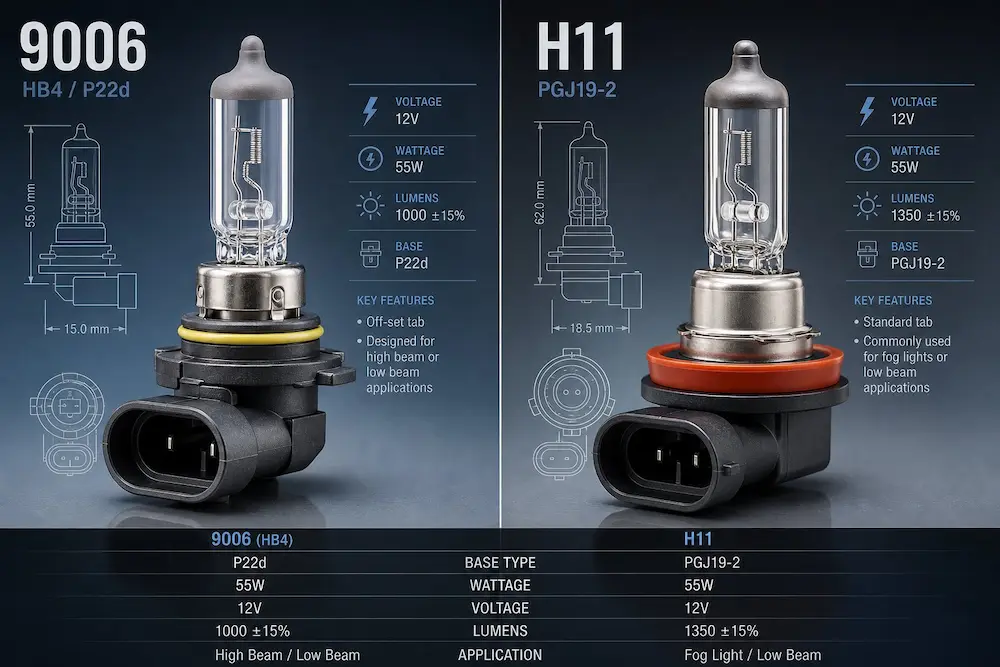
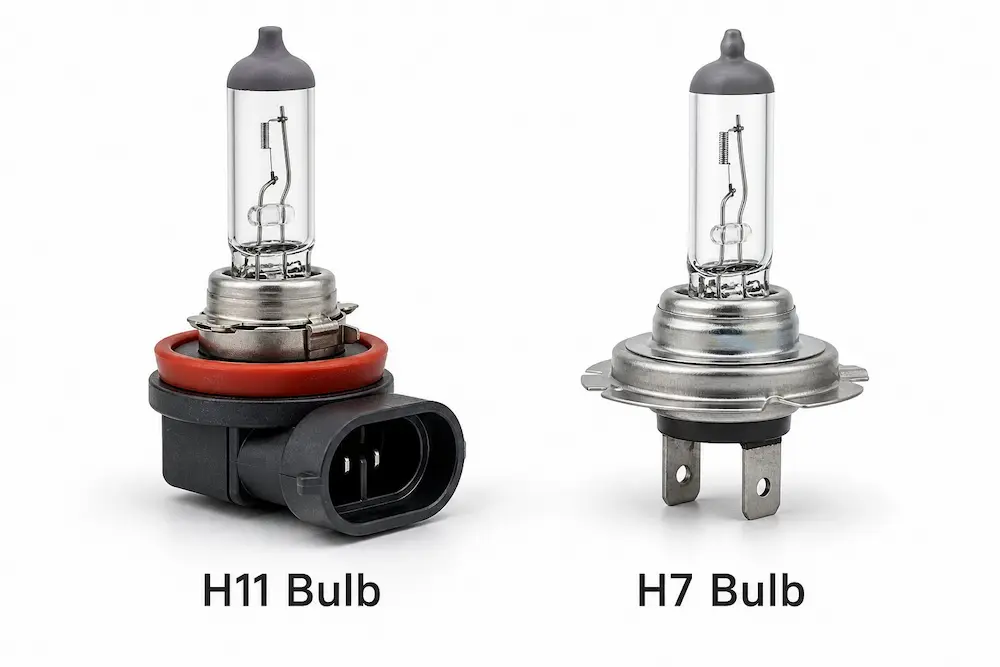
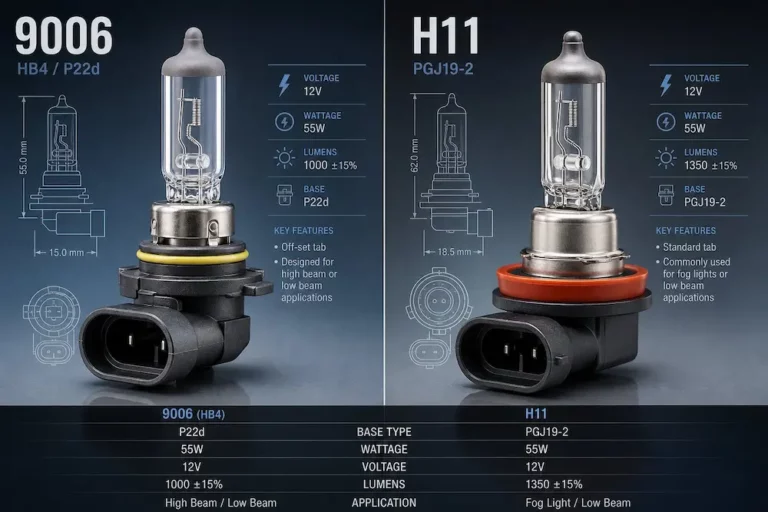
This is the big one. The H11 uses a PGJ19-2 base, while the 9006 (also called HB4) uses a P22d base. These aren’t just different labels — the physical locking systems work in completely opposite ways.
H11 base features:
- Two narrow electrical pins separated by a plastic center divider
- Internal metal locking tabs
- Rectangular connector housing with alignment tabs on the outer ends
9006 base features:
- Two wider electrical pins with no center divider
- Three external heavy-duty plastic locking tabs
- Oval connector housing with no end tabs
Try fitting an H11 plug into a 9006 socket and nothing locks, nothing seals, and nothing connects properly.
Size Differences You Can Actually Measure
The two bulbs also differ in overall length. The H11 measures roughly 43mm in total length with a light center length of 25mm. The 9006 is noticeably longer at around 79.5mm, with a light center length of approximately 31.5mm. Both share a similar 12mm glass envelope diameter — which is precisely why people assume they’re interchangeable.
That light center length difference is critical. It defines exactly where the filament sits inside the housing. More on why that matters in a moment.
The O-Ring Seal Is Different Too
The rubber O-ring on a 9006 bulb is physically larger in diameter than the one on an H11. Forcing one bulb into the other’s housing breaks this seal. Once moisture gets in, your reflective coating clouds over, your lens fogs permanently, and thermal shock can crack the glass. A small rubber ring is doing a lot of heavy lifting here.
| Mechanical Spec | H11 | 9006 (HB4) |
|---|---|---|
| Base Type | PGJ19-2 | P22d |
| Pin Spacing | Narrow, center divider present | Wide, no divider |
| Locking Mechanism | Internal metal tabs | External plastic tabs |
| Connector Housing | Rectangular with end tabs | Oval, no end tabs |
| O-Ring Diameter | Smaller | Larger |
| Max Overall Length | ~43mm | ~79.5mm |
| Light Center Length | ~25mm | ~31.5mm |
Brightness: H11 Wins, But Context Matters
Raw Lumen Output
The H11 produces around 1,350 lumens. The 9006 puts out approximately 1,000 lumens. That’s a 35% difference in raw brightness — significant when you’re driving a dark highway at 70mph.
But brightness isn’t the whole story. How that light spreads matters just as much.
Beam Pattern: Focused vs. Wide
The H11 throws a narrow, concentrated beam. It punches light far down the road, giving you more reaction time to spot hazards. That’s why it’s the go-to bulb for modern low beam projector headlamp systems.
The 9006 casts a wider, more diffused beam. It doesn’t reach as far forward, but it lights up the edges of the road more effectively. This makes the 9006 excellent for fog lights and rural driving — anywhere you need peripheral illumination over raw distance.
Matching the Bulb to the Housing
Your headlamp housing type determines which beam profile you actually need.
- Reflector housings use a mirrored bowl to bounce and direct light. The 9006’s wide spread works well here, delivering solid foreground coverage.
- Projector housings use a lens and a physical cutoff shield to focus light and block upward glare. The H11’s concentrated 1,350-lumen output is perfectly matched to how projector optics focus and direct light down the road.
Install the wrong bulb type in the wrong housing, and you get scattered, unfocused light and glare that blinds oncoming drivers.
Power Draw: Basically Identical
Both bulbs operate on 12V DC and draw similar power. The H11 is rated at 55 watts, drawing roughly 4.58 amps. The 9006 runs at 51 watts nominal, up to 55 watts at the 12.8V test threshold.
In practice, neither bulb places meaningfully different stress on your fuses, wiring, or relay. You won’t see any efficiency difference between them when comparing standard halogen versions.
Lifespan: 9006 Lasts Three Times Longer
Here’s where things get interesting. The H11’s brighter filament runs hotter. More heat means faster tungsten evaporation, which shortens the filament’s life. A standard H11 halogen bulb typically lasts around 270 to 300 hours.
The 9006 runs its filament at a lower temperature to produce its 1,000 lumens. That cooler operation dramatically reduces wear. A standard 9006 can reliably last up to 1,000 hours — roughly triple the H11.
This reflects a deliberate engineering trade-off. Older bulb standards like the 9006 were designed for longevity and low maintenance. The H11 is a newer standard built around maximum visibility, accepting shorter life as the price.
| Performance Spec | H11 | 9006 (HB4) |
|---|---|---|
| Luminous Flux | ~1,350 lumens | ~1,000 lumens |
| Power Consumption | 55W | 51–55W |
| Beam Profile | Narrow, concentrated | Wide, diffused |
| Best Application | Low beam headlamps, projector housings | Fog lights, reflector housings |
| Average Halogen Lifespan | ~270–300 hours | ~1,000 hours |
| Color Temperature (halogen) | ~3,200K | ~3,100K |
Why You Should Never Swap a 9006 for an H11 (or Vice Versa)
Optical Misalignment Creates Real Danger
Your headlamp housing is precision-engineered around one specific focal point in 3D space. The filament of your bulb must sit exactly at that focal point for the beam pattern to work correctly.
Since the 9006 and H11 have different light center lengths, forcing one into the other’s housing shifts the filament away from the focal point. The reflector or projector then scatters light unpredictably — reducing your forward visibility while blasting raw light into oncoming traffic. That’s not just inconvenient. It’s a safety hazard and a legal violation under FMVSS 108, the federal standard governing automotive headlamp performance administered by NHTSA.
Loose Electrical Connections Are a Fire Risk
The connector pins on these two bulbs differ in width and spacing. Forcing a 9006 harness connector onto an H11 bulb creates a loose, poor electrical contact. Poor connections generate resistance, resistance generates heat, and localized heat inside a plastic wiring harness can melt connectors or start an electrical fire in your engine bay.
No amount of extra brightness is worth that risk.
What About Modding Within the Same Bulb Family?
Some enthusiasts try to gain extra brightness by swapping a higher-wattage bulb within the same base family. Here’s what actually happens:
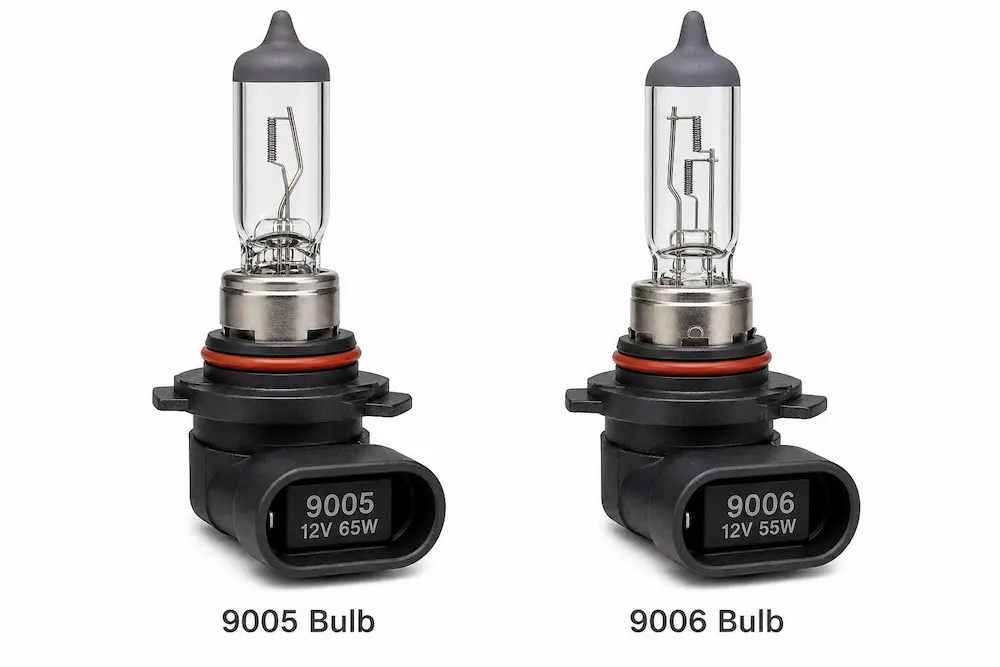
9006 → 9005 modification: The 9005 high beam bulb uses a nearly identical P20d base to the 9006 P22d. The only structural difference is one reversed locking tab. The 9005 produces 1,700 lumens at 65W — a 70% brightness jump. But trimming that tab to force a 9005 into a 9006 housing removes the blackout coating that prevents high-beam glare. You’ll blind oncoming drivers.
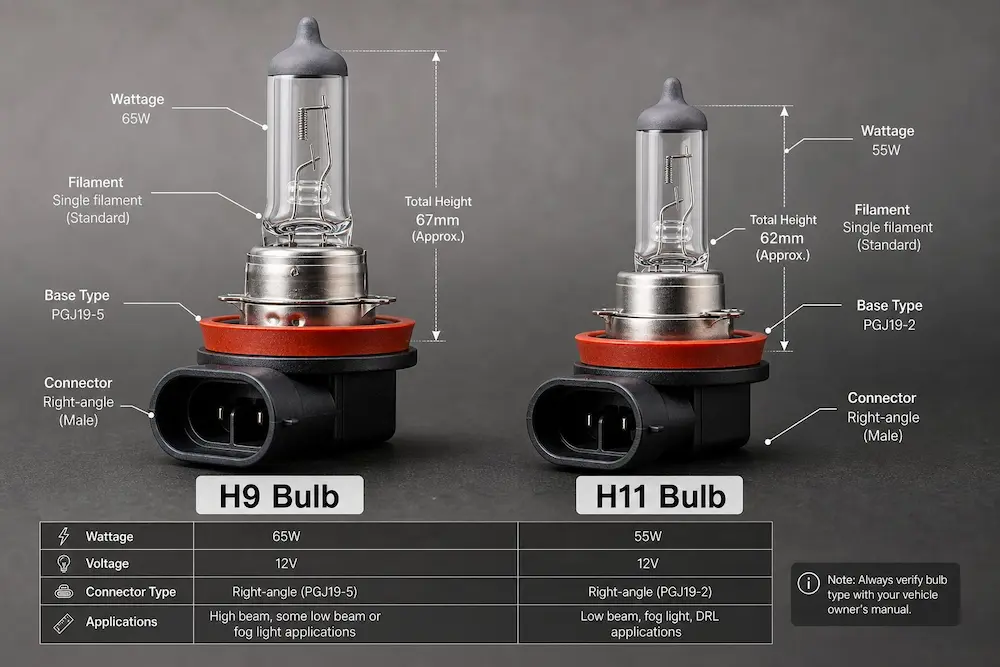
H11 → H9 modification: The H9 high beam produces 2,100 lumens at 65W. With a small tab trimmed, it fits an H11 socket. That’s a 50% brightness increase, but it comes with overwhelming glare, excessive heat that can melt smaller fog light housings, and a lifespan as short as 240 hours.
Both of these modifications also violate FMVSS 108 compliance, which requires replacement bulbs to precisely match the original equipment specs certified with the vehicle.
LED Upgrades for 9006 and H11: Big Gains, Real Caveats
The Brightness Jump Is Substantial
Upgrading from halogen to LED offers transformative improvements. Modern LED kits can produce 6,000 to 40,000 lumens per pair while drawing just 20 to 45 watts per bulb — versus the 55-watt draw of a halogen. That lower current draw reduces strain on your alternator and wiring. High-quality LED diodes also last 30,000 to 50,000 hours, essentially eliminating bulb replacement for the life of your car.
Filament Replication Is Everything
Here’s the catch: your headlamp housing was designed around a glowing wire. Drop a huge multi-directional LED array into that housing and you flood it with scattered, unfocused light. High lumen counts on paper mean nothing if the beam pattern is destroyed.
Quality LED retrofits use a 1:1 filament replica design — thin copper substrates with micro-LED chips positioned exactly where the halogen filament would sit. This preserves the beam geometry and maintains the sharp cutoff line that keeps glare off oncoming drivers.
Heat Management and CAN Bus Compatibility
Unlike halogens that radiate heat outward, LEDs concentrate heat at the diode junction. Without effective cooling, they dim and fail quickly. Better LED kits use aluminum heat sinks or active micro-fan systems, so check your headlamp has clearance behind the socket before buying.
Modern vehicles also monitor headlamp circuit resistance to detect blown bulbs. An LED draws less power than the 55-watt halogen it replaces, which can trigger dashboard warning lights or flickering (hyperflashing). Premium H11 and 9006 LED kits integrate CAN bus decoders and load resistors to mimic halogen resistance and prevent these issues.
Color Temperature: Brighter Isn’t Always Better in Bad Weather
Standard halogens emit around 3,100–3,200K — a warm yellow-white light. That long-wavelength yellow light cuts through fog and rain effectively because it minimizes backscatter from water droplets.
Most LED replacements output 5,000–6,500K, producing crisp cool white or slightly blue light. This improves contrast on clear nights dramatically but performs poorly in fog, rain, and snow, where shorter blue wavelengths scatter aggressively and create a wall of glare for the driver.
Recommended color temperatures:
- H11 low beam headlamps: 4,300–5,000K for balanced all-weather performance
- 9006 fog lights: 3,000K yellow for maximum wet-weather penetration
- Clear-night highway driving: Up to 6,000K where fog is rarely a concern
The Legal Reality of LED Retrofits in the US
Technically, FMVSS 108 requires replacement bulbs to match the exact physical and optical specs of the original equipment. That means a glass envelope and a tungsten filament. Most aftermarket LED retrofits don’t meet this definition — which makes them technically non-compliant for US public roads, regardless of how well they replicate the beam pattern.
Enforcement is another matter entirely. It happens at the state level and varies wildly. States with rigorous annual vehicle inspections — Virginia, New York, Pennsylvania, and New Jersey among them — may fail your car if an inspector spots modified heat sinks on your bulbs. Most other states apply little scrutiny as long as your lights are white (or amber), aimed correctly, and not actively blinding oncoming traffic.
The practical takeaway: prioritize LEDs with genuine 1:1 optical alignment and a proper cutoff line. They improve your safety without creating hazards for everyone else — which is ultimately what keeps them under the radar.
How to Pick the Right Bulb Every Time
Stop guessing. Here’s a simple decision process:
- Check your owner’s manual or the code stamped on the dead bulb. Don’t rely on visual similarity.
- Match bulb type to your housing. Projector housing → H11 priority. Wide reflector bowl → 9006 works well.
- Match bulb to your driving environment. Highway driving → fresh H11 for maximum forward reach. Rural/fog conditions → 9006 for wide peripheral coverage.
- For LED upgrades, ignore raw lumen claims. Look for 1:1 filament replica construction, proper CAN bus compatibility, and active or multi-layer passive cooling systems.
- Check your housing condition first. A cloudy, oxidized lens cuts brightness by up to 80%. Restore or replace the housing before spending money on bulbs — otherwise you’re pouring lumens through frosted glass.
The 9006 and H11 solve the same problem in different ways. Know what your vehicle needs, respect the engineering behind the housing design, and you’ll drive with better visibility and zero headaches.