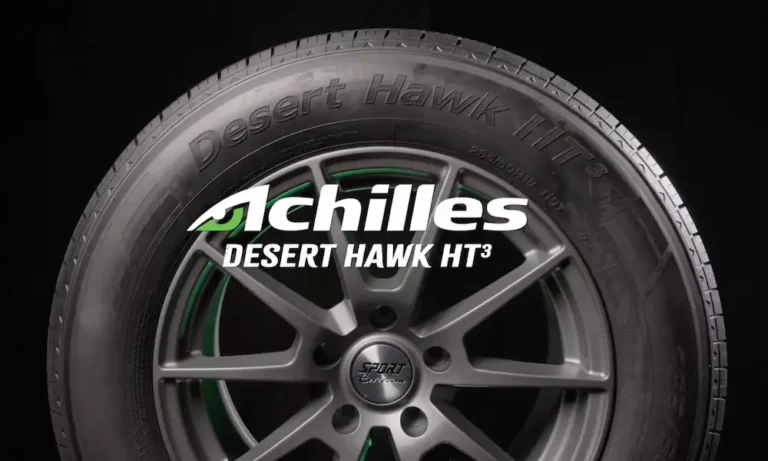
Looking for cheap tires and wondering if Achilles is worth the gamble? You’re about to discover why the answer isn’t as simple as checking the price tag. What you’ll learn here might save you from a costly—or even dangerous—mistake. Let’s cut through the marketing hype and dig into what really matters.
The Achilles Brand: Two Companies, One Messy History
Here’s where things get complicated. When you buy Achilles tires, you’re dealing with two separate entities.
PT Multistrada Arah Sarana (MASA) manufactures the tires in Indonesia. They’ve been making them since 2005. But here’s the kicker—MASA is the company that’s been slapped with multiple NHTSA safety actions.
TBC Corporation handles North American distribution. They relaunched the brand in 2024, promising to “elevate” it. Sounds great, right? Not so fast. The relaunch happened while MASA was still battling federal regulators over safety violations.
That timing isn’t coincidental. TBC likely snagged distribution rights cheap because the brand’s reputation was in the gutter.
What Owners Actually Say (The Good Part)
Let’s be fair—plenty of people drive on Achilles tires and don’t hate them.
The most common praise focuses on three things:
Dirt-cheap pricing. You’ll pay roughly half what premium brands cost. One Reddit user faced a choice between $67 Achilles tires and Continentals at triple the price. The wallet won.
Quiet ride quality. Multiple owners mention low road noise. A Mazda 6 driver specifically noted “very little road noise” at highway speeds, which is impressive for a budget tire on a car that doesn’t isolate sound well.
Adequate handling for daily driving. People talk about “great traction” and “taking curves like a pro.” But here’s the problem—most drivers never push tires anywhere near their limits. What feels like “great handling” during your commute tells you nothing about emergency performance.
There’s also a weird reputation in the drift community. That should raise red flags. Drifters specifically want tires that don’t grip well—they need hard, cheap rubber that smokes easily. If that’s your tire’s claim to fame, it’s not a selling point for safe street driving.
The Professional Testing Data Says Otherwise
While owners are happy cruising to work, professional testers tell a different story.
Notice how Achilles never appears in tests from Car and Driver or Tire Rack? That’s because they either can’t compete or won’t submit their tires for testing. Both scenarios are red flags.
The one professional test we found is brutal. German publication Auto Zeitung tested 20 summer tires in 2020, including the Achilles ATR Sport 2.
Result: Dead last. 20th out of 20.
The verdict was damning: “Long braking distance on wet pavement,” “Weak lateral stability on wet pavement,” and “Unstable grip of the rear axle on dry pavement.”
So while Joe Six-Pack thinks his ATR Sport 2s handle great, instrumented testing shows they’re unstable and dangerous in emergency situations. You won’t know your tires suck until the moment you desperately need them not to.
The NHTSA Safety Record Is Alarming
This is where budget tires cross the line from “questionable value” to “potential safety hazard.”
2018 Sidewall Separation Recall
MASA recalled Achilles Desert Hawk A/P LT tires for lower sidewall separation—basically, the tire’s structure was falling apart. This wasn’t a minor issue. NHTSA stated it “can cause loss of air pressure, increasing the risk of a crash.”
The Desert Hawk line is still being sold today. You can walk into a shop right now and buy tires from a product family with a documented history of catastrophic structural failures.
2020 Labeling Violation (1.6 Million Tires)
This one’s even worse because it reveals corporate incompetence on a massive scale.
MASA manufactured over 1.6 million tires with improper Tire Identification Numbers. This violates federal safety standards. The risk? If there’s a recall, the manufacturer can’t identify and contact affected customers.
MASA’s response was to petition NHTSA, claiming the violation was “inconsequential.” NHTSA reviewed the petition and denied it, forcing MASA to recall and remedy over 1.6 million units.
Think about that. The manufacturer screwed up labeling on a massive scale, compromising the entire recall system, then tried to avoid responsibility. That’s not a company prioritizing safety.
Breaking Down the Current Product Line
Let’s examine what TBC is actually selling under the Achilles name.
All-Season Tires (Touring Sport A/S, 868 All Season)
These are marketed for daily drivers—cars, crossovers, minivans. The Touring Sport A/S comes with a 55,000-mile warranty and a 440 A A UTQG rating.
Sounds decent until you read the fine print. Reviews note it “doesn’t perform well in winter conditions any more serious than light snow.” The 868 All Season is worse, with “poor performance in heavy snow conditions.”
Real all-season tires earn the Three-Peak Mountain Snowflake (3PMSF) certification. It’s proof they passed standardized snow traction tests. Achilles “all-season” tires don’t have it.
If you live anywhere that gets actual winter weather, these tires are dangerously misnamed.
Performance Tires (ATR Sport 2, Street Hawk Sport)
The ATR Sport 2 is marketed as “Ultra High Performance.” Remember, this is the exact model that finished dead last in professional testing for unstable grip and long braking distances.
It was also one of the models named in the 1.6 million-tire labeling violation.
So Achilles’ flagship performance tire offers neither documented performance nor regulatory compliance, all while providing a measly 35,000-mile tread life warranty.
Truck/SUV Tires (Desert Hawk Line)
This is the product line recalled for sidewall separation. If you’re buying Desert Hawk tires today, you’re trusting a manufacturer that already proved they can’t build a structurally sound tire in this category.
Winter Tires (Winter 101 X)
The brand’s “winter” tire is marketed for “ice- and snow-covered road surfaces.” But there’s zero mention of 3PMSF certification—the industry standard proving a tire actually works in severe snow.
It’s a winter tire in name only. Don’t trust your family’s safety to marketing claims that aren’t backed by certification.
The Price Trap: Why “Cheap” Costs More
Let’s run the numbers on a common size: 225/65R17.
Achilles Touring Sport A/S: $95.85 per tire, 55,000-mile warranty
Michelin Defender 2: $179.99 per tire, 80,000-mile warranty
You save $336 buying a set of Achilles. Great deal, right?
Not when you factor in real-world tread life. Owner reports suggest Achilles tires deliver 30,000-40,000 miles max. You’ll need a second set before the Michelins wear out—plus another round of mounting, balancing, and installation fees.
The “cheap” tires end up costing more. You’re not getting a bargain; you’re paying the appropriate price for inferior quality.
| Brand/Model | Price Per Tire | Warranty | Performance Record | Safety Record |
|---|---|---|---|---|
| Achilles Touring Sport A/S | $96 | 55,000 miles | Poor in snow | 2018 recall, 2020 violation |
| Hankook Kinergy 4S2 | $150-160 | 60,000-80,000 miles | 3PMSF certified | Clean |
| Michelin Defender 2 | $180 | 80,000 miles | Top-tier | Clean |
Who Should (And Shouldn’t) Buy Achilles Tires
You might consider Achilles if:
You’re driving a beater in Arizona or Florida (dry, mild climate year-round). You literally can’t afford anything else. You understand you’re accepting documented safety risks to save money upfront.
Even then, it’s questionable. But at least the risk matches the use case.
Don’t even think about Achilles if:
You drive a family vehicle. The Desert Hawk recall and poor winter performance make this brand unsuitable when you’re hauling kids around.
You live anywhere with real winter weather. The “all-season” tires fail in heavy snow. The dedicated winter tire lacks 3PMSF certification. You’re gambling with your safety.
You want actual performance. The brand’s only professional test result was 20th out of 20 for unstable handling and poor braking. Hard pass.
You care about corporate responsibility. MASA’s pattern of regulatory noncompliance shows a manufacturer that cuts corners and fights accountability.
The Bottom Line on Achilles Tires
So, are Achilles tires good?
No. They’re cheap, and there’s a reason for that.
The low price isn’t because you found a hidden gem or market inefficiency. It’s because you’re buying tires from a manufacturer with documented safety failures, regulatory violations, and rock-bottom performance in professional testing.
Premium brands charge more because they invest in R&D, testing, quality control, and compliance. That cost shows up at checkout, but it also shows up in independent testing and clean safety records.
Achilles skips those investments. You get the savings upfront and the consequences later—maybe when your tires fail to grip in an emergency, or when your “winter” tires prove useless in actual winter conditions.
The TBC relaunch doesn’t change the fundamentals. There’s no evidence the tires are manufactured differently or held to higher standards. It’s just better marketing for the same problematic product.
Your tires are the only thing between your car and the road. They’re not the place to bargain hunt. Spend the extra money on proven brands with verified safety records and real-world performance data. Your life—and your family’s lives—are worth more than $336.