Shopping for tires shouldn’t feel like rolling dice, but with Kenda, it kinda does. You’ve seen the crazy-low prices and you’re wondering if there’s a catch. Spoiler: there is one, but it’s not what you think. Let’s cut through the noise and figure out if Kenda deserves a spot on your car.
What Makes Kenda Different from Other Tire Brands
Kenda isn’t some fly-by-night operation. Founded in Taiwan back in 1962, they’ve spent six decades building a global manufacturing empire. What’s interesting is their corporate evolution—they didn’t just stay in Asia pumping out cheap rubber.
In 2004, Kenda partnered with Cooper Tire & Rubber Company in China. That’s a big deal because it meant they were learning Western manufacturing standards two decades ago, not last Tuesday.
But here’s where it gets really interesting. In 2014, Kenda opened their American Technical Center right in Akron, Ohio—the beating heart of America’s tire industry. They followed up with a European center in Germany in 2016. This wasn’t just for show. They poached local engineering talent and started designing tires specifically for American roads and driving expectations.
This R&D pivot created what I call “Two Kendas”: the old budget-focused designs and the new performance-value products. Which one you get determines everything about your experience.
The Kenda Tires That Actually Deliver
Let’s talk about the good stuff first, because it’s legitimately impressive.
Vezda UHP A/S (KR400): The Overachiever
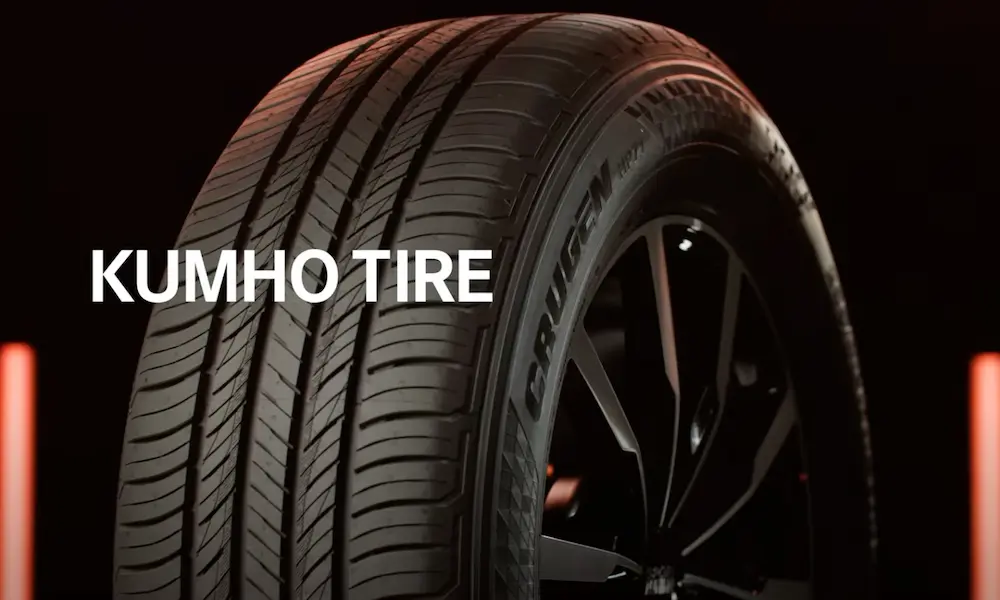
This is Kenda’s flagship ultra-high performance all-season tire, and it’s the reason car enthusiasts won’t shut up about the brand. Developed at their Akron facility, this tire carries a 500 AA A UTQG rating and a 50,000-mile warranty.
The real story is who’s buying these and what they’re saying. We’re not talking about economy car owners thrilled to save fifty bucks. We’re talking about GR Corolla owners, BMW 540i drivers, and Polestar 2 enthusiasts—people who actually know what good tires feel like.
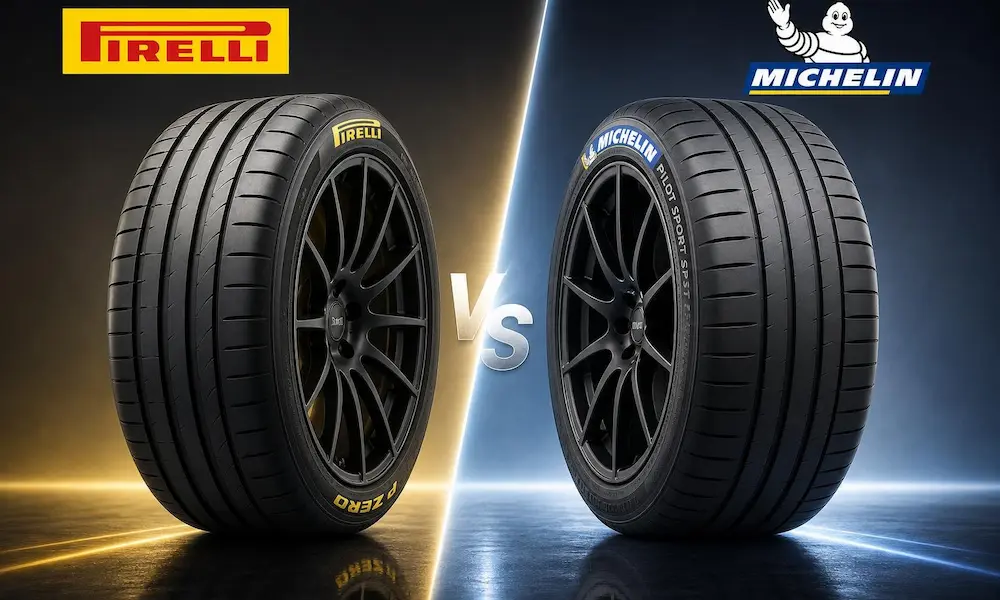
One Elantra N owner said they “feel 98% like a Michelin Pilot Sport A/S… at half the price.” Another driver who A/B tested them against the benchmark Michelin Pilot Sport 4S on a GR Corolla found them “honestly a surprisingly good tire.”
When performance car owners are comparing your budget tire favorably to Michelin and Continental—the industry gold standard—you’re doing something right.
Vezda Touring A/S (KR205): The Quiet Comfort Pick
If you don’t need performance-car grip but want something nicer than bare-bones, the KR205 is Kenda’s grand touring option. It steps up from the basic Kenetica with a 620 A A UTQG rating (versus 580 A B) and a 65,000-mile warranty.
The upgrade isn’t just on paper. This tire uses an asymmetric tread pattern instead of the symmetric design on cheaper models, which helps balance handling and comfort. Users specifically praise its smooth, quiet ride—one reviewer was “ecstatic to find this option” as a quieter, more affordable alternative to expensive OEM tires.
Kenetica Touring A/S (KR217): The Basic Workhorse
This is Kenda’s bread-and-butter touring tire for daily commuters. With a 580 A B UTQG rating and a 60,000-mile warranty, it’s designed for “dependability and safety at an incredible value.”
The KR217 features four large circumferential grooves for water evacuation and high sipe density for wet grip. It’s not exciting, but it’s competent. Think of it as the tire equivalent of a Honda Civic—it’ll get the job done without drama.
Where Kenda Falls Flat on Its Face
Now for the ugly truth: some Kenda tires are genuinely bad, and it’s not even close.
Vezda Touring 4S (KR211): The Confused All-Weather Tire
This tire has the Three-Peak Mountain Snowflake certification, which means it’s rated for severe snow service. Sounds great, right? Wrong.
Here’s the problem: people buy 3PMSF tires for one reason—superior traction in snow, slush, and nasty weather. But the KR211’s worst attribute is its mediocre 7.7 traction score. Its best attribute? A 9.0 longevity score.
Let’s compare it to the General Altimax 365AW to see how badly Kenda missed the mark:
| Tire Model | Overall Score | Traction | Handling | Longevity |
|---|---|---|---|---|
| Kenda Vezda Touring 4S (KR211) | 8.2 | 7.7 | 8.1 | 9.0 |
| General Altimax 365AW | 8.7 | 8.7 | 8.7 | 9.0 |
The General proves you can deliver elite longevity and elite traction. Kenda engineered a long-lasting touring tire that happens to have a snowflake stamp, but it fails at the primary mission. If you live somewhere with real winters, this tire is a hard pass.
Klever A/T2 (KR628): The Outclassed All-Terrain
Kenda’s mainstream all-terrain tire for trucks and SUVs looks decent on paper—3PMSF certification, up to 60,000-mile warranty. But specifications don’t tell the whole story.
Stack it against the Falken Wildpeak A/T4W (a category leader) and the performance gap is brutal:
| Tire Model | Overall Score | Traction | Handling | Longevity |
|---|---|---|---|---|
| Kenda Klever A/T2 (KR628) | 8.1 | 8.0 | 8.0 | 8.6 |
| Falken Wildpeak A/T4W | 9.5 | 9.8 | 9.4 | 9.3 |
That 1.8-point gap in traction isn’t subtle—it’s the difference between confidently tackling muddy trails and getting stuck. The Klever isn’t offering 98% of the performance for half the price like the Vezda UHP does. It’s just a budget tire performing like one.
The Quality Control Lottery Nobody Talks About
Here’s where things get serious. Kenda has a quality control problem that’s borderline scary.
You’ll find people who are “thoroughly impressed” and say their Kendas are “better than name brand tires including Continental DWS06.” These reviews exist, and they’re from credible enthusiasts.
But you’ll also find people calling them “the worst tires I’ve ever had” and reporting catastrophic failures.
The Scary Stuff
We’re not talking about faster-than-expected wear or high road noise. We’re talking about safety failures:
- One Toyota Tundra owner had a Klever tire’s inside wall “crumble” after just 3,000 miles. The tire smoked and popped.
- A Mercedes SL550 owner reported Vezda UHP Summer tires “cracked and splitting” with one crack going completely across the tread—at 4,000 miles.
A tire’s internal structure crumbling or tread splitting after a few thousand miles isn’t wear and tear. It’s a manufacturing defect, likely from compound mixing or curing failures.
What makes this terrifying is that these failures happened on both a truck tire and the flagship performance tire. This isn’t isolated to one old product line—it’s a brand-wide quality control issue.
The Warranty Wildcard
Kenda offers a standard warranty covering defective materials and workmanship. Sounds reassuring until you read the fine print of real experiences.
Remember that Tundra owner whose tire crumbled at 3,000 miles? Kenda declined to warranty it. Let that sink in. A textbook manufacturing defect, documented with photos, and the claim was denied.
This transforms the entire Kenda proposition. You’re not just betting you’ll get a good tire—you’re also betting that if you get a bad one, Kenda will actually honor their warranty. That’s two gambles, not one.
What Kenda’s Other Products Reveal About the Brand
Kenda is massive in the bicycle tire market. A detailed review from their e-bike division accidentally reveals their entire corporate philosophy.
One cyclist explained that Kenda tires are “made to be the best for you what you needed at a cheap price” but are “often made for one goal while also sacrificing other goals.” The reviewer also admitted: “They do suffer from some QC issues though for sure!”
This explains everything about their automotive lineup:
- Vezda UHP A/S (KR400): Made for one goal (grip and handling). Achieved it brilliantly. It’s a good Kenda.
- Vezda Touring 4S (KR211): Made for one goal (longevity). Achieved it by sacrificing the primary mission (traction). It’s a bad Kenda.
- Klever A/T2 (KR628): Made for one goal (low price). Achieved it by sacrificing performance across the board. It’s a bad Kenda.
This “engineer for one thing, sacrifice everything else” approach works when they nail the right priority. When they don’t, you get a tire with a snowflake rating that can’t grip in snow.
Should You Actually Buy Kenda Tires?
The answer depends entirely on who you are and what you’re buying.
Buy Kenda If You’re This Person
You should consider Kenda if you’re a value-focused enthusiast who:
- Owns a performance car (or at least cares about driving dynamics)
- Does extensive research before buying (like reading this entire post)
- Can accept a small quality control risk for massive savings
- Is specifically targeting the Vezda UHP A/S (KR400)
If you fit this profile, the KR400 is legitimately excellent. You’re looking at near-premium performance for literally half the price. That’s not marketing hype—it’s validated by enthusiasts comparing them to Michelin and Continental.
Skip Kenda If You’re This Person
Avoid Kenda if you’re a risk-averse daily commuter who:
- Isn’t a “car person” and just needs reliable, safe tires
- Drives a family sedan, crossover, or work truck
- Can’t afford to absorb the total loss of a tire purchase
- Values predictability over saving money
For this buyer, the “Kenda Gamble” is a terrible bet. Saving $100-$200 on a set of tires isn’t worth the documented risk of a catastrophic failure at 3,000 miles and a potentially denied warranty claim.
You need predictability and an ironclad warranty. Stick with established brands like General, Cooper, or Falken that have consistent quality control.