Shopping for a used Ford Expedition? With nearly 30 years of model years to choose from, picking the right one saves you thousands in repairs — or costs you dearly if you pick the wrong one. This guide breaks down every generation, flags the problem years, and tells you exactly which models are worth your money.
Why the Ford Expedition Still Wins the Full-Size SUV Game
The Ford Expedition has been body-on-frame since 1997. That means serious towing, real durability, and a truck-based backbone that outlasts unibody SUVs in tough conditions. It’s not perfect — no vehicle is — but the right model year delivers a family hauler that can hit 200,000 miles without drama.
The trick? Knowing which years Ford got it right.
Quick Reference: Best and Worst Years at a Glance
| Category | Model Year | Why It Matters |
|---|---|---|
| Best Overall (Classic) | 2011 | Zero recalls, under $300/yr in repairs |
| Best Overall (Modern) | 2021 | Fixed 2018-2020 powertrain flaws |
| Best Performance | 2016 | EcoBoost + bulletproof 6-speed trans |
| Best Budget Pick | 2005 | Best of Gen 2, improved everything |
| Years to Avoid | 2003, 2004, 2018 | Transmission failures, cam phaser issues |
Generation-by-Generation Breakdown
First Gen (1997–2002): Solid Foundation, One Big Flaw
The first-generation Expedition launched with Ford’s 4.6L and 5.4L Triton V8 engines. These engines earned a reputation for raw durability — but came with a nasty asterisk.
The aluminum cylinder heads had too few spark plug threads. Under heat and pressure, spark plugs could literally eject from the engine. Fixing it cost between $600 and $1,200. Not ideal.
Best pick from this generation: 2002. Five years of production-line refinements ironed out the worst kinks. The 4R70W transmission stabilized, the interior improved, and you still get the simplicity of a naturally aspirated V8 with no turbo complexity to worry about.
Worst picks: 1997–1998. Early build quality issues and the most spark plug vulnerability.
Second Gen (2003–2006): Great Idea, Rough Execution
Ford introduced fully independent rear suspension (IRS) in 2003 — a first for a full-size American SUV. It improved ride quality dramatically and enabled a fold-flat third row. Smart engineering on paper.
In practice? The 2003 and 2004 models were a mess.
- 2004 Expedition: Transmission failure at an average of 76,000 miles. Repair costs often exceeded the vehicle’s value.
- Both years carried over the spark plug blowout problem.
- Electrical gremlins plagued dashboards throughout 2003–2004.
| Problem Area | 2003–2004 | 2005–2006 |
|---|---|---|
| Spark Plug Blowout | High | Moderate |
| Transmission Failure | High (76k avg) | Low |
| Brake Wear | Severe | Moderate |
Best pick from this generation: 2005. Ford introduced the 3-valve 5.4L V8, switched to the more robust 4R75E transmission, and made AdvanceTrac with Roll Stability Control standard equipment. It’s the only second-gen model worth recommending.
Third Gen (2007–2017): The Reliability Golden Age
This generation ran for ten years. That’s not an accident — Ford built a genuinely dependable vehicle here, and the market kept buying it.
The T1 platform improved towing capacity and interior quietness. The big mechanical win? Ford paired the 5.4L Triton with the 6R80 six-speed automatic transmission, widely considered one of the most durable gearboxes Ford has ever produced.
The standout years: 2010–2014
The 2010, 2011, 2013, and 2014 model years recorded zero NHTSA recalls — a remarkable stat for any complex full-size SUV. The 2011 model carries a J.D. Power reliability score of 76/100 and averages under $300 per year in repairs.
The 2011 is the best year for Ford Expedition if you want a high-mileage workhorse.
One important note for 2005–2014 owners: the 3-valve Triton engine needs oil changes every 5,000 miles without fail. Skipping them clogs the cam phaser oil passages and triggers the dreaded “Triton Tick” — a rattling noise that precedes expensive engine work. Stay on top of maintenance and these engines run forever.
The EcoBoost transition: 2015–2017
In 2015, Ford dropped the V8 entirely and installed the 3.5L twin-turbo EcoBoost V6. The numbers spoke for themselves:
| Metric | 2014 (Final V8) | 2015 (First EcoBoost) | Change |
|---|---|---|---|
| Horsepower | 310 hp | 365 hp | +17.7% |
| Torque | 365 lb-ft | 420 lb-ft | +15.1% |
| Avg. MPG (Combined) | 14 mpg | 17 mpg | +21.4% |
| Towing Capacity | 9,200 lbs | 9,200 lbs | No change |
The 2015 suffered from first-year turbo gremlins — condensation in the intercooler, manifold warping, and turbo gasket leaks. Ford fixed most of these issues by 2016.
Best pick from 2015–2017: 2016. It pairs the powerful EcoBoost engine with the proven 6R80 transmission and SYNC 3 infotainment — Apple CarPlay, Android Auto, and a genuinely responsive touchscreen. This is the best year for Ford Expedition if you want modern performance without the complexity of the newer 10-speed transmission.
Fourth Gen (2018–2024): Big Promises, Bumpy Start
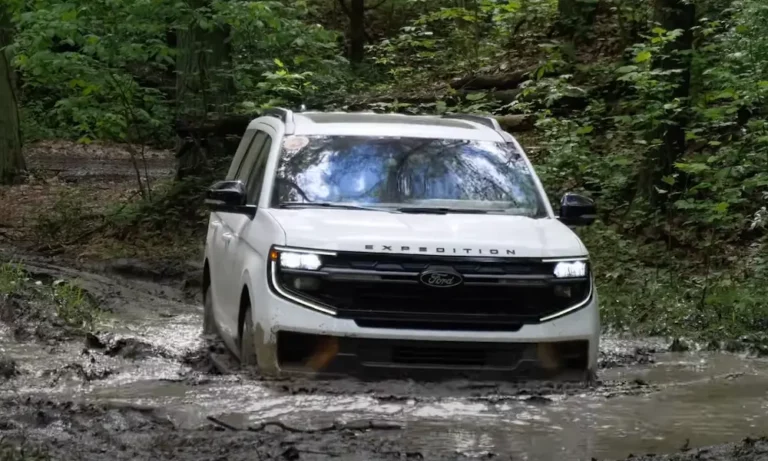
Ford redesigned the Expedition from the ground up for 2018. The aluminum body shed up to 300 pounds. Interior space grew. Technology leapt forward. Towing capacity climbed to 9,300 pounds.
Then reality set in.
Years to avoid: 2018, 2019, 2020
The fourth generation introduced two major problems simultaneously:
- Cam phaser rattle — Premature wear on the 3.5L EcoBoost cam phasers caused a loud rattle at startup. Left unchecked, it leads to timing chain failure. Repair cost: $2,500–$3,500.
- 10-speed transmission problems — The new 10R80 transmission suffered from hard shifts, gear slipping, and clunking. The root cause? A defective CDF clutch drum bushing that could migrate and block hydraulic fluid passages.
The 2018 model also carried the highest volume of powertrain complaints of any modern Expedition. It was essentially a beta test for three new systems at once — the aluminum body, the 10-speed transmission, and revised cam phasers.
| Model Year | J.D. Power Reliability | Key Issues |
|---|---|---|
| 2018 | 71/100 | Cam phasers, transmission shifts |
| 2019 | 73/100 | Trans slipping, AC failure |
| 2020 | Low | CDF drum failure, steering noise |
| 2021 | 80/100 | Minor software updates only |
| 2022 | 75/100 | Blower motor recall |
Best pick from this generation: 2021
By 2021, Ford had implemented hardware revisions to the cam phasers and software updates to the transmission control module. Most of the 2018–2020 headaches were gone. The 2021 also added Ford Co-Pilot360 as standard equipment — automatic emergency braking, blind-spot monitoring, lane-keeping assist — all included without paying extra.
It also kept the physical dashboard controls that Ford replaced with touchscreen-only inputs in the 2022 refresh. Many owners actually prefer the 2021 layout for daily driving.
The 2021 earns the title of best year for Ford Expedition in the modern era.
Infotainment: Which System Should You Live With?
Buying a used Expedition means inheriting whatever tech was current at the time. Here’s the honest breakdown:
- SYNC 1 & 2 (2007–2015): SYNC 2 (MyFord Touch) froze constantly and responded slowly. Largely obsolete now.
- SYNC 3 (2016–2020): Stable, fast, Apple CarPlay and Android Auto included. The sweet spot for used buyers.
- SYNC 4 / 4A (2021–2024): Wireless smartphone connectivity, larger screens up to 15.5 inches, and over-the-air software updates that fix bugs without a dealer visit.
If infotainment matters to you, aim for 2016 at the earliest. SYNC 3 holds up well and doesn’t require any workarounds.
Safety: What the Numbers Actually Say
The fourth-generation Expedition earns a 5-Star Overall NHTSA Safety Rating across most model years. Its size and body-on-frame construction absorb frontal and side impacts effectively.
The catch? The IIHS “Small Overlap” test — which simulates hitting a pole with the corner of the vehicle — gave the Expedition a “Marginal” rating due to A-pillar separation during impact. Ford disputed the methodology, pointing to its 5-star NHTSA score as the broader safety benchmark.
For most real-world scenarios, the Expedition’s mass and frame work in your favor. But it’s worth knowing the IIHS limitation exists.
Real Cost of Ownership by Generation
According to RepairPal, the Expedition averages $861 per year in repair costs. That’s higher than the average for all vehicles, but normal for full-size SUVs. The good news: it only needs unscheduled shop visits about 0.2 times per year — half the full-size SUV average.
| Generation | Common Repair | Estimated Cost |
|---|---|---|
| First/Second | Spark plug blowout | $600–$1,200 |
| Second/Third | Air suspension bag | $1,500 |
| Third | Blower motor resistor | $150 |
| Fourth | Cam phaser replacement | $2,500–$3,500 |
| Fourth | Transmission valve body | $1,500 |
Third-generation models (especially 2010–2014) keep repair costs remarkably low when properly maintained. Fourth-generation models cost more to fix, but the 2021+ variants fail less often than the 2018–2020 models.
The Final Verdict: Which Year Should You Buy?
Here’s the plain-English summary:
- Want the most reliable Expedition ever built? Buy a 2011. Zero recalls, under $300 per year in repairs, proven 6R80 transmission, and V8 simplicity.
- Want a modern Expedition without the early EcoBoost drama? Buy a 2021. Cam phasers fixed, transmission calibrated, full safety suite standard.
- Want the best balance of performance and reliability on a budget? Buy a 2016. EcoBoost power, 6-speed transmission, SYNC 3 tech.
- Shopping on a tight budget and don’t mind older tech? Buy a 2005. The only trustworthy second-gen model.
- Skip entirely: 2003, 2004, and 2018. Each carries fundamental powertrain flaws that make them expensive and unpredictable to own.
The best year for Ford Expedition depends on what you need — but the data points clearly to the 2011 and 2021 as the models that deliver the most value with the fewest headaches. Pick either one, stay on top of oil changes, and this SUV will haul your family and your gear for years without drama.