Shopping for a used F-150 shouldn’t feel like defusing a bomb — but pick the wrong model year, and that’s exactly what it becomes. Some years are rock-solid. Others will drain your wallet before you hit 100,000 miles. This guide cuts through the noise and tells you exactly which years to buy, which to skip, and why.
Why the Model Year Matters More Than You Think
Not all F-150s are equal. Ford’s engineering strategy follows a familiar pattern — bold redesigns followed by years of fixes. That means the best year for Ford F-150 depends entirely on which version of the truck you’re getting. Buy during a refinement year, and you score a reliable workhorse. Buy right after a major redesign, and you’re often the one paying for Ford’s learning curve.
The good news? This guide maps out those windows so you don’t have to guess.
The Years You Must Avoid (Seriously, Walk Away)
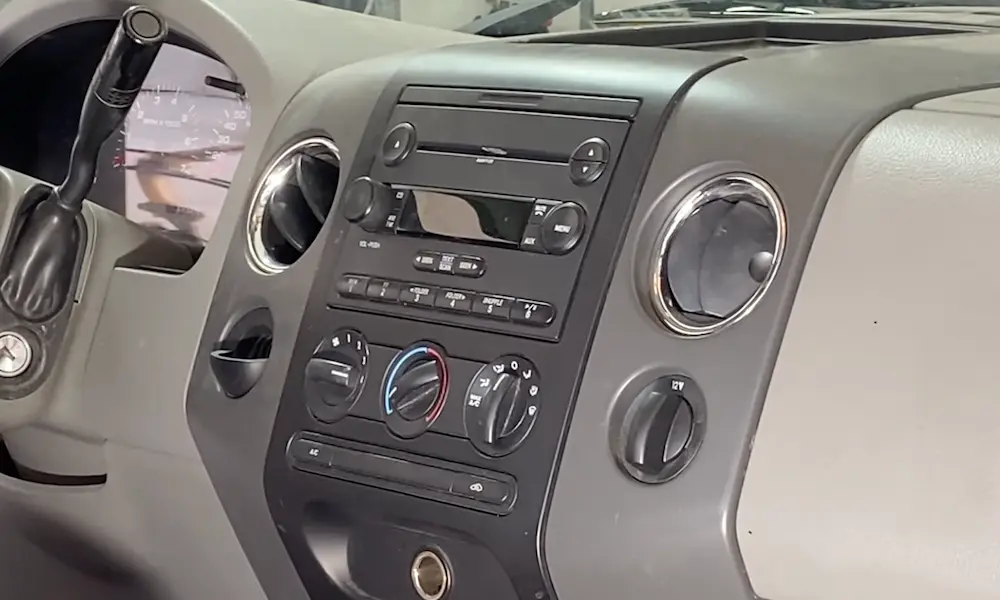
2004–2006: The Reliability Canyon
This three-year stretch is the most dangerous buying window in F-150 history. The eleventh-generation redesign looked great on the outside but hid a mechanical mess underneath.
The main culprit was the 5.4L Triton 3-valve V8. Here’s what went wrong:
- Spark plug breakage: Plugs would snap inside the cylinder head during removal. Fixing them cost $300–$600 per plug in labor alone
- Cam phaser failure: Oil-pressure-dependent phasers failed constantly, causing a loud diesel-like rattle and eventual timing system collapse. Repairs ran $2,000–$5,500
- Airbag recalls: Some units deployed randomly without warning
- Fuel tank strap corrosion: Tanks could detach from the chassis mid-drive
According to NHTSA safety recall data, these models carry a statistically high probability of catastrophic failure before 100,000 miles. Skip them entirely.
2013: The Surprise Downshift Problem
The 2013 model had a specific transmission defect where the 6-speed automatic would unexpectedly downshift into second gear at highway speeds. That’s not just annoying — it’s dangerous. If you’re looking at a 2011–2014 F-150, inspect the 2013 thoroughly or skip it.
The Best Years for Ford F-150 by Use Case
There’s no single “best year” that works for everyone. Your answer depends on your budget, how you use the truck, and how many miles you plan to put on it. Here’s how it breaks down.
Best Budget Pick: 2009 F-150
If you have under $15,000 to spend, the 2009 is your truck. Ford redesigned the F-150 in 2009 and fixed most of the 5.4L V8’s timing and spark plug failures from the previous generation. You can identify the improved engine by its brown coil boots instead of black ones. Consumer Reports rated the 2009 as “Very Good” for reliability, and it remains a favorite among budget buyers who want a traditional work truck.
Best “Last Steel Body” Truck: 2014 F-150
The 2014 model is widely regarded as one of the best years for the F-150 in the entire modern era. It’s the final year of the steel-body platform, and it represents the absolute peak of that generation’s refinement:
- The 5.0L Coyote V8 runs clean and strong
- The 6R80 6-speed transmission is bulletproof
- No oil consumption issues yet
- Price point: $15,000–$25,000 on the used market
If you want a traditional, no-fuss truck at a fair price, the 2014 is your answer.
Best Durability King: 2017 F-150 (5.0L V8 Only)
Mechanics consistently point to the 2017 F-150 with the 5.0L engine as the sweet spot for long-term ownership. Here’s why it stands out:
- Aluminum body: Lighter, more fuel-efficient, and rust-resistant — great if you live in a salt-belt state
- 5.0L Gen 2 Coyote V8: No oil consumption issues yet (those arrived with the Gen 3 in 2018)
- 6R80 6-speed transmission: Much more reliable than the 10-speed that replaced it in 2018+
- Modern safety features without the 10-speed’s known failure mode
That 10-speed matters more than most people realize. The 10R80 transmission introduced in 2017–2018 has a known “CDF clutch drum” failure where an internal bushing migrates and blocks oil flow. The result? Harsh shifting, then complete transmission failure. Rebuilds run $5,500–$7,000. The 2017 5.0L avoids all of that.
Best All-Around Daily Driver: 2020 F-150 (2.7L EcoBoost)
Want modern tech, great fuel economy, and a proven powertrain? The 2020 F-150 with the 2.7L EcoBoost hits all three.
The 2.7L EcoBoost is built with a compacted graphite iron (CGI) block — the same material used in heavy-duty diesel engines. Technicians describe it as “overbuilt” for its 325 horsepower output. It regularly hits 200,000 miles with basic maintenance and lacks the cam phaser issues that plague the larger 3.5L EcoBoost.
The 2020 also comes standard with Ford Co-Pilot360, the most refined aluminum body of the 13th generation, and cleaner software than the 2021+ redesign.
Best New Truck: 2024 F-150
If you’re buying new or nearly new, the 2024 is the one. According to dealer reliability data, Ford incorporated the final engineering fixes for both the 10-speed transmission’s CDF drum issue and the hybrid drivetrain’s software glitches in this model year. Consumer Reports also noted that the hybrid’s reliability scores are finally trending upward after a rough 2022–2023.
You’ll pay $38,000–$77,000 depending on trim, but the 2024 offers:
- Maximum towing: 13,500 lbs
- BlueCruise hands-free driving
- 430 HP / 570 lb-ft from the PowerBoost hybrid
- Lowest projected 5-year maintenance costs of the current generation
Engine Reliability Breakdown at a Glance
Choosing the right engine is just as important as picking the right year. Here’s how the major options compare:
| Engine | Best Reliability Years | Known Issues |
|---|---|---|
| 5.0L Coyote V8 | 2011–2017, 2021+ | Oil consumption on 2018–2020 models |
| 2.7L EcoBoost V6 | 2018–2020, 2023+ | 2021 intake valve recall |
| 3.5L EcoBoost V6 | 2017–2020 | Cam phasers, timing chain stretch |
| 3.0L PowerStroke Diesel | 2018–2021 | High maintenance and repair costs |
| 3.3L Cyclone V6 | 2018–2023 | Limited towing capability |
One important note on the 5.0L: the 2018 update added direct and port injection, pushing power to 395 HP. But it also introduced an oil consumption problem — some engines burned up to 3 quarts per 1,000 miles. Ford issued a TSB with a PCM reflash, but the Gen 2 (2015–2017) 5.0L remains the more trusted choice for high-mileage ownership.
Also worth knowing: the 3.5L EcoBoost is the only engine in the current lineup that keeps a traditional chain-driven oil pump. The newer 2.7L and 5.0L engines use a “wet belt” oil pump system that’s quieter but carries long-term risk if the belt fails after 150,000+ miles. For a truck you plan to drive to 300,000 miles, that detail matters.
Resale Value and What to Expect Over Time
The F-150 holds its value better than most trucks, with a five-year depreciation rate around 37.9–50% depending on condition and market conditions. Aluminum-body trucks (2015+) carry a premium over older steel-body models because of better fuel economy and no rust concerns.
| Vehicle Age | Estimated Residual Value | Average Resale Value |
|---|---|---|
| 1 Year | 68.6% | ~$42,544 |
| 3 Years | 61.1% | ~$37,912 |
| 5 Years | 50.5% | ~$31,302 |
| 7 Years | 43.6% | ~$27,054 |
| 10 Years | 36.1% | ~$22,397 |
The current “value sweet spot” sits in the 2018–2020 window, where trucks retain roughly 60–65% of MSRP after three years. That’s real money saved without sacrificing much in features or reliability.
Total 10-year maintenance costs for an F-150 average around $11,242–$11,365 — about $1,617 more than typical pickup trucks, largely due to turbocharged parts and 10-speed transmission service. The probability of a major repair (one costing over $2,000) climbs to 31.6% by year 10, so budget accordingly.
Quick Reference: F-150 Model Year Reliability Summary
| Production Window | Reliability Status | Verdict |
|---|---|---|
| 2004–2006 | Critical Failure | Avoid entirely |
| 2009–2010 | High Value | Best budget choice |
| 2011–2013 | Cautionary | Inspect carefully |
| 2014–2017 | Elite Reliability | Peak modern durability |
| 2018–2020 | High Performer | Excellent daily driver |
| 2021–2023 | Cautionary | Check recall status first |
| 2024–Present | Top Tier | Best tech and max tow capacity |
The right year for your F-150 comes down to what you need the truck to do and how much risk you’re willing to carry. Stick to the windows above, match the engine to your use case, and you’ll be driving one of the most capable trucks on the road — without the repair bills that come from picking the wrong year.