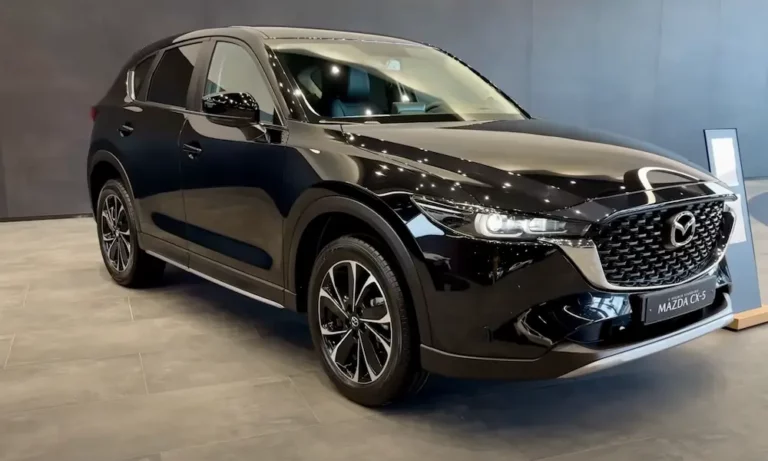
Picking the right Mazda CX-5 year can save you thousands — or cost you an engine. Here’s everything you need to know, from the standout years worth buying to the one year you should skip entirely. Stick around, because the answer might surprise you.
Why the Mazda CX-5 Stands Out in a Crowded Market
The Mazda CX-5 isn’t just another compact SUV. It’s the vehicle that rebuilt Mazda’s entire identity in the North American market. Since its 2013 debut, it’s been Mazda’s global bestseller — and for good reason.
It drives like a car, looks like it costs more than it does, and holds its value better than most rivals. But not every model year is created equal. Some years are excellent buys. One year is a reliability disaster. Let’s break it all down.
First Generation (2013–2016): Where It Started
The first-gen CX-5 introduced Mazda’s Skyactiv technology to the world. It was lighter, stiffer, and sharper to drive than anything Mazda had built before. However, it had some growing pains worth knowing about.
2013: Skip It If You Want More Power
The 2013 CX-5 was a genuinely exciting launch. It offered precise steering, athletic handling, and even a rare six-speed manual option. But the only available engine — a 2.0-liter four-cylinder producing just 155 horsepower — left drivers wanting more, especially on highway on-ramps.
Add in lower crash test scores (it earned a “Marginal” rating in the IIHS small overlap front test) and some reports of excessive oil consumption, and the 2013 model is generally one to pass on.
2014–2015: The Sweet Spot of Gen One
Mazda listened to the criticism. For 2014, they added a proper 2.5-liter engine making 184 horsepower and 185 lb-ft of torque. That changed everything.
| Spec | 2013 (2.0L) | 2014–2016 (2.5L) |
|---|---|---|
| Horsepower | 155 hp | 184 hp |
| Torque | 150 lb-ft | 185 lb-ft |
| Transmission | 6-Speed Manual/Auto | 6-Speed Automatic |
The 2014 and 2015 models also gained a Smart City Brake Support system — early automatic emergency braking that was ahead of the curve for a non-luxury SUV. These two years represent the most stable version of the first generation, with the extra power and no major systemic failures.
2016: The Year to Avoid — Full Stop
Here’s the one year you should actively avoid: the 2016 Mazda CX-5.
On paper, it looked great. Mazda gave it a facelift, better interior materials, improved sound insulation, and a new MZD Connect infotainment system. In practice, it became the most problematic year in the CX-5’s history.
The main issues:
- Blown head gaskets around 120,000 miles, often requiring full engine replacements costing $6,000+
- LED daytime running light failures caused by a defective sealing material that corroded the lights from the inside — prompting a recall of over 36,000 vehicles
- Fuel filler pipe recall for a rupture risk during rear-end collisions, flagged by NHTSA as a potential fire hazard
No matter how good the deal looks on a 2016 CX-5, walk away.
Second Generation (2017–2025): The CX-5 Grows Up
The 2017 redesign shifted the CX-5 into premium territory. Mazda went after buyers who wanted near-luxury quality without the German price tag.
2017: Quieter, Softer, Smarter
The 2017 model brought a stiffer frame, dramatically more sound-deadening material, and a fully overhauled cabin with higher-grade materials throughout. It used the same 187-hp 2.5-liter engine but with smoother power delivery and a more refined automatic transmission. A solid buy if you find a well-maintained one.
2018–2019: Great Tech, One Known Issue to Check
In 2018, Mazda introduced cylinder deactivation — the engine could run on just two cylinders during light driving to save fuel. Smart engineering, but a software glitch in the powertrain control module caused unexpected stalling on some 2018 and 2019 models. Mazda issued a recall to fix it. Always verify the PCM software update has been applied before buying one of these.
There was also a fuel pump recall affecting 2018–2019 models where a cracked impeller could cause the engine to stall.
The big news for 2019 was the turbocharged engine — a 2.5-liter turbo making up to 250 horsepower on premium fuel, borrowed from the larger CX-9. It turned the CX-5 into one of the quickest crossovers in its class.
| Engine | Fuel | Horsepower | Torque |
|---|---|---|---|
| Standard 2.5L | Regular (87) | 187 hp | 186 lb-ft |
| Turbo 2.5L | Regular (87) | 227 hp | 310 lb-ft |
| Turbo 2.5L | Premium (93) | 250 hp | 320 lb-ft |
The 2019 model also finally added Apple CarPlay and Android Auto across most trims. The top-tier Signature trim brought Nappa leather, real wood trim, and a 360-degree camera.
One thing to avoid in 2019: the diesel variant. It was discontinued after one year for good reason. DPF blockages and oil dilution issues made it a headache, especially for city drivers.
2020: The Best Year for Value
The 2020 CX-5 is where things get really interesting for budget shoppers. This was the first year Mazda made the full i-Activsense safety suite standard on every trim — including the base Sport.
That means every 2020 CX-5 comes with:
- Forward collision warning
- Automatic emergency braking
- Adaptive cruise control
- Lane-keeping assist
J.D. Power awarded the 2020 CX-5 a Quality & Reliability score of 85/100 — the highest score in the nameplate’s history. You get modern safety tech, proven mechanicals, and a lower used-market price than newer models. Hard to beat.
2021: The Best Overall Year to Buy
If you had to pick just one year, the 2021 Mazda CX-5 is the answer.
Here’s why it earns the top spot:
- New 10.25-inch infotainment screen with a much faster, more responsive Mazda Connect system (fixes the “ghost touch” issues that plagued pre-2021 screens)
- Proven mechanical platform — no new-year bugs to worry about
- Full safety suite standard on every trim
- Turbocharged engine available for drivers who want performance
- Priced attractively on the used market relative to what you get
The 2021 model hits every note: reliability, technology, safety, and driving enjoyment. It’s the CX-5 at its most complete before the 2022 facelift.
2022–2025: All-Wheel Drive Becomes Standard
The 2022 facelift brought redesigned styling, more comfortable seats, and — most importantly — i-Activ AWD standard on every U.S. model. No more trim-level hunting to get all-wheel drive.
Updates through 2025 were mostly incremental: wireless charging, software tweaks, and in 2024, improved rear seatbelt load limiters and pretensioners to meet updated IIHS crash standards. All solid years to buy.
The 2026 Redesign: A New Chapter
Announced in July 2025, the 2026 CX-5 is a complete ground-up redesign — and it fixes the two complaints buyers have had for years.
More Space Where It Counts
The wheelbase grows by 4.5 inches. Rear-seat legroom increases significantly. The cargo hold is larger. The rear doors open wider for easier child seat installation. Mazda finally addressed its biggest weakness compared to rivals like the Honda CR-V.
New Infotainment System
The rotary commander knob — a Mazda signature for over a decade — is gone. In its place is a 12.9-inch touchscreen (upgradeable to 15.6 inches on top trims) with Google built-in for native Maps, Assistant, and app access.
| 2026 Trim | Starting MSRP | Key Highlights |
|---|---|---|
| 2.5 S | $29,990 | 12.9-inch screen, i-Activ AWD |
| 2.5 S Select | $31,990 | Leatherette seats, wireless integration |
| 2.5 S Preferred | $34,250 | 19-inch wheels, power liftgate |
| 2.5 S Premium | $36,900 | Panoramic roof, Bose 12-speaker audio |
| 2.5 S Premium Plus | $38,990 | 15.6-inch screen, 360-degree camera |
A hybrid variant using Mazda’s in-house Skyactiv-Z system arrives for 2027, targeting significantly better fuel economy while keeping the CX-5’s engaging driving dynamics intact.
CX-5 Safety: Consistently Among the Best
The CX-5 has earned NHTSA’s 5-star overall safety rating across multiple generations. In 2021, it was the only compact SUV to earn a “Good” rating in the IIHS’s updated, tougher side-impact test — a test that tripped up many competitors.
| IIHS Test | 2013 | 2014–2021 | 2022–2025 |
|---|---|---|---|
| Small Overlap Front | Marginal | Good | Good |
| Moderate Overlap Front | Good | Good | Good |
| Side Impact (Updated) | N/A | Good | Good |
| Roof Strength | Good | Good | Good |
Mazda has consistently led the industry in IIHS TOP SAFETY PICK+ awards, making safety a genuine CX-5 strength across all generations.
Real Ownership Costs: What to Expect
The CX-5 is one of the more affordable compact SUVs to maintain. Average annual maintenance runs $400–$500 — well below segment average. With proper care, these engines regularly run 200,000 to 250,000 miles.
Things to watch on high-mileage used examples:
- Suspension bushings wear around 100,000 miles
- Carbon buildup on intake valves (less common than other direct-injection engines, but worth an inspection)
- AWD system clunk on neglected high-mileage units
Resale value is another CX-5 strength. It retains roughly 65–70% of its value after three years — better than most American and European rivals. That makes it a smart choice whether you’re buying to keep or plan to trade in eventually.
Which Year Is Right for You?
Here’s the quick-reference breakdown:
- Best overall year: 2021 — best tech, proven reliability, full safety suite
- Best value year: 2020 — same safety features, lower price, highest J.D. Power reliability score
- Best for performance: 2019 Turbo Signature — just verify the recall is completed first
- Best for space and new tech: 2026 redesign — bigger, smarter, more modern
- Year to avoid: 2016 — head gasket failures, LED recall, fuel system issues make it a hard pass
Whatever year you choose, always pull the vehicle history, check for open recalls on NHTSA’s database, and confirm any recall-related repairs are documented and completed. The CX-5 is one of the most rewarding compact SUVs you can buy — just make sure you’re buying the right one.