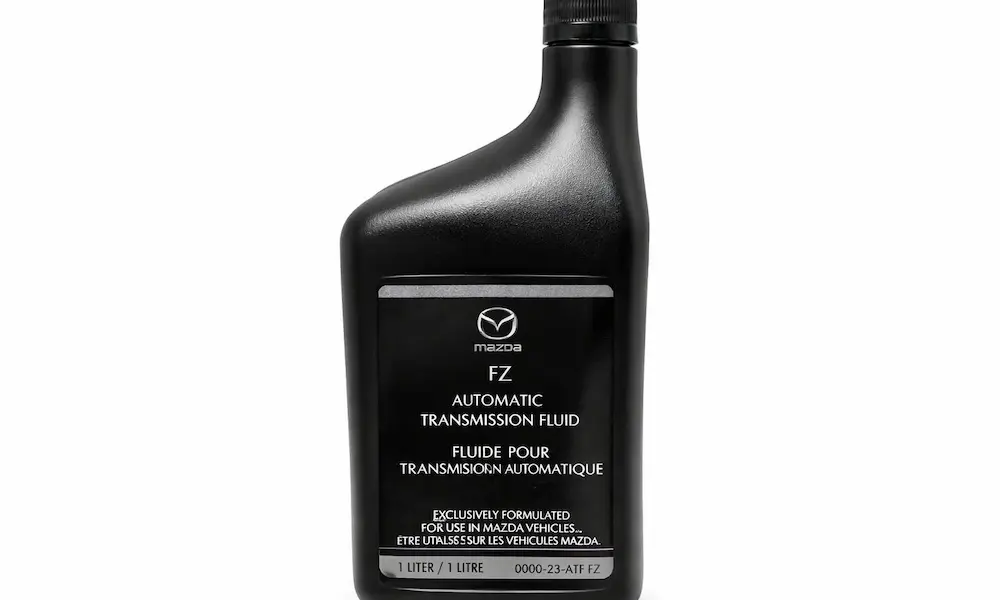
Mazda says the ATF FZ fluid in your Skyactiv transmission is “lifetime.” Spoiler: it’s not. The wrong fluid — or a neglected fluid change — can turn your smooth-shifting Mazda into a jolting, shuddering mess. This guide breaks down every credible Mazda ATF FZ equivalent, what the specs actually mean, and how to keep your transmission healthy for the long haul. Read to the end — the drain procedure section alone could save you hundreds.
What Makes Mazda ATF FZ So Different?
The Skyactiv-Drive transmission isn’t your typical automatic. Mazda engineered it to blend the smoothness of a traditional planetary auto, the directness of a dual-clutch, and the efficiency of a CVT — all in one unit.
The secret weapon is a multi-plate lock-up clutch that engages across roughly 80% of the operating range. That’s a massive departure from conventional automatics, which rely on the torque converter for most of their power transfer.
This high lock-up rate creates intense thermal and frictional stress on the fluid. Standard ATF couldn’t handle it. So Mazda — working with transmission manufacturer Aisin AW — developed ATF FZ: a low-viscosity, fully synthetic fluid with a precisely tuned additive package.
They even dyed it blue.
That’s not a gimmick. The blue color prevents technicians from accidentally using the older red-colored Mazda M-III or M-V fluids, which have higher viscosities and different friction profiles. Using the wrong fluid in a Skyactiv-Drive can cause shift shudder or mechanical failure.
The Core Specs: What ATF FZ Actually Looks Like on Paper
Before you pick an equivalent, you need to understand what you’re trying to match. Here’s how genuine ATF FZ and two well-known alternatives stack up:
| Lubricant Property | Testing Standard | Mazda/Aisin Genuine FZ | Ravenol ATF FZ | Vapro ATF MZ-FZ |
|---|---|---|---|---|
| Density at 15°C (kg/m³) | ASTM D4052 | 849.9 | 835.0 (at 20°C) | 850.0 |
| Kinematic Viscosity @ 40°C (cSt) | ASTM D445 | 27.67 | Variable | 32.0 |
| Kinematic Viscosity @ 100°C (cSt) | ASTM D445 | 5.73 | Variable | 6.3 |
| Viscosity Index (VI) | ASTM D2270 | 155 | — | 152 |
| Flash Point (°C) | ASTM D92 | 220 | Not Listed | 205 |
| Pour Point (°C) | ASTM D97 | -49 to -51 | -51 | -55 |
| Color | Visual | Blue/Blue-Green | Blue | Blue |
The kinematic viscosity at 100°C — sitting around 5.73 cSt for the genuine fluid — is the number that matters most. It’s significantly lower than traditional ATFs. That low viscosity is what enables consistent hydraulic pressure in the tight tolerances of the Skyactiv-Drive valve body.
Any fluid you use as a Mazda ATF FZ equivalent must hit this range. Fluids that are too thick will affect shift timing and increase heat buildup.
The Best Mazda ATF FZ Equivalents (Ranked by Reliability)
Aisin ATF-MFZ: The Closest You Can Get
Here’s something most Mazda owners don’t know: Aisin AW builds the Skyactiv-Drive transmission. They designed it, they manufacture it, and they formulate the fluid for it.
The fluid sold as Aisin ATF-MFZ is widely regarded by technical specialists as the OE fluid — chemically identical to what’s in the bottle at your Mazda dealership, just with different packaging. It matches the 5.73 cSt kinematic viscosity at 100°C and carries the same blue color profile.
If you want genuine-spec protection without the dealership markup, this is your top pick. The distinction between “genuine” and “aftermarket” here is really just a branding question, not a chemistry one.
Ravenol ATF FZ: The Premium Synthetic Upgrade
Ravenol ATF FZ is a fully synthetic fluid built on a Polyalphaolefin (PAO) base oil. That matters because PAO molecules are synthetically uniform — they don’t need as many Viscosity Index Improvers (VII) to maintain their grade.
In a Skyactiv-Drive, the fluid gets hammered through the valve body at high pressure and experiences intense friction at the lock-up clutch. Traditional VII polymers can shear under this stress, permanently lowering the fluid’s viscosity. PAO resists this.
Ravenol lists compatibility with Mazda part numbers 0000-FZ-113E-01 and 8300-77-246, is dyed blue, and is a dedicated FZ formulation — not a universal fluid stretched to fit.
Think of it this way: the Ravenol starts at the same viscosity as OEM fluid, but stays there longer. That consistency means your transmission shifts the same way at 80,000 km as it did at 10,000 km.
Idemitsu Multi-Vehicle ATF PLUS: The Japanese Factory Specialist
Idemitsu supplies lubricants directly to the Japanese automotive industry. Their Multi-Vehicle ATF PLUS is formulated to cover a range of Japanese low-viscosity specifications, including the Mazda FZ spec. It runs a kinematic viscosity at 100°C of approximately 6.1 cSt — slightly higher than the OEM figure but within an acceptable range.
It’s a solid choice for everyday drivers who want Japanese OEM-grade quality without paying premium prices.
Castrol Transmax ATF/CVT Universal: The Versatile Option
Castrol Transmax ATF/CVT Universal is notable for being the first multi-vehicle fluid certified for both traditional step-automatics and CVTs. It uses Smooth Drive Technology to manage friction across a wide torque range.
It’s dyed red — not blue — but Castrol explicitly lists Mazda FZ as a supported application. Its slightly higher viscosity makes it a good fit for vehicles in warmer climates or those used for towing, where extra film strength is welcome.
Valvoline MaxLife Multi-Vehicle ATF: The High-Mileage Helper
Valvoline MaxLife targets higher-mileage transmissions. It’s a full-synthetic formulation with advanced friction modifiers and seal conditioners. Many Mazda owners report reduced low-speed jolting after switching to it — likely because the seal conditioners address minor internal wear.
The caveat: it’s a broad universal fluid covering DEXRON VI, MERCON LV, and others. That broad compatibility means it doesn’t hit the FZ spec as precisely as Aisin or Ravenol. It’s a reasonable budget choice, but critics note it’s not a perfect viscosity match.
Why Friction Modifiers Matter More Than You Think
The “buttery” shift feel of a new Mazda isn’t just good engineering — it’s chemistry. Friction modifiers within ATF FZ are polar molecules that bond to clutch plate surfaces and manage the transition between static and dynamic friction during lock-up engagement.
If those modifiers don’t match the specific clutch material and friction-paper chemistry of the FW6A-EL transmission, two things can happen:
- Too abrupt a transition → jolting, harsh shifts
- Too slow a transition → shudder, excess heat, accelerated clutch wear
This is exactly why cheap generic multi-vehicle fluids are risky. A fluid that doesn’t explicitly list Mazda FZ compatibility may not have the right friction modifier balance for the Skyactiv clutch stack — even if its viscosity looks acceptable on paper.
The “Lifetime” Fluid Myth — Debunked
Mazda officially labels the ATF FZ as a “lifetime” fluid. What they mean is that it’s designed to outlast the powertrain warranty. What they don’t say is that the transmission itself can last far longer with proper maintenance.
Independent fluid analysis reports confirm that ATF FZ degrades like any other lubricant. Three specific mechanisms accelerate that degradation:
- Thermal oxidation — Stop-and-go traffic spikes operating temperatures, depleting additives and thinning the fluid over time
- Particulate accumulation — Microscopic metallic wear particles suspend in the fluid and can damage sensitive solenoids in the valve body
- Moisture absorption — Temperature cycling causes condensation inside the transmission case, attacking the fluid’s additive chemistry
Most specialists recommend a drain and fill every 30,000 to 60,000 miles as a preventative measure — especially for vehicles in tropical climates or heavy urban traffic.
How to Do a Proper ATF FZ Drain and Fill
Know Your Capacity First
A single drain doesn’t replace all the fluid. Fluid trapped in the torque converter and internal cooling circuits stays put. Here’s what you’re working with across common Mazda models:
| Vehicle Model / Engine | Total System Capacity (L) | Single Drain Volume (L) |
|---|---|---|
| Mazda 3 / CX-5 (Skyactiv-G 1.5L) | 7.2 | 3.5–4.0 |
| Mazda 6 / CX-5 (Skyactiv-G 2.0/2.5L) | 7.6 | 3.5–4.5 |
| Mazda 6 / CX-5 (Cylinder Deactivation) | 7.9 | 3.5–4.5 |
| Mazda CX-9 / Skyactiv-D 2.2L | 8.0 | 4.0–5.0 |
To maximize fluid replacement, many technicians run three consecutive drain-and-fill cycles, driving the vehicle briefly between each one. This method theoretically replaces over 80% of the old fluid without the risks of a high-pressure machine flush — which isn’t recommended for Skyactiv-Drive systems due to the absence of external cooler lines.
RTV Sealant, Not a Gasket
If you drop the pan for a thorough service, don’t reach for a rubber gasket. Mazda Skyactiv transmissions seal the pan with automotive-grade RTV silicone. The pan flange is machined for the low profile of a chemical sealant. Using a conventional gasket will cause leaks. Remove all old RTV completely, then apply a fresh, precise bead before reinstallation.
Reset the TCM After Every Fluid Change
This step gets skipped constantly — and it causes real problems. The Transmission Control Module (TCM) continuously learns hydraulic pressure adjustments to compensate for worn, degraded fluid. After a fluid change, the TCM may still operate on those “learned” parameters — optimized for old fluid.
A professional diagnostic tool can perform an adaptive shift learn reset, forcing the TCM to recalibrate its shift sequences to the fresh fluid’s properties. Skip this and you might change the fluid but still feel like the transmission is shifting on empty.
What the Fluid Color Actually Tells You
Fresh ATF FZ is a vibrant blue. But the dye is thermally sensitive. Within a few thousand kilometres, it naturally shifts toward reddish-brown or dark brown. That’s normal.
Mazda dealerships consider the fluid acceptable as long as it’s not pitch black and doesn’t smell burnt. Enthusiasts typically use color as a secondary prompt rather than the sole indicator. If it’s dark and you’re past 50,000 km, just change it.
Handling and Disposal: Don’t Skip This Part
ATF FZ and its equivalents contain zinc, phosphorus, and sulfur-based additives that are toxic to aquatic life. Pouring used fluid down a drain isn’t just illegal in most jurisdictions — it’s genuinely harmful.
Here’s the basic safety reference:
| Hazard Type | Protocol |
|---|---|
| Skin Contact | Wash immediately with soap and water |
| Eye Contact | Flush with clean water for at least 15 minutes |
| Ingestion | Don’t induce vomiting — seek medical attention immediately |
| Inhalation | Move to fresh air; use respiratory protection if mist is present |
| Fire | Use CO2, foam, or dry chemical; avoid solid water streams |
Collect used fluid and take it to a certified recycling facility. Most reputable workshops already use specialized oil collection services for this purpose.
The Smart Choice for Your Skyactiv-Drive
The Mazda ATF FZ equivalent market is mature and well-stocked. You’ve got solid options at every price point. Here’s the quick summary:
- Best overall: Aisin ATF-MFZ — it’s chemically the same as OEM, just without the Mazda sticker
- Best long-interval protection: Ravenol ATF FZ — PAO base resists shear and holds viscosity longer
- Best value for regular changes: Idemitsu Multi-Vehicle ATF PLUS — Japanese OEM quality at a fair price
- Avoid: Any generic multi-vehicle fluid that doesn’t explicitly list Mazda FZ compatibility
Change it every 50,000 to 80,000 km. Reset the TCM after each service. Use RTV, not a gasket, on the pan. Do it right once, and your Skyactiv-Drive will shift like new well past the 150,000 km mark.