Got a Volvo SCR system fault message staring you down from the dashboard? You might already feel the dread of a 5 MPH derate creeping in. This guide breaks down exactly what’s triggering that fault, which codes matter most, and what you can do before your truck becomes a very expensive road cone. Read to the end — there’s a real-world case breakdown you don’t want to miss.
What Is the Volvo SCR System, and Why Should You Care?
The Selective Catalytic Reduction (SCR) system is Volvo’s way of keeping nitrogen oxide (NOx) emissions in check. It injects Diesel Exhaust Fluid (DEF) — a mix of 32.5% urea and 67.5% deionized water — into the exhaust stream. That triggers a chemical reaction that converts harmful NOx into harmless nitrogen and water vapor.
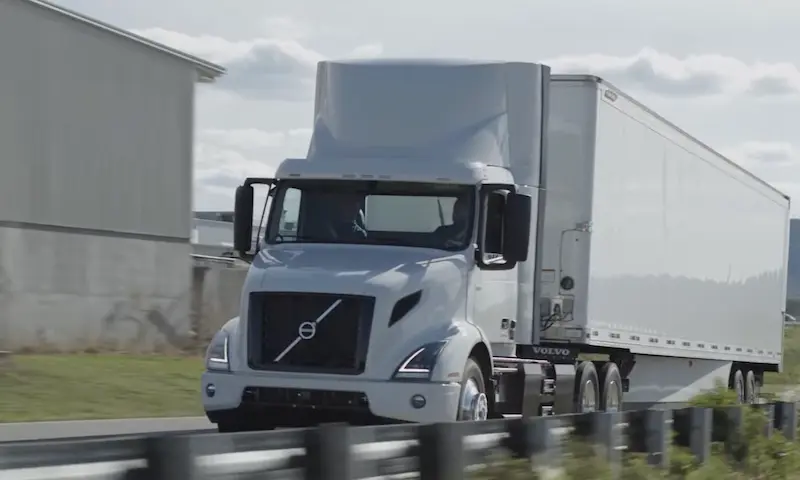
On heavy-duty trucks like the VNL, VHD, and VAH series, the SCR catalyst sits inside a compact “One-Box” unit alongside the Diesel Oxidation Catalyst (DOC) and Diesel Particulate Filter (DPF). On passenger vehicles like the XC90 and XC60, it’s scaled down but works the same way.
Here’s the thing: the system needs exhaust temperatures above 200°C to work properly. Drop below that regularly, and you’re setting yourself up for trouble.
The Key Players in the System
| Component | What It Does | What Gets Monitored |
|---|---|---|
| DEF Tank | Stores reductant fluid | Level, quality (urea %), temperature |
| Supply Module (Pump) | Pressurizes DEF to ~5 bar / 72.5 psi | Line pressure, power draw |
| Dosing Valve | Atomizes DEF into exhaust | Dosing rate, solenoid resistance (12–18Ω) |
| SCR Catalyst | Where the chemical reaction happens | Conversion efficiency (%) |
| Inlet NOx Sensor | Measures engine-out NOx | NOx concentration (ppm) |
| Outlet NOx Sensor | Verifies tailpipe NOx | NOx concentration (ppm) |
The Aftertreatment Control Module (ACM) runs all of this. It compares inlet and outlet NOx readings. If the gap isn’t big enough, it flags a Volvo SCR system fault — and things go downhill fast from there.
The Fault Codes You Need to Know
P20EE: The Most Common (and Most Frustrating) Code
P20EE — SCR NOx Catalyst Efficiency Below Threshold — is the code most Volvo drivers and technicians see first. And it’s maddening because it doesn’t tell you why efficiency is low. It just tells you it is.
According to this NHTSA technical service bulletin, a P20EE can be caused by:
- Contaminated DEF — Even a 2–3% deviation in urea concentration triggers faults. Diesel or coolant contamination in the tank makes it worse.
- Sensor drift — The outlet NOx sensor starts reading high even when actual NOx is fine.
- A clogged dosing valve — It’s not spraying enough DEF, so conversion tanks.
- Catalyst poisoning — Oil or coolant from upstream issues coats the catalyst substrate and renders it useless.
Don’t automatically replace the catalyst. A drifting sensor is a much cheaper fix.
The Codes That Lead to the Dreaded 5 MPH Derate
The inducement system works in stages. You’ll get warnings first, then torque reductions (25% or 50%), and finally, if nothing gets fixed, you hit SPN 5246 FMI 0 — the terminal 5 MPH speed restriction.
Here’s a quick reference table:
| DTC / SPN | What It Means | What Happens |
|---|---|---|
| P20EE / P20EE00 | SCR NOx catalyst efficiency below threshold | MIL on, possible torque derate |
| P208E | Dosing valve stuck closed | DEF flow stops, derate follows |
| P103C | NOx catalyst efficiency inducement | Active power limitation |
| SPN 5246 | SCR inducement final level | 5 MPH speed restriction |
| SPN 5394 | Dosing valve failure | Complete loss of DEF dosing |
| P204F | Reductant system performance (Bank 1) | System-wide dosing error |
If you’re already at SPN 5246, this OTR Performance breakdown covers your immediate options for getting the truck moving again.
What Actually Causes a Volvo SCR System Fault
Bad DEF Quality
This is the first thing to check. DEF degrades over time and loses its urea concentration. It can also get contaminated with diesel fuel or coolant — both of which kill the system fast.
Always use DEF that meets ISO 22241 standards. Store it properly (out of direct sunlight, between 12°F and 86°F), and don’t let it sit in the tank for more than a year.
A Failing Dosing Valve
The dosing valve is a high-frequency solenoid injector sitting right next to extreme heat. Many Volvo dosing valves are water-cooled for this reason. Over time, they clog, crack, or fail outright.
Signs of a bad dosing valve:
- “Insufficient DEF injected” fault codes
- White crystalline deposits around the injector port
- Fault only appears under heavy load (could be a thermally-active crack in the flange)
Replacement dosing valves run between $160 and $360 depending on the source.
NOx Sensor Drift
According to diagnostic guides from iCarsoft, a healthy SCR system should show outlet NOx reading less than 20% of the inlet NOx while dosing is active. If you’re seeing the outlet reading higher than the inlet while dosing — that’s not a catalyst problem. That’s a drifted sensor.
Aftermarket NOx sensors run $391–$418. OEM Volvo sensors are closer to $450–$600.
Upstream Engine Issues
The SCR is the last component in the exhaust aftertreatment system. That means anything wrong upstream — EGR leaks, turbocharger oil consumption, low boost pressure, or a cracked DPF — flows right into the SCR and damages it.
This NHTSA service bulletin specifically notes that the SCR is “the last component in the EATS which makes it susceptible to any upstream failures.” Before you condemn the catalyst, check the engine.
Urea Crystallization: The Silent Killer
Urea crystallization happens when DEF doesn’t fully convert to ammonia gas. Instead of vaporizing, it pools on exhaust pipe surfaces and hardens into white, rock-like deposits. Some techs call it “stalactite” formation — and it’s a fitting name.
Low-load driving is the main culprit. If your exhaust temps are regularly dropping below 200°C, the DEF doesn’t fully react, and the buildup starts.
How to Deal With Crystallization
- Physical cleaning: Remove the dosing valve and use a brass-bristled brush to clear the nozzle and port. Warm pressurized water can dissolve stubborn deposits.
- Chemical treatment: Products like Hot Shot’s Secret DEFender go into the DEF tank and break down existing urea scale while the truck runs.
- Sulfur regeneration: For severe cases, a specific regeneration cycle raises SCR temperatures high enough to bake out the deposits entirely.
Real-World Cases: What These Faults Look Like in Practice
Case 1: The “Ghost” Inducement in Phoenix
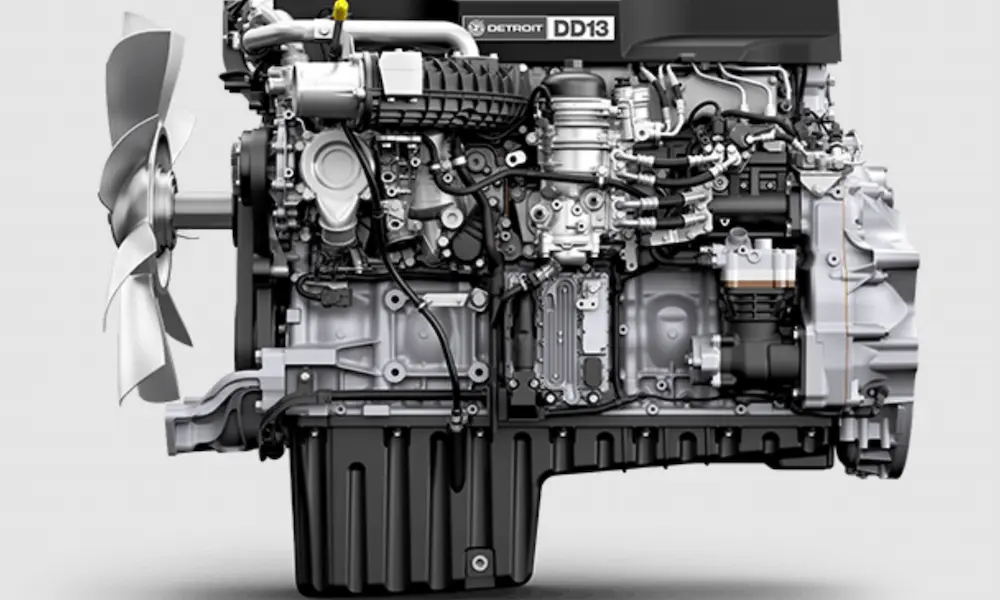
A Volvo D13 truck drops into 5 MPH derate in Phoenix, Arizona. DEF tank is half full, quality tests at exactly 32.5% urea. Everything looks fine — but the truck won’t exit derate.
What’s happening: In extreme heat, the DEF pump can vapor lock and the dosing valve can heat-soak. The technician runs “Test C: Exit Inducement Mode” via PTT. This forces the ACM to re-evaluate all monitors and reset the derate timer, giving the driver a 4-hour window to reach a shop.
Case 2: The Fault That Only Showed Under Load
An owner-operator gets an “Insufficient DEF Injected” fault — but only under heavy load. A dosing test at the shop passes perfectly.
What’s happening: A hairline crack in the dosing valve mounting flange only opens up when metal expands under heat during a parked regen (which exceeds 600°C). The crack pulls in ambient air and fools the NOx sensor. Replacing just the dosing valve and stainless braided exhaust pipe fixes it.
Case 3: Persistent P20EE with White Deposits at SCR Inlet
A 2019–2020 model truck shows a recurring P20EE with visible crystallization at the SCR inlet.
What’s happening: This falls under Field Service Bulletin 258-041. The One-Box EATS system on these models is prone to crystallization in certain duty cycles. The fix requires removing the dosing valve and sealing plate (both get discarded), cleaning out the crystal buildup manually, then running a sulfur regeneration cycle to clear the substrate.
Warranty Programs That Might Save You Money
Before you pay for any SCR repair, check your warranty coverage. There are programs most owners don’t know about.
| Warranty Program | Vehicle / Engine | Coverage | What’s Covered |
|---|---|---|---|
| U112 | 2017 D13 Truck Engine | 10 yrs / 435,000 miles | Pre-SCR NOx Sensor |
| P29929 | 2015–2016 XC60/XC90/S60 | 8 yrs / 80,000 miles | Low Pressure Fuel Sensor |
| CARB High-Cost | CA-registered passenger vehicles | 7 yrs / 70,000 miles | SCR Catalyst, ECM |
Warranty Extension U112 specifically covers the Pre-SCR NOx sensor on 2017 D13 engines — a sensor that can cost $500+ out of pocket. If your truck qualifies, that’s a bill you shouldn’t be paying.
California owners also benefit from CARB’s High-Cost Emissions-Related Parts coverage, which covers the SCR catalyst and ECM for 7 years or 70,000 miles. Worth checking before you write a big check at the dealer.
Don’t Even Think About Emulators
The internet is full of ads for AdBlue emulators — devices that splice into your truck’s CAN-bus and fake a healthy SCR signal. They stop derate events, which sounds great until you realize what’s actually happening.
Without a functioning SCR system, your DPF can’t regulate regenerations properly. That leads to a fully blocked DPF, which can damage the turbocharger or even the engine itself. Some emulators also cause interference with ABS and transmission controllers.
And legally? Emissions tampering is a federal offense in many countries. The financial risk of fines and the mechanical risk of catastrophic engine damage make emulators a very bad deal.
What Good DEF Maintenance Actually Looks Like
Most SCR faults are preventable. Here’s the short version of what actually works:
- Use quality DEF — Don’t buy unknown brands from unmarked containers. API-certified DEF only.
- Don’t let DEF sit too long — Shelf life is about 1 year at normal temperatures.
- Keep the DEF tank heater working — Especially critical for XC90/XC60 owners in cold climates. A failed AdBlue tank heater is a common winter failure that freezes the system solid.
- Check the EGR system regularly — EGR leaks increase raw NOx output and overwhelm the SCR.
- Don’t ignore amber warning lights — By the time you hit the final inducement, you’ve already missed several chances to fix the problem cheaply.
A Volvo SCR system fault doesn’t have to mean a huge repair bill — but it does mean you need to act fast, diagnose smart, and not skip the upstream checks before throwing parts at it.