Dealership quotes for Volvo key fob programming often land between $600 and $800 — for a single key. That’s a lot. But here’s the thing: the process varies wildly depending on your platform, and knowing which method applies to your car can save you hundreds. This guide breaks it all down, from the old-school P80 to the latest SPA and CMA systems. Stick around — the cost section alone is worth it.
Why Volvo Key Fob Programming Isn’t One-Size-Fits-All
Volvo has built its security systems across five major platforms over the past three decades: P80, P2, P3, SPA, and CMA. Each one uses a different programming method, different hardware, and different levels of encryption.
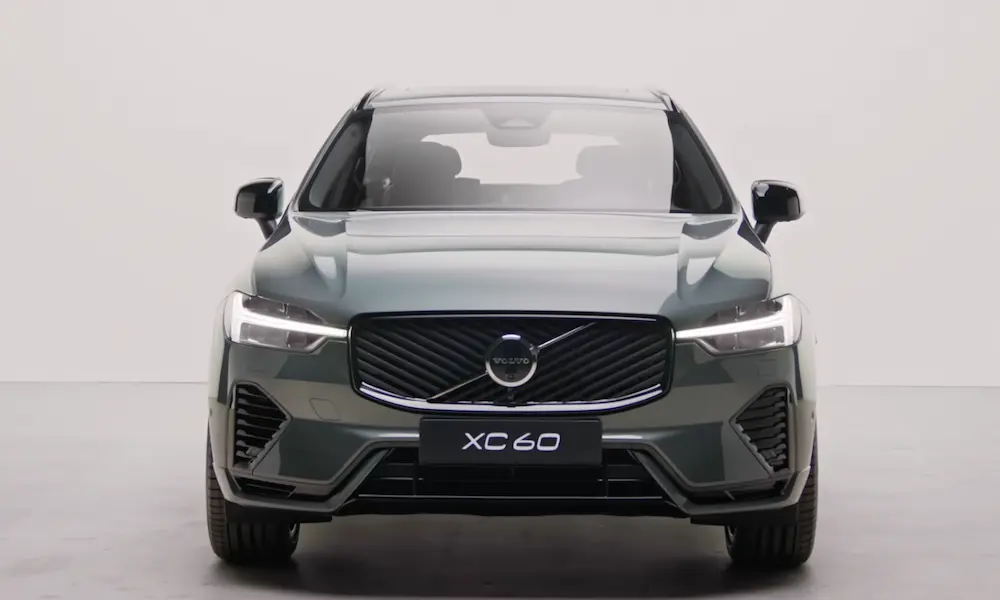
What works on a 1996 Volvo 850 won’t work on a 2022 XC60. Not even close.
The platform your car sits on determines:
- Whether you can program the fob yourself
- What tools you’ll need
- How much it’ll cost
- How long it takes
Let’s go platform by platform.
P80 Platform: The DIY-Friendly Era (1993–2000)
The P80 covers the Volvo 850, early S70, V70, and C70. These are the models where manual key fob programming is actually possible without any diagnostic tools.
How the Manual Sync Sequence Works
For a 1996 Volvo 850, here’s the process:
- Close all doors, the hood, and the tailgate
- Cycle the ignition from OFF to ON (Position II) five times within 10 seconds
- Leave it in the ON position on the fifth cycle
- Watch for the dashboard LED to blink — that’s your signal the system is ready
- Press a button on the remote within 15 seconds
- Repeat for up to four remotes, each within 15 seconds of the last
The security module enters a learning mode and captures each remote’s unique ID into its non-volatile memory. Simple, effective, and completely free.
Important caveat: From 1998 onward, Volvo phased out this manual process on late P80 models like the refined S70 and V70. Those cars require a PIN-protected software handshake through Volvo’s diagnostic tools.
| Model Year | Platform Stage | Programming Method | Immobilizer Type |
|---|---|---|---|
| 1993–1995 | Early P80 | Manual ignition cycles | None or basic transponder |
| 1996–1997 | P80 | Manual ignition cycles | Megamos Fixed Code 6 |
| 1998–2000 | Late P80 | Diagnostic tool (VIDA/Dealer) | Megamos Crypto 9 |
RF frequency note: North American P80 remotes run on 315 MHz. European models use 433 MHz. Buying the wrong remote is a common (and frustrating) mistake.
P2 Platform: VIDA Enters the Picture (2001–2009)
The P2 platform covers the S60, S80, V70 Phase II, XC70, and XC90. This is where Volvo key fob programming gets significantly more technical.
The Central Electronic Module (CEM) now acts as the primary security gatekeeper. Every P2 remote comes serialized — it has a unique 8-digit or 16-digit code printed on its original packaging. Without that code, the remote is useless. The vehicle’s software won’t accept the hardware ID without the matching cryptographic key.
What You Need for P2 Programming
- VIDA software (Vehicle Information and Diagnostics for Aftersales)
- DiCE interface (Diagnostic Communication Equipment)
- The remote’s unique pairing code
- A stable 12V power supply
One thing that trips people up: the P2 system has separate “bits” for the immobilizer and the remote control. The physical transponder chip must pair with the CEM to authorize engine start. The RF circuit pairs separately for locking functions. If your power supply dips during a VIDA session, you can end up with a “half-programmed” key — one that starts the car but won’t lock the doors, or vice versa.
How Multi-Module Security Works
When you turn the key, the CEM queries the transponder through the antenna ring. Once validated, the CEM sends a sync signal to the Engine Control Module (ECM). If the ECM doesn’t get the right response in a millisecond-precision window, it kills the fuel pump and ignition coils. This makes P2 Volvos essentially impossible to hotwire through conventional means.
Used remotes from another P2 car cannot be reprogrammed to a different vehicle. The pairing code is consumed during initial programming and isn’t recoverable from the fob itself.
P3 Platform: Encryption, Slot Keys, and the 24-Hour Decode (2007–2016)
The P3 platform — covering the S60 II, S80 II, V60, V70 III, XC60, and XC70 II — is where things get genuinely complex. The traditional ignition cylinder disappears, replaced by a Start Control Unit (SCU) where you insert the key fob.
Security here depends on a highly encrypted CEM that stores the master keys for the vehicle’s immobilization system. You need a unique CEM PIN to authorize any changes, including adding new keys. Volvo doesn’t give these PINs to anyone — even their own dealers use an automated back-end handshake through VIDA servers.
CEM PIN Decoding: What It Actually Involves
For independent technicians, software like VDASH and OrBit developed brute-force decoding methods. The software sends thousands of diagnostic requests through the OBD-II port, analyzing CEM responses to narrow down the 6-byte security code.
Time required: 8 to 24 hours of uninterrupted connection.
Power requirement: A battery maintainer capable of 15A to 25A of constant current. The ignition stays in Position II the entire time, running cooling fans, interior lighting, and active modules. A voltage drop below 12V resets everything and forces you to start over. In worst cases, a voltage drop during a write operation corrupts the CEM’s flash memory — and that requires bench repair.
All Keys Lost (AKL) Scenarios
If the OBD-II method fails because the car is in a locked-down state, professional locksmiths use tools like the Autel IM608 Pro II for EEPROM reading. This means:
- Physically removing the CEM from the vehicle
- Opening the casing
- Soldering leads to the circuit board (or using specialized clips)
- Reading binary data directly from the microcontroller
- Using the extracted data to calculate the PIN and generate a transponder file
P3 vehicles with proximity entry also have a Keyless Vehicle Module (KVM) in the trunk. If you program the CEM without properly addressing the KVM, the car starts from the slot but lacks keyless entry functionality. This CEM/KVM coordination failure is one of the most common issues in aftermarket P3 programming.
| Platform | Key Type | Security Access Method | Average Time |
|---|---|---|---|
| P2 | Mechanical / KIR | VIDA reload code | Instant (with code) |
| P3 | Slot / Smart Key | CEM PIN via OBD brute-force | 8–24 hours |
| SPA | Proximity Smart Key | CEM PIN / VIDA 3-day sub | 12–24 hours or seed/key |
SPA and CMA Platforms: The Modern Security Frontier (2016–Present)
The Scalable Product Architecture (SPA) and Compact Modular Architecture (CMA) platforms cover the XC90 II, XC60 II, and XC40. Physical ignition slots are gone entirely. These cars use proximity smart keys paired with a Vehicle Gateway Module (VGM) — an advanced firewall for the car’s high-speed Ethernet-based network.
Motion-Sensing Keys: Stopping Relay Attacks
Starting in 2021, Volvo introduced Motion-Sensing (MS) fobs — and it’s a smart solution to a real problem. Thieves were using RF amplifiers to extend a key’s signal from inside a house to a car in the driveway. The MS fob contains an internal accelerometer. When the key sits still for a few minutes, it enters sleep mode and disables its RF transmitter. No signal, no relay attack.
These MS keys are backward compatible with earlier SPA vehicles and available as an accessory upgrade.
VIDA vs. OrBit for SPA Programming
VIDA (Official Route):
- 3-day subscription costs $73–$83
- Requires purchasing a “Key Pairing” application on top of that
- All Keys Present rule: the system erases ALL existing key data when programming begins. If you leave a spare at home, it’s permanently wiped from the car’s memory
OrBit (Independent Route):
- More flexible — allows programming of used keys, not just new ones
- Directly modifies Variant Coding if the CEM PIN is known
- Manages Special keys (Red Key, Orange Key / Care Key) through Item 214 configuration
- Can toggle a Care Key to full access or restrict a standard key to 120 km/h speed limit
The iCUP / Android Firewall
The newest Volvo models use an Android Automotive-based iCUP system. The VGM firewall blocks all diagnostic write operations — including key programming and error code clearing — without a digital certificate from Volvo’s servers. Tools like VDASH can still read data, but they can’t write without the VGM PIN. That currently requires a live VIDA connection.
This is the “Security as a Service” model, and it’s a significant complication for independent locksmiths.
Diagnostic Tools: What the Professionals Actually Use
The quality of your interface cable matters enormously for Volvo key fob programming. Volvo’s security protocols are highly sensitive to latency and packet loss — especially during PIN decoding.
J2534 Passthrough Devices:
- Mongoose JLR — Low latency, highly reliable for P3 PIN decoding
- Super J2534 — Optimized for VDASH, acts as a full DiCE replacement
- VOE Cable (Ethernet-to-OBD) — Used for SPA/CMA vehicles via DoIP (Diagnostics over IP). Disable “Green Ethernet” and power-saving settings on your laptop’s Ethernet adapter, or the connection drops mid-session
Note on DiCE clones: Cheaper Chinese clones often get blacklisted by cloud-based VIDA, which detects counterfeit hardware serial numbers.
| Tool | Price Range | Best For | Volvo Capability |
|---|---|---|---|
| Autel IM608 Pro II | $3,000–$3,500 | Full IMMO, EEPROM, OE diagnostics | Excellent for P3/SPA AKL |
| OBDSTAR X300 DP Plus | $1,200–$2,100 | PIN reading, remote start | Strong for P2/P3 PIN bypass |
| Xhorse Key Tool Plus | $2,600–$2,800 | Transponder cloning, smart key gen | Versatile for pre-cut blades/chips |
| Autel KM100 | $400–$600 | Budget smart key programming | Limited but useful for newer fobs |
RF Frequencies: Don’t Buy the Wrong Fob
This is a common and completely avoidable mistake. Volvo uses different RF bands by region, and even within the same platform the frequency can shift.
- North America (P80/P2): 315 MHz
- North America (P3/SPA/CMA): 434 MHz
- Europe: 433 MHz and 868 MHz
- Japan (P3): 426 MHz — a notable outlier that looks identical to other keys externally
When sourcing a replacement key from eBay or AliExpress, always verify the FCC ID or internal part number before buying. For example, the HUF8423 is a 434 MHz North American key. A Japanese-market XC60 uses a completely different RF circuit in an identical-looking shell.
If you’re using OrBit, check Item 092 in the configuration to confirm the vehicle’s required frequency.
The Real Cost of Volvo Key Fob Programming
Here’s where the numbers get interesting. Dealership pricing for a single SPA key involves three separate charges:
- Hardware: $150–$250 for the fob itself
- Software: $25–$125 for the reload code or application fee
- Labor: $150–$300 for one hour of programming time
That totals $600–$800 per key. For three keys at a dealership, expect to pay around $1,700.
The independent route cuts that dramatically — but it takes time and upfront investment.
| Method | 1 Key (Est. Total) | 3 Keys (Est. Total) | Time Investment |
|---|---|---|---|
| Dealership | ~$700 | ~$1,700 | 1–2 hours |
| Independent Locksmith | $350–$500 | $600–$800 | 2–4 hours |
| DIY (OrBit/VIDA) | ~$250 | ~$450 | 12–24 hours |
Technicians have reported programming five keys for around $400 total — including tool costs. That’s roughly $80 per key versus $700 at the dealer. The trade-off is time and technical complexity.
Common Failure Points You’ll Want to Avoid
Voltage Drops Mid-Session
The CEM and KVM modules cut sessions if voltage fluctuates by even 0.5V. Always use a high-amperage battery maintainer — not a standard trickle charger. T8/Recharge hybrid models have an advantage here: the internal DC-DC converter helps stabilize voltage during VIDA sessions.
Broken Proximity After Programming
If you brute-force the CEM PIN but skip KVM synchronization, you get a “semi-smart” key. It starts the car from the slot but triggers “Key Not Found” when the key is in your pocket, and the door handles won’t respond. Fixing this usually requires a KVM software reload at dealer level.
The AKL Bricking Risk
In All Keys Lost situations, attempting to wipe the CEM without first extracting security data bricks the vehicle. No OBD-II communication, no start, nothing. Repair costs can exceed $3,000 when you factor in CEM, KVM, and Steering Column Lock replacement. Professional locksmiths always perform a full binary EEPROM backup on the bench before any OBD-II write operations.
SPA Key Programming via OrBit: Step-by-Step
For technicians ready to tackle SPA programming with OrBit, here’s the actual process:
- Prep your power: Connect a 25A battery maintainer to the vehicle before anything else
- Connect the VOE cable: This is your Ethernet-to-OBD link for DoIP communication
- Configure your laptop: Disable Green Ethernet and power management on the Ethernet adapter — a dropped connection mid-session is a real problem
- Acquire the CEM PIN: Use OrBit’s PIN Finder or VDASH’s Decode PIN function. Budget up to 24 hours if brute-forcing
- Erase existing keys: SPA programming starts fresh — all existing keys get wiped
- Initialize the first key: Place it in the backup reader location (center console or armrest storage area, depending on model)
- Complete the handshake: Press “Unlock” on the fob when prompted. The car captures the fob’s ID and 8A transponder signature
- Add subsequent keys: Repeat for every key, including any originals that were erased
- Finalize: Cycle ignition OFF then back ON. Test proximity entry and engine start for each key individually
The Sport Key Situation
The Sport Key (Activity Key) is the waterproof, buttonless tag that comes with many SPA vehicles. It’s ultrasonically welded — no user-replaceable battery. Dealer replacement runs $400–$500.
Some technicians cut the seam, swap the CR2032 battery, and reseal with adhesive. It works, but the tag usually loses its waterproofing. Since used Sport Keys can be reprogrammed to other cars via OrBit, there’s a growing secondary market for recycled tags — a worthwhile option if you only need the proximity start function and not pristine aesthetics.
Where Volvo Key Security Is Heading
The evolution from the P80’s manual ignition cycles to the iCUP platform’s server-dependent VGM firewall tells you everything about where this is going. Security is increasingly centralized in the CEM, and Volvo is moving toward a model where the manufacturer holds a persistent digital key to your car’s security configuration.
For independent technicians, staying relevant means investing in the right hardware infrastructure — specifically reliable J2534 interfaces, stable power supplies, and up-to-date software subscriptions. The days of a key blank and a code reader being enough are long gone. Volvo key fob programming is now as much about software expertise and network administration as it is about automotive locksmithing.