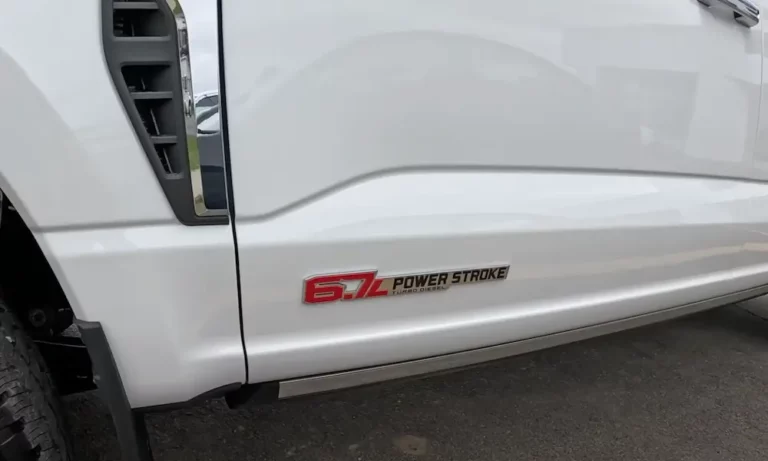
Shopping for a used diesel Super Duty? The 6.7 Powerstroke has over a decade of history — and not all years are created equal. This guide cuts through the noise and tells you exactly which years to target, which to skip, and why it matters for your wallet.
What Makes the 6.7 Powerstroke Special?
Ford launched the 6.7L Power Stroke in 2011 as its first fully in-house heavy-duty diesel — a massive departure from the Navistar-built engines that came before it.
Internally nicknamed “Scorpion,” this engine brought some genuinely clever engineering to the table:
- Reverse-flow cylinder heads — intake ports sit on the outside of the V8, exhaust manifolds sit in the valley
- Compacted graphite iron (CGI) block — twice the tensile strength of gray cast iron, without the extra weight
- Turbo mounted in the valley — shorter exhaust path means faster spool-up and less turbo lag
- Six-bolt main caps — four vertical, two horizontal — keeping the crank stable under brutal loads
The result? A platform that can clear 300,000 miles if you maintain it right. But the “best years for 6.7 Powerstroke” question isn’t straightforward — each generation brought meaningful changes.
Generation 1 (2011–2014): Promising, But Proceed With Caution
The first-gen Scorpion arrived with 390 hp and 735 lb-ft of torque. Ford bumped that to 400 hp and 800 lb-ft via a software update shortly after launch. Impressive numbers for the time — but early production trucks had real problems.
The 2011–2012 Turbo Problem
The original Garrett GT32 “DualBoost” turbo used ceramic ball bearings. On paper, ceramic reduces friction and spools faster. In practice, those bearings couldn’t handle sustained heat from heavy towing. Failures were catastrophic — a screaming, smoke-billowing event that usually destroyed the turbo seals and sucked oil into the exhaust.
Ford switched to steel ball bearings on the GT32 starting in the 2013 model year, which dramatically improved turbo longevity.
The Exhaust Valve Issue
Early 2011 trucks had a defect in the exhaust valve metallurgy. Valve heads could break off mid-cycle, drop into the cylinder, and destroy the engine. Broken glow plug tips often showed up as an early warning sign. Ford corrected the valve design in late 2011 production, making 2012–2014 trucks much more stable internally.
| Model Year | HP | Torque | Turbo | Key Issue |
|---|---|---|---|---|
| 2011 | 390/400 | 735/800 lb-ft | GT32 Ceramic | Exhaust valves, turbo bearings |
| 2012 | 400 | 800 lb-ft | GT32 Ceramic | CP4 sensitivity, turbo failure |
| 2013 | 400 | 800 lb-ft | GT32 Steel | Transition year — more stable |
| 2014 | 400 | 800 lb-ft | GT32 Steel | Solid, but outclassed by Gen 2 |
Verdict: Skip 2011–2012 unless you can verify the turbo has been replaced. The 2013–2014 are decent value buys if the price is right.
Generation 2 (2015–2016): The First “Real” Success
Many diesel technicians consider 2015 the year the 6.7 Powerstroke genuinely grew up. Ford replaced the GT32 with the larger Garrett GT37 variable geometry turbocharger — a non-wastegated design with steel ball bearings from the start.
The GT37 brought:
- Better high-altitude towing performance
- Stronger exhaust braking
- Significantly improved heat tolerance
Power climbed to 440 hp and 860 lb-ft of torque. Ford also revised the Bosch CP4.2 high-pressure fuel pump with a longer stroke for more fuel flow, and redesigned the piezoelectric injectors for better spray atomization — which made these trucks noticeably quieter at idle.
Cooling System Upgrades
The second gen also got a high-capacity radiator and a dedicated transmission cooler to handle the extra torque. These trucks still wore the traditional steel Super Duty body — a point some buyers actively prefer for repairability.
| Feature | Gen 1 (2011–2014) | Gen 2 (2015–2016) |
|---|---|---|
| Turbo Bearing | Ceramic → Steel | Steel (from day one) |
| Peak HP | 400 hp | 440 hp |
| Injection Pressure | 29,000 PSI | 30,000+ PSI |
| Cooling Setup | Single radiator | Enhanced multi-cooler |
Verdict: 2015–2016 is the best value pick for budget-conscious buyers. Fixed turbo, more power, traditional steel body. These trucks tend to be priced well below the 2017+ aluminum-body trucks.
Generation 3 (2017–2019): The Sweet Spot
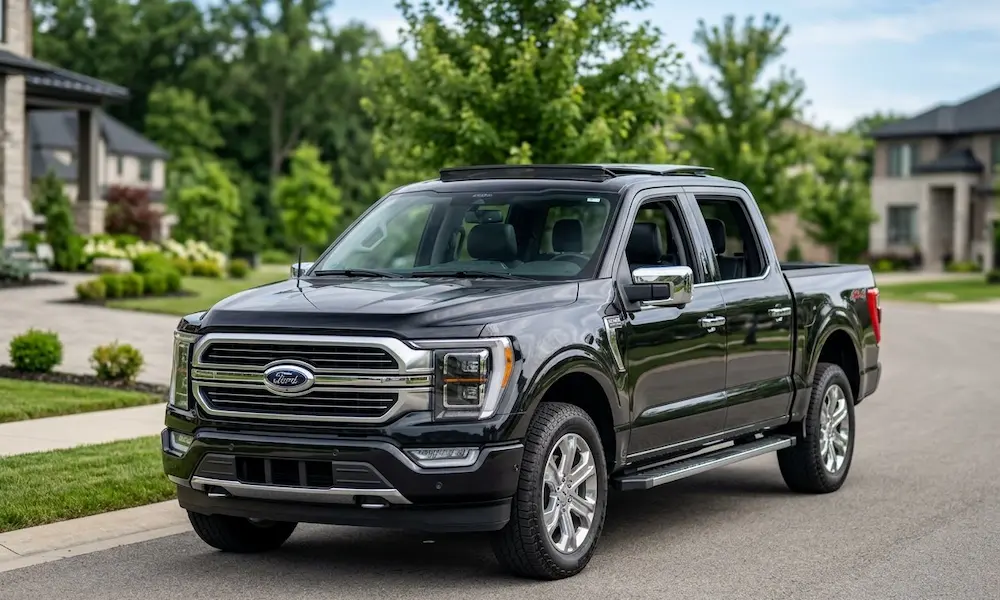
This is where most experienced diesel buyers land when asked about the best years for 6.7 Powerstroke. The 2017 Super Duty moved to a high-strength steel frame with military-grade aluminum alloy body panels, cutting weight while the engine itself got stronger.
The 2017–2019 engines carried over 500 new or revised parts — reinforced block, updated heads, and improved engine management software that optimized DPF regeneration cycles. Power jumped to 450 hp and 935 lb-ft of torque by 2018–2019.
Why the 6R140 Transmission Matters
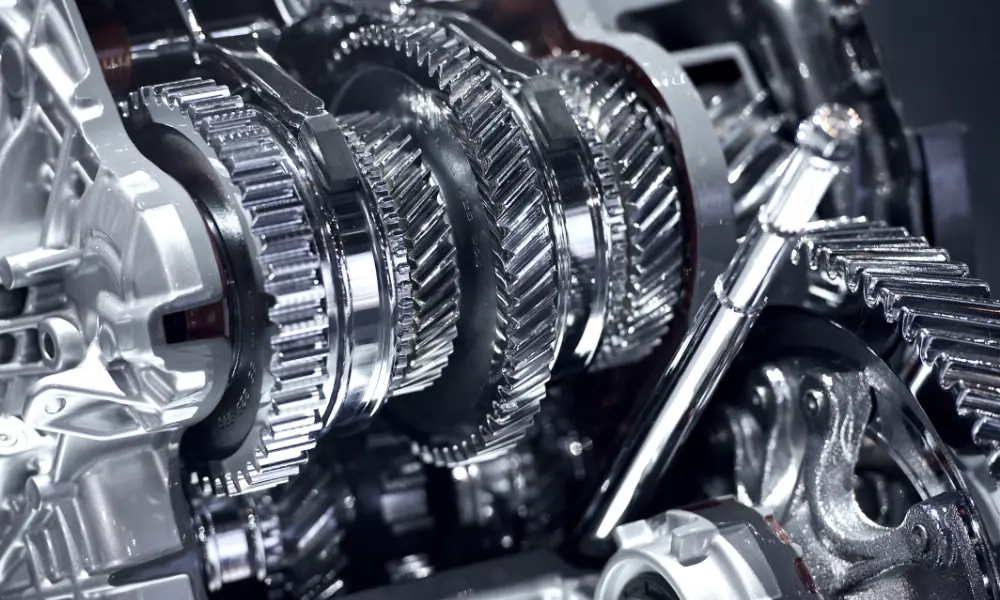
These trucks pair with the 6R140 TorqShift 6-speed automatic, widely regarded as one of the toughest automatic transmissions ever put behind a diesel pickup. Its Lepelletier gear set handles heat extremely well, and its long track record gives you a lot of real-world data on failure points — which are few.
The 2019 specifically holds a reputation as the “gold standard” among enthusiasts. It’s the last year of the 6-speed and still has a conventional transmission dipstick — avoiding early teething issues with the 10-speed that rolled out in 2020.
| Model Year | HP | Torque | Transmission | Body |
|---|---|---|---|---|
| 2017 | 440/450 | 925 lb-ft | 6R140 6-speed | Aluminum |
| 2018 | 450 | 935 lb-ft | 6R140 6-speed | Aluminum |
| 2019 | 450 | 935 lb-ft | 6R140 6-speed | Aluminum |
Verdict: 2017–2019 is the sweet spot — proven engine updates, bulletproof transmission, lighter chassis. The 2019 is the top pick of the generation.
Generation 4 (2020–2022): The Durability King
If you’re regularly pulling heavy loads, the 2020–2022 trucks deserve serious attention. The biggest internal change? Mahle-developed forged steel pistons replaced cast aluminum.
Steel pistons handle higher combustion pressures and exhaust gas temperatures without cracking. They also expand at nearly the same rate as the iron block, so engineers specified tighter piston-to-cylinder clearances — meaning less long-term wear and blow-by.
Power figures hit 475 hp and 1,050 lb-ft of torque, fueled by injection pressures pushed to 36,000 PSI with up to eight injection events per cycle.
The 10R140 10-Speed Transmission
The 10R140 TorqShift 10-speed debuted in 2020. Co-developed with GM but beefed up for Ford’s torque requirements, it offers a 7.39:1 gear ratio spread versus the 6-speed’s ~5.8:1. That extra range keeps the engine in its power band while climbing grades with a loaded trailer.
| Feature | 6R140 6-Speed | 10R140 10-Speed |
|---|---|---|
| 1st Gear Ratio | 3.97:1 | 4.61:1 |
| Overdrive Gears | 2 | 3 |
| Gear Ratio Spread | ~5.8:1 | 7.39:1 |
| Best Use | General towing | Maximum heavy-haul efficiency |
Verdict: 2020–2022 is the best pick for serious haulers. Steel pistons and the 10-speed make these the most capable used diesel trucks on the market right now.
Generation 5 (2023–Present): Best of the Best — If You Can Afford It
Ford split the 2023+ 6.7 into two tunes: Standard Output (SO) at 475 hp / 1,050 lb-ft, and High Output (HO) at 500 hp / 1,200 lb-ft. The HO isn’t just a software tune either — it runs a water-jacketed turbo housing, liquid-cooled compressor section, and upgraded cast stainless steel exhaust headers.
The Ninth Injector: A Genuine Game-Changer
Every 6.7 before 2023 performed DPF regenerations by injecting raw fuel into the cylinders on the exhaust stroke. Some of that fuel slipped past the rings and diluted the engine oil — a real concern for bearing life if you stretched oil change intervals.
The 2023+ engines add a ninth injector in the exhaust stream. It sprays fuel directly into the exhaust to heat the DPF catalyst — completely bypassing the engine internals. Oil stays cleaner. Bearings live longer.
| Output | HP | Torque | Max Tow (F-450) | Key Tech |
|---|---|---|---|---|
| Standard Output | 475 | 1,050 lb-ft | 35,000+ lbs | Steel pistons, 36k PSI injection |
| High Output | 500 | 1,200 lb-ft | Up to 40,000 lbs | 9th injector, water-cooled turbo |
Verdict: If budget isn’t the constraint, the 2023+ HO is the definitive 6.7 Powerstroke.
The CP4.2 Pump: The One Problem That Follows Every Generation
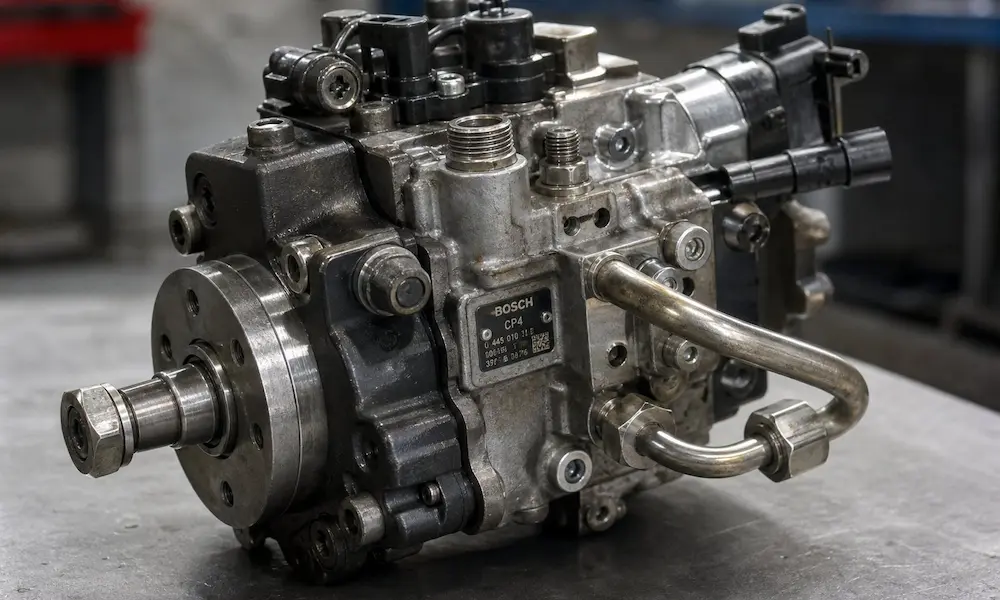
No honest guide to the best years for 6.7 Powerstroke skips this. The Bosch CP4.2 high-pressure fuel pump is the engine’s biggest weakness across all generations.
Unlike older CP3 pumps, the CP4.2 relies entirely on diesel fuel for internal lubrication. North American ultra-low sulfur diesel (ULSD) doesn’t always provide enough lubricity. Add water or air contamination, and the pump’s internal rollers can spin 90 degrees and grind the cam.
When a CP4.2 grenades, it sends metal shards through the entire high-pressure fuel system — rails, injectors, everything. Repair bills run $8,000–$15,000.
How to protect yourself:
- Replace fuel filters every 15,000 miles with OEM Motorcraft FD-4615 or FD-4625 filters
- Consider a Disaster Prevention Kit that reroutes pump debris back to the tank
- Add a fuel additive with lubricity improvers if you’re in a region with questionable diesel quality
Maintenance: What It Actually Costs to Keep One Running
The 6.7 Powerstroke rewards owners who stay on top of maintenance and punishes those who don’t. Annual maintenance typically runs $1,000–$2,400 depending on duty cycle.
The cooling system is a dual-loop design — one loop for the block and heads, a second loop for the fuel, transmission, and turbocharger. Both loops need regular inspection.
| Service | Normal Interval | Severe Interval | Fluid/Part |
|---|---|---|---|
| Engine Oil | 7,500–10,000 miles | 3,000–5,000 miles | 13–15 qts 10W-30 / 15W-40 |
| Fuel Filters | 15,000–22,500 miles | 7,000–10,000 miles | Motorcraft FD-4615 / FD-4625 |
| Coolant Flush | 105,000 miles | 60,000 miles | Motorcraft Orange or Yellow |
| Trans Fluid | 150,000 miles | 30,000–60,000 miles | Mercon LV |
| DPF Service | 100,000 miles | 40,000–60,000 miles | Professional cleaning or replace |
One more item worth watching: the Crankcase Ventilation (CCV) filter. On 2011–2016 trucks, a clogged CCV causes high crankcase pressure, which pushes oil out through the rear main seal or turbo seals. Clean or replace it on schedule. The 2017+ trucks use an improved maintenance-free CCV design, though carbon buildup in the intake remains a long-term concern worth monitoring.
Best Years for 6.7 Powerstroke: The Quick Summary
Here’s the bottom line by use case:
- Best overall (used market sweet spot): 2017–2019 — proven engine, bulletproof 6R140 transmission, lighter aluminum body. The 2019 is the standout.
- Best for heavy haulers: 2020–2022 — forged steel pistons, 10-speed transmission, 1,050 lb-ft torque.
- Best value buy: 2015–2016 — fixed the Gen 1 turbo problems, still priced below the aluminum-body trucks.
- Best new truck option: 2023+ High Output — 1,200 lb-ft, ninth injector, water-cooled turbo. The most complete package Ford has ever offered.
- Years to avoid: Early 2011–2012 production trucks unless the turbo and exhaust valves have documented repair history.
Whatever year you land on, the 6.7 Powerstroke can go the distance — but clean fuel and consistent maintenance are what get you there.