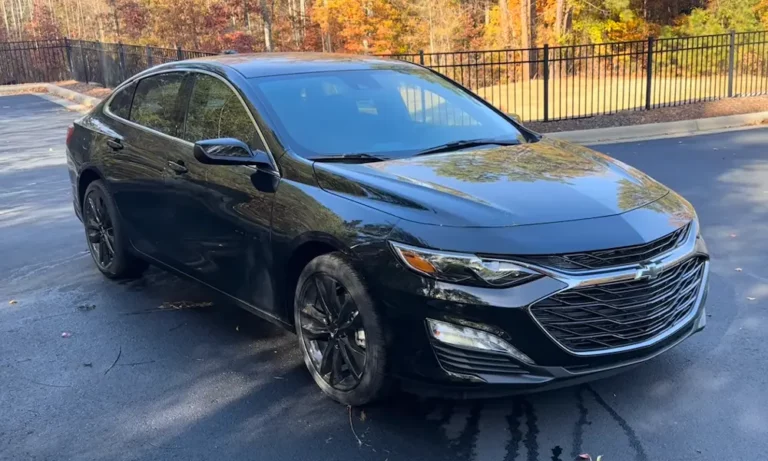
Ever been stuck at a red light when your Chevy Malibu’s engine suddenly shuts off? That’s the auto stop-start feature doing its thing. While designed to save fuel, many drivers find this feature more annoying than helpful. If you’re tired of the constant starting and stopping, you’re in the right place. I’ll show you exactly how to disable auto stop on your Chevy Malibu—from quick temporary fixes to permanent solutions.
What Is the Auto Stop Feature and How Does It Work?
The auto stop-start system in your Chevy Malibu automatically shuts off the engine when you come to a complete stop. You’ll notice the tachometer needle moving to the “Auto Stop” position. When you release the brake pedal, the engine restarts automatically.
Chevrolet designed this system to improve fuel economy and reduce emissions. The system uses enhanced components including:
- A more robust starter motor
- Upgraded battery technology
- An auxiliary battery to power accessories when the engine is off
The system won’t activate in certain situations, such as:
- When the engine isn’t at operating temperature
- If the outside temperature is too extreme
- When your battery charge is low
- If your hood is open
- When the climate control system needs continuous operation
Auto Stop Variations Across Malibu Model Years
Not all Chevy Malibus are created equal when it comes to disabling the auto stop feature.
2020 and Newer Models
Good news if you have a 2020 or newer Malibu! These models came with a dedicated auto stop disable button, making it easy to temporarily turn off the feature. The downside? You’ll need to press this button every time you start your car.
2016-2019 Models
These model years typically don’t have a convenient disable button. You’ll need to use one of the alternative methods I’ll cover below.
2015 and Older Models
The 2015 Malibu with the 2.5-liter four-cylinder engine has the auto stop-start system, but without any factory-provided way to turn it off. The system’s activation frequency can be influenced by using different air conditioning settings—eco mode allows more frequent stop-start cycles than comfort mode.
Temporary Ways to Disable Auto Stop
Using the Auto Stop Button (2020+ Models)
If your Malibu has the auto stop disable button (typically 2020 and newer models), here’s what to do:
- Locate the button marked with a capital “A” enclosed in a curved arrow (usually on the dashboard or center console)
- Press the button once
- Check that the LED indicator is not illuminated, which means the system is disabled
Remember, you’ll need to repeat this every time you start your car, as the system reactivates with each new ignition cycle.
The Manual Mode Transmission Trick (Works for Most Models)
This widely-used workaround works on most Malibu models with automatic transmissions:
- Start your vehicle
- Shift to the “L” (Low) position
- Press the “+” button on the shifter six times to reach L6 (or the highest available gear)
- Drive normally—the auto stop system won’t activate while in manual mode
You’ll need to repeat this process each time you start your car, but it’s an effective way to temporarily disable the feature without any modifications.
The Brake Pedal Pressure Technique
With some practice, you can prevent auto stop activation by carefully controlling your brake pedal pressure:
- When stopping, apply just enough brake pressure to keep the car stopped
- Avoid pressing the brake pedal too firmly, as this triggers the auto stop system
- Maintain consistent light pressure throughout the stop
This technique requires practice and constant attention but can be effective once mastered. It’s particularly useful for short stops but becomes challenging in stop-and-go traffic where maintaining precise pedal pressure is difficult.
Permanent Solutions to Disable Auto Stop
The Hood Latch Sensor Method
This technical approach tricks your vehicle’s computer into thinking the hood is always open:
- Locate the hood latch sensor connector under the hood
- Disconnect the wiring harness from the sensor
Since the auto stop system is programmed not to operate when the hood is open (for safety reasons), this creates a permanent disable effect. However, be aware of these significant drawbacks:
- It triggers a check engine light (code P257F)
- It can affect other vehicle systems that rely on hood position information
- The persistent warning light could cause issues during inspections or service
- Potential warranty implications
Aftermarket Auto Stop Eliminator Devices
For a cleaner, more user-friendly permanent solution, aftermarket devices are available:
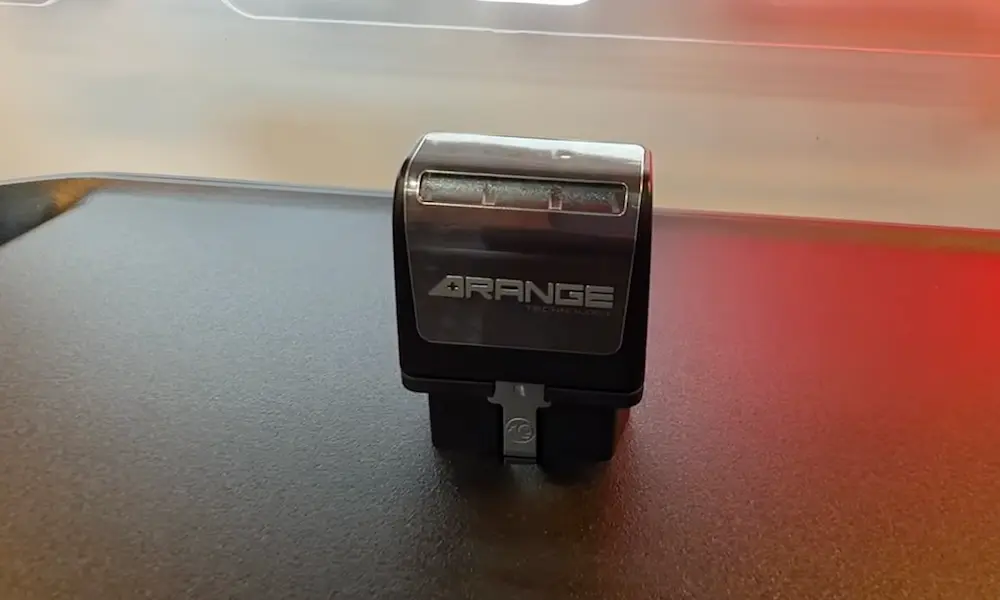
- Companies like Autostop Eliminator manufacture plug-and-play devices
- These devices typically cost about $10
- They install behind the auto stop button or connect to specific wiring harnesses
- Once installed, they remember your last setting, eliminating the need to press the disable button with each startup
Installation usually requires removing dashboard panels to access the switch wiring, but most mechanically inclined owners can complete it in 30-60 minutes. These devices work exactly as GM intended, avoiding negative effects like battery drain or interference with other vehicle systems.
ECU Reprogramming Solutions
The most comprehensive permanent solution involves professional engine control unit (ECU) reprogramming:
- Companies like Trifecta Performance offer specific auto stop disable calibrations
- These solutions typically cost $150-300
- They require specialized equipment and expertise for installation
- The reprogramming permanently disables the auto stop feature while maintaining all other GM diagnostics
- Most companies provide the ability to return the vehicle to stock calibration if needed
This approach offers the cleanest disable solution but may have warranty implications and requires professional installation.
Specific Approaches for Different Malibu Model Years
2016-2017 Malibu (1.5L Turbo)
These models typically lack the convenient disable button found in later models. Your best options include:
- Using the manual mode method for daily convenience
- Installing an aftermarket eliminator device for a permanent solution
- Professional ECU calibration from companies like Trifecta Performance
2018-2019 Malibu Models
These years continue to lack factory disable buttons. Your options include:
- The manual transmission mode workaround (effective and widely used)
- Aftermarket eliminator devices (well-supported for these model years)
- The hood latch sensor method (extensively documented but comes with check engine light drawbacks)
2020+ Malibu Models
Beginning with 2020, Chevrolet added the auto stop disable button, significantly improving the user experience. However, since the button requires activation with each startup, many owners still prefer:
- Aftermarket eliminator devices that integrate with the existing disable button
- These devices provide the convenience of remembering your last setting while maintaining factory switch functionality
Installation Considerations and Warranty Implications
DIY vs. Professional Installation
The complexity of disabling auto stop varies significantly between methods:
- Simple approaches (manual mode method, brake pedal technique): No technical expertise required
- Aftermarket eliminator devices: Require dashboard disassembly and basic electrical knowledge
- ECU reprogramming: Requires specialized equipment and expertise
- Hood latch sensor method: Requires basic mechanical skills but carries higher risk
Warranty Considerations
Under the Magnuson-Moss Warranty Act, manufacturers can only deny warranty claims when they can prove that an aftermarket modification caused the specific failure. However, any modification carries potential risks:
- Lowest risk: Using the manual transmission mode or controlling brake pedal pressure (uses existing vehicle functions as designed)
- Moderate risk: Properly installed aftermarket devices
- Higher risk: ECU modifications or improper installations that affect other vehicle systems
Cost-Benefit Analysis of Different Methods
Financial Considerations
When deciding which method to use, consider these cost factors:
| Method | Cost | Complexity | Permanence |
|---|---|---|---|
| Manual Mode Trick | Free | Low | Temporary |
| Brake Pedal Technique | Free | Medium | Temporary |
| Auto Stop Button (2020+) | Factory-installed | Low | Temporary |
| Hood Latch Sensor | Free | High | Permanent (with check engine light) |
| Aftermarket Eliminator | $80-120 | Medium | Permanent |
| ECU Reprogramming | $150-300 | High | Permanent |
Long-term Reliability
- Aftermarket eliminator devices: Good long-term reliability when properly installed, with many users reporting years of trouble-free operation
- ECU reprogramming solutions: Excellent long-term results when performed by reputable companies
- Temporary methods: No reliability concerns as they use existing vehicle functions
Practical Experience and Performance Impact
Many Malibu owners report that disabling the auto stop feature improves their driving experience, particularly in stop-and-go traffic. While the system is designed to improve fuel economy, the actual savings are typically minimal in real-world driving—often less than 1 mpg.
When disabled, drivers often note:
- Smoother driving experience
- Eliminated delay when transitioning from stop to go
- Reduced wear on the starter motor and battery systems
- More consistent climate control performance at stops
Which Method Is Right for You?
The best method for disabling your Chevy Malibu’s auto stop feature depends on your specific needs:
- Want immediate relief without modifications? Use the manual transmission mode method or brake pedal technique.
- Have a 2020+ model? Start with the factory disable button, upgrading to an aftermarket eliminator if you want to avoid pressing it every time.
- Need a permanent solution with minimal risk? Aftermarket eliminator devices offer the best balance of effectiveness, cost, and reversibility.
- Want the most comprehensive solution? Professional ECU reprogramming provides a factory-like permanent disable.
Whether you’re frustrated by the constant engine cycling or just prefer a more traditional driving experience, there’s a solution available for your specific Chevy Malibu model that can help you take back control of when your engine stops and starts.