Your diesel truck’s high-pressure fuel pump might be quietly destroying itself right now — and you’d never know until it’s too late. CP4 pump failure is one of the most expensive mechanical disasters in modern diesel history, with repair bills routinely hitting five figures. Here’s everything you need to know to protect yourself.
What Is a CP4 Pump?
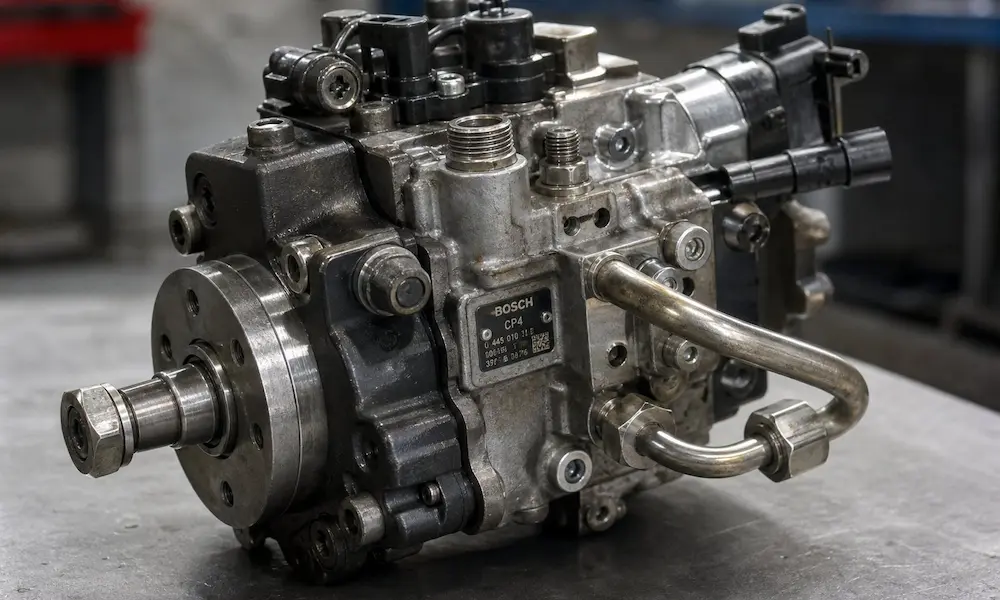
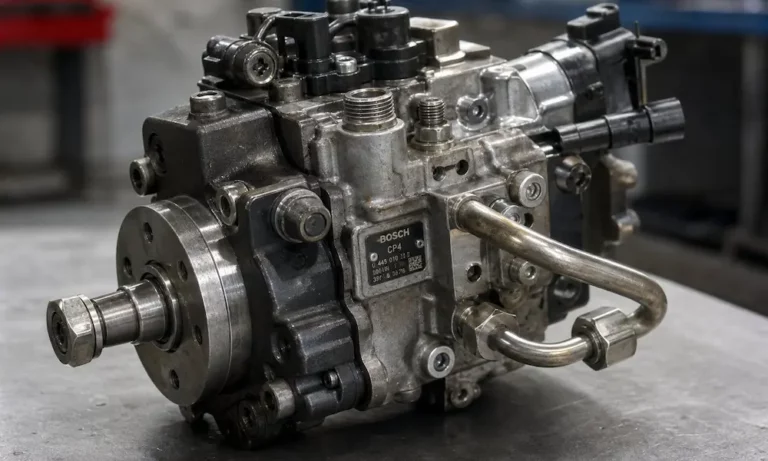
The Bosch CP4 is a high-pressure fuel injection pump used in modern diesel engines. It pressurizes diesel fuel to nearly 30,000 PSI — fine-misting fuel into the combustion chamber for clean, efficient burning.
Bosch designed it as a lighter, more efficient successor to the legendary CP3 pump. Manufacturers loved it. Ford, GM, Ram, Nissan, VW, Audi, Porsche, and BMW all plugged it into their diesel lineups throughout the 2010s.
On paper, it looked like a win. In the real world — especially in the United States — it became a ticking time bomb.
Why CP4 Pump Failure Happens in the U.S.
Here’s the core problem: Bosch engineered the CP4 for European diesel fuel. Then they sold it to American manufacturers who put it in trucks fueled by American diesel.
Those two fuels aren’t the same.
The Lubricity Gap That Destroys Pumps
Modern diesel goes through a refining process called hydrotreating to strip out sulfur. That’s good for the environment — but it also strips out the natural compounds that lubricate the fuel pump’s internal parts.
European regulations mandate that replacement lubricity additives bring the fuel up to a strict standard. The U.S.? Not so much.
Fuel lubricity gets measured by a “wear scar diameter” test — a steel ball drags across a steel plate submerged in fuel. The smaller the scar, the better the lubrication.
| Standard | Region | Max Sulfur | Min Cetane | Max Wear Scar |
|---|---|---|---|---|
| EN 590 | Europe | 10 ppm | 51 | 460 microns |
| ASTM D975 | United States | 15 ppm | 40 | 520 microns |
The Engine Manufacturers Association recommends a maximum wear scar of 460 microns to protect sensitive high-pressure injection systems. American diesel legally allows 520 microns — 13% more wear on every stroke.
That gap might sound small. Multiplied across tens of thousands of miles? It’s catastrophic.
The Fatal Design Flaw Inside the Pump
Low-lubricity fuel wouldn’t be fatal if the CP4 had a more forgiving design. It doesn’t.
Inside the pump, a rotating camshaft drives a set of steel rollers called roller tappets. These rollers ride the cam lobes and push the fuel plungers up and down. The entire system relies on a continuous film of diesel fuel for lubrication.
Here’s the problem: the CP4’s roller tappets have no physical locking mechanism — no pin, no keyway, nothing to stop them from spinning sideways. They rely entirely on downward pressure and perfect lubrication to stay aligned.
When lubricity drops — or when air enters the fuel line — that downward pressure disappears for a split second. The roller tappet spins up to 90 degrees inside its bore. Now, instead of rolling smoothly over the cam lobe, it sits sideways against it.
The camshaft drives into the misaligned roller like a pile driver. Metal grinds against metal. The pump begins eating itself alive.
By contrast, the older CP3 pump used a polygonal ring design that can’t spin out of alignment. It’s physically immune to this failure mode — which is exactly why it earned a legendary reputation for durability.
What Else Triggers CP4 Pump Failure?
Low-lubricity fuel is the slow killer. But other conditions can accelerate CP4 pump failure dramatically:
- Fuel aeration: Air in the fuel lines — from a failing lift pump, running dry, or loose fittings — allows the plunger to float and lose contact with the cam lobe. The roller spins. Failure begins.
- Water contamination: Even tiny amounts of water instantly strip away boundary lubrication and corrode the pump’s polished steel surfaces.
- Degraded biodiesel: Fresh biodiesel actually has great lubricity. But aged biodiesel — like the fuel sitting in parked trucks during COVID lockdowns — forms thick gummy deposits that coat the roller components, spiking internal friction and accelerating wear.
The “Grenade” Effect: How One Pump Destroys an Entire Fuel System
CP4 pump failure isn’t just a pump problem. It’s a full-system catastrophe.
Technicians call it a “grenade” event — and the name fits perfectly.
Here’s what happens the moment those rollers start grinding:
- Metal shavings (called swarf) pour into the fuel stream inside the pump
- The CP4 has no internal filter between the crankcase and high-pressure elements — so it compresses metal-laced fuel to 30,000 PSI and blasts it directly into the fuel rails
- The contaminated fuel floods the injectors, destroying their microscopic internal clearances in seconds
- Contaminated return fuel flows back to the fuel tank, poisoning the entire low-pressure system — lines, fuel cooler, lift pump, and the tank walls themselves
Within minutes of the initial roller misalignment, every component that touches diesel fuel is contaminated with hardened steel debris. There’s no partial repair. It’s a total system replacement.
CP4 Pump Failure Symptoms to Watch For
The damage is severe before most drivers realize something’s wrong. But the failure does leave clues:
Early warning signs:
- Extended cranking on cold starts
- Loss of power under heavy load (towing, grades, hard acceleration)
- Rough or unbalanced idle
- Subtle metallic ticking from the engine valley
Late-stage symptoms:
- Violent surging or hesitation
- Random misfires
- Check engine light and limp mode
- Complete stall and no-start condition
The definitive diagnosis: Pull the fuel filter. If the fuel looks like it’s full of glitter — shimmering, metallic particles swirling around — the pump has already grenaded. The entire system needs replacing.
Common diagnostic trouble codes:
- P0087 — Fuel rail pressure too low (pump actively disintegrating)
- P0088 — Fuel rail pressure too high (debris jamming the pressure regulator)
- P0191 — Erratic rail pressure sensor readings from fluctuating pressure and debris
Which Vehicles Are Affected?
Nearly every diesel sold in the U.S. from roughly 2011 to 2023 carries some version of the CP4. Here’s where things stand across the major manufacturers:
Ford 6.7L Power Stroke (2011–Present)
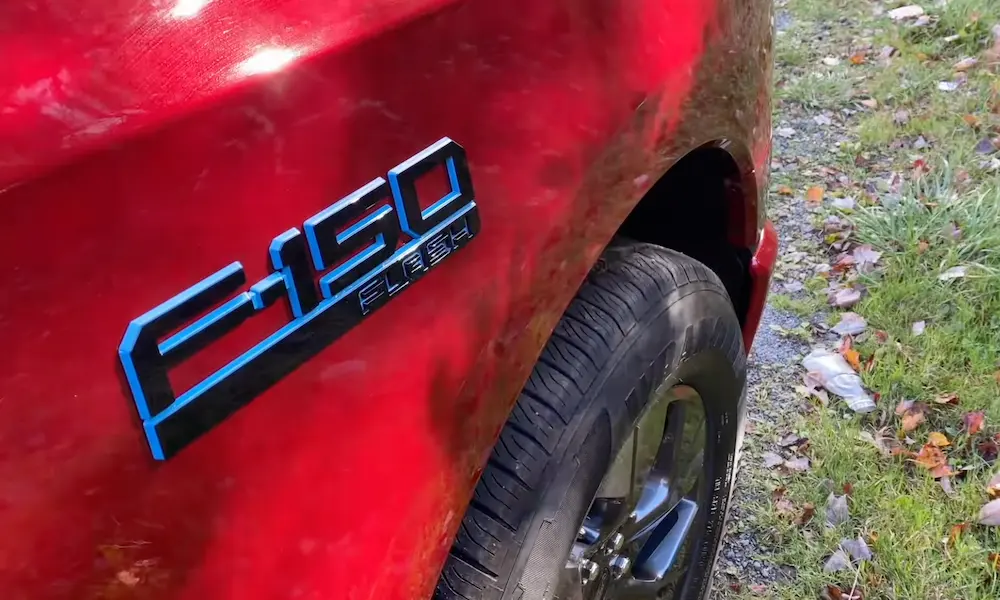
Ford used the CP4 in its F-250 through F-550 Super Duty trucks. In December 2024, Ford issued NHTSA Recall 24V-957 covering 295,449 trucks from the 2020–2022 model years. The remedy? A software update. Consumer advocates and lawyers immediately criticized the fix, arguing a software patch can’t solve a mechanical design flaw. Litigation against Ford remains active.
GM 6.6L Duramax (2011–2016)
GM made the CP4 situation worse by not including an electric lift pump in the Duramax LML setup — forcing the CP4 to suck fuel all the way from the rear tank under vacuum, dramatically increasing aeration risk.
The class-action lawsuit (Chapman, et al. v. General Motors LLC) resulted in a court-approved $50 million settlement finalized in May 2025. The settlement covered $30 million in direct compensation to affected owners across seven states, plus $5 million for those who sold trucks at diminished value.
Ram 6.7L Cummins (2019–2020)
For over a decade, Ram used the bulletproof CP3 in its heavy-duty trucks. Then, for just two model years, they switched to the CP4.2. Failure rates spiked immediately.
Stellantis issued NHTSA Recall 21V-880, recalling 222,410 trucks — and the fix was a complete engineering reversal. Dealers physically replaced every CP4.2 with a newly manufactured CP3.3. Every Ram Cummins built from 2021 onward went straight back to the CP3.
Stellantis 3.0L EcoDiesel (Ram 1500, Jeep Grand Cherokee, Wrangler, Gladiator)
Stellantis ran a multi-phase recall campaign. NHTSA Recall 22V-767 covered 138,645 vehicles from 2014–2020. Then NHTSA Recall 23V-263 added another 45,711 newer Wranglers, Gladiators, and Ram 1500s from 2021–2023. Both campaigns mandated physical pump replacements.
Nissan Titan XD 5.0L Cummins (2016–2019)
Nissan’s attempt at a “half-ton/heavy-duty crossover” truck used the CP4.2, and it failed predictably. A class-action lawsuit filed in 2023 alleges Nissan knew the pump was incompatible with U.S. fuel and still directed dealers to deny warranty claims under “contaminated fuel” clauses — leaving owners with repair bills between $16,800 and $22,000.
Volkswagen, Audi & Porsche TDI (2009–2019)
VW and Audi deployed the CP4 early across their TDI lineup. After NHTSA launched Engineering Analysis EA11-003 in 2011, VW retrofitted filler necks with misfuel guards and Bosch added anti-wear coatings to the rollers. Still, low-lubricity American diesel kept grinding away at pumps for years.
BMW N47 & N57 Diesel (2014–2018)
BMW issued NHTSA Recall 21V-586 in July 2021, covering over 11,000 vehicles. BMW also extended the high-pressure fuel pump warranty to 10 years or 120,000 miles on affected N47 and N57 engines — one of the more consumer-friendly responses across the industry.
The Real Cost of CP4 Pump Failure
Because the entire fuel system gets contaminated, you can’t just swap the pump and call it done. A proper repair means replacing everything diesel touches.
| Vehicle | Estimated Repair Cost | Why It’s So Expensive |
|---|---|---|
| VW/Audi 2.0L TDI | $6,000–$9,000 | Piezoelectric injectors are very pricey |
| Ford 6.7L Power Stroke | $10,000–$14,000 | Pump buried under intake and turbo plumbing |
| GM 6.6L Duramax | $10,000–$15,000 | Labor-intensive; frequent warranty denials |
| Nissan Titan XD 5.0L | $16,000–$22,000 | Specialized parts, complex twin-turbo access |
And here’s the warranty trap that makes this even worse: manufacturers often deny claims by calling it “contaminated fuel damage” — because technically, the fuel is contaminated. It’s contaminated with the metal shavings the pump generated itself.
How to Prevent CP4 Pump Failure
You don’t have to wait for your pump to grenade. The aftermarket has developed smart solutions — and they work.
CP4 Bypass Kits (Disaster Prevention Kits)
This is the most popular and cost-effective protection. A bypass kit splits the incoming fuel into two isolated circuits:
- Clean fuel goes straight to the high-pressure metering unit for the injectors
- Separate fuel lubricates the lower crankcase and rollers — then gets routed back to the tank, completely bypassing the high-pressure elements
Advanced systems like the S&S Diesel Motorsport Gen2.1 kit add a dedicated spin-on return filter that catches any metal shavings before they reach your tank or injectors.
A bypass kit doesn’t make the CP4 immortal. But if the pump does fail, you’re replacing one pump and a filter instead of the entire fuel system — turning a $12,000 disaster into a $2,500 repair.
CP3 Conversion Kits
For owners who want a permanent fix, CP3 conversion kits physically remove the CP4 and replace it with the older, virtually indestructible Bosch CP3. This is the same fix Stellantis used for their Ram Cummins recall. The CP3 is immune to the roller tappet failure mode by design.
Upgraded CP4 Pumps With Pinned Rollers
When a CP3 swap isn’t physically possible, companies like RCD Performance offer remanufactured CPX pumps with pinned roller tappets — mechanically locking the rollers in place so they can’t rotate out of alignment. Many also include built-in return-to-tank routing, eliminating the need for external bypass plumbing.
Lubricity Additives and Maintenance Habits
If you’re running a stock CP4, these habits matter:
- Add a quality diesel lubricity additive at every fill-up. A good additive can bring American diesel down to the European 460-micron standard, significantly reducing friction on the cam and rollers.
- Upgrade your fuel filter and water separator. Water and debris are immediate threats. High-efficiency aftermarket filters are cheap insurance.
- Replace fuel filters on schedule — or early.
- Always prime the system properly after filter changes. Dry-cranking a CP4 forces it to run without lubrication for the first few seconds. That’s enough to start the wear process.
The CP4 pump failure crisis is a story about a brilliant piece of European engineering dropped into an environment it was never designed for. Millions of trucks are still running these pumps today. The difference between a $2,500 repair and a $15,000 nightmare is usually just preparation.