You’re standing at the pump, staring at that $1 price difference between regular and premium, wondering if your Acura really needs the expensive stuff. Your wallet says no, but that little door sticker keeps nagging at you. Let’s cut through the marketing talk and figure out what your engine actually needs.
What “Premium Recommended” Actually Means
Here’s the thing: most Acuras don’t technically require premium gas—they recommend it. There’s a huge difference.
When Acura says “recommended,” they’re telling you the engine was designed and tested using 91 octane fuel. All those horsepower numbers in the brochure? They’re based on premium fuel flowing through the system.
But your car won’t explode if you use regular 87 octane. Modern Acuras pack sophisticated knock sensors that detect engine ping. When these sensors catch the slightest hint of trouble, the Engine Control Unit (ECU) immediately retards the ignition timing to protect your engine. It’s like having a safety net.
The catch? That “safety net” costs you power. Your turbocharged RDX or TLX suddenly feels sluggish because the computer is literally holding it back to prevent damage.
Breaking Down Acura’s Lineup: Who Really Needs Premium?
The “You Better Use Premium” Models
Acura NSX: This one’s simple. Premium fuel is absolutely required. No wiggle room, no debate. The twin-turbo V6 hybrid runs such extreme boost pressures that regular gas would cause pre-ignition before the computer could react.
Integra Type S: The manual lists 93 octane as preferred. While it technically runs on 87, you’re basically wasting the performance you paid for. That K20C1 engine makes 320 hp—but only when you feed it the good stuff.
The “Premium Strongly Suggested” Models
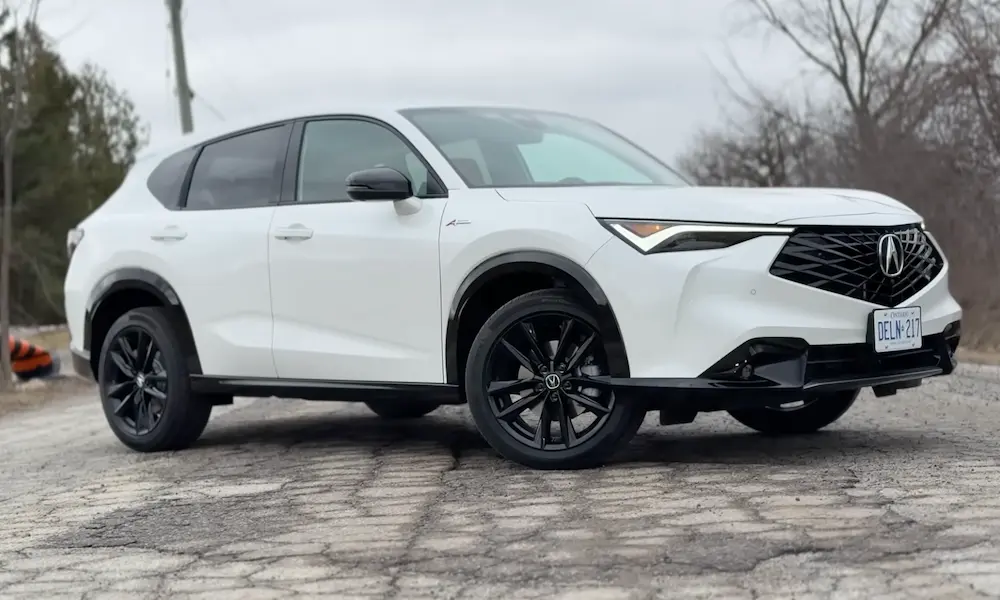
Current RDX (2019–Present): The 2.0L turbo four-cylinder produces 272 hp and 280 lb-ft of torque. According to the owner’s manual, 91 octane is recommended for optimal performance.
On regular gas? You’ll notice hesitation when merging onto highways. The low-end torque—the RDX’s best feature—disappears because the turbo can’t build boost without triggering knock sensors.
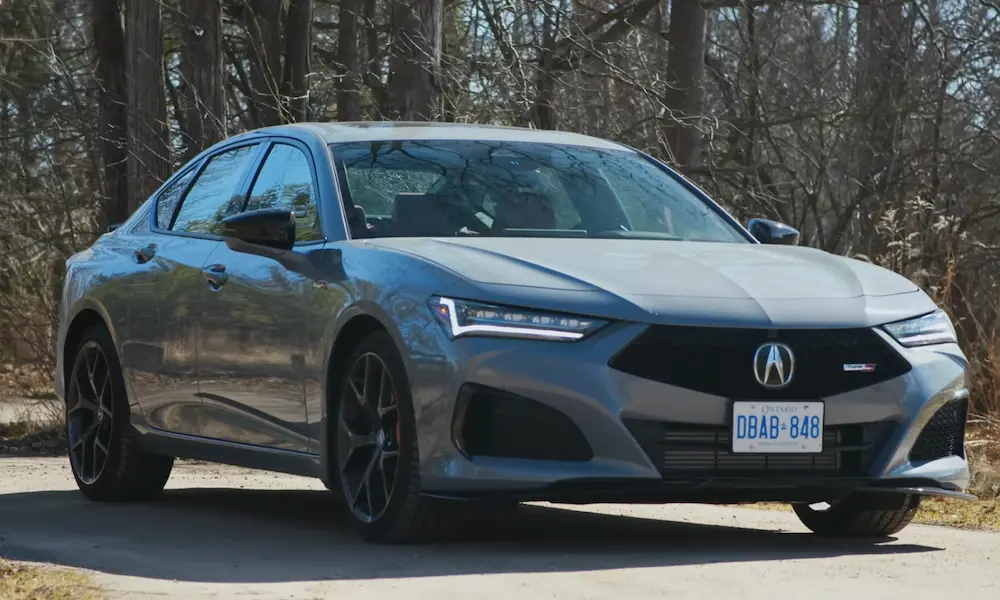
TLX Type S: With 355 hp from a 3.0L twin-turbo V6, this sedan needs premium to deliver what you paid for. Running 87 octane in a Type S is like buying a sports car and never pushing it past 3,000 RPM.
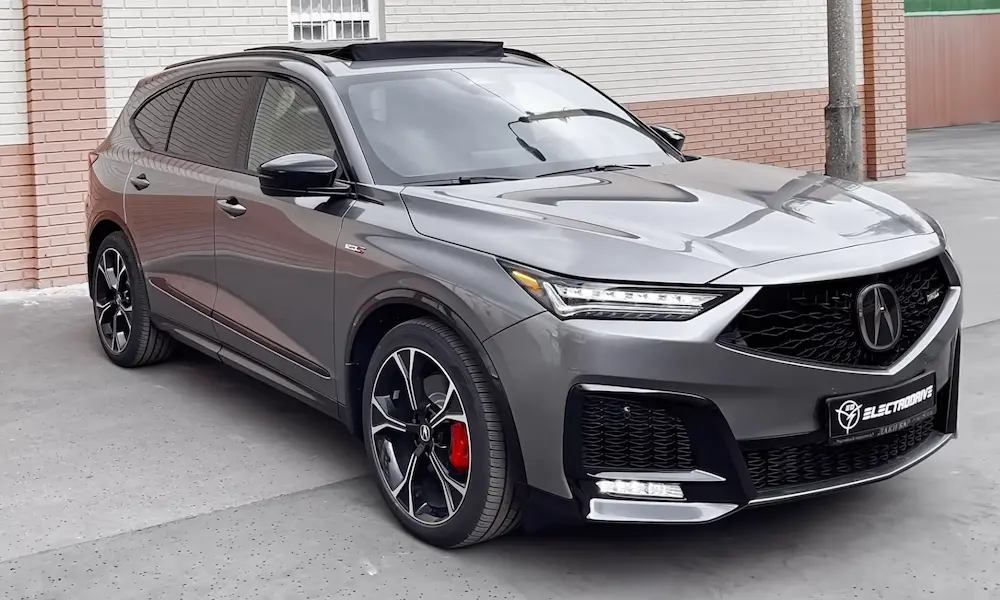
MDX Type S: Same story as the TLX Type S. That turbo V6 is designed around premium fuel’s higher resistance to detonation. Don’t handicap it with regular.
The “You’ll Probably Be Fine” Models
Base MDX (3.5L V6): This naturally aspirated engine tolerates regular gas surprisingly well. Owners on Reddit report running 87 octane for years with only a 1 MPG fuel economy drop and barely noticeable performance loss.
Second-Gen RDX (2013–2018): The naturally aspirated 3.5L V6 in this generation is very forgiving. It shares DNA with Honda minivans that run on regular gas all day long.
Why Octane Ratings Actually Matter
Let’s talk chemistry for a second—don’t worry, it’s quick.
Octane ratings measure fuel’s resistance to premature ignition. Higher compression engines (and turbocharged engines under boost) create intense heat and pressure inside cylinders. Regular gas can spontaneously ignite before the spark plug fires, causing “knock”—a destructive pressure wave that hammers pistons and bearings.
Premium gas contains different hydrocarbon chains that resist this auto-ignition. It’s not “cleaner” or more powerful—it just handles heat better.
Your Acura’s turbocharger compounds this issue. When the turbo spools, it forces more air into the cylinder. More air means higher pressure. Higher pressure means more heat. Modern turbocharged engines rely on premium fuel to handle these thermal loads without knocking.
The Real Cost Analysis Nobody Shows You
Here’s where the math gets interesting.
Let’s say premium costs $0.70 more per gallon than regular. On a 17-gallon tank, that’s about $12 extra per fill-up.
“But I’ll save money!” you’re thinking.
Not so fast. When your ECU pulls timing to prevent knock, your engine works less efficiently. It extracts less energy from each combustion cycle. Real-world testing shows turbocharged engines lose 10-15% fuel economy on regular gas.
Let’s run the numbers for a TLX:
Using Premium (91 octane):
- Cost per tank: $73
- Fuel economy: 24 MPG
- Range: 408 miles
- Cost per mile: $0.179
Using Regular (87 octane):
- Cost per tank: $60
- Fuel economy: 21 MPG (assuming 3 MPG loss)
- Range: 357 miles
- Cost per mile: $0.168
You’re saving barely one cent per mile. Over 12,000 miles annually, that’s roughly $130 saved.
For that $130, you’re accepting reduced power, increased engine stress, and potential long-term carbon buildup on intake valves and direct injectors.
Is it worth it?
What Happens Inside Your Engine on Regular Gas
When you fill up with 87 instead of 91, here’s the chain reaction:
- You hammer the accelerator to merge onto the highway
- The turbo spools up, building boost pressure
- Cylinder temperatures spike
- Regular gas can’t handle the heat and starts to pre-ignite
- Knock sensors detect the abnormal combustion
- ECU immediately retards spark timing by several degrees
- Peak cylinder pressure drops
- Torque output falls
- You feel a hesitation or “dead spot” in acceleration
This happens hundreds of times during aggressive driving. Your engine constantly fights between delivering power and protecting itself.
Over time, this chronic timing retardation can lead to higher exhaust gas temperatures and increased thermal stress on components.
Model-by-Model Fuel Requirements
Here’s the quick reference guide:
| Model | Engine | Fuel Status | What You Should Know |
|---|---|---|---|
| NSX | 3.5L Twin-Turbo V6 Hybrid | Required | Zero tolerance. Premium only. |
| Integra Type S | 2.0L Turbo | Recommended (93 preferred) | Track use demands premium. |
| Integra A-Spec | 1.5L Turbo | Recommended (91) | Small turbo, high boost, very sensitive. |
| TLX Type S | 3.0L Twin-Turbo V6 | Recommended (91+) | 355 hp rating depends on premium. |
| TLX Base | 2.0L Turbo | Recommended (91) | Noticeable lag on regular. |
| MDX Type S | 3.0L Twin-Turbo V6 | Recommended (91+) | Heavy SUV needs the power. |
| MDX Base | 3.5L V6 | Recommended (91) | Actually tolerates 87 pretty well. |
| RDX Current | 2.0L Turbo | Recommended (91) | Low-end torque suffers on 87. |
The Hidden Costs of Cheaping Out
Beyond the immediate fuel economy hit, running regular gas in a premium-recommended Acura carries some sneaky long-term risks:
Carbon Buildup: Direct injection engines (most modern Acuras) are prone to carbon accumulation on intake valves. Premium fuel’s better combustion characteristics can help minimize this issue.
Catalytic Converter Stress: Retarded timing means hotter exhaust gases. Over years, this increased thermal load can shorten cat life.
Reduced Resale Value: Enthusiast buyers check maintenance records. A history of cheap gas in a performance model raises red flags.
When You Can Actually Skip Premium
There are legitimate scenarios where regular gas makes sense:
Short-term financial pinch: If money’s tight this month, your Acura will survive a few tanks of 87. Just avoid aggressive driving.
Light city commuting: If you’re just putting around town at part-throttle, the engine rarely enters high-load conditions where knock occurs.
Leasing: If you’re turning the car in after three years, the long-term effects aren’t your problem. (Though this feels a bit like leaving a mess for the next person.)
Older naturally aspirated models: A 2nd-gen RDX or base MDX with the 3.5L V6 genuinely tolerates regular gas with minimal penalty.
The Altitude Exception You Need to Know
If you live in Colorado, Utah, or other high-altitude states, pay attention: never use 85 octane gas, even though it’s labeled “regular” at the pump.
Acura’s minimum fuel requirement is 87 octane, period. The 85 octane sold at high altitude falls below your ECU’s calibration range. Your turbocharger spins faster at altitude to compensate for thin air, meaning cylinder pressures remain high. You need at least 87 octane—preferably 91.
Top Tier Detergent: The Other Half of the Equation
Here’s something dealerships won’t emphasize: octane rating isn’t everything. The detergent package in your gas matters almost as much.
Top Tier gasoline (sold at Costco, Shell, Chevron, Mobil, and others) contains significantly more detergents than EPA minimum standards. These additives keep fuel injectors clean and prevent carbon deposits.
You can use Top Tier 87 octane or non-Top Tier 91 octane, but the best choice is Top Tier 91 octane. It gives you both knock resistance and cleanliness.
Real Owner Experiences
The Reddit Acura community offers unfiltered perspectives:
One MDX owner reported: “I don’t get any knocks, only 1 MPG less fuel economy, and if there’s any reduced power it’s barely noticeable” after switching to 87.
A TLX Type S owner countered: “The car feels completely different on premium. The midrange punch disappears on regular, and I get a weird hesitation at partial throttle.”
An Integra Type S driver noted: “I tried 87 once. Never again. The car felt neutered.”
The pattern is clear: naturally aspirated base models tolerate regular gas reasonably well. Turbocharged models—especially performance variants—suffer noticeably.
What About Mixing Octanes?
Some owners split the difference by mixing 89 and 93 to achieve roughly 91 octane. Mathematically, this works. If your manual calls for 91 and you can only find 89 and 93 at the pump, filling half-and-half gets you there.
Just remember: your ECU can’t read octane ratings. It only reacts to knock. If your “homemade 91” mix still causes pinging, the computer will pull timing regardless of your calculations.
The Electric Future: Acura ZDX
The 2024 Acura ZDX makes this entire discussion obsolete. As Acura’s first battery electric vehicle, it delivers 500 hp and 544 lb-ft of torque with zero concern for octane ratings.
The ZDX Type S produces more power than the NSX without requiring a single drop of premium fuel. Electricity doesn’t knock, pre-ignite, or accumulate carbon. The “premium” debate shifts from fuel quality to charging infrastructure.
It’s a glimpse of the future—and possibly a relief for your wallet.
The Straight Answer
So, do Acuras need premium gas?
Technically: Most don’t strictly need it. The NSX requires it. Everything else can survive on 87 octane thanks to knock sensors and adaptive tuning.
Practically: Yes, turbocharged Acuras need premium to deliver their advertised performance. You paid for a 272-hp RDX or a 355-hp TLX Type S. Why detune it to save $12 per tank?
Economically: The fuel economy penalty on regular gas erases most of the cost savings. You’re not saving as much as you think.
Mechanically: Premium fuel isn’t just about preventing damage—it’s about optimizing an expensive, sophisticated engine to perform as engineers intended.
Feed your Acura what it asks for. The extra few bucks at the pump protect your investment and let you actually enjoy the car you bought.