You just dropped serious cash on a fresh set of tires. Then the mechanic hits you with: “Want an alignment with that?” You’re standing there wondering if this is an upsell or actually necessary. Here’s the deal: you don’t technically need one, but skipping it might cost you more in the long run. Let’s break down when it’s smart money and when you can pass.
What Wheel Alignment Actually Does
Wheel alignment isn’t about adjusting your tires—it’s about tweaking your suspension system. Mechanics adjust three angles: camber (how your tire tilts in or out), toe (whether tires point inward or outward), and caster (your steering axis angle).
Think of it like adjusting picture frames on a wall. When everything’s straight, it looks right and works better. When your wheels point in the same direction and sit flush against the road, your tires wear evenly and your car drives straight.
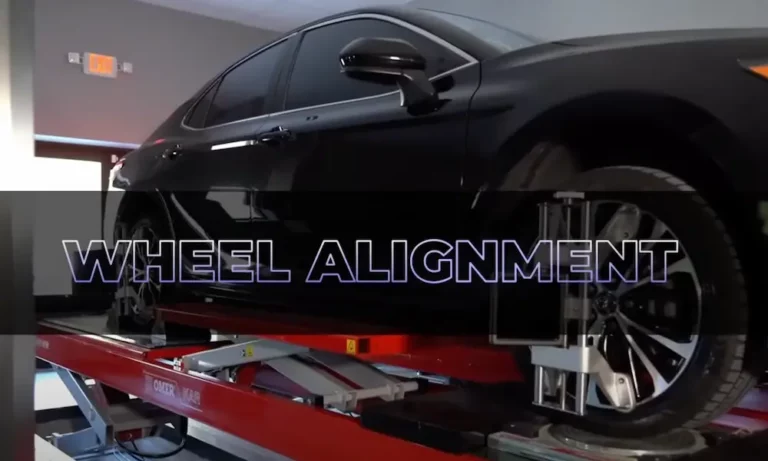
Modern shops use computer-controlled alignment machines that measure these angles down to fractions of a degree. It’s precision work that’s impossible to eyeball or DIY in your driveway.
When You Absolutely Need an Alignment
Some situations scream “get an alignment now.” Don’t skip it if you notice:
Your car pulls to one side. Take your hands off the wheel (safely, on an empty road). Does your car drift left or right? That’s misalignment talking.
Your steering wheel sits crooked. Driving straight but your steering wheel’s tilted? Your alignment’s off. It’s not just annoying—it’s wearing your tires unevenly right now.
Your old tires wore funny. Check your worn tires before they’re tossed. If one edge is balder than the other, or you’ve got weird wear patterns, misalignment killed those tires. It’ll kill your new ones too.
You feel steering wheel vibrations. Shaking that gets worse at highway speeds? Could be alignment issues affecting how your tires contact the road.
It’s been over 2-3 years. Most mechanics recommend alignment checks every couple years. Potholes, curbs, and normal wear gradually knock things out of spec.
You drive rough roads regularly. Every pothole you hit jolts your suspension. Enough jolts over time shift those carefully calibrated angles.
When You Can Probably Skip It
Not every new tire installation demands alignment. You’re likely fine without one if:
Your old tires wore evenly. Uniform tread wear across all four tires suggests your alignment’s still good. If they all aged gracefully together, your suspension geometry’s probably fine.
Your car drives perfectly straight. No pulling, no vibrations, no off-center steering wheel. If it ain’t broke, don’t fix it.
You got aligned recently. Had an alignment six months ago and haven’t smashed any curbs since? You’re probably still in spec.
These are temporary tires. Putting on a used set until you can afford better? Maybe hold off on alignment until you install your keepers.
Here’s the catch: many cars on the road aren’t properly aligned even when they seem fine. Gradual misalignment happens so slowly you don’t notice—until your brand-new tires develop bald spots after 15,000 miles.
The Money Math That Matters
Let’s talk dollars and cents. Alignment costs $50-200 depending on your area and whether you need two-wheel or four-wheel alignment. Sounds steep until you compare it to replacing tires early.
| Cost Factor | Without Alignment | With Alignment |
|---|---|---|
| Alignment Service | $0 | $50-200 |
| Tire Lifespan | 25-50% shorter | Full expected life |
| Replacement Cost (4 tires) | $400-800+ early | On schedule |
| Annual Fuel Waste | Up to 10% more | Optimal efficiency |
Misalignment can slash tire life by 25-50%. If your $600 tire set should last 60,000 miles but only makes it to 30,000, you’ve wasted $300. Plus the hassle of shopping for tires again way too soon.
There’s more. Poor alignment hurts fuel economy by making your engine work harder to overcome drag from crooked wheels. We’re talking up to 10% worse gas mileage. On a 15-gallon tank at $3.50 per gallon, that’s an extra $5.25 every fill-up.
It also beats up your suspension components. Ball joints, control arms, and steering linkage all take extra stress from misaligned wheels. Fixing those gets expensive fast.
What the Pros Actually Recommend
Talk to mechanics who aren’t trying to upsell you, and most say the same thing: alignment with new tires is smart preventive maintenance. One experienced tech puts it this way: “It’s like insurance for your investment.”
Industry standards suggest:
- Annual alignment checks for typical drivers
- Always align after suspension work or collisions
- Check alignment when installing new tires
- Four-wheel alignment for modern vehicles (most cars now)
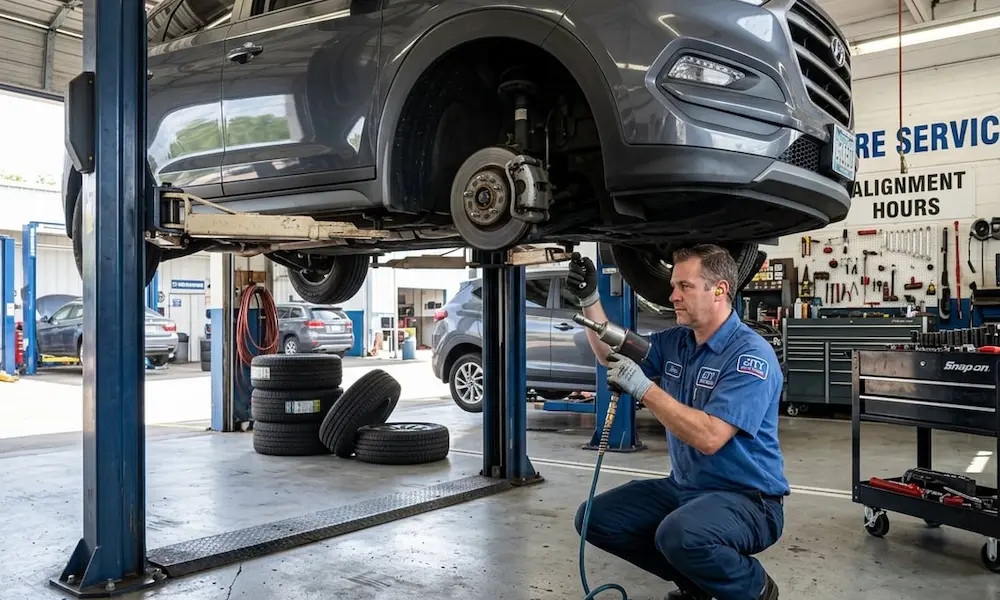
The reasoning’s simple. You’re already paying for tire installation. The wheels are off. The car’s on the lift. It’s the perfect time to check and adjust. Waiting until you notice problems means your new tires have already been getting chewed up.
What Your Tire Warranty Actually Says
Here’s something that trips people up. Refusing alignment doesn’t void your tire warranty—that’d be illegal. But manufacturers can deny warranty claims if you didn’t maintain your vehicle properly.
Tire warranties typically cover defects in materials and workmanship. They don’t cover damage from neglect or misuse. If your tires wear out early and show obvious alignment-related wear patterns, the manufacturer might argue you didn’t maintain proper alignment.
Some warranties require proof of maintenance, including rotation and alignment records. It’s worth keeping your alignment receipt just in case.
Why This Isn’t a DIY Job
Some car maintenance you can handle at home. Alignment isn’t one of them. Here’s why:
Professional alignment requires specialized equipment that costs thousands. We’re talking laser or computer-guided systems that measure angles to hundredths of a degree. You can’t replicate that with a level and a tape measure.
The process involves:
- Mounting sensors to each wheel
- Inputting your vehicle’s exact specifications
- Taking baseline measurements of all three angles
- Adjusting suspension components with precision tools
- Rechecking measurements after each adjustment
- Test driving to verify corrections
Modern vehicles have tight tolerances. Your manufacturer specifies camber, caster, and toe angles down to fractions of degrees. Getting “close enough” means uneven tire wear and handling problems.
Plus, some adjustments require special tools or even heating and bending suspension components on certain vehicles. Not something for Saturday afternoon in your garage.
The Bottom Line on Alignment
Spending $100-200 on alignment might sting after dropping $400-800 on tires. But consider it protecting that bigger investment. Proper alignment saves you from premature tire replacement, wasted fuel, and worn suspension parts.
Think of alignment as the foundation under your new tires. You wouldn’t build a house on a crooked foundation and expect it to last. Same principle applies here.
The choice is yours, but the math is clear. A couple hundred bucks now beats replacing tires at 30,000 miles instead of 60,000. It beats the frustration of a car that pulls left every time you take your hands off the wheel. And it beats the safety risk of compromised handling when you need to make an emergency maneuver.
Your new tires represent a significant investment in your vehicle’s performance and your safety. Getting them properly aligned ensures you get every mile and every dollar’s worth from them. That’s not an upsell—that’s just smart car ownership.