Your car won’t start. You need a battery fast. You’re wondering if Advance Auto Parts will just swap it out for you—or if you’re on your own. Good news: they do install batteries, but there’s a catch. Actually, there are a few. Read this before you drive over, and you’ll know exactly what to expect.
Yes, Advance Auto Parts Does Change Batteries—For Free
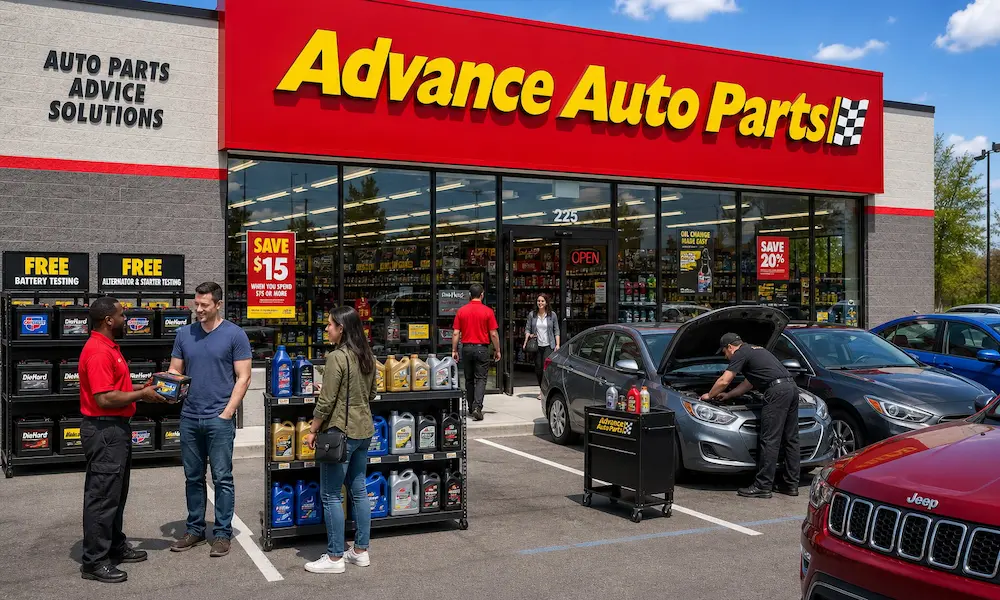
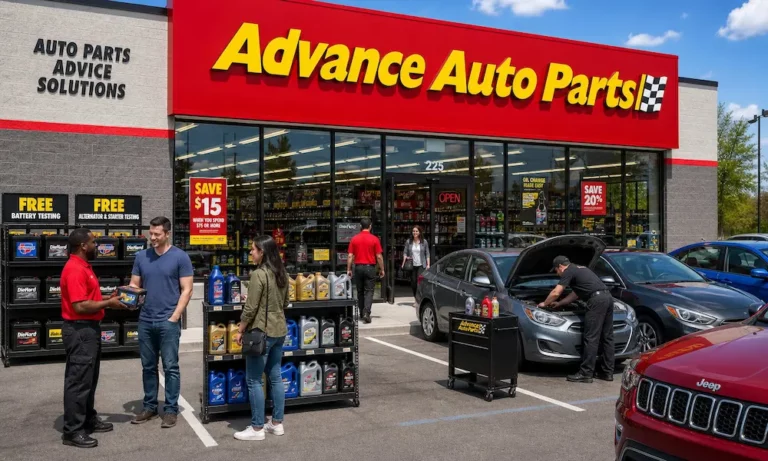
Advance Auto Parts offers free battery installation when you buy a new battery from them. That applies whether you buy in-store or online. No appointment needed. They’ll do it right in the parking lot.
The free installation covers:
- Standard hood-mounted batteries on most everyday vehicles
- Online orders (buy online, pick up in-store within 30 minutes, get it installed same day)
- Any battery tier—whether you grab a budget unit or a premium one
That said, the official policy says installation is available on “most vehicles, at most locations.” That phrase carries a lot of weight, and we’ll get into exactly what it means.
What Advance Auto Parts Does Before They Touch Your Battery
Before anyone picks up a wrench, the team runs a quick diagnostic check. This isn’t just a formality—it’s genuinely useful.
Battery, Starter, and Alternator Testing
Advance Auto Parts tests your battery, starter, and alternator for free—no purchase required. They use handheld diagnostic tools to check:
- Your battery’s current charge and cell health
- Whether your starter draws the right amount of current
- Whether your alternator generates enough voltage to recharge the battery while you drive
This matters because a failing alternator will drain a brand-new battery within days. You’d be back at square one.
Free Engine Code Scanning
They’ll also plug into your OBD-II port and pull any stored fault codes at no charge. If the results point to something beyond a battery swap—a wiring issue, a deeper electrical fault—they’ll refer you to a local mechanic rather than guess.
Free Battery Charging
If your battery is just deeply discharged (you left the lights on overnight), they’ll charge it for free. You’ll need to leave it at the store for a few hours, but it beats buying a new battery you don’t need.
The Hidden Step Most People Miss: Battery Registration
Here’s something a lot of drivers don’t know exists until it’s too late.
What Is Battery Registration?
Modern vehicles—especially European brands—run a Battery Management System (BMS) that tracks your battery’s age and condition. Over time, the BMS learns to push more charge into your aging battery to compensate for its decline.
When you drop in a fresh battery, that charging profile doesn’t automatically reset. Your car keeps treating the new battery like the old worn-out one. The result? Overcharging, reduced battery lifespan, and potentially serious electrical problems.
Advance Auto Parts offers free digital battery registration with battery purchases. A technician connects a scan tool to your OBD-II port, resets the BMS, and tells your car’s computer to start fresh with the new battery’s profile.
What Happens If You Skip It?
Skipping registration on a car that requires it can trigger limp mode—a failsafe where your car deliberately limits engine speed, restricts transmission shifting, and disables non-essential features. In worst-case scenarios, the car won’t start at all until a proper registration is completed.
Which Cars Need It?
Registration is most common on newer European vehicles. Advance Auto Parts specifically flags these brands:
- BMW
- Mini
- Volkswagen
- Audi
But as start-stop engine technology spreads across more mainstream brands, registration requirements are expanding fast. Check your owner’s manual or ask the store team before assuming you’re in the clear.
When They’ll Say No: Real Reasons Installations Get Refused
This is where “most vehicles, at most locations” gets real. Advance Auto Parts is a retail store, not a repair shop. Their team works with basic hand tools in an open parking lot. Some jobs simply can’t be done there safely.
Battery Location Is the Biggest Dealbreaker
Not every battery lives under the hood. Engineers sometimes tuck batteries into unusual spots to improve weight distribution or free up engine bay space. Each location creates its own problem:
| Battery Location | Why Retail Staff Can’t Help |
|---|---|
| Wheel well | Requires a hydraulic jack and removal of fender liners. Staff aren’t authorized to lift vehicles. |
| Under the seat | Requires unbolting seat tracks and disconnecting airbag sensors. Safety and liability risk. |
| Trunk/cargo area | May sit next to central computer modules. One slip can cause thousands in damage. |
| Inside the cabin | Risk of staining interior or damaging sensitive electronics. |
A real example: certain Mercedes ML models house a central computer (the SAM Unit) right next to the battery in the trunk. That area also collects water from faulty seals. Attempting a battery swap there without proper equipment is genuinely risky.
The 15–30 Minute Rule
Retail installations have an unofficial time cap of 15–30 minutes. If a specific make and model typically takes an hour to swap a battery—like certain Ford Transit vans with under-seat dual battery setups—the store will decline the job. They’re running a store, not a service bay.
Other Common Refusal Triggers
- Heavy terminal corrosion: Forcing a wrench on a corroded terminal can snap the cable. That leaves your car dead in their parking lot—and that’s their liability problem.
- Aftermarket wiring: Custom audio setups, winches, or extra lighting wired directly to the battery terminals make a clean swap nearly impossible without risking shorts.
- Low staffing: If a store is running with three people during a rush, pulling someone to do a parking lot installation isn’t always possible. This exact situation has burned customers before.
| Disqualifier | Core Reason for Refusal |
|---|---|
| Hidden battery placement | Requires lifting, disassembly, or access to sensitive components |
| Labor over 30 minutes | Disrupts store operations and monopolizes retail staff |
| Severe terminal corrosion | High risk of snapping brittle cables and stranding the vehicle |
| Aftermarket accessories on terminals | Risk of shorts or damaging custom electrical add-ons |
| Understaffed location | Not enough people to cover floor and parking lot simultaneously |
Choosing the Right Battery: Don’t Just Grab the Cheapest One
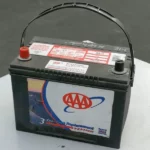
Advance Auto Parts carries batteries across multiple tiers, mostly under the DieHard brand (Silver, Gold, Platinum). Here’s what actually matters when you’re picking one.
Traditional vs. Advanced Battery Types
Traditional flooded batteries work fine for older vehicles and basic commuter cars. They’re the affordable option, typically ranging from $60–$120, and last roughly 2–5 years under normal use.
Advanced AGM (Absorbed Glass Mat) batteries are a different animal. If your vehicle has start-stop technology, advanced driver assistance systems, or a heavy infotainment load, a traditional battery will underperform fast. AGM batteries are also fully sealed—meaning they’re mandatory for any vehicle where the battery sits inside the cabin or trunk. They last 5–6 years on average, but expect to pay $200 or more for premium units.
Two Numbers That Actually Matter
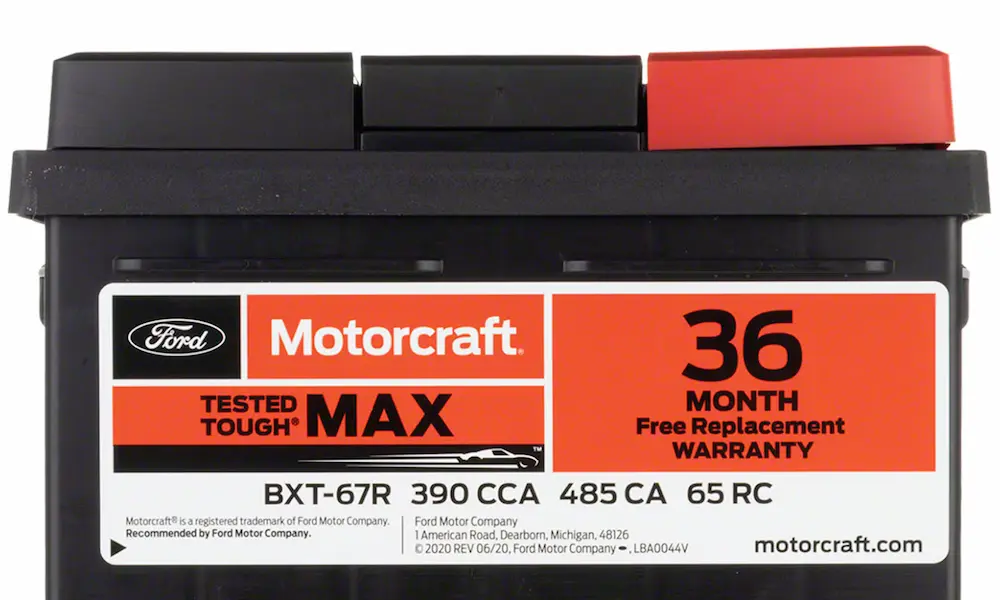
Cold Cranking Amps (CCA): This is the burst of power your battery delivers to start a cold engine. The colder your climate, the higher this number needs to be. If you’re in Minnesota, don’t cheap out here.
Reserve Capacity: This tells you how long your battery can keep your car’s essentials running (headlights, fuel pump, ignition) if the alternator fails while you’re driving. It’s a real-world safety buffer.
Industry best practices suggest replacing your battery every four years—even if it hasn’t failed yet—to avoid getting stranded unexpectedly.
Battery Recycling: Get $10 Just for Dropping Off an Old Battery
Advance Auto Parts runs two separate recycling programs. They’re often confused for each other—here’s the difference.
The Core Charge (When You Buy a New Battery)
When you buy a new battery, a mandatory deposit gets added to your total at checkout. Return your old battery in usable condition and you get that deposit refunded to your original payment method. This is required by law in most states and isn’t optional.
Learn more about how core charges work here.
The Battery Bounty Program (No Purchase Required)
The Battery Bounty program is completely separate. Got an old dead battery sitting in your garage? Bring it in and get a $10 store gift card—no purchase required.
A few things to know:
- No daily or annual limit—multiple old batteries mean multiple gift cards
- Does not stack with a core charge return on the same transaction
- Only covers standard automotive and light-truck batteries
- Excluded: AA batteries, lawn equipment batteries, motorcycle batteries, and EV/hybrid battery packs
One caveat: some store employees aren’t trained on this program and may not know how to process it. If you get pushback, ask a manager directly.
What the Warranty Actually Covers
Advance Auto Parts batteries come with a replacement warranty for manufacturing defects. But the fine print matters.
What’s covered:
- Batteries that fail due to internal defects during the warranty period
- Free replacement (not a refund)
What voids it immediately:
- Installing an automotive battery in a marine vessel or off-road vehicle
- Physical damage from a collision or misuse
- A battery that’s just discharged (that’s not a defect—they’ll charge it and send you home)
Important: If you get a replacement battery during the warranty window, the clock doesn’t reset. The new unit inherits the remaining time on the original purchase date.
Also worth knowing: under the Magnuson-Moss Warranty Act, your dealer cannot void your vehicle’s factory warranty just because you used an aftermarket battery from Advance Auto Parts. That’s federally protected.
Returns: The 45-Day Window
If you buy a battery and installation gets refused—or you simply changed your mind—you have 45 days to return it. The battery must be completely uninstalled and in new condition. Even minor terminal marks or anti-corrosion grease can disqualify the return.
No receipt? You can still return an obviously uninstalled battery, but you’ll get store credit calculated at the lowest selling price from the past 45 days—not necessarily what you paid.
Before You Drive to the Store: A Quick Checklist
Save yourself a wasted trip by running through this first:
- Know where your battery is located. Check your owner’s manual. If it’s not under the hood, call the store before going.
- Check your vehicle’s registration requirement. European vehicles almost always need it. Increasingly, others do too.
- Look at your terminals. Heavy white or green buildup? Mention it when you call—staff can tell you whether it’ll be an issue.
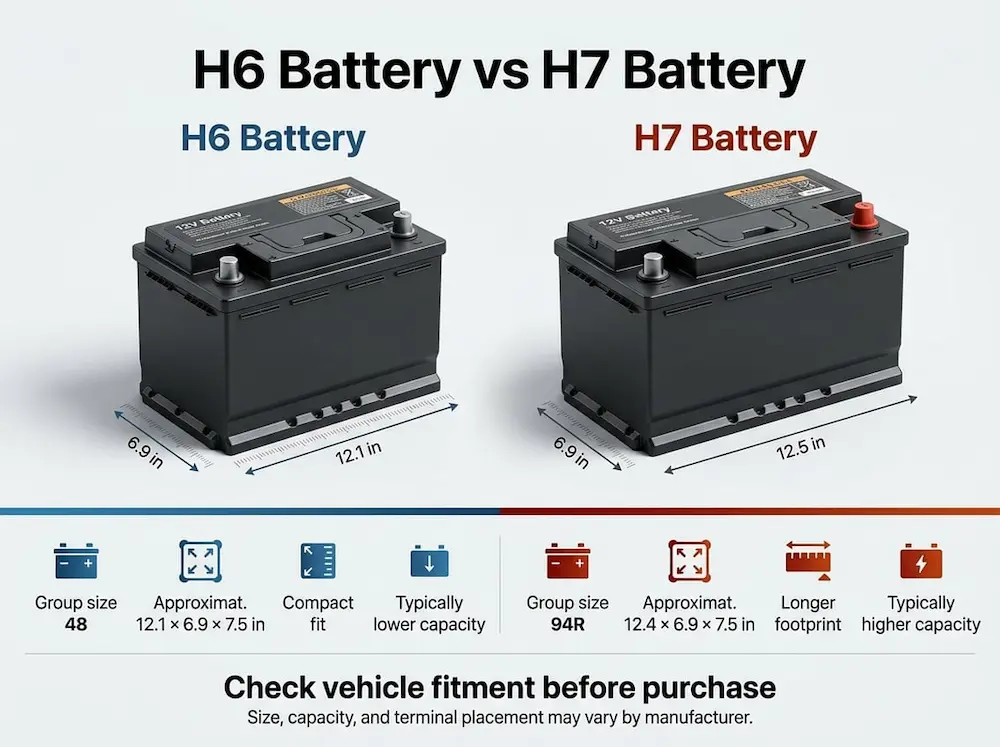
- Verify the battery spec online first. Use Advance Auto Parts’ online fitment tool to confirm the correct group size and CCA rating for your exact year, make, and model.
- Call ahead if you’re unsure. Staffing varies by location and time of day. A quick call confirms they can actually help you when you arrive.