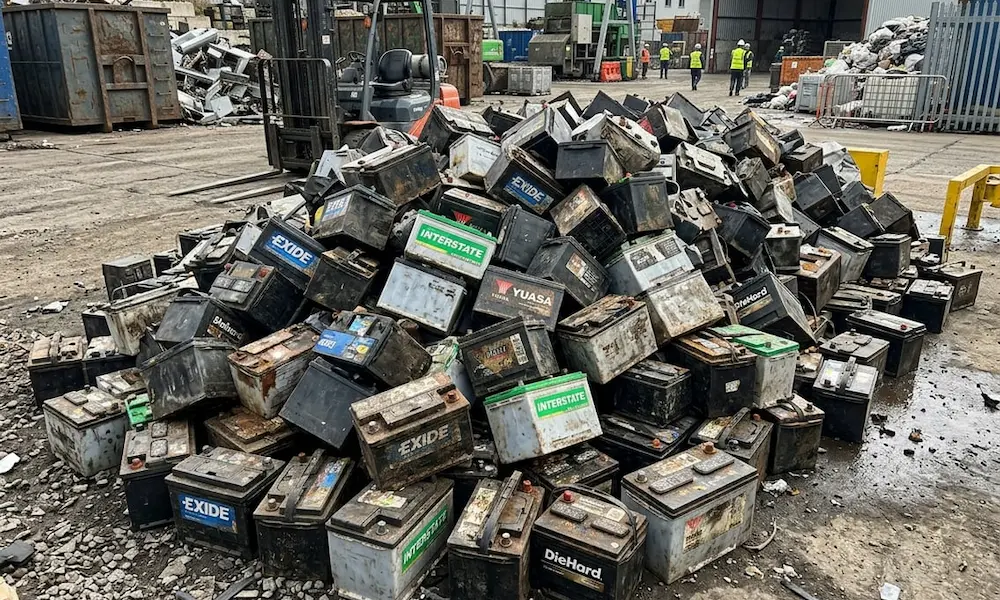
Got a dead car battery sitting in your garage? You can’t toss it in the trash — and yes, that’s actually illegal. But here’s the good news: you have several easy options for where to dispose of old car batteries, and some of them put money back in your pocket. Read to the end to find the best option for your situation.
Why You Can’t Just Throw a Car Battery Away
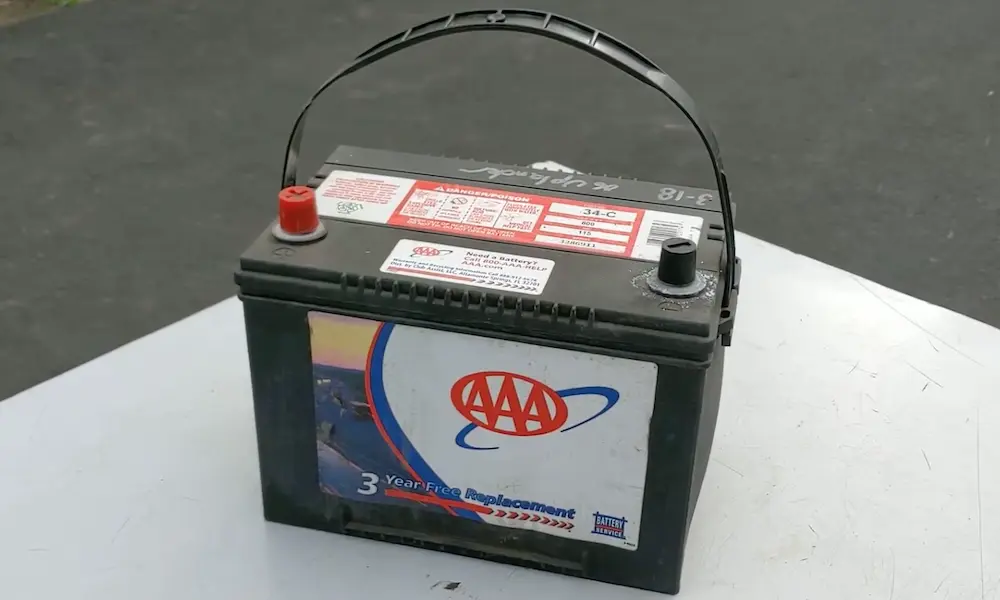
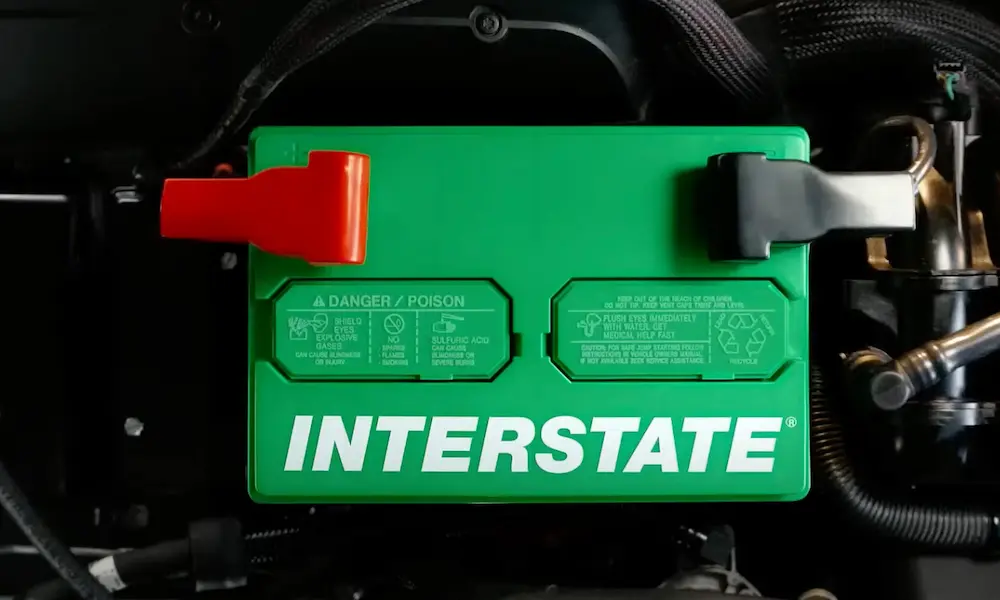
Car batteries contain lead and sulfuric acid — two seriously nasty materials. If they end up in a landfill, lead and acid leach into groundwater. If they get incinerated, they release toxic lead particles into the air.
That’s why federal and state laws flat-out ban tossing lead-acid batteries in the regular trash. Violating this in California, for example, carries fines of up to $25,000 per incident.
The upside? The U.S. recycles 98–99% of all lead-acid batteries. The system works — you just need to know where to plug in.
Option 1: Return It to an Auto Parts Store (And Get Your Core Charge Back)
This is the most common and often the most financially rewarding option.
When you buy a new car battery, retailers in most states charge a core deposit — a refundable fee ranging from $10 to $75. You get that money back when you return the old battery. It’s called a core charge system, and it works similarly to returning a deposit bottle.
Here’s what the major retailers offer:
| Retailer | Core Charge Refund | Non-Purchase Incentive | Accepted Battery Types |
|---|---|---|---|
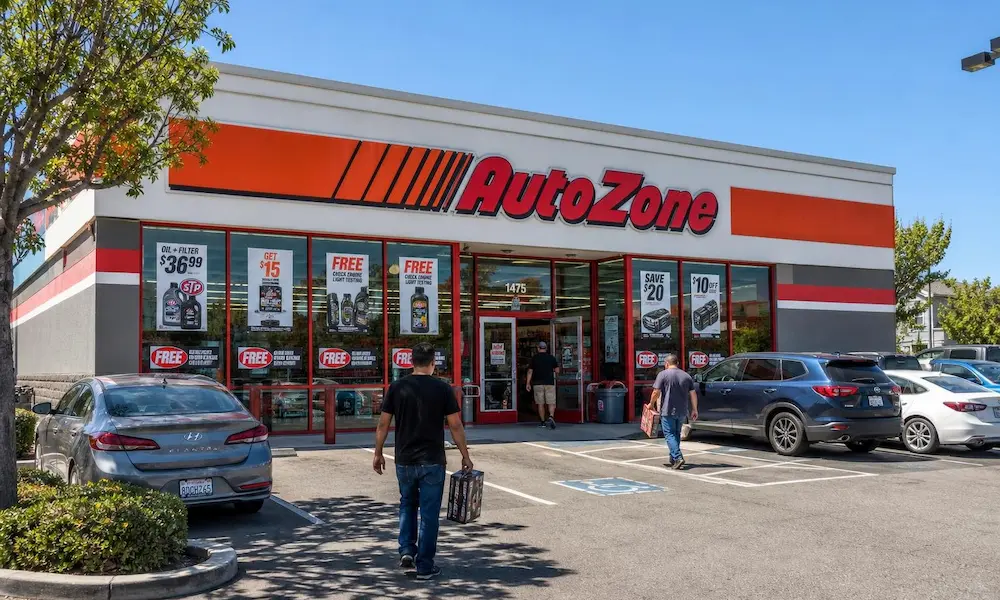
| AutoZone | Varies by state/size | $10 gift card per battery | Lead-acid (auto, marine, powersport) |
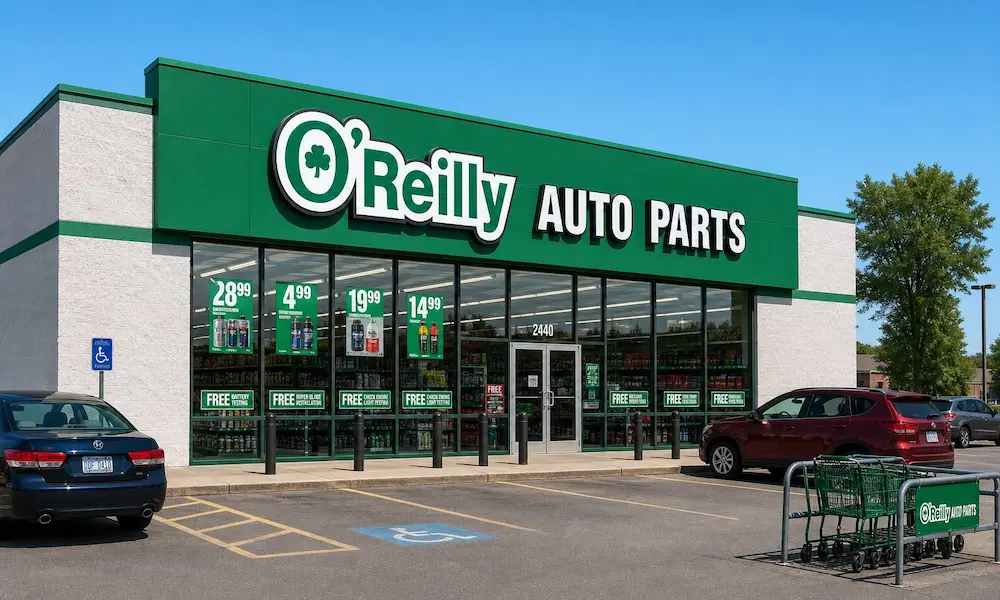
| O’Reilly Auto Parts | Varies by state/size | $10 gift card per battery | Lead-acid (auto, marine, motorcycle, lawn) |
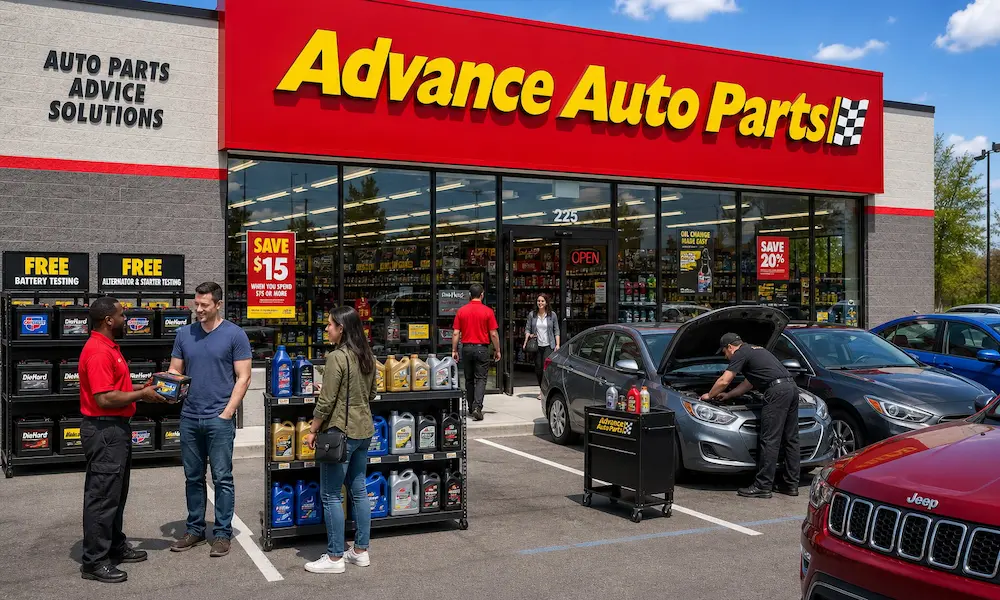
| Advance Auto Parts | Varies by state/size | $10 gift card per battery | Lead-acid (auto and light truck only) |
| NAPA Auto Parts | $18–$27 refund | None | Lead-acid (car, motorcycle, marine, lawnmower) |
| Batteries Plus | $10–$75 | Core credit toward new purchase | Lead-acid + some rechargeable types |
| Walmart | $5–$10 (state-dependent) | None | Lead-acid (auto and marine) |
Don’t Have a Replacement? You Can Still Cash In
AutoZone, O’Reilly, and Advance Auto Parts all run battery bounty programs. Bring in a dead battery without buying anything, and you walk out with a $10 store gift card. No purchase required.
NAPA requires your original receipt to release the core deposit. Keep that receipt.
Watch Out for Online Purchase Complications
Bought your battery online? Core deposits on e-commerce orders often get buried in fees or mislabeled during checkout. When you return the old battery in-store, the associate may need to manually override the system to process your refund. Be patient — or ask for a manager if it stalls.
Option 2: Sell It to a Scrap Yard for Cash
If you’ve got multiple batteries — or you just want cash instead of store credit — take them to a commercial scrap yard.
Scrap yards pay based on weight and the current market price for lead. Typical payouts run $0.10 to $0.30 per pound. A standard car battery weighs 35–50 pounds, so expect $7 to $30 per unit in cash.
Prices vary by location. Here’s a snapshot of current scrap battery prices across the U.S.:
| State | Location | Price Per Pound |
|---|---|---|
| Maryland | Hagerstown | $0.28 |
| Massachusetts | Westport | $0.27 |
| Texas | Point Blank | $0.25 |
| Alabama | Moody | $0.21 |
| Florida | West Palm Beach | $0.20 |
| Michigan | Houghton Lake | $0.18 |
| Wisconsin | Janesville | $0.15 |
| Connecticut | Meriden | $0.12 |
| South Carolina | Anderson | $0.08 |
Prices shift with global lead commodity markets, so check iScrapApp before you go. If you’re selling in volume, this beats any retail gift card program.
Option 3: Drop It Off at a Municipal Hazardous Waste Facility
Not interested in store credit or scrap prices? Your local government has you covered.
Most counties run Household Hazardous Waste (HHW) programs — either permanent drop-off facilities or scheduled collection events. You drop off the battery for free, and they make sure it gets recycled properly.
To find your nearest event or facility, search “[your county] household hazardous waste drop-off.”
Wait — What About Those Drop Boxes at Hardware Stores?
Those cardboard battery collection boxes at Home Depot, Staples, or Best Buy — managed by The Battery Network (formerly Call2Recycle) — are not for car batteries.
Those boxes only accept dry-cell rechargeable batteries (like AA rechargeables, laptop packs, or small sealed lead-acid units under 11 pounds). Dropping a heavy, liquid-filled car battery in one of those boxes risks acid leaks, short circuits, and container failure. Don’t do it.
How to Safely Remove and Transport Your Old Battery
Before you head out, handle the battery correctly. Sulfuric acid burns skin and eyes. Lead exposure is serious. Here’s what to do:
Gear up first:
- Acid-resistant or leather gloves
- Safety glasses or goggles
- Closed-toe shoes
- Long sleeves
Removing the battery:
- Disconnect the negative terminal first (black or gray cable)
- Then disconnect the positive terminal (red cable)
- Never let a metal tool touch both terminals at once — that causes arcing or explosions
- Remove rings, watches, and metal jewelry before you start
Transporting it safely:
- Keep the battery upright at all times to prevent acid leaks through the vent caps
- Don’t store it directly on bare concrete — concrete accelerates discharge and can crack the casing. Use a wooden pallet or plastic tray instead
- Wrap it in a thick plastic bag or place it in a sealed plastic container to catch any residue
If the battery is cracked or leaking, seal it in a polyethylene bucket immediately and label it with today’s date. Don’t leave it open.
What If You Have an EV or Hybrid Battery?
Hybrid and EV propulsion batteries play by completely different rules. These packs weigh anywhere from 60 to over 1,000 pounds and carry high-voltage charges.
Under federal Universal Waste rules, they’re banned from regular trash, retail drop-offs, and municipal HHW programs. If a scrapyard crushes a car with the propulsion battery still inside, that’s an unpermitted hazardous waste violation under the Resource Conservation and Recovery Act.
Your options for EV or hybrid battery disposal:
- Contact your vehicle manufacturer — most have certified take-back programs
- Visit an authorized dealership — they handle battery returns through manufacturer networks
- Use a specialized recycler like GreenTec Recycling or Recohub, which handle safe discharge, second-life grading, and material recovery
Advanced recycling methods can recover 95–98% of raw materials — including lithium, cobalt, nickel, and copper — feeding them back into new battery production.
Know Your State’s Rules
Core charge laws vary by state. Here’s a quick rundown of how a few states handle things differently:
| State | Key Rule | Notable Detail |
|---|---|---|
| California | Refundable core deposit + non-refundable state battery fee | Exempts new vehicles, used car dealer sales, and free warranty replacements |
| Ohio | Retailers must accept trade-ins of the same battery type | Stores must post signage explaining the law |
| Washington | Minimum $5 core charge required by law | Core returns reduce your retail sales tax base |
| Colorado | Core charge is taxed upfront | Sales tax on core charge is non-refundable unless you trade in at time of purchase |
The Quickest Way to Choose Your Disposal Option
Use this decision tree to pick the right path:
- Buying a replacement battery? → Return the old one at the same time. You get the core charge back ($10–$75) and skip the hassle.
- Not buying anything but want store credit? → Drop it at AutoZone, O’Reilly, or Advance Auto Parts for a $10 gift card.
- Have multiple batteries or want cash? → Sell to a local scrap yard at $0.10–$0.30 per pound.
- Just want it gone, no transaction needed? → Drop it at your county’s HHW facility for free.
- Got a hybrid or EV battery pack? → Contact the manufacturer or a certified industrial recycler. Don’t take it anywhere else.
Pick the option that fits your situation and get that battery out of your garage — the right way.