Your car won’t start. It’s 7 AM. You need answers fast. Does O’Reilly’s change batteries, or will they just sell you one and wave goodbye? This post gives you the full picture — what they actually do, when they’ll say no, and how to handle either outcome.
Yes, O’Reilly Does Change Batteries — But There’s a Catch
The short answer is yes. O’Reilly Auto Parts offers free battery installation when you buy a battery from them. It’s one of their most-used store services.
But here’s the thing: it’s a courtesy service, not a guaranteed repair. Staff can — and sometimes will — turn you down. It depends on your car, the staff available, the weather, and honestly, how complicated your battery swap turns out to be.
Don’t take it personally. Understand the rules, and you’ll get the most out of this free service.
Free Battery Testing Comes First
Before anyone touches a wrench, O’Reilly runs a free diagnostic test on your battery. This isn’t just checking voltage with a multimeter. They use digital load testers that simulate the massive amp draw of your starter motor.
Why does that matter? A dying battery can still show fine resting voltage. The moment it’s under load — like cranking an engine on a cold morning — it collapses completely. That simple voltage check fools a lot of people into thinking their battery is fine when it isn’t.
What the Test Actually Checks
- Battery health: Can it hold a charge under real starting conditions?
- Alternator output: Is it charging the battery correctly while you drive?
- Starter draw: Is it pulling too many amps to crank the engine?
They’ll also test motorcycles, ATVs, marine vessels, lawnmowers, and golf carts — not just cars and trucks. If your vehicle is completely dead and can’t be driven in, they suggest removing the battery and bringing it to the store for bench testing and a free charge before the load test runs.
O’Reilly also offers free OBD-II scanning on any vehicle made after 1996. If your check engine light came on alongside the battery issue, this can point you toward a bigger electrical problem.
| Diagnostic Service | Where It’s Done | What It Finds |
|---|---|---|
| Digital Load Test | On vehicle or bench | True battery condition under starter-level stress |
| Alternator Test | On vehicle or bench | Whether your charging system works correctly |
| Starter Motor Test | On vehicle or bench | Excessive amp draw causing battery drain |
| OBD-II Code Scan | On vehicle | Hidden faults triggering warning lights |
How the Free Installation Actually Works
If the test confirms your battery is dead and you buy a replacement, a staff member will typically install it in the parking lot. For a standard, accessible battery, the whole swap takes under 15 minutes.
Here’s the basic process they follow:
- Park on a flat surface, engine off, hood open
- Remove the hold-down bracket securing the battery
- Disconnect the negative cable first — always
- Disconnect the positive cable
- Lift the old battery out
- Lower the new battery in with terminals facing the correct direction
- Reconnect positive first, then negative
- Reattach the hold-down hardware
- Start the vehicle to confirm everything works
That negative-first rule isn’t just habit. If a wrench touches the positive terminal while the negative is still grounded, you’ll create a short circuit that can fry your car’s electronics instantly.
When O’Reilly Won’t Change Your Battery
This is where things get real. Modern car design has made “simple battery swaps” surprisingly complicated. Staff are explicitly told to decline installations on vehicles that are too complex, too risky, or require software tools they don’t have.
Batteries in Weird Locations
Car engineers love optimizing weight distribution. Unfortunately, that sometimes means hiding your battery somewhere completely inconvenient.
- Dodge Journey and some Chrysler models: Battery sits inside the front wheel well. You need a jack, a removed tire, and plastic fender liner removal. O’Reilly staff aren’t allowed to jack up vehicles — it’s a liability issue.
- BMW, Mercedes, and some luxury sedans: Battery lives under the rear seat, in the trunk under the spare tire, or beneath the passenger floor. Getting to it means tearing out seats and carpet — too much risk of damaging expensive interior trim.
- Ford Escape (2013–present): The battery is buried near the firewall. Accessing it often requires removing the wiper cowl or the entire air intake box. Mess that up and your wipers won’t sync.
- Chevy Traverse, GMC Acadia, Buick Enclave: Complex location requiring significant disassembly. Not a parking lot job.
| Vehicle | Battery Location | Why O’Reilly Declines |
|---|---|---|
| Dodge Journey / Chrysler Sedans | Front wheel well | Requires lifting the vehicle — safety policy violation |
| BMW / Luxury Sedans | Trunk or under rear seats | Risk of damaging interior trim and seat tracks |
| Ford Escape (2013+) | Near firewall, deep in engine bay | Wiper cowl or air intake removal required |
| Chevy Traverse / GMC Acadia | Sub-floor or firewall area | Extensive disassembly beyond courtesy service scope |
The Software Problem No One Warns You About
This one catches a lot of people off guard. Many modern vehicles use a Battery Management System (BMS) — basically, the car’s computer learns how the old battery behaves over years and adjusts the alternator’s charging output accordingly.
Swap in a fresh battery without resetting that system? The alternator keeps treating it like the old, degraded unit. It overcharges the new battery, boils the fluid, and kills it in months instead of years.
Worse, disconnecting the battery cable on some cars triggers a cascade of problems:
- Check engine lights flood the dashboard
- The radio locks itself and demands an anti-theft code you probably don’t have
- Transmission shifts get rough because the computer forgot its learned patterns
- Some steering columns lock up entirely
To do this swap safely, the vehicle needs a constant voltage supply connected to the OBD-II port throughout the process — keeping the computers awake while the battery is swapped. Some Ford vehicles even require a specific sequence of physical inputs — like flashing the high beams five times — to complete the reset.
O’Reilly staff don’t carry dealership-level scan tools. If your car needs a BMS reset, they’ll tell you to head to a shop.
Other Reasons They Might Say No
Beyond the technical stuff, real-world O’Reilly employees point out a few more reasons installations get declined:
- Understaffing: One person running the counter during a rush can’t also spend 40 minutes in the parking lot
- Weather: Torrential rain, lightning, extreme cold, or dangerous heat — they can decline outdoor service
- Corroded hardware: If battery bolts are rusted solid and a wrench rounds off the head, the car is now worse than when it arrived. Employees visually inspect hardware first and walk away from anything too corroded
- Missing tools: The infamous 10mm socket disappears constantly. No tool, no install
Clean the Terminals — Don’t Skip This Step
Whether O’Reilly installs your battery or you do it yourself, cleaning the cable terminals before connecting the new battery is non-negotiable. That blue-green or white crusty buildup isn’t just ugly — it’s an electrical insulator that blocks current flow.
Here’s why it forms: as your battery charges and discharges, microscopic amounts of hydrogen gas escape through the vents. That gas reacts with the metal terminals, moisture, and heat to create corrosion. Over time, it chokes the connection between the battery and your car’s electrical system. The result? A brand-new battery that still won’t start your car.
The Right Way to Clean Terminals
- Spray Super Start Battery Cleaner directly onto the terminals and let it foam
- Rinse with clean water and dry completely
- Scrub with a terminal wire brush — brands like Lisle, Performance Tool, and OTC all make the right tool
- Apply dielectric silicone grease over the finished connection to seal it from air and moisture
- Place treated felt pads at the base of each post before clamping on the cables
If the cable ends are so corroded they can no longer grip the post, terminal splice repair kits let you cut off the ruined section and bolt on a fresh copper lug — no dealership wiring harness replacement needed.
| Product | What It Does |
|---|---|
| Battery Cleaner Spray | Dissolves and neutralizes acid corrosion on contact |
| Terminal Wire Brush | Strips oxidation to expose bare, conductive metal |
| Dielectric Silicone Grease | Seals connection against future corrosion |
| Treated Felt Pads | Absorbs acidic gas before it reaches the clamp |
| Terminal Splice Kit | Replaces destroyed cable ends without rewiring the car |
What to Do If They Can’t Install It
If O’Reilly declines your installation, you’ve still got solid options.
Use the Loaner Tool Program. O’Reilly’s free tool rental program covers specialty tools you’d never use again — memory savers, battery terminal spreaders, torque wrenches, and more. Pay a deposit equal to the tool’s retail price, return it undamaged, get your full deposit back. Keep it if you want. The deposit becomes the purchase price.
Take it to a shop. Any vehicle requiring BMS reset, wheel well access, or interior disassembly needs a certified technician. It’s not a knock on O’Reilly — it’s just the reality of modern car design.
Recycle Your Old Battery — and Get Paid for It
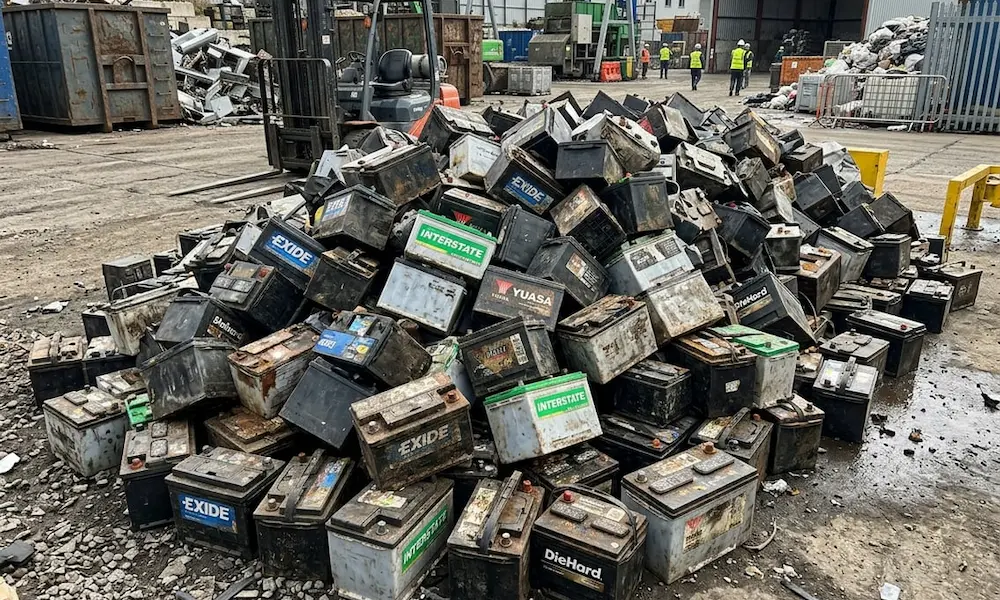
Lead-acid batteries contain toxic materials. Federal and state regulations prohibit landfill disposal. O’Reilly handles this with two programs:
Core charge refund: Every new battery purchase includes a refundable core charge. Return your old battery within 45 days, get the full amount back. Simple.
Battery buy-back: Got an old battery sitting in your garage that wasn’t part of a recent purchase? Bring it in and O’Reilly gives you a $10 gift card. Covers cars, trucks, motorcycles, boats, and lawnmowers.
Recycling Limits by Region
| Region | Daily Return Limit | Notes |
|---|---|---|
| National Standard | 5 units | Prevents commercial scrap dealer exploitation |
| Florida | 2 units | Stricter state hazardous waste regulations |
| California | 6 units | Enhanced recycling mandates at the state level |
A few important restrictions: cracked or leaking batteries get rejected — they’re a safety hazard. Lithium batteries are never accepted — too flammable for standard transport. And you can’t claim both a core refund and the gift card for the same battery.
The recycled material doesn’t go to waste. Lead gets smelted into new battery grids. Plastic casings get melted down and reformed. The acid gets neutralized into water and reusable sulfates. O’Reilly may eventually stock new batteries made from the exact materials you turned in.
Choosing the Right Replacement Battery
O’Reilly stocks batteries under the Super Start brand across multiple performance tiers. The right one depends on your climate, vehicle type, and how many electronics your car runs.
| Super Start Tier | Best For | Key Feature |
|---|---|---|
| Economy | Older vehicles, minimal electronics | Budget-friendly, standard performance |
| Premium | Most modern passenger vehicles | Higher cold cranking amps, longer warranty |
| Extreme | Harsh climates, heavy use | Dense internal plates, maximum reserve capacity |
| Fleet / Heavy Duty | Commercial trucks, diesel engines | Oversized, vibration resistant |
| AGM (Absorbent Glass Mat) | Start-stop vehicles, luxury cars | Spill-proof, handles deep cycling without damage |
Warranties range from one to three years depending on the tier. If a battery fails due to a manufacturing defect, O’Reilly replaces it free at any location. But the warranty won’t cover damage caused by a faulty alternator overcharging it, repeated deep discharges from parasitic drains, or physical abuse.
So — does O’Reilly’s change batteries? Yes, often, for free, in about 15 minutes. But bring realistic expectations. If your battery is in a wheel well, under a seat, or your car needs a computer reset after the swap, you’re looking at a trip to a repair shop instead. Either way, O’Reilly still handles the free testing, the right replacement, and the old battery recycling — which covers most of what you actually need.