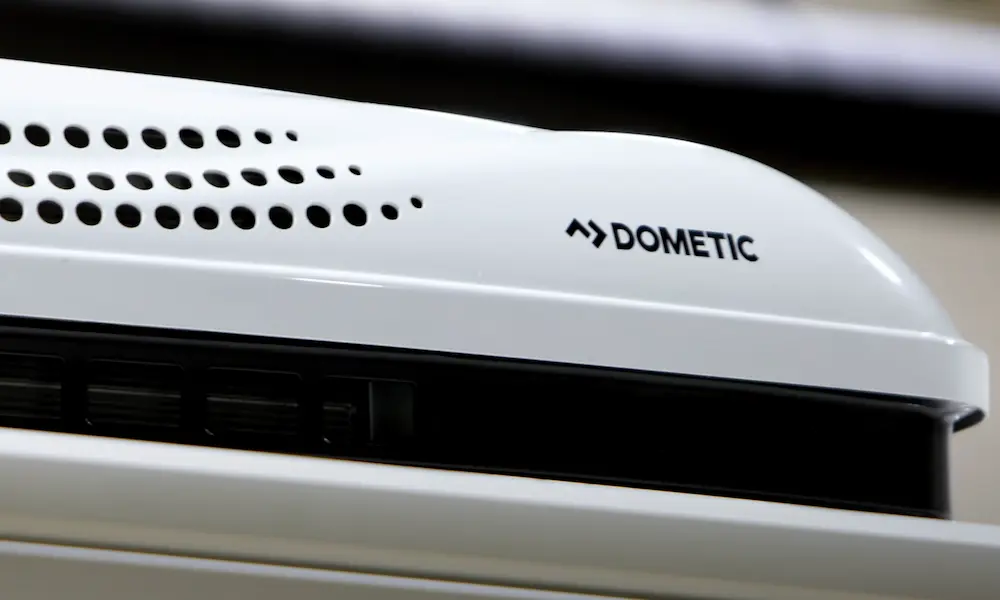
Is your RV’s air conditioner not keeping you cool? Before you call a repair technician, there’s plenty you can do yourself to diagnose and fix common Dometic AC issues. With proper maintenance and troubleshooting, you can often restore your unit to working order and save hundreds on service calls.
Understanding Your Dometic RV Air Conditioner
Your Dometic RV air conditioner works much like your home AC, but in a more compact package. The system includes several key components:
- Compressor: The heart of your system that circulates refrigerant
- Evaporator coils: Inside your RV, these absorb heat from the interior
- Condenser coils: On the rooftop, these release heat outside
- Fan motor: Circulates air through the system
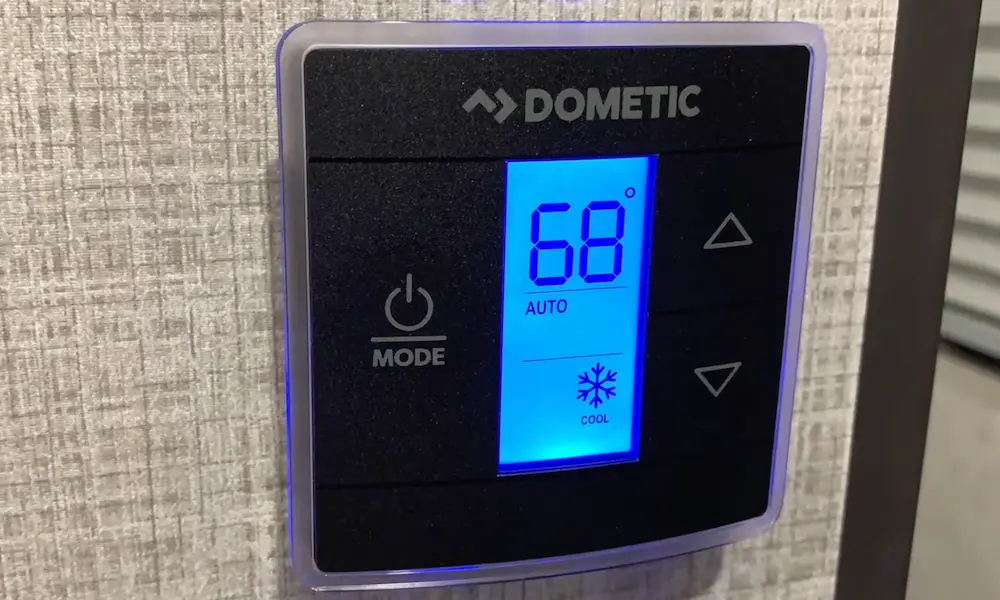
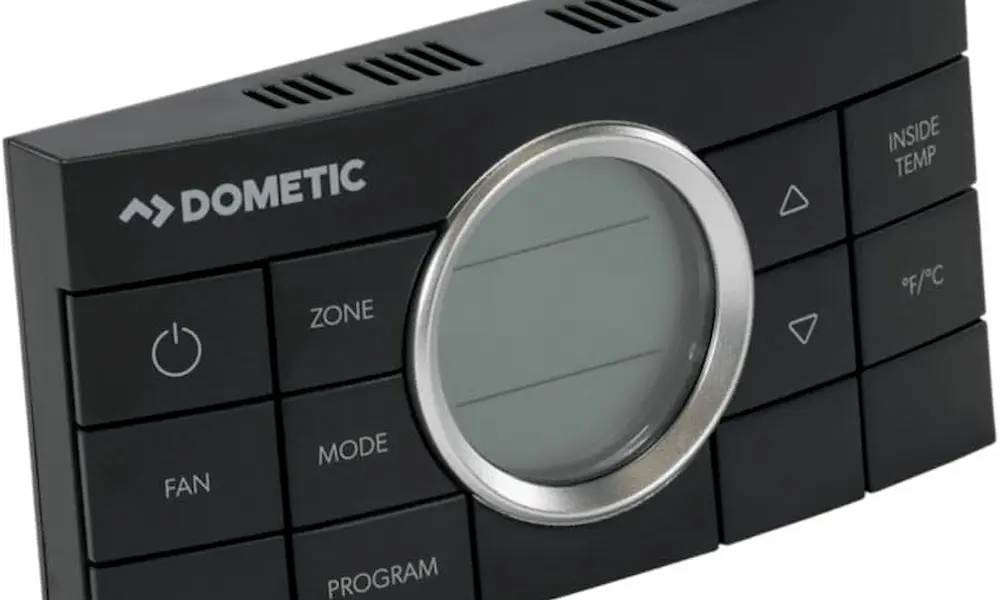
- Thermostat: Controls temperature settings
- Control board: Manages system operation
- Capacitors: Provide power for startup and running
When these components work together properly, you stay cool. When something goes wrong, it’s time to troubleshoot.
Essential Maintenance to Prevent Problems
Many Dometic AC issues stem from neglected maintenance. Here’s what you should do regularly:
Clean Your Filters
Dirty filters block airflow and make your system work harder. For optimal performance:
- Turn off all power to your AC
- Remove the air filter (typically located in the ceiling assembly)
- Vacuum loose dirt and debris
- Wash with mild soap and water
- Let dry completely before reinstalling
Do this monthly during heavy use seasons.
Check and Clean Coils
Dirty coils can’t transfer heat effectively. While you might need a professional for a deep clean:
- Turn off all power
- Inspect condenser coils on the roof unit for debris
- Gently clean accessible areas with a soft brush
- Ensure the condensation drainage channels aren’t blocked
Inspect Ductwork and Seals
Small leaks in your ductwork can dramatically reduce efficiency:
- Remove the ceiling assembly cover
- Check for gaps or cracks in the plenum area
- Use HVAC foil tape to seal any leaks
- Check that all vents are properly aligned and sealed
Maximize Efficiency When Using Your AC
- Set your thermostat to a reasonable temperature (around 72°F)
- Keep your RV well-insulated with reflective blinds or curtains
- Pre-cool your RV before the hottest part of the day
- Run your fan on high in humid conditions
- Minimize opening doors and windows
Common Dometic AC Problems and How to Fix Them
AC Unit Won’t Turn On
If your AC shows no signs of life, check these potential causes:
Power Supply Issues
- Verify your RV is securely connected to shore power
- Check your battery voltage and connections
- Reset the 20-amp circuit breaker for the AC
- Inspect any accessible fuses related to the AC unit
Thermostat Problems
- Ensure the thermostat is turned on
- Try resetting the thermostat:
- For Dometic Penguin II single-zone thermostats: Hold the (+) button and On/Off Mode button for 3 seconds until a (–) appears, then press On/Off Mode again
- For multi-zone thermostats: Hold Zone and Mode buttons, return switch to on until “FF” appears, then release
Common Thermostat Repair
A very common issue with Dometic thermostats is cracked solder joints on the on/off switch. If you’re comfortable with a soldering iron:
- Remove the thermostat cover
- Locate the on/off switch
- Re-solder any cracked joints
- Clean contacts with contact cleaner
Thermostat Shows Error Codes
Dometic thermostats display specific error codes to help diagnose problems:
| Error Code | Meaning | Solution |
|---|---|---|
| E1 | Communication loss between thermostat and module | Reset thermostat, check connections |
| E2/E3 | Indoor temperature sensor issue | Fan still works, but heating/cooling locked out |
| E4 | Outdoor temperature sensor issue | Heat pump locked out, but AC/fan still work |
| E5 | Freeze sensor issue | AC mode locked out |
| E03 | No connection between power module and display | May need service |
| E13 | Internal communication error | Reset error, service if recurring |
To clear most errors, turn the thermostat off, cycle power to the AC (off then on), then turn the thermostat back on.
Compressor Issues: Not Starting, Surging, or Noisy
When your compressor isn’t working properly, your AC won’t cool. Common symptoms include failure to start, erratic operation, or unusual noise.
Check Capacitors (Common DIY Fix)
Faulty capacitors are often the culprit and are relatively easy to replace:
- Turn off all power
- Access the capacitor (usually in the rooftop unit)
- Visually inspect for bulging or fluid leakage
- Test with a multimeter that has capacitance setting
- Replace if out of specification (should be within 5-10% of rated value)
Test Power to Compressor
For accurate testing:
- Use a 60-watt light bulb with socket and wires (not just a multimeter)
- With power off, locate the relay on the control board
- Test for voltage when power is applied and thermostat calls for cooling
Advanced Diagnosis
If capacitors check out but compressor won’t run:
- With power off, remove the wire cap from compressor
- Check all three wires for damage or burning
- Test continuity between compressor leads using an ohmmeter
Fan Runs But No Cooling
This common problem usually means your fan works but the compressor isn’t running.
Quick Checks:
- Set thermostat to “cool” and verify temperature setting is below room temperature
- Listen for compressor attempting to start (humming sound)
- Check that the fan is blowing air through all vents
Specific Wiring Issue:
Some Dometic units have a specific wiring anomaly – a yellow wire meant for heat pump models. If incorrectly connected to an AC-only unit, it can cause conflicts. If present, disconnecting this wire might resolve the issue.
Bypass Control Board Test:
To determine if the control board is at fault:
- With power disconnected, locate the black relay on the control board
- Jump the black and blue (12 gauge) wires connected to this relay
- Apply power to the AC unit
- If compressor starts, the control board or thermostat signal is faulty
Insufficient Cooling or Warm Air
When your AC runs but doesn’t cool properly, airflow is usually the culprit.
Airflow Checks:
- Clean filters and coils as described in maintenance section
- Ensure all vents are open and unblocked
- Check for leaks in ductwork and seal with HVAC foil tape
- Make sure return air path is unobstructed
Humidity Management:
In humid conditions, coils can freeze and block airflow:
- Set fan to high speed (not auto)
- Consider using a dehumidifier in very humid environments
- Check that condensate is draining properly
Environmental Factors:
- Park in shade when possible
- Use awnings and window coverings to reduce heat load
- Limit use of heat-producing appliances inside
Electrical Issues: Tripped Breakers and Overload
If your AC repeatedly trips the circuit breaker, power management is key.
Voltage and Load Management:
- Monitor incoming voltage with an EMS or display panel
- Turn off other high-wattage appliances when running AC
- Remember that AC startup draws much more power (around 2,400 watts) than running (about 1,500 watts)
Electrical Inspection:
- Check for loose connections or corroded terminals
- Ensure all grounds are properly connected
- Verify that the breaker is properly sized for your unit
Diagnostic Tools You’ll Need
To effectively troubleshoot your Dometic AC, these tools are helpful:
- Multimeter: For checking voltage and resistance
- 60-watt light bulb with wires: For testing actual power delivery
- Small soldering iron: For thermostat repairs
- Spray contact cleaner: For cleaning electrical contacts
- HVAC foil tape: For sealing ductwork
- Household thermometer: For comparing actual vs. displayed temperatures
Quick Reference Troubleshooting Guide
| Problem | Most Common Causes | First Steps to Try |
|---|---|---|
| Won’t turn on | Power issues, tripped breaker, thermostat | Check power, reset breaker, reset thermostat |
| Error codes | Communication issues, sensor problems | Reset thermostat, check connections |
| No cooling | Compressor or capacitor failure | Test/replace capacitors, check power to compressor |
| Weak cooling | Airflow restrictions, dirty components | Clean filters/coils, check ductwork |
| Trips breaker | Voltage issues, too many appliances running | Reduce electrical load, check connections |
| Freezing up | High humidity, poor airflow | Set fan to high, clean filters, check airflow |
By following these troubleshooting steps, you can often diagnose and fix common Dometic RV air conditioner problems yourself. Regular maintenance is your best defense against breakdowns, especially before summer travel season begins.
Remember that while many issues can be fixed DIY-style, refrigerant work and major electrical repairs should be handled by professionals. Stay cool and happy travels!