Is your RV feeling more like a sauna than a cozy home on wheels? When your RV air conditioning stops working, it can quickly turn your dream vacation into a sweaty nightmare. But don’t worry—most RV AC problems have straightforward solutions you can tackle yourself. This guide walks you through diagnosing and fixing the most common issues, saving you from expensive service calls and getting you back to comfortable camping faster.
Why Your RV Air Conditioner Might Not Be Working
RV air conditioners are actually simpler than residential units, with two main systems: the sealed refrigerant system (compressor, condenser, evaporator) and the air movement system (fans and motors). When your AC stops working, the problem typically falls into one of several categories we’ll explore below.
No Power to Your RV Air Conditioner
Checking Power Sources
If your AC shows no signs of life, start with the obvious—power supply. RV air conditioners need both 120V AC power for the compressor and fan motors, plus 12V DC power for the thermostat and controls.
First, check your shore power connection at the pedestal:
- Is the 30A or 50A plug fully seated?
- Is the pedestal breaker switched on?
- Try using a multimeter to check voltage—readings below 108V can cause poor performance or complete failure.
Inside your RV, verify:
- Main breakers haven’t tripped
- 12V DC system is working (for thermostat operation)
- Battery disconnect switch is in the “on” position
Your converter constantly draws power while charging batteries, so combined with other appliances, you might be exceeding your available power. Try turning off other power-hungry devices when running the AC.
Blown Fuses and Tripped Breakers
RV air conditioners typically have dedicated circuit breakers. Look for:
- Tripped breakers in your main panel
- Blown fuses in the 12V system
- Reset any tripped GFCI outlets that might affect your AC circuit
If breakers trip repeatedly after resetting, you likely have a more serious electrical issue, possibly a short circuit or failing component drawing too much current.
Thermostat and Control System Problems
Faulty Thermostat
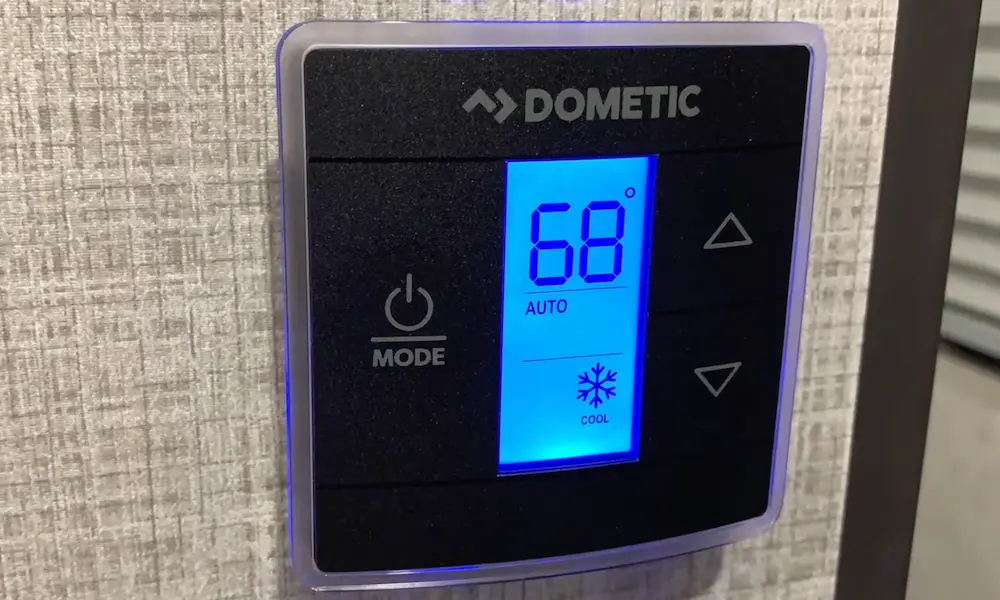
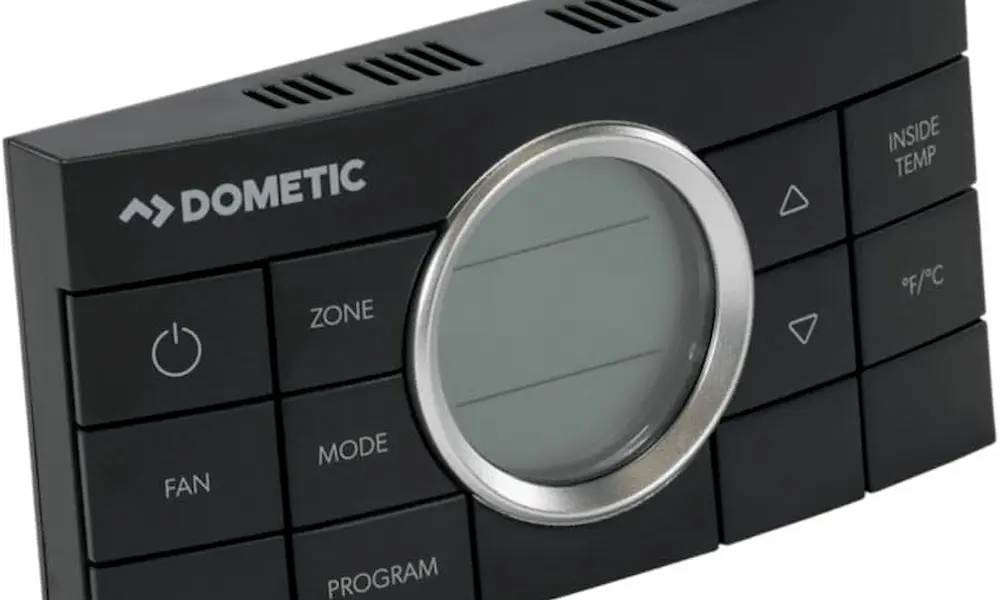
Your thermostat is the command center for your AC system. Problems here can prevent your unit from working even when everything else is fine.
Signs of thermostat problems include:
- Unresponsive controls
- Inaccurate temperature readings
- Inability to engage cooling modes
Modern RV thermostats are often battery-powered, and low batteries frequently cause erratic operation. Replace batteries semi-annually regardless of apparent function.
For digital thermostats, try a reset:
- Remove batteries
- Disconnect power
- Wait 5 minutes
- Reconnect and install fresh batteries
You can also test your thermostat by measuring the 12V DC output on control wires:
- Yellow wire for cooling
- Green/gray for fan speeds
- White for heating
Control Board Issues
For Dometic systems experiencing communication errors (E1 or E3 codes), the issue typically involves wiring between the thermostat and AC control module. Check all connections for corrosion, looseness, or damage.
Some thermostats include internal fuses that can blow. Consult your manual for fuse location and testing procedures.
Poor Cooling Performance
Dirty Air Filters and Restricted Airflow
When your RV AC runs but fails to cool effectively, dirty filters are often the culprit. Restricted airflow can reduce cooling capacity by up to 50%!
To clean your filters:
- Remove them carefully
- Wash with warm soapy water
- Rinse thoroughly
- Allow to dry completely before reinstallation
Clogged filters not only reduce airflow but can cause your evaporator coils to freeze, further reducing cooling capacity.
Dirty Evaporator and Condenser Coils
Both sets of coils need regular cleaning:
Condenser coils (exterior/rooftop):
- Use foaming coil cleaner designed for HVAC systems
- Work from top to bottom with a soft brush
- Rinse thoroughly (when safe to do so)
Evaporator coils (interior):
- Use antibacterial no-rinse cleaner to prevent mold growth
- Apply carefully to avoid damaging the delicate fins
- Consider professional cleaning annually
Frozen Evaporator Coils
Ice formation on evaporator coils indicates airflow problems, low refrigerant, or incorrect thermostat operation.
If you discover frozen coils:
- Turn the system off
- Switch to fan-only mode
- Allow ice to melt completely before resuming cooling operation
If freezing recurs after cleaning filters and coils, check the freeze sensor placement—it should be firmly seated within the evaporator coil fins.
Low Refrigerant and Leaks
Persistent freezing after cleaning filters and coils suggests refrigerant issues. Low refrigerant typically results from system leaks, which can be identified by oil residue around refrigerant lines and fittings.
Warning signs of refrigerant issues include:
- AC runs but doesn’t cool
- Frost or ice on refrigerant lines
- Hissing sounds near AC unit
- Oil stains on connections
While minor leaks can sometimes be sealed with refrigerant stop-leak products, significant leaks require professional repair and system recharging.
Electrical Component Failures
Capacitor Problems
Capacitor failures represent the most common RV AC repair that owners can safely perform themselves. Capacitors provide the electrical “kick” needed to start and run motors.
Symptoms of capacitor failure include:
- Compressors that won’t start
- Fans that run slowly
- Units that trip breakers repeatedly
- Humming sound when trying to start
To test or replace capacitors:
- Disconnect all power
- Discharge existing capacitors using an insulated screwdriver across the terminals
- Test capacitance using a multimeter with capacitance function
- Readings should match the capacitor’s rated value within 10%
When replacing capacitors, use exact specifications; never substitute different capacitance values. Capacitors are non-polarized in AC systems, so wire connections can be made to either terminal.
| Capacitor Type | Typical Rating | Function | Symptoms When Failed |
|---|---|---|---|
| Start Capacitor | 88-108 MFD | Provides initial power boost for compressor startup | Compressor hums but won’t start |
| Run Capacitor | 5-15 MFD | Maintains motor operation | Compressor may start but run poorly or overheat |
Fan Motor Issues
Fan motor problems typically manifest as weak airflow, unusual noises, or complete fan failure.
Before assuming motor failure:
- Disconnect power
- Check that the fan spins freely by hand
- Binding or resistance indicates bearing wear or debris interference
You can test fan motor operation by measuring amperage draw—excessive current suggests worn bearings or electrical issues.
Many fan motors include serviceable bearings that can be lubricated annually, though sealed units require complete replacement. When replacing fan motors, ensure proper CFM ratings match your original equipment to avoid coil freezing or inadequate heat transfer.
Compressor Issues
Compressor Not Starting
If your compressor won’t start, but the fan runs, you might have:
- Failed start capacitor
- Thermal overload protection engaged
- Failed compressor
Listen for a humming sound when the compressor tries to start. This usually indicates a capacitor problem. If you hear nothing, the issue might be with the compressor itself or its control circuit.
To troubleshoot:
- Check capacitor as described above
- Verify proper voltage to the compressor
- Test compressor windings if you have proper equipment and knowledge
Overheating Compressor
An overheating compressor will typically shut down due to thermal protection, then restart after cooling. Causes include:
- Dirty condenser coils
- Fan motor problems
- High ambient temperatures
- Blocked roof vents
Make sure your RV has proper ventilation and shade when operating the AC in extreme heat. Regular cleaning of the condenser coils is essential for preventing compressor overheating.
Preventive Maintenance
Regular Maintenance Schedule
Preventive maintenance significantly extends RV AC lifespan and prevents costly repairs:
Monthly tasks:
- Clean or replace filters
- Remove debris from exterior unit
- Test operation and listen for unusual noises
Seasonal maintenance:
- Deep clean coils
- Inspect electrical connections
- Test capacitors
- Lubricate fan motors (if applicable)
Annual professional inspection:
- Refrigerant level check
- Complete system diagnostics
- Thorough cleaning of difficult-to-reach components
Essential Supplies for RV AC Maintenance
Keep these items on hand for regular maintenance:
- Coil cleaner (non-corrosive formula)
- Filter replacement or cleaning supplies
- Multimeter
- Insulated screwdriver
- Fin comb (for straightening bent condenser fins)
- RV-specific AC cover for off-season storage
DIY vs. Professional Repairs
What You Can Safely DIY
Most RV owners can safely perform:
- Filter replacement
- Basic cleaning
- Capacitor replacement
- Thermostat installation
These repairs require basic electrical knowledge and common tools. Capacitor replacement, in particular, offers significant cost savings over professional service calls.
When to Seek Professional Help
Some issues require professional expertise:
- Refrigerant leaks (EPA certification required)
- Compressor failures
- Complex electrical problems
- Control board failures
- Sensor problems
Compressor replacement often costs more than complete unit replacement, so get multiple quotes before proceeding with major repairs.
Using Your RV AC Efficiently
Maximizing Cooling Performance
To get the most from your RV air conditioner:
- Park in shade when possible
- Use window coverings to block direct sunlight
- Run AC early in the day before temps peak
- Use ceiling fans to improve air circulation
- Consider a secondary portable unit for extreme heat
Power Management Tips
RV air conditioners are power-hungry. To avoid tripping breakers:
- Turn off other high-draw appliances when running AC
- Use a soft start device to reduce startup power surge
- Consider running on generator rather than marginal shore power
- Monitor shore power voltage during peak usage times
- In extreme heat, run AC intermittently rather than continuously
Troubleshooting Chart for Common RV AC Problems
| Symptom | Possible Causes | First Steps to Try |
|---|---|---|
| No power to AC unit | Tripped breaker, blown fuse, disconnected power | Check shore power, breakers, 12V system |
| Unit runs but doesn’t cool | Dirty filters, low refrigerant, frozen coils | Clean filters, check for ice on coils |
| AC cycles on and off rapidly | Dirty coils, faulty thermostat, low voltage | Clean coils, test thermostat, check voltage |
| Unusual noises | Loose components, fan issues, compressor problems | Inspect for loose parts, check fan operation |
| Water leaking inside RV | Clogged drain channels, unit not level | Clear drain holes, level RV, check drain pan |
Modern RV air conditioners are designed for owner maintenance and basic repair. With proper tools, safety awareness, and systematic troubleshooting, most cooling problems can be resolved without expensive service calls. Regular maintenance prevents the majority of failures, making proactive care the most cost-effective approach to RV air conditioning reliability.
Remember to always disconnect power before performing any maintenance or repairs, and never work on rooftop units alone. With the right approach, you can keep your RV cool and comfortable for many camping seasons to come.