Ever stared at your Norcold refrigerator control panel wondering which button does what? You’re not the only one puzzled by those temperature dials and mode options. Getting your settings right means the difference between properly chilled food and a warm disaster on your camping trip. Let’s dive into everything you need to know about your Norcold RV refrigerator settings.
Understanding Norcold Refrigerator Types
Before messing with any buttons, you need to know which type of Norcold you have. There are two main varieties:
Absorption refrigerators like the N611, N641, N841, and 1200 series work using heat from propane, AC electric, or DC electric to drive an ammonia cooling system. These traditional models have numbered temperature settings from 1-9.
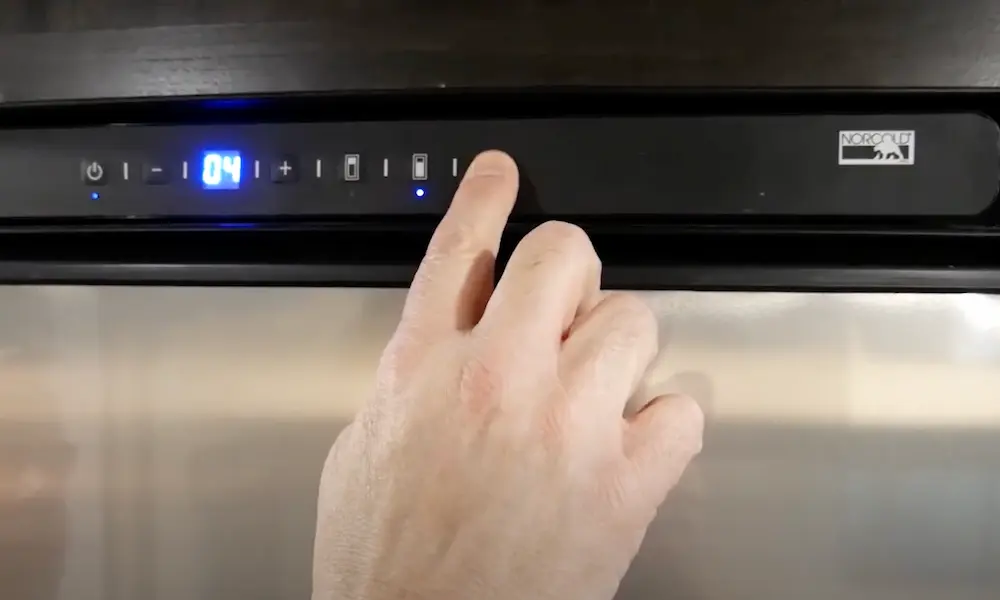
Electric-only refrigerators such as the N10DC and N8DC use compressor technology and run solely on 12V DC power. These newer models often have digital displays with more precise controls.
The type you have determines which settings are available and how you’ll need to operate your fridge.
Basic Control Panel Operation
Power On/Off Functions
Starting your Norcold isn’t as simple as flipping a switch. Here’s what to do:
- Press and hold the ON/OFF button for 3-10 seconds (time varies by model)
- Watch for indicator lights or display activation
- To turn off, press and hold the same button for 2-5 seconds until shutdown
Some models require just a quick press while others need a longer hold. If it’s not turning on, try holding the button longer – up to a full 10 seconds for stubborn units.
Operating Mode Selection
Your MODE button is the key to controlling your refrigerator’s power source. Here are your options:
Auto mode is your best bet for most situations. It automatically chooses the most efficient available power source in this order:
- AC electric (shore power) first
- Propane second
- DC electric last (on 3-way models)
When you’re hooked up at a campground, the fridge will use shore power. If that connection drops, it switches to propane automatically.
Manual modes let you force operation on a specific power source:
- Electric mode: Uses only AC power from shore power or generator
- Propane mode: Uses only LP gas from your tanks
- DC mode: Uses 12V battery power (only on 3-way models)
Choose manual modes when you want to conserve a particular resource or when troubleshooting problems.
Temperature Control Settings
Temperature controls differ between model types:
Traditional models use numbered settings:
- Scale ranges from 1-5 or 1-9 depending on model
- Higher numbers = colder temperatures
- Setting 5 (on 1-5 scale) or 9 (on 1-9 scale) is the coldest setting
- Most owners find the middle range (3-4 or 5-6) works well for normal use
Modern LCD models have separate controls for fridge and freezer:
- Settings typically range from 0-5
- Digital displays show current settings
- Some have actual temperature displays
To adjust temperature on models with a TEMP SET button:
- Press and hold the button
- Watch as settings change in the display
- Release when you reach your desired setting
Your temperature setting remains constant regardless of which operating mode (AC, propane, or DC) the refrigerator uses.
Advanced Settings and Features
Night Mode Operation
Newer electric models include a night mode that reduces noise levels from 34 to 31 decibels by slowing the compressor. This is perfect for:
- Sleeping near the refrigerator
- Conserving battery power during boondocking
- Reducing overall noise in your RV
To use night mode, press the moon button. The mode automatically runs for 8 hours, then returns to normal operation.
Memory Function
Modern Norcold refrigerators remember your settings even after shutdown. When you restart the fridge, it returns to your previously selected:
- Temperature settings
- Operating mode
- Other preferences
This feature saves you from reconfiguring everything each time you travel.
Thermistor Function and Adjustment
The thermistor is the temperature sensor that tells your fridge when to cool and when to stop. This small device is critical for proper operation.
What Is a Thermistor?
The thermistor is a small sensor located on the cooling fins inside your refrigerator compartment. It changes electrical resistance based on temperature and sends signals to the control board to regulate cooling cycles.
Thermistor Positioning
Where the thermistor sits on the cooling fins matters tremendously:
- Higher position = colder temperatures
- Lower position = warmer temperatures
- Most models place it on the 5th or 10th fin from the right side
If your refrigerator runs too cold or too warm, the thermistor position might need adjustment.
Common Thermistor Problems
Watch for these thermistor issues:
- Incorrect positioning causing temperature problems
- Corroded connections leading to erratic cooling
- Drift in resistance values requiring thermistor replacement
If your refrigerator runs constantly or fails to maintain proper temperatures, check the thermistor first.
Operational Guidelines and Best Practices
Pre-Cooling Procedures
Your Norcold doesn’t get cold instantly. Follow these tips for proper pre-cooling:
- Start the refrigerator 12-24 hours before you need it cold
- Begin cooling 2-3 days before departure when possible
- Pre-cool all food items in your home refrigerator before transferring them
- Use the coldest setting initially, then adjust to normal once cooled
Patience is key – rushing the cooling process only leads to frustration.
Proper Loading Techniques
How you load your RV refrigerator affects its cooling efficiency:
| Do This | Don’t Do This |
|---|---|
| Maintain 1-inch clearance around cooling fins | Block airflow with tightly packed items |
| Pack from bottom to top | Overload shelves beyond capacity |
| Place heaviest items on bottom shelves | Put warm items directly in refrigerator |
| Use containers that allow air circulation | Use cardboard boxes that insulate |
Proper loading helps maintain consistent temperatures throughout the refrigerator.
Level Operation Requirements
Absorption refrigerators have strict leveling requirements:
- Side-to-side: Maximum 3 degrees off level
- Front-to-back: Maximum 6 degrees off level
Operating off-level can cause:
- Poor cooling performance
- Permanent damage to the cooling unit
- Formation of ammonia salt deposits
- Complete system failure
Use a bubble level on the refrigerator floor to check leveling before operation.
Troubleshooting Common Settings Issues
Temperature Control Problems
If your refrigerator isn’t cooling adequately:
- Check thermistor position and connections
- Verify proper airflow around cooling fins
- Ensure refrigerator is level within specifications
- Confirm doors seal completely when closed
- Test thermistor resistance using a multimeter
If food is freezing in the refrigerator compartment:
- The thermistor may be disconnected
- Temperature setting might be too high (closer to 9)
- Thermistor might be positioned too high on cooling fins
- Thermistor resistance may have drifted from specifications
Power Source Issues
If you see a red indicator light or error codes:
- Check all power connections (AC, DC, propane)
- Verify propane tank valves are open
- Inspect breakers and fuses
- Test for adequate 12V DC power supply (needed even for AC operation)
If your refrigerator won’t start on any mode:
- Hold power button for the full 7-10 seconds
- Check 12V DC power supply and connections
- Verify all fuses are intact
- Inspect control board connections for corrosion or damage
Fault Codes and Diagnostics
Common Fault Codes
Modern Norcold refrigerators display error codes to help diagnose problems:
| Code | Meaning | Possible Solution |
|---|---|---|
| “NO” or “FL” | Flame detection issues | Clean burner, check propane |
| “LI OP” or “O” | High temperature limit triggered | Improve ventilation, check level |
| “SR” or “S” | Flame sense circuit failure | Power board replacement likely needed |
| Flashing numbers | System-specific faults | Check manual for your model |
Diagnostic Mode Access
Many Norcold models have built-in diagnostic capabilities:
- For N611/N811 models: Press and hold MODE and TEMP SET buttons simultaneously
- For 1200 series: Press and hold ON/OFF and MODE buttons for 5 seconds
- For N8/N10 series: Press and hold MENU button for 5 seconds
Consult your specific model’s service manual for exact procedures, as they vary significantly between refrigerator types.
Maintenance and Storage Settings
Seasonal Storage Procedures
When storing your RV for extended periods:
- Turn off the refrigerator completely
- Prop doors open to prevent mold and mildew
- Remove all food items and clean thoroughly
- Defrost the freezer compartment completely
- Ensure all water is removed to prevent wood damage
Never leave the refrigerator running while in storage unless the RV is being monitored.
Cleaning and Maintenance
Regular maintenance keeps your Norcold running efficiently:
- Inspect and clean the rear ventilation system
- Remove spider webs, insulation, or debris blocking airflow
- Check the condensation drain tube for clogs
- Consider adding a small fan to improve rear ventilation in hot weather
A clean refrigerator runs more efficiently and lasts longer.
Safety Considerations
Gas Operation Safety
When operating on propane:
- Always open propane tank valves fully
- Bleed gas lines by lighting stovetop burners before switching to propane mode
- Never operate on propane while driving unless your model is specifically approved
- Install and maintain a propane leak detector in your RV
Propane operation requires careful attention to safety details.
Electrical Safety Considerations
Protect your refrigerator’s electrical components:
- Ensure proper 12V DC power (11.5-15.4 volts) for control functions
- Check converter operation and battery condition regularly
- Inspect electrical connections at the rear panel for corrosion
- Use surge protectors when connecting to unfamiliar power sources
Even when running on AC or propane, your refrigerator needs stable 12V power for controls.
Optimizing Performance in Extreme Conditions
Hot Weather Operation
High ambient temperatures challenge your refrigerator’s cooling ability:
- Set temperature to maximum (9 or 5 depending on scale)
- Improve ventilation around the unit with additional fans
- Park in shade when possible
- Keep refrigerator stocked (not empty, not overfilled)
- Minimize door openings during the hottest part of the day
In temperatures above 90°F, expect your refrigerator to work harder and run more frequently.
Cold Weather Operation
Operating in freezing temperatures presents different challenges:
- Install winter covers on exterior vents if recommended for your model
- Use a small 40-watt light bulb in the rear access panel (at safe distance from combustibles)
- Consider switching to electric operation rather than propane
- Monitor freezer temperatures to prevent freezing of refrigerator section
Below 32°F, some components may need protection from freezing.
Getting the Most from Your Norcold
Understanding and properly adjusting your Norcold RV refrigerator settings ensures reliable operation and food safety during your travels. The right temperature setting, operating mode, and maintenance routine will maximize performance and extend your refrigerator’s life.
Remember that absorption refrigerators need patience—allow adequate time for cooling and never rush the process. With proper care and the right settings, your Norcold will provide years of reliable service for your adventures on the road.