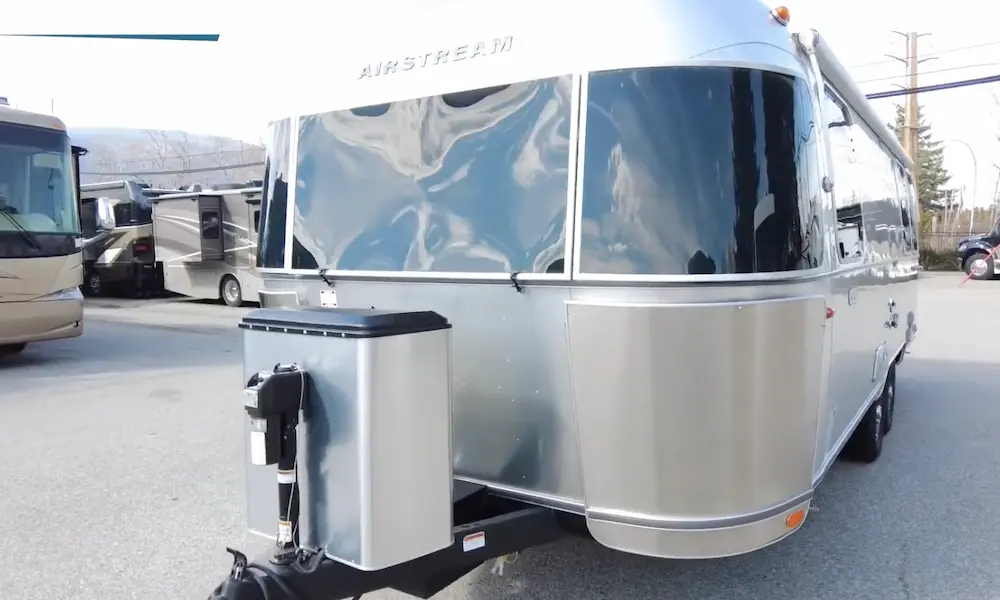
Thinking about investing in that iconic silver bullet? You’re not alone. Airstreams command premium prices – often 2-3 times more than comparable trailers – leaving many potential buyers wondering if they’re actually worth the investment. I’ve done the research to help you determine if that shiny aluminum trailer deserves your hard-earned cash or if you’d be better off with alternatives.
The Airstream Premium: What You’re Actually Paying For
When you look at an Airstream price tag, you might experience sticker shock. New 2024-2025 models range from $47,900 for the entry-level Basecamp to a whopping $193,500 for flagship Classic models. The popular Flying Cloud series starts around $97,900, while mid-range Globetrotters begin at $131,500.
For perspective, a Flying Cloud 25-foot model averaging $122,900 competes against similar-sized trailers from Winnebago ($60,000) and Jayco ($57,500) – effectively double the cost. That’s a significant premium for what appears to be the same basic function.
What exactly are you paying for? Three main things:
- Aircraft-Grade Construction: Unlike conventional RVs with wood framing and stapled walls, Airstreams use aluminum framework with riveted inner and outer skins – similar to aircraft construction.
- Handcrafted Quality: Each unit is manufactured at their Ohio facility with premium materials and handcrafted detail.
- Brand Legacy: That iconic silhouette represents 90+ years of history and unmistakable design recognition.
But are these benefits worth doubling your investment? Let’s dig deeper.
Resale Value: The Hidden Financial Advantage
The most compelling financial argument for Airstreams is their exceptional value retention. Research shows Airstreams typically hold 50-70% of their original value after five years, compared to just 37-45% for standard travel trailers.
This isn’t just marketing hype – approximately 65% of every Airstream ever manufactured is still in use, a remarkable statistic that speaks to their longevity.
Let’s compare a 5-year ownership scenario:
| Travel Trailer | Purchase Price | 5-Year Resale | Total Depreciation | Annual Cost |
|---|---|---|---|---|
| Airstream Flying Cloud | $120,000 | $84,000 (70%) | $36,000 | $7,200 |
| Conventional Trailer | $60,000 | $33,000 (55%) | $27,000 | $5,400 |
While you’ll still lose more total dollars with the Airstream, the gap is significantly smaller than the initial price difference suggests. This advantage grows the longer you own it – making Airstreams particularly attractive for long-term owners.
Quality Construction: What Sets Airstreams Apart
The fundamental difference in Airstream construction creates several tangible benefits:
- No Delamination Issues: The riveted aluminum construction eliminates the common problem of wall delamination that plagues fiberglass trailers.
- Better Aerodynamics: The curved profile cuts through air more efficiently, providing up to 20% better fuel economy than box trailers.
- Structural Integrity: Unlike conventional RVs that rely on furniture components for structural support, Airstreams maintain their integrity independently.
- Weather Resistance: Aluminum withstands harsh elements better than fiberglass and doesn’t deteriorate from UV exposure like many conventional materials.
These construction advantages translate to a trailer that often remains functional for decades rather than years.
Common Airstream Problems: Not All Sunshine and Silver
Despite premium construction, Airstreams aren’t immune to problems. Common issues include:
Water Intrusion: The most significant concern is water leaks around seals, windows, vents, and roof components. The numerous rivets create potential entry points, and seal degradation over time is inevitable. Repair costs for minor seal work can range from hundreds to thousands depending on severity.
Rivet Maintenance: Those signature rivets don’t last forever and are more difficult to replace than screws. Failed rivets often lead to leaks and require professional repair.
Quality Control Fluctuations: Several owners reported increased quality issues for 2021-2022 models produced during COVID-related supply chain disruptions. These included alignment problems, loose fittings, and increased warranty claims. However, 2020 and 2023+ models appear to have fewer systemic issues.
Annual maintenance costs typically range from $200-500 for routine upkeep, though major repairs (air conditioner replacement, water heater failure) can cost $600-1,200 each.
Total Cost of Ownership: Beyond the Purchase Price
When evaluating whether an Airstream is “worth it,” consider these additional costs:
Towing Requirements: Different models have varying demands. The Basecamp requires a vehicle capable of towing 3,500 pounds, while larger models like the Classic need 10,000+ pound capacity. Many buyers discover their current vehicle is inadequate, necessitating truck upgrades.
Campground Fees: These vary dramatically by location and amenities. Budget campgrounds range from $20-40 per night, while full-hookup sites average $30-100 nightly. Monthly rates at RV parks can reach $700-900.
Insurance and Storage: RV insurance, storage fees (if not used year-round), and registration costs add several thousand dollars annually.
One detailed analysis of five-year RV ownership showed total costs of approximately $5,800 per year for a used travel trailer. This equated to about $157 per night for limited use (20 nights annually) but dropped to just $23.55 per night for extensive users (130+ nights annually).
Airstream Alternatives: Premium Options Without the Premium Price
Several manufacturers offer high-quality alternatives worth considering:
Oliver Travel Trailers: Often cited as Airstream’s closest competitor, Oliver builds fully fiberglass trailers with excellent build quality. They typically cost similarly to Airstreams but offer different floor plans and construction advantages. Many reviewers praise Oliver’s superior fit and finish, though they lack Airstream’s iconic styling.
Escape Trailers: Canadian-built fiberglass trailers known for customization options and cold-weather capability. They offer good value but have limited U.S. dealer networks.
Scamp and Casita: Smaller, more affordable fiberglass options. Both are significantly lighter and more affordable than Airstreams but offer less space and amenities.
Lance Travel Trailers: Well-regarded for build quality among conventional stick-and-tin construction trailers. They offer more space and storage than Airstreams at lower prices but lack the aluminum construction’s longevity benefits.
Who Should Buy an Airstream: The Ideal Buyer Profile
After analyzing the data, Airstreams make the most sense for specific buyer profiles:
Frequent Users: Those planning extensive RV use (50+ nights annually) benefit most from the durability and lower per-use costs. The high initial investment amortizes better with heavy usage.
Long-Term Keepers: Buyers planning 10+ year ownership benefit from the aluminum construction’s longevity and avoid the worst depreciation hit.
Resale-Conscious Buyers: Those who value strong resale values and want to minimize depreciation losses find Airstream’s value retention compelling.
Brand Enthusiasts: The Airstream community and brand cachet appeal to buyers who value the social aspects and iconic styling. The Airstream Club offers unique travel opportunities and networking.
When Alternatives Make More Sense
Certain buyer profiles would likely find better value elsewhere:
Budget-Conscious Buyers: Those with limited budgets can get significantly more space and features from conventional RVs, though with faster depreciation and shorter lifespans.
Infrequent Users: Occasional campers (under 20 nights annually) struggle to justify the high per-use costs and might benefit from renting or buying less expensive alternatives.
Maximum Space Priority: Buyers prioritizing interior space and storage will find better value in conventional RVs or fifth wheels, as Airstreams sacrifice some livability for their aerodynamic profile.
Off-Road Users: While Airstreams handle well on highways, those planning serious off-road adventures might prefer purpose-built expedition trailers.
The Financial Break-Even Point
The Airstream premium makes financial sense primarily when the superior value retention offsets the higher initial cost. Consider these scenarios:
Scenario 1 – 5 Year Ownership:
- New Airstream Flying Cloud: $120,000, retains 70% = $84,000 resale
- Conventional equivalent: $60,000, retains 55% = $33,000 resale
- Net cost: Airstream $36,000 vs Conventional $27,000
- Airstream premium: $9,000 over 5 years
Scenario 2 – 10 Year Ownership:
- Airstream likely retains 50%+ = $60,000 resale
- Conventional likely retains 30% = $18,000 resale
- Net cost: Airstream $60,000 vs Conventional $42,000
- Airstream premium: $18,000 over 10 years
These calculations don’t account for quality differences. If a conventional trailer requires replacement after 10-15 years while an Airstream functions for 20-30 years, the total lifecycle costs may favor Airstream despite the higher initial price.
Smart Buying Strategies for Airstream Shoppers
Consider Used Models: A 5-10 year old Airstream offers most of the benefits at significantly reduced cost. Used models typically sell for 60-75% of original MSRP, drastically reducing depreciation risk.
Negotiate Aggressively: Dealers frequently offer significant discounts, with some showing savings of $15,000-$25,000 off MSRP.
Look for Year-End Deals: Model year changeovers and end-of-season sales can yield the best values on new models.
Get a Pre-Purchase Inspection: For used models, hire an Airstream specialist to check for hidden water damage, rivet issues, and floor rot before purchasing.
The Verdict: Are Airstreams Worth It?
Airstreams are worth the premium for specific buyers who align with their strengths: frequent use, long-term ownership, and appreciation for their unique construction and brand experience. The superior value retention, aluminum durability, and iconic design create genuine value for the right buyer profile.
However, they’re not universally the best choice. The 2-3x price premium over competitors is substantial, and many buyers can achieve their RV goals more affordably with alternatives. The key is honest assessment of your usage patterns, budget constraints, and priorities.
For buyers who can afford the premium and align with Airstream’s strengths—particularly those planning extensive use and long-term ownership—they represent a sound investment that can provide decades of service while retaining substantial value. For others, the excellent alternatives in today’s market may provide better overall value.
The Airstream premium ultimately buys you three things: superior construction longevity, exceptional value retention, and brand cachet. Whether those benefits justify the cost depends entirely on how much you value each factor in your specific situation.