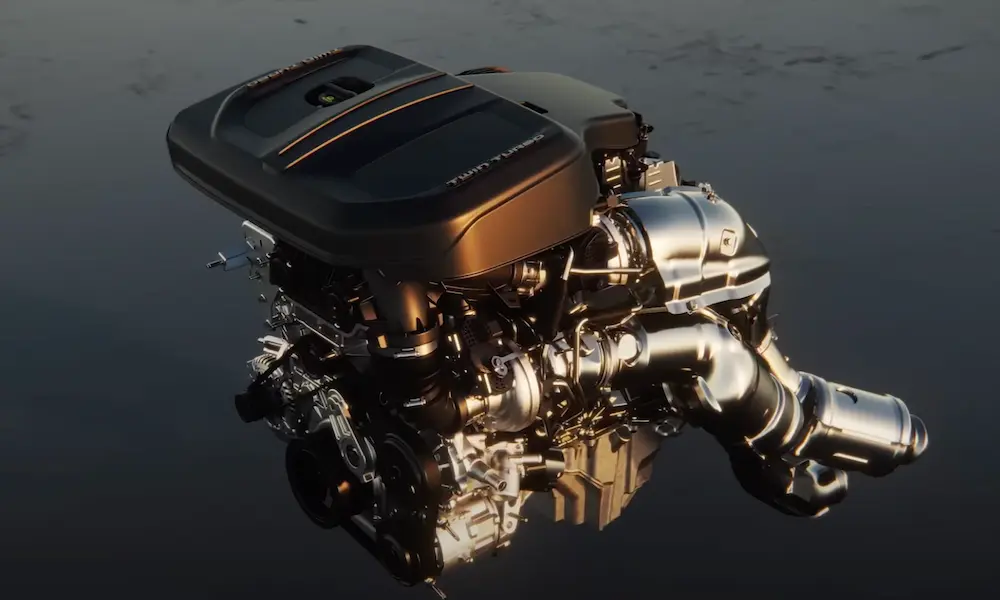
Got a Duramax and need to confirm the firing order fast? Maybe you’re chasing a misfire, rebuilding your engine, or just curious why your crankshaft snapped at 800 hp. Either way, this guide covers every Duramax firing order across every generation. Stick around — the section on the alternate firing order camshaft alone is worth the read.
What Is a Firing Order and Why Does It Matter?
A firing order is the exact sequence your cylinders fire during the combustion cycle. It’s not random. Engineers pick it deliberately to balance forces, reduce vibration, and protect the crankshaft.
In a four-stroke engine, the firing order determines which cylinder delivers its power stroke at each 90-degree interval across a full 720-degree cycle. Get the sequence wrong during a repair or rebuild, and you’re looking at hard starts, heavy smoke, catastrophic injector damage, or worse — a hydrostatic lock.
For Duramax diesel engines specifically, the firing order also ties directly into emissions control, injector timing, and diesel particulate filter regeneration. It’s foundational, not optional.
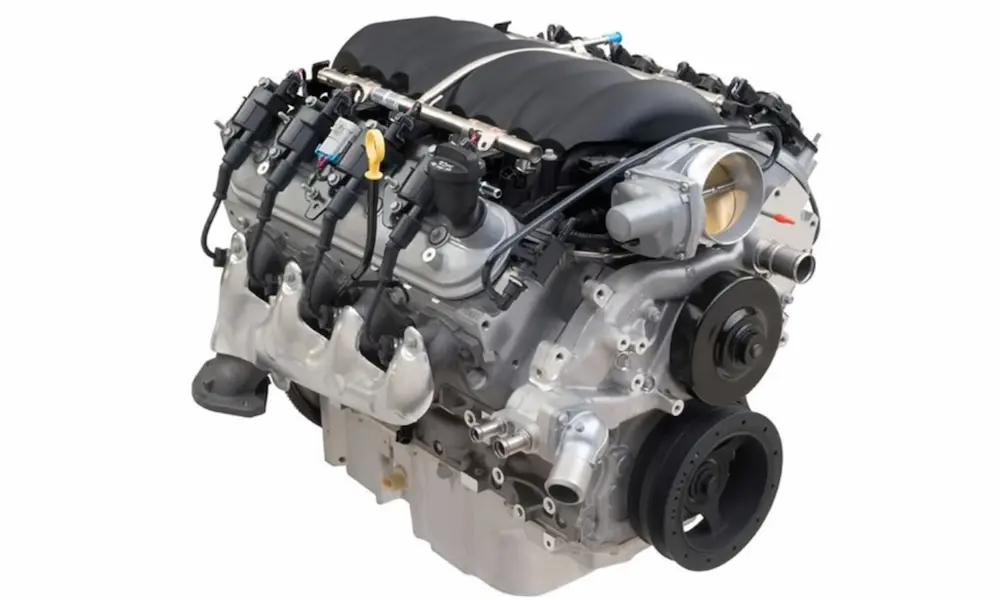
The 6.6-Liter V8 Duramax Firing Order (All Generations)
The Answer: 1-2-7-8-4-5-6-3
Every generation of the 6.6-liter Duramax V8 — from the LB7 in 2001 through the current L5P — uses the same firing order: 1-2-7-8-4-5-6-3.
This sequence spaces combustion events evenly across a 90-degree cross-plane crankshaft, delivering smooth torque and a refined idle. That mattered a lot back in 2001, when GM and Isuzu needed their new diesel to feel dramatically better than the clunky mechanical engines it replaced.
Cylinder Numbering: Don’t Get This Wrong
The 6.6L Duramax uses a 90-degree V8 layout. Here’s how the cylinders are arranged:
- Passenger side (right bank): Cylinders 1, 3, 5, 7 — numbered front to rear
- Driver side (left bank): Cylinders 2, 4, 6, 8 — numbered front to rear
So cylinder 1 sits at the front of the passenger side, and cylinder 2 sits directly across at the front of the driver side. This layout differs from many classic American V8 gas engines, so don’t assume.
Getting this wrong during injector harness routing or misfire diagnosis sends you down a very expensive rabbit hole.
A Quick Note on the LLY Firing Order Myth
Some older service databases list the LLY firing order as 1-8-7-3-6-5-4-2. That’s wrong. Cross-referencing primary GM documentation confirms the LLY uses the same 1-2-7-8-4-5-6-3 as every other 6.6L V8 Duramax. Using the incorrect sequence causes poor combustion, power loss, elevated emissions, and potential DPF damage.
Every 6.6L Duramax Generation at a Glance
| Engine Code | Years | Firing Order | Horsepower | Torque | Compression |
|---|---|---|---|---|---|
| LB7 | 2001–2004 | 1-2-7-8-4-5-6-3 | 300 hp | 520 lb-ft | 17.5:1 |
| LLY | 2004.5–2005 | 1-2-7-8-4-5-6-3 | 310 hp | 605 lb-ft | 17.5:1 |
| LBZ | 2006–2007 | 1-2-7-8-4-5-6-3 | 360 hp | 650 lb-ft | 16.8:1 |
| LMM | 2007.5–2010 | 1-2-7-8-4-5-6-3 | 365 hp | 660 lb-ft | 16.8:1 |
| LML | 2011–2016 | 1-2-7-8-4-5-6-3 | 397 hp | 765 lb-ft | 16.0:1 |
| L5P | 2017–Present | 1-2-7-8-4-5-6-3 | 470 hp | 975 lb-ft | 16.0:1 |
The power numbers jumped significantly over the years — nearly 475 hp worth of progress — but that firing order never changed. Solid engineering ages well.
Why High-Horsepower Duramax Engines Break Crankshafts
Here’s where things get genuinely interesting.
The factory 1-2-7-8-4-5-6-3 firing order works fine at stock power levels. Push past 800 hp though, and you’ll discover its dirty little secret: the crankshaft tends to snap near the number one rod journal.
The “3-1-2 Hit” Problem
Look at the end of the factory firing sequence: …6, then 3, then the cycle restarts with 1, then 2.
Map those cylinders onto the block, and you’ll notice something uncomfortable. Cylinders 1, 2, and 3 all sit at the front of the engine. That means three consecutive massive combustion events all happen at the same end of the crankshaft. The diesel performance community calls this the “3-1-2 hit.”
At stock power levels, the crankshaft and harmonic balancer absorb this torsional punch just fine. At 800+ hp, the front of the crank tries to accelerate rapidly while the rear is anchored by the torque converter and transmission mass. That violent twisting eventually fatigues the crankshaft web and snaps it clean.
The Fix: Alternate Firing Order Camshaft
Performance shops like SoCal Diesel, Wagler Competition Products, and Empire Diesel developed the Alternate Firing Order camshaft to solve this exact problem.
The new firing order is: 1-5-6-3-4-2-7-8
Instead of hammering the front of the block three times in a row, this sequence distributes combustion events across the entire crankshaft length. The result? The rear transmission mass actually helps absorb torsional shock instead of fighting it.
Installing an alternate firing order cam isn’t a simple bolt-on job though. It requires:
- Injector harness repinning — swap terminal pins so the ECM fires the right injectors in the new sequence
- ECM synchronization — the control module still reads cylinder 1 TDC from the crankshaft sensor, then fires channels in the programmed order
- Camshaft degreeing — a degree wheel and dial indicator confirm valve timing perfectly matches the new piston sequence
This modification doesn’t add horsepower on its own. What it does is keep the rotating assembly alive under extreme continuous load — mandatory for competitive diesel drag racing and sled pulling.
The 3.0-Liter Inline-Six Duramax Firing Order
The Answer: 1-5-3-6-2-4
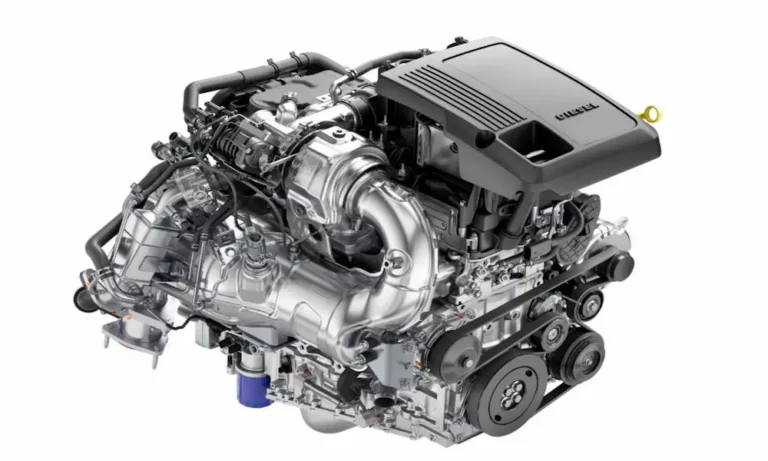
GM introduced the 3.0-liter inline-six Duramax in 2019 for the Silverado 1500, Sierra 1500, Tahoe, Suburban, Yukon, and Cadillac Escalade. It’s the smoothest engine in the Duramax family — so smooth that many drivers genuinely can’t tell it’s a diesel without looking.
The firing order 1-5-3-6-2-4 is the gold standard for inline-six engines. No two adjacent cylinders fire consecutively, which distributes heat evenly across the aluminum cylinder head and spreads torsional load across all seven main bearing caps.
The real magic is perfect primary and secondary mechanical balance. The inline-six acts like two mirrored three-cylinder engines joined end-to-end. Pistons cancel each other’s vibrations naturally, so there’s no need for heavy external counterweights on the crankshaft.
LM2 vs. LZ0: What Changed (Besides Nothing You’d Notice at Idle)
The firing order stayed identical between both generations. The changes underneath were significant though:
| Specification | LM2 (2019–2022) | LZ0 (2023–Present) |
|---|---|---|
| Firing Order | 1-5-3-6-2-4 | 1-5-3-6-2-4 |
| Piston Material | Aluminum | Forged Steel |
| Compression Ratio | 15.0:1 | 15.2:1 |
| Peak Horsepower | 277 hp | 305 hp |
| Peak Torque | 460 lb-ft | 495 lb-ft |
| Oil Pump Belt Interval | 150,000 miles | 200,000 miles |
The switch to forged steel pistons in the LZ0 allowed tighter piston-to-wall clearances, a slightly higher compression ratio, and a revised combustion bowl that cuts NOx emissions. The oil pump belt service interval stretched by 50,000 miles — a quiet but meaningful reliability win.
The LZ0 also delivers 94% of its peak torque at just 1,500 rpm. That’s an absurdly flat torque curve for a light-duty engine.
The 2.8-Liter Inline-Four Duramax Firing Order (LWN)
The Answer: 1-3-4-2
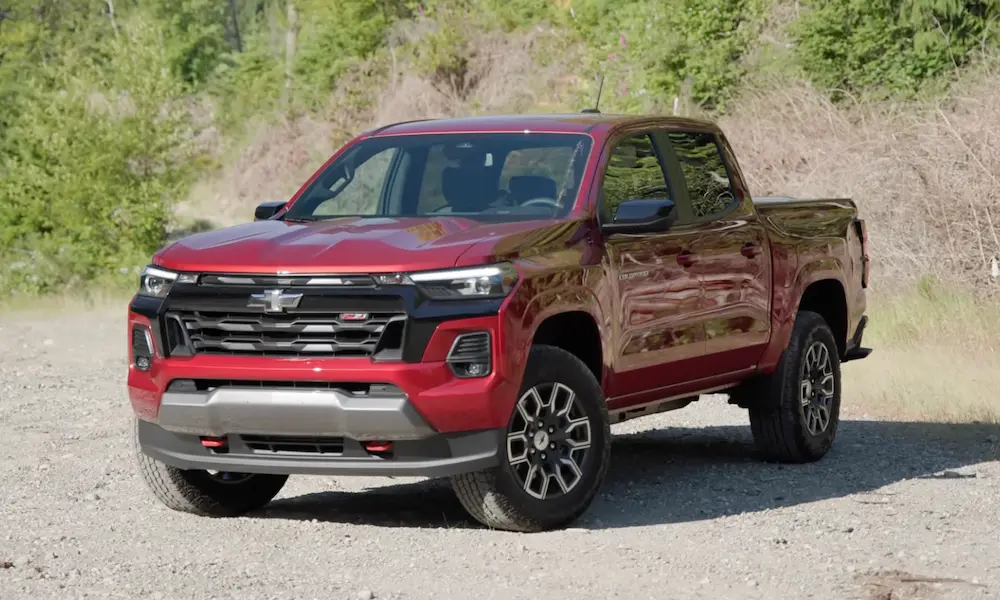
GM brought the 2.8-liter LWN Duramax to the US market in 2016 for the Colorado, Canyon, and later the Express and Savana commercial vans.
The official GM specification documents submitted to federal regulators confirm the firing order as 1-3-4-2. Some aftermarket databases list it as 1-3-2-4 — almost certainly a typo that spread through third-party data aggregators. Stick with 1-3-4-2 for any diagnostic or timing belt work.
Why Four-Cylinders Need Balance Shafts
Inline-four engines have an inherent secondary imbalance problem. Pistons travel slightly faster toward top dead center than they do toward bottom dead center. That velocity difference creates vertical vibration that worsens as rpm climbs.
The LWN tackles this with a dedicated balance shaft that spins at twice crankshaft speed, generating opposing forces that cancel the vibration out. The transmission also adds a centrifugal pendulum vibration absorber inside the torque converter for good measure. The result is a mid-size truck that doesn’t rattle your fillings loose at highway speeds.
Producing 181 hp and 369 lb-ft through a Honeywell variable geometry turbo, the LWN enables towing ratings up to 7,700 pounds — genuinely capable numbers for a four-cylinder diesel.
Medium-Duty Duramax Engines: 4HK1 and 6HK1
5.2-Liter Inline-Four (4HK1): Firing Order 1-3-4-2
The 4HK1 powers commercial cab-over trucks and shares the standard 1-3-4-2 firing order. At nearly 1.3 liters per cylinder, each combustion event hits like a freight train. This engine produces up to 520 lb-ft of torque and uses dry-type cylinder liners, meaning you can rebuild it in-frame indefinitely — a feature fleet operators genuinely love.
7.8-Liter Inline-Six (Duramax 7800 / 6HK1): Firing Order 1-5-3-6-2-4
The Duramax 7800 (Isuzu 6HK1) handles Class 6 and 7 commercial work with 475 cubic inches of displacement and over 860 lb-ft of torque at just 1,450 rpm. The 1-5-3-6-2-4 sequence keeps harmonic loads spread evenly across the massive cast-iron block during hours of sustained hill-climbing under full payload. These engines routinely exceed 400,000 miles of service.
How the Firing Order Affects Diagnostics and Repairs
Finding a Dead Cylinder Fast
When your Duramax throws a misfire code, the ECM uses the firing order to pinpoint the problem. It monitors crankshaft rotational speed between each combustion event. If one cylinder fails to accelerate the crank as expected, the module flags exactly which cylinder missed.
No scan tool handy? Try the infrared thermometer method. Right after a cold start, check exhaust manifold surface temperatures at each port. A cylinder that’s not contributing stays noticeably cooler than the rest. It won’t tell you why it’s dead — failed injector, cracked piston, loss of compression — but it tells you where to look.
Injector Harness: Don’t Mix These Up
Modern Duramax engines use electronic common-rail injection. The high-pressure fuel rail stays pressurized constantly across all cylinders. The firing order is expressed entirely through the electrical signals the ECM sends to each injector solenoid.
Mix up the harness connectors during a fuel system service, and you’ll spray diesel into a cylinder during its intake or exhaust stroke. Best case, you get white smoke and a no-start. Worst case, liquid fuel fills the cylinder and causes a hydraulic lock that bends connecting rods. Double-check every connector against the cylinder numbering before you button anything up.
DPF Regeneration Depends on Firing Order Accuracy
This one surprises a lot of people. The DPF regeneration cycle on LMM, LML, and L5P engines relies on precisely timed post-injection events — tiny fuel squirts fired milliseconds after the main power stroke. These send raw fuel into the exhaust to heat the oxidation catalyst and burn off trapped soot.
The ECM calculates these post-injection events based directly on the firing sequence and crankshaft position data. Any sequence disruption, misfire, or harmonic instability disables the regeneration system immediately and triggers a reduced-power limp mode. So beyond just running the engine correctly, the firing order actively protects your exhaust after-treatment hardware.
Quick Reference: Duramax Firing Orders by Engine
- 6.6L V8 (LB7, LLY, LBZ, LMM, LML, L5P): 1-2-7-8-4-5-6-3
- 6.6L V8 High-Performance Alternate: 1-5-6-3-4-2-7-8
- 3.0L Inline-Six (LM2, LZ0): 1-5-3-6-2-4
- 2.8L Inline-Four (LWN): 1-3-4-2
- 5.2L Commercial Inline-Four (4HK1): 1-3-4-2
- 7.8L Commercial Inline-Six (6HK1/Duramax 7800): 1-5-3-6-2-4
Whatever Duramax you’re working on — whether it’s an L5P pulling a fifth wheel or an LBZ you’re building for the strip — the firing order isn’t just trivia. It’s the blueprint the entire engine operates around. Get it right, and everything else follows.