Got a Ford Explorer 3rd row seat stuck down and no clue how to get it back up? You’re dealing with one of the most common (and most frustrating) Explorer problems out there. The good news: most fixes don’t require a dealer visit. Read to the end — the solution might be simpler than you think.
Why Your Ford Explorer 3rd Row Seat Gets Stuck Down
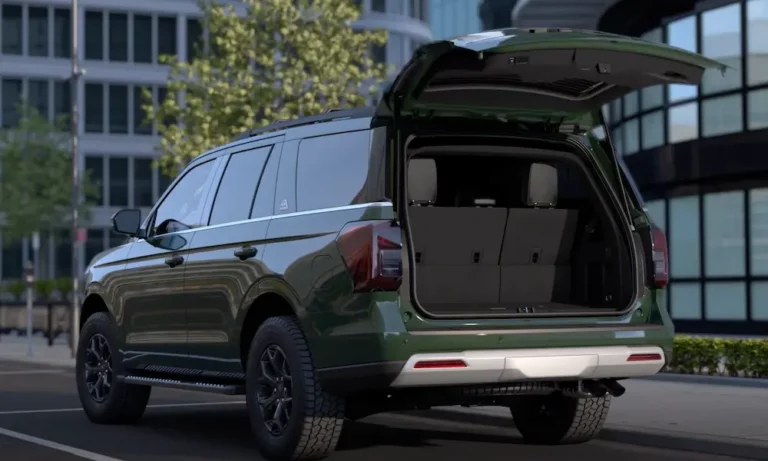
The third-row seat in a Ford Explorer doesn’t just fold flat with one simple hinge. It runs through a multi-stage sequence — the seatback folds, the headrest tucks, and then the whole unit tumbles 180 degrees into a floor tub. That’s a lot of moving parts.
In power-folding models, two DC motors drive the whole process. A dedicated Third-Row Folding Seat Module (TRM) controls them both. When something goes wrong at any point in that sequence, the seat stops mid-cycle — or worse, stays flat on the floor with no response at all.
Here’s the thing: the cause of your Ford Explorer 3rd row seat stuck down problem depends almost entirely on what year your truck is.
Generation-By-Generation Breakdown: What’s Actually Breaking
2006–2010 Explorers: Stripped Gears Are the Culprit
On fourth-generation Explorers, the motor’s internal gears — made from composite plastic — wear out. When the seat tries to lift out of the floor tub, the initial torque spike can shear those plastic teeth right off.
The telltale sign? You’ll hear the motor whirring or spinning freely when you press the button. That means the motor’s getting power, but the torque isn’t reaching the hinge. The gear-to-screw assembly has failed, and no amount of button-pressing will fix it.
2011–2019 Explorers: Software Locks and Sensor Drift
The fifth-generation Explorer brought digital controls into the picture. The seats now talk to the CAN-bus through the TRM. That’s great for convenience — until the module “loses” its home position and simply refuses to move the seat.
Here’s a quick look at how failure patterns differ across this generation:
| Feature | 2011–2015 | 2016–2019 |
|---|---|---|
| Control Logic | Basic relay integration | Hall-effect sensor feedback |
| Common Failure | Blown fuses (23/42) | Module/relay logic hang (Fuse 78) |
| Mechanical Issue | Floor latch binding | Cargo load panel jamming |
| Manual Override | Access via hinge plugs | Integrated strap release |
The 2016–2019 models have a sneaky problem: the cargo load panel — the piece that creates a flat floor when seats are stowed — can warp or break. If it shifts out of place, it creates a physical block. The TRM reads that as an obstruction, cuts power to protect the motor, and the seat stays stuck.
2020–2025 Explorers: Wiring Faults and Recall 25S67
Newer Explorers deal with harness routing issues. During the seat’s movement cycle, pinched or pulled wiring from the lumbar and power-fold harness can blow a fuse and kill the seat entirely.
On top of that, Ford issued Recall 25S67 covering over 300,000 Explorer and Aviator SUVs. Incorrectly installed seat switch bezels can cause switches to bind in the “down” position. When that happens, the TRM enters a lockout mode to protect the motor — and the seat stops responding to any input.
If you own a 2020–2025 Explorer, check whether your VIN is included in this recall before spending a dime on parts.
Step 1: Try the 60-Second Software Reset First
Before you tear anything apart, try this. Many stuck third-row seat issues on modern Explorers are just a software glitch. Ford’s official re-learn procedure can reset the TRM and get things moving again.
Here’s how to do it:
- Start the engine — full voltage matters here.
- Open the power liftgate all the way.
- Move the second-row seats forward and clear everything out of the rear cargo area.
- Find the center control button that manages both the left (3L) and right (3R) seats.
- Press and hold that center button for exactly 60 seconds.
- Keep holding for 5 more seconds after the seat moves.
- Test the 3L and 3R buttons separately to confirm both sides work.
This works because it bypasses the TRM’s normal current limits. It pushes full torque to the motor, which can knock it past a “dead spot” in the brushes or free up minor friction points. Many owners have solved the problem this way without touching a single tool.
Step 2: Check the Fuses
If the seat is completely dead — no clicking, no movement, no response — check the fuses before anything else.
| Model Year | Fuse Location | Fuse # | Amperage | Circuit |
|---|---|---|---|---|
| 2011–2015 | Engine compartment | 23 & 42 | 30A | Driver/Passenger power seat |
| 2016–2019 | Power distribution box | 78 | 30A | 3rd row folding seat module relay |
| 2020–2025 | BCM / Engine box | Varies | 30A+ | 3rd row PowerFold module |
You can find the fuse box on 2011–2015 Explorers here and the fuse box location for 2011–2019 models here.
On 2016–2019 models, Fuse 78 is the one to check first. If it’s blown, don’t just swap it and move on. A blown fuse is a symptom, not the cause. If there’s a mechanical bind or pinched wire underneath, your new fuse will blow the moment the seat tries to cycle.
Fix the root cause first. Then replace the fuse.
Step 3: Physical Fixes When Nothing Electrical Works
The Motor Tap Method
If you hear the motor clicking or humming but the seat won’t move, the motor might have a dead spot on its armature. Owners have had success with a simple trick: pull back the rear cargo flap to access the motor housing, then tap it firmly while pressing the seat button.
It sounds rough, but the logic is solid. Tapping the motor housing can jar the internal brushes into making contact again or push the worm gear off a flat spot. Use a padded cloth if you want to avoid scratching. Keep pressing the button while you tap.
Manual Spindle Cranking (2006–2010 Models)
If the gears are stripped and the motor spins freely, here’s how to raise the seat manually:
- Pull off the plastic trim covers on the seat hinge.
- Remove the four 1/4″ screws holding the motor in place.
- Move the motor aside to expose the threaded spindle.
- Grab the spindle with locking pliers and rotate it manually.
- Turn until the seat rises out of the stowed position.
Some owners go further and weld a 12mm socket extension to the spindle. That way, you can operate the seat with a regular ratchet or drill through a small opening in the trim — a permanent solution for a dead motor.
Releasing a Stuck Latch
For manual-seat Explorers or situations where the floor latches won’t let go, try these steps:
- Apply firm downward pressure on the seat corners — sometimes that’s enough to trip the latch into releasing.
- Spray lubricant directly onto the floor strikers to reduce friction.
- Pull the release straps — Strap 1 folds the seatback, Strap 2 tumbles the seat. If cables have stretched or return springs have weakened, this may take more force than usual.
- As a last resort, remove the bolts holding the floor strikers to the frame with a low-profile ratchet.
Run a Diagnostic Scan If You’re Still Stuck
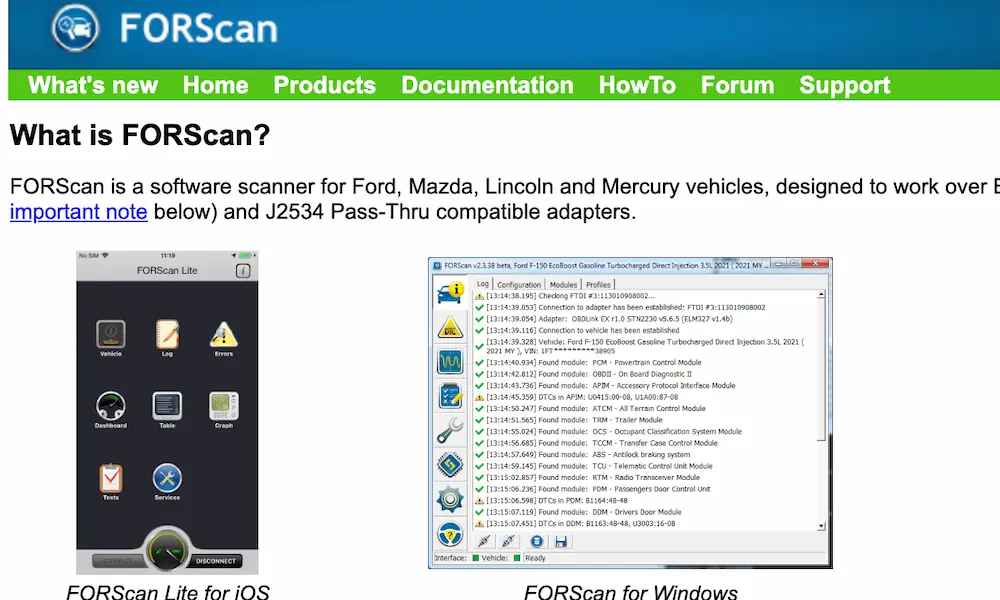
If none of the above works, connect an OBD-II scanner. FORScan works well for Ford vehicles and lets you talk directly to the TRM to pull trouble codes.
Look for these:
- B1212 / B1213 — Seat position sensor circuit fault
- B1211 — Motor circuit failure or internal TRM relay fault
- U-series codes — CAN-bus communication failure (the module may be completely dead)
FORScan also lets you send active commands to manually trigger seat movement in small increments — often the only way to free a seat stuck mid-cycle without full disassembly.
What’s It Going to Cost?
Repair costs vary a lot depending on your year and how deep the problem goes.
| Model Year | Parts Cost | Labor Hours | Total Estimate |
|---|---|---|---|
| 2006–2010 | $95 – $270 | 1.5 – 2.5 hrs | $250 – $550 |
| 2012–2015 | $470 – $570 | 2.0 – 3.0 hrs | $650 – $950 |
| 2016–2019 | $610 – $850 | 2.5 – 4.0 hrs | $950 – $1,300 |
| 2020–2025 | $500 – $800 | 2.0 – 3.5 hrs | $800 – $1,200 |
Source: RepairPal Ford Explorer Power Seat Motor Replacement
Older models are much cheaper to fix because aftermarket motors start around $95. Newer models almost always require OEM parts since the TRM calibrates to the motor’s specific current-draw profile. Use an aftermarket part and you may trigger false “stuck” detections all over again.
This Isn’t Just Annoying — It’s a Safety Issue
A Ford Explorer 3rd row seat stuck down isn’t just inconvenient. Ford’s owner manual explicitly warns that the seatback won’t raise if the rear latch hooks aren’t properly engaged — that’s a built-in safety failsafe.
But the bigger concern is this: a seat that isn’t locked into its floor strikers can shift or fold unexpectedly while driving. In a rear-end collision, an unsecured seat becomes a heavy projectile inside the cabin. The NHTSA Technical Service Bulletin 17-2223 addresses related seat track issues, and Recall 25S67 specifically flags the danger of unlatched seats moving while the vehicle is in motion.
A wiring fault in the seat harness can also trigger an SRS warning light and potentially disable the rear side-curtain airbags if the system can’t verify the seat’s position. That’s a serious enough reason to deal with this problem sooner rather than later.
One Last Thing: Keep the Floor Tub Clean
This sounds too simple to matter — but debris in the cargo floor tub is one of the most common reasons a seat gets stuck in the first place. A small toy, a piece of gravel, or a warped load panel is enough to create a hard stop that the TRM reads as an obstruction.
Before you run through any of the diagnostics above, look into the tub. Clear it out completely. Check the cargo load panel for cracks or warping. Sometimes the fix really is that straightforward.