Got a rock chip on your white Ford that’s driving you crazy? Ford paint code YZ — Oxford White — has been around since 1991, and fixing it right takes more than dabbing on paint from a bottle. This guide covers everything from finding your code to spraying a flawless finish. Read to the end — the defect section alone could save your entire paint job.
What Is Ford Paint Code YZ?
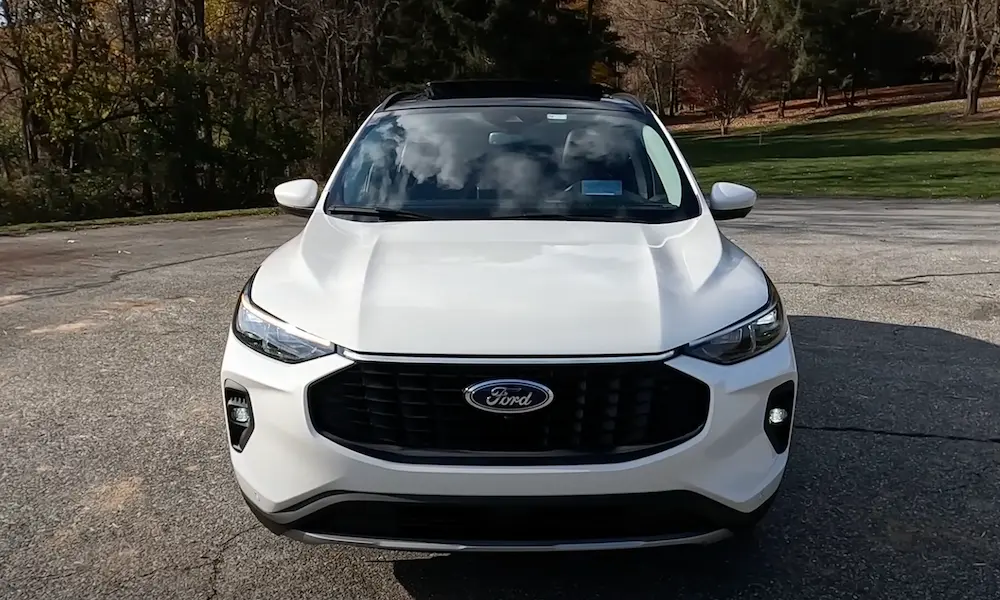
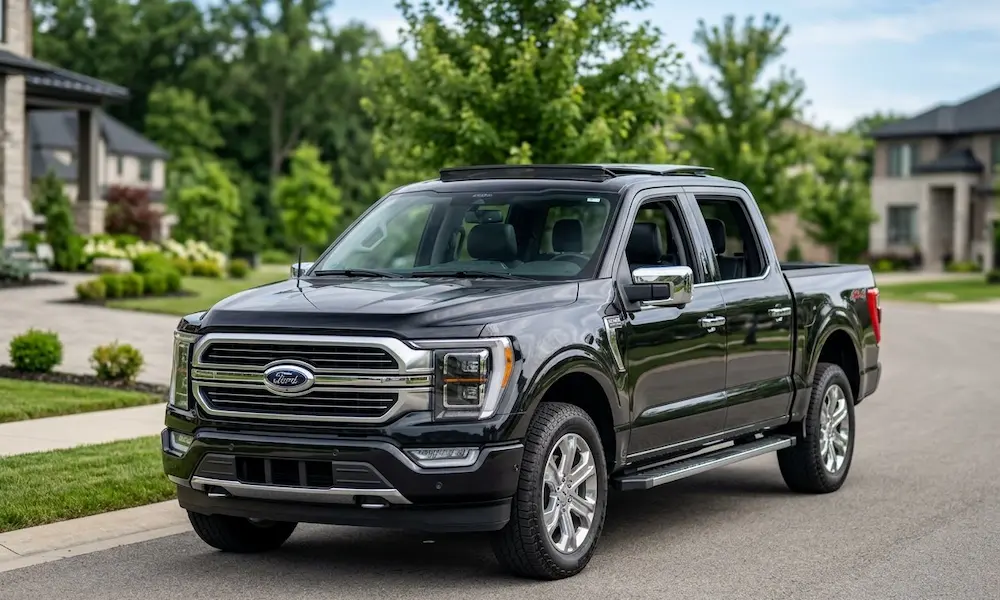
Ford paint code YZ is the factory designation for Oxford White, one of the most widely used automotive colors in North American history. Ford introduced it in 1991, and it’s still going strong on everything from the F-150 to the Mustang Mach-E.
You’ll also see it listed as Z1, M6466, M6887, or YZ-6466 depending on the vehicle and production year. Don’t let those extra codes confuse you — they all share the same chemical mixing formula and produce the same color.
Oxford White is a true solid color. That means no metallic flakes, no pearl particles, no mica. It’s engineered with a cool, high-clarity tone — no cream, no ivory, no warmth. That cool brightness looks sharp in any light, but it’s also brutally honest. Imperfections hide nowhere.
How to Find the Paint Code on Your Ford
Before you buy a single drop of touch-up paint, you need to confirm your code. Don’t assume — verify.
Check the Door Jamb Label
Your paint code lives on the factory safety compliance label. Look for a rectangular adhesive sticker on the driver’s side door jamb near the latch. It usually has a barcode and a patterned background.
Scan the label for the text “EXT PNT” or “EX PT”. Right next to it, you’ll see a two-character code — either YZ or Z1. Don’t grab the wrong string. Labels also carry codes like “WB” (wheelbase) and factory build codes like “LX3.” Those aren’t your paint code.
What If the Label Is Missing?
Doors get replaced. Labels get damaged. If yours is gone, use your 17-digit VIN as your key. The VIN itself doesn’t encode the paint color, but Ford’s service database connects it to your original build sheet.
You can reach Ford Customer Service directly at 1-800-392-3673 to request your factory build sheet. Alternatively, any authorized Ford dealership can pull this information from their service portal using your VIN.
Still unsure? Ford’s own support page on finding your vehicle’s paint code walks you through it step by step.
Which Ford Models Use Paint Code YZ?
Oxford White has appeared on nearly every Ford platform sold in the US. Here’s a breakdown:
| Vehicle Category | Ford Models | Production Window |
|---|---|---|
| Light-Duty Trucks & Pickups | F-150, Ranger, Maverick, F-150 Lightning | 1991–2027 |
| Medium & Heavy-Duty Commercial | Super Duty (F-250/350/450), Econoline, E-Series | 1991–2027 |
| Vans & Transit Platforms | Transit, Transit Connect, E-Transit | 2007–2027 |
| SUVs & Crossovers | Explorer, Expedition, Bronco, Edge, Escape | 2007–2027 |
| Passenger Cars | Mustang, Focus, Fusion, Taurus, Crown Victoria | 2007–2027 |
| Specialty & Supercars | Ford GT, Mustang Mach-E, Shelby Platforms | 2007–2027 |
If it rolled off a Ford assembly line, there’s a decent chance it was available in YZ.
Choosing the Right Paint System
Two main systems handle Ford paint code YZ refinishing: single-stage and two-stage basecoat-clearcoat. Your choice affects durability, cost, and how much work you’ll do long-term.
Single-Stage Paint
Single-stage urethane combines color, resin, and gloss in one mixture. Products like the PPG Omni MTK system use a 4:1:1 ratio — four parts paint, one part hardener, one part reducer.
It’s faster, simpler, and cheaper upfront. Great for fleet work, budget repairs, or DIY projects. Because the pigment runs through the entire film thickness, you can wet-sand and buff aggressively without burning through a clearcoat layer.
The downside? UV rays attack the pigment directly since there’s no protective barrier. Expect chalking and oxidation over time, especially in harsh climates.
Two-Stage Basecoat-Clearcoat
Two-stage systems like the PPG Omni MBC Basecoat separate color from protection. The basecoat (mixed 1:1 with reducer) establishes the Oxford White hue. A separate polyurethane clearcoat with UV inhibitors seals it.
The clear acts like a lens — it deepens and intensifies that cool white brightness. It also takes the beating from scratches, chemicals, and road salt so your pigment doesn’t have to. Light scratches polish right out of the clear without touching the color underneath.
The trade-off is higher cost, more steps, and stricter environmental requirements during application.
Oxford White Touch-Up Paint: Pricing and Packaging
Touch-up options for YZ range from a $10 pen to a gallon for full resprays. Match the product to the damage:
| Format | Price Range | Best For |
|---|---|---|
| Touch-Up Pen & Brush | $10.50–$19.95 | Rock chips up to pencil-eraser size |
| Paint Pen Kit | $46.95 | Multi-step scratch repair with clearcoat |
| Paint Bottle Kit | $64.95 | Deep gouges up to dime size |
| Dupli-Color Aerosol (BFM0229) | $18.99 | Bumper scuffs, mirror covers |
| Aerosol Spray Can | $20.99–$39.95 | Spot repairs, trim sections |
| Spray Can Kit | $79.95 | Door panels, fenders, mirror assemblies |
| Professional Pint | $32.99 | Minor panel sprays, test blends |
| Professional Quart | $55.99 | Hoods, fenders, multi-panel repairs |
| Professional Gallon | $109.95–$209.97 | Full resprays, commercial fleets |
How to Apply Ford Paint Code YZ the Right Way
Oxford White punishes sloppy prep work. Every flaw shows. Follow this process and you’ll get clean, durable results.
Surface Prep
Start with a wash using wax-free automotive detergent. Follow with a solvent-based wax and grease remover to pull out tar, road grime, and silicone.
Then sand based on damage severity:
- Raw plastic panels: Scuff uniformly with a medium prep pad
- Existing factory paint: Sand with P320–P400 wet-or-dry until the surface is uniformly dull
- Deep scratches or filler areas: Feather with 180-grit before priming
Finish with a static-free tack rag to pull every trace of dust before you spray anything.
Primer and Sealer
Apply a high-build primer over repaired areas, then block it flat. Here’s a detail most people miss: the sealer color matters with Oxford White.
Paint white over dark gray substrate and you’ll see shadowing, thin spots, and a dull hue. You’ll burn through extra material trying to cover it. Always apply a light gray or pure white sealer — such as Gray AP-7541g — before your topcoat. This gives the YZ pigment a clean, consistent base to work from.
Spraying Basecoat and Clearcoat
Keep your workspace between 60°F and 75°F with humidity below 60%. Use a gravity-fed HVLP spray gun.
Basecoat:
- Mix 1:1 with temperature-appropriate reducer, strain into the gun cup
- Apply 2–3 medium-wet coats at 6–8 inches from the panel
- Use 50–60% overlap per pass
- Flash off 10–15 minutes between coats
- Let the basecoat dry flat 30–45 minutes before clearcoat
Clearcoat:
- Mix with active hardener per manufacturer specs
- Apply 2–3 thin, even coats
- Flash off 10–20 minutes between passes
- Touch-dry in 1–2 hours; handleable in 24 hours
- Wait 2–3 days before wet sanding or compounding
- Defer waxing at least 10 days
The Tattooing Method for Rock Chips
Standard touch-up brushes leave raised blobs. The tattooing method delivers professional, flush results on small chips.
- Clean the chip with isopropyl alcohol on a microfiber towel
- Ditch the stock brush — grab a super-fine pointed artist’s brush or micro-applicator pen
- Shake the YZ bottle for 60 seconds, then pour a small amount into a bottle cap as your working well
- Dip just the tip of the brush into the paint pool
- Touch the tip to the chip center — let capillary action fill the cavity naturally. Don’t brush or sweep.
- Let it dry 10–15 minutes — it’ll shrink. Repeat thin layers until the paint forms a slight micro-dome above the surrounding clearcoat
- Cure 48 hours, then wet-sand the dome flat using 2000-grit paper on a small backing block
- Polish with fine rubbing compound on a microfiber towel to restore gloss
Common Defects and How to Fix Them
Solid whites are prone to specific problems during application. Know what causes them before you spray.
Blushing and Blooming
Blushing looks like a milky white haze across fresh paint. It happens when moisture condenses into a wet paint film. Fast-evaporating solvents drop the panel temperature below the dew point, pulling moisture from humid air right into the coating.
Prevention: Stay below 60% relative humidity. If you must spray in high humidity, add a slow-drying retarder solvent (butyl acetate, methyl amyl ketone, glycol ether EB, or butyl cellosolve) to your mix.
Fix: Minor blushing polishes out with fine rubbing compound after full cure. Severe cases need wet sanding, surface drying, and repainting with retarder under controlled conditions.
Solvent Pop
Solvent pop creates tiny craters or bubbles in the cured film. Trapped solvents can’t escape because the top surface skinned over too fast, so they rupture through.
Common causes: coats applied too thick, insufficient flash-off time, spraying too close, or a reducer that evaporates too fast for the shop temperature.
Prevention: Apply thin coats, time your flash-off intervals with an actual timer, and match your reducer speed to ambient temperature.
Fix: Light solvent pop — wet sand with 1500-grit progressing to 2000-grit, then compound. Deep solvent pop — sand back to sound substrate and respray correctly.
Color Drift and Yellowing
Refinished white panels can turn amber or pale yellow over time, making repairs obvious against factory Oxford White. This happens when paint resins oxidize, especially in heat-exposed areas, high-humidity environments, or low-quality paint systems.
Counterintuitively, daylight helps — it bleaches certain yellow-toned compounds that form during curing. Keeping vehicles in dark garages long-term can worsen yellowing.
Prevention: Use high-quality acrylic urethane systems with active UV inhibitors in the clearcoat. Apply a stain-blocking primer-sealer to isolate old substrate from fresh white paint. Always spray a test card first — aged panels may have drifted from factory-fresh Oxford White, and you’ll want to see the match before committing to a full panel.
Key Best Practices at a Glance
- Keep your shop at 60–75°F with humidity under 60% — both blushing and solvent pop trace back to ignoring this
- Use one unified paint system from a single manufacturer — mixing brands causes adhesion failures and early yellowing
- Always seal with light gray or white — dark substrates under Oxford White create shadowing that no amount of extra coats will fully fix
- Build layers, don’t flood panels — multiple medium-wet coats beat one heavy pass every time
- Wait before you sand — compound after 3 days, wax after 10 days minimum
Oxford White looks effortless on a clean Ford. Getting it there takes patience, the right materials, and respect for the process — but the result speaks for itself.