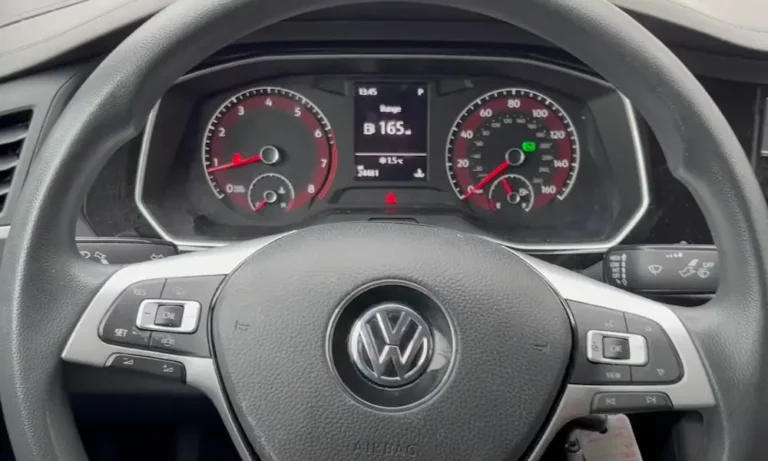
Your temperature gauge is creeping up, the heater blows cold air, and you just replaced your coolant. Sound familiar? You’ve probably got an air pocket stuck in your cooling system. The good news? It’s fixable. Stick around, because the right method depends entirely on your vehicle — and using the wrong one can fry your water pump.
Why Air Pockets Are Such a Big Deal
Air is a terrible conductor of heat. Liquid coolant? Excellent. So when air gets trapped inside your engine’s cooling passages, it creates localized hot spots that liquid can’t reach.
Here’s what happens when air sits in the wrong place:
- The thermostat gets tricked by the air pocket and stays shut — your engine overheats before coolant ever reaches the radiator
- The heater core doesn’t get flow — you get cold air from the vents in January
- Electric water pumps on BMWs over-rev trying to move nothing — and burn out
- On a Toyota Prius, a trapped inverter loop air pocket triggers a P0A93 fault code and puts the car in limp mode
An airlock is never just a minor inconvenience. Left alone, it warps aluminum cylinder heads and blows head gaskets.
What Causes Air Pockets in the First Place
Air enters the cooling system in a few common ways:
- Coolant flush or refill — any time you open the system, air gets in
- Component replacement — new thermostat, water pump, or hoses
- Head gasket failure — combustion gases push into the coolant passages continuously
- Hose or clamp leak — small vacuum leaks pull air in during cool-down
The tricky one is a blown head gasket. If air pockets keep coming back after you’ve bled the system correctly, a block tester will tell you whether you’re actually dealing with combustion gases instead of trapped air.
Know Your System Before You Start
Not every car bleeds the same way. Your first step is figuring out what type of cooling system you have.
| System Type | Pressure Cap Location | Bleeding Approach |
|---|---|---|
| Overflow reservoir | On the radiator neck | Manual gravity bleed |
| Pressurized expansion tank (degas bottle) | On the expansion tank | Spill-free funnel or vacuum tool |
| Electric water pump (BMW N52/N54/N55) | On the expansion tank | Software-driven electronic bleed |
| Hybrid inverter loop (Toyota Prius) | Separate inverter reservoir | Pump cycling + bleeder valve |
| Battery EV (Tesla) | Expansion tank | Vacuum refill + software routine |
Never open a pressurized expansion tank while the engine is hot. The system runs at full pressure. Open it hot and you’ll get a violent steam release that causes serious burns. An unpressurized overflow reservoir is safer to open when warm, but even then — wait until it cools down.
The Jiggle Pin: The Small Part That Does a Big Job
Before you start any bleed procedure, check your thermostat installation. There’s a tiny weighted valve called a jiggle pin built into the thermostat flange. When the engine is off and the pump isn’t running, the pin hangs open and lets buoyant air bypass the closed thermostat valve and travel upward toward the radiator.
For thermostats mounted horizontally, the jiggle pin must sit at the 12 o’clock position — the highest point of the housing. Install it wrong and air gets permanently trapped above the pin. You’ll bleed for an hour and never clear it.
If your aftermarket thermostat didn’t come with a jiggle pin, drill a 1/16-inch hole at the 12 o’clock position on the flange. It replicates the same function.
Method 1: Manual Gravity Bleed (Older Vehicles and Trucks)
This is the classic approach. It works well on older vehicles, heavy-duty trucks, and anything with a traditional belt-driven water pump.
What you need:
- Spill-free funnel kit with locking adapters
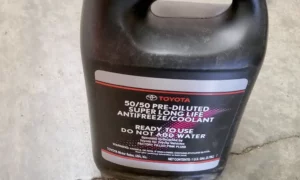
- Pre-mixed coolant (50/50 antifreeze to distilled water — never tap water)
- Nitrile gloves and safety glasses
- A sloped surface or jack stands to raise the front of the vehicle
Step-by-step:
- Park nose-uphill. Air rises. Tilting the front of the car upward gives trapped bubbles a direct path toward the open filler neck. If you don’t have a slope, safely raise the front axle with jack stands.
- Lock the spill-free funnel onto the filler neck. Fill it halfway with coolant. This creates a fluid column higher than any other point in the system, so escaping air has an unobstructed path out and coolant feeds in automatically by hydrostatic pressure.
- Start the engine and crank the heat to max. This opens the heater control valve and integrates the heater core into the main coolant loop. Skip this step and you’ll leave a massive air pocket behind the dashboard. Set the blower fan to low so it doesn’t strip heat too fast.
- Watch the funnel when the thermostat opens. You’ll see the fluid level drop and a burst of large bubbles break the surface. That’s the air pocket evacuating — exactly what you want.
- Squeeze the radiator hoses. Use a gloved hand to physically collapse the upper and lower hoses. This dislodges stuck bubbles in bends and rough pump housing surfaces. You can also rev the engine briefly to 1,500–2,000 RPM in 15-second bursts to surge the pump and push horizontal pockets out.
- Run through full cooling cycles. Let the electric fans cycle on and off multiple times. Once the funnel level stays completely still and bubbles stop appearing, insert the stopper plug, remove the funnel, and reinstall the pressure cap.
Using the Bleeder Valve (If Your Car Has One)
Many modern vehicles have a small brass or plastic bleeder screw on top of the thermostat housing, on the water pump, or spliced into the upper hose. It’s there specifically for this job.
With the spill-free funnel attached and the engine idling, slowly loosen the bleeder screw — don’t remove it completely. You’ll hear hissing as air escapes. Watch for the output to change from air to a sputtering air-coolant mix, then finally to a solid, uninterrupted stream of pure coolant. That stream tells you the pocket at that point is gone. Tighten the screw promptly. A cracked plastic bleeder screw becomes a vacuum leak that pulls air back in every time the engine cools down.
Method 2: Pneumatic Vacuum Refill (Modern Vehicles)
Modern vehicles with complex plumbing, turbochargers, low hood profiles, and multiple heat exchangers make gravity bleeding unreliable. Professional shops use a pneumatic vacuum refill tool — sometimes called an AirLift system — that works backward from traditional methods.
The logic is simple: pull all the air out first, then let atmospheric pressure push coolant in. No air in the system means no air pocket can form.
How it works:
- The tool’s manifold attaches to the empty radiator neck or expansion tank with an airtight rubber seal.
- Shop air runs through a venturi block, which uses the Bernoulli effect to create suction — no moving parts required.
- The system gets pulled down to a target vacuum of negative 24 to negative 27 inches of mercury. You’ll watch the rubber hoses collapse completely flat under the negative pressure.
The vacuum decay test matters. Once the target vacuum is reached, close the air valve and watch the gauge for several minutes. If the needle holds steady, your system is sealed and ready. If it creeps upward, air is leaking back in through a bad gasket, cracked plastic tank, or faulty water pump seal. Don’t fill a leaking system — fix the leak first.
When the system passes the decay test, submerge the pickup hose deep into your coolant bucket and open the fluid valve. The vacuum pulls coolant in instantly, expanding the collapsed hoses back to shape and filling every cavity simultaneously. Because there was no air to begin with, there’s nothing left to bleed.
Critical: keep the pickup tube fully submerged the entire time. If the tip breaks the surface, the vacuum immediately inhales a slug of air and you have to start over.
Method 3: Electronic Bleeding (BMW Electric Water Pump)
If you own a BMW with an N52, N54, or N55 engine, do not run the engine during the bleed. These cars use a software-controlled electric water pump. Running the engine with air pockets against the impeller causes the pump to overheat and fail electrically.
Connect a battery charger first. The bleed cycle draws heavy amperage. If voltage drops below threshold, the software aborts the routine.
The procedure:
- Press the start button without touching the brake — accessory mode only, engine stays off.
- Set climate control to max heat, blower to lowest speed.
- Fully depress the accelerator and hold it for 10–15 seconds.
That wide-open-throttle signal with the engine off triggers the coolant purge cycle in the ECU. The pump runs a 12-minute automated sequence, pulsing at varying speeds to agitate and dislodge air pockets from the cylinder head. Let the full cycle finish. Top off the expansion tank only after the pump goes silent.
Method 4: Toyota Prius Inverter Loop
The Prius runs two separate cooling systems. The inverter loop has no thermostat — it runs cold continuously to protect the high-voltage electronics. Air trapped here triggers limp mode fast.
To bleed it:
- Connect a clear hose to the inverter bleeder valve and route it back into the open inverter reservoir.
- Fill the reservoir with Toyota Super Long Life coolant.
- Press the brake and push the power button to place the car in Ready mode — this activates the inverter pump without starting the combustion engine.
- Let the pump run in short two-second cycles. Watch the clear hose for bubbles.
- Cycle the car off and back to Ready, topping off the reservoir each time.
Repeat until the fluid through the hose runs completely clear with zero bubbles and the reservoir level stops dropping.
Frequently Asked Questions
What is a block tester, and how does it diagnose continuous air pockets?
A block tester is a diagnostic chemical tool for when air pockets keep coming back after correct bleeding. You place a transparent tube filled with blue detector fluid over the radiator neck while the engine runs, then squeeze a bulb to draw fumes through the fluid. If a head gasket is blown or the block is cracked, combustion gases (containing carbon dioxide) push into the coolant passages. When those gases hit the blue fluid, it turns yellow instantly. Yellow fluid means the “air pockets” are actually exhaust gases — and the engine needs major mechanical repair, not more bleeding.
Why does my exhaust or interior smell sweet when there’s an air pocket?
A sweet, syrupy smell is a classic sign of a coolant leak that’s letting air in. If the smell comes from the interior vents with a greasy film building up on the inside of your windshield, your heater core has ruptured and is leaking into the ventilation system. If it’s coming from the exhaust — often with thick white smoke — coolant is getting into the combustion chambers and burning. Both scenarios actively introduce air into the cooling system.
Can you mix different coolant colors?
No. Different colors indicate different corrosion inhibitor chemistries — silicates, organic acids, or hybrids. Mixing them causes the chemical packages to react with each other, forming a thick, gelatinous sludge that blocks the narrow radiator tubes and heater core passages. Always use the specific coolant your manufacturer specifies and flush thoroughly before switching types.
How does altitude affect the bleeding process?
Higher altitude means lower atmospheric pressure, which lowers the boiling point of your coolant. At elevation, your system is more prone to localized boiling and steam pocket formation — especially if the pressure cap is weak. When using a vacuum refill tool at high altitude, you’ll also pull a shallower vacuum than at sea level because there’s less atmospheric pressure available to push coolant into the void during the fill phase.
What’s the correct antifreeze-to-water ratio for extreme climates?
Use a refractometer to check your current mix. Standard is 50/50, which protects to about -34°F. In very cold climates, you can go up to 60% antifreeze / 40% distilled water for protection near -58°F. Never exceed 60% antifreeze — pure antifreeze conducts heat poorly and will cause overheating even in cold weather. In very warm climates, don’t go below 40% antifreeze or you’ll lose corrosion protection.
What are the EPA rules on coolant disposal in the US?
It’s illegal to dump used coolant down a storm drain, on the ground, or into a septic system. Glycols are highly toxic to local water sources, wildlife, and pets — and pets are attracted to the sweet smell. Capture all expelled fluid in a sealed drain pan, transfer it to sealed plastic jugs, and take it to a hazardous waste facility, municipal recycling center, or a certified shop with licensed environmental recycling services.