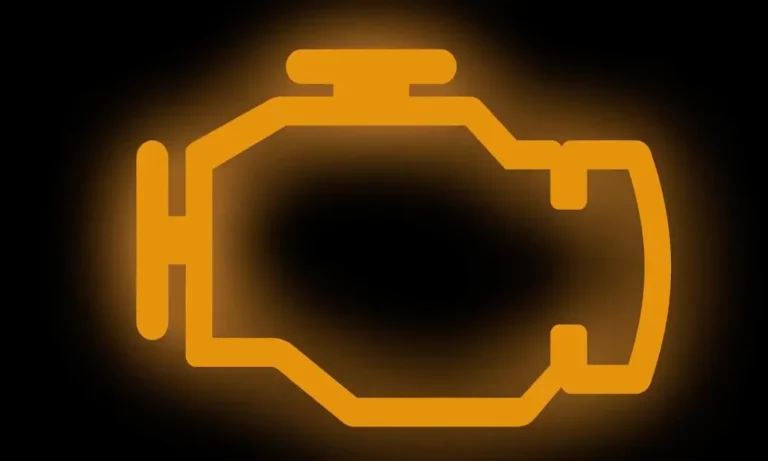
Your car’s acting weird after a repair, or that check engine light won’t quit. A PCM reset might fix it. This guide covers exactly how to reset your PCM safely, which method suits your situation, and the critical relearn steps your specific car needs afterward. Skip the relearn part, and you’ll create new problems. Read to the end.
What Does Resetting the PCM Actually Do?
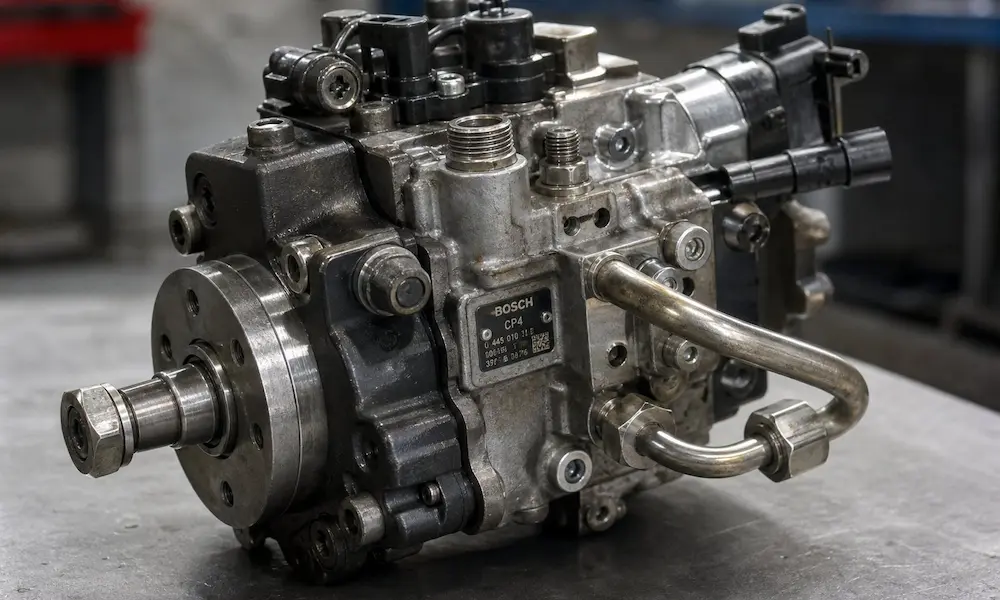
Your Powertrain Control Module isn’t just a simple computer running fixed commands. It’s a learning system. Every mile you drive, it adjusts fuel delivery, ignition timing, and shift pressures based on real-world sensor data. This adaptive data lives in Keep Alive Memory — a type of volatile RAM that needs constant power to survive.
When you reset the PCM, you wipe Keep Alive Memory clean. The module reverts to factory defaults and starts learning from scratch.
Here’s what actually gets cleared — and what doesn’t:
| Memory Type | What It Stores | Cleared by Reset? |
|---|---|---|
| Flash Memory | Core software, fuel maps, timing logic | No |
| EEPROM | VIN, immobilizer codes, security keys | No |
| Keep Alive Memory | Fuel trims, idle data, shift adaptives, fault codes | Yes |
So no, a reset won’t erase your aftermarket tune. It won’t bypass your immobilizer either. It clears the learned adaptives — nothing more.
When Should You Reset the PCM?
Don’t reset your PCM randomly. It forces the engine to run on rigid factory defaults, which often makes an older engine run worse temporarily. Reset it when you have a specific reason.
Good reasons to reset:
- You replaced a mass airflow sensor, oxygen sensor, or throttle body
- You cleaned the throttle body and now the idle surges above 2,000 RPM
- You rebuilt or replaced the transmission
- A persistent fault code remains after fixing the underlying problem
- The module stored bad fuel trims from a now-repaired vacuum leak
When a new sensor goes in without a reset, the PCM still applies the skewed fuel trims it learned from the old faulty one. That mismatch triggers new codes almost immediately.
3 Ways to Reset Your PCM
Method 1: Diagnostic Scan Tool (Best Option)
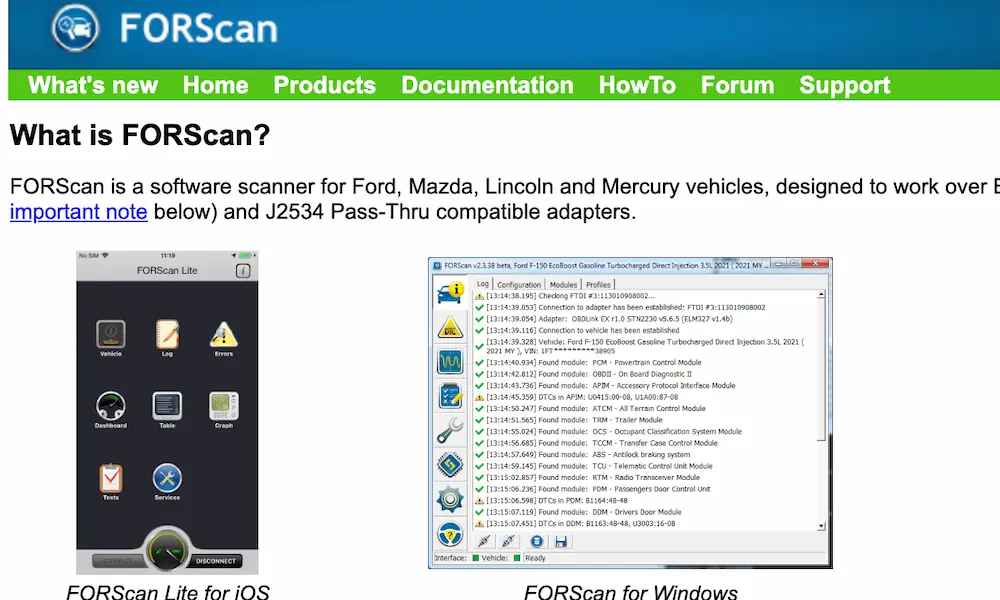
A bi-directional scan tool connects to the OBD-II port under your dashboard and talks directly to your PCM. You can clear fuel trims without touching transmission adaptives. You can reset the throttle body without losing radio presets.
This method is surgical. No collateral damage. No waiting around.
If you’re a shop, this is the only method worth using regularly.
Method 2: Battery Disconnection
No scan tool? This works. Disconnect the battery, starve the Keep Alive Memory of power, and it wipes clean.
Do it correctly:
- Turn the ignition completely off and remove the key
- Use an insulated wrench to remove the negative terminal first
- Then remove the positive terminal
Removing the negative first matters. If your wrench touches the chassis while you’re loosening the positive, you’ll create a direct short circuit. Take the ground off first, and the chassis is no longer live.
Important: Simply unhooking the battery often isn’t enough. Modern PCMs have internal capacitors that hold a charge. Your Keep Alive Memory can survive for a while even with no battery connected.
Two ways around this:
- Wait it out: Leave the battery disconnected for 15–30 minutes and let the capacitors drain naturally
- Capacitive discharge: With both cables fully detached from the battery, touch the two vehicle cables together. This drains residual voltage instantly and forces an immediate hard reset
The downside: Battery disconnection wipes everything — radio stations, clock settings, power seat memory, window calibrations. Your passengers will notice.
Method 3: PCM Fuse Pull
This is the middle ground. Pull the dedicated PCM or Keep Alive Memory fuse from your fuse box, wait 10–15 minutes, then reinstall it.
Check your fuse box lid diagram or owner’s manual to find the right fuse. With the right one pulled, you clear the engine adaptives without killing the radio or any other module’s memory.
| Reset Method | Tool Needed | Precision | Collateral Loss | Time |
|---|---|---|---|---|
| Scan Tool | Bi-directional scanner | High | None | Instant |
| Battery Disconnect | Wrench | Low | Total | 15–30 min |
| Capacitive Discharge | Wrench + jumper wire | Low | Total | Instant |
| Fuse Pull | Fuse puller | Medium | None | 10–15 min |
What Happens After a Reset: The Relearn Problem
Here’s where most people go wrong. They reset the PCM, start the car, and drive off. Then they wonder why the idle surges, the transmission slams into gear, or the engine stumbles at every red light.
After a reset, your PCM is running factory defaults on a car that’s accumulated real-world wear. The defaults don’t match reality. You need to run a relearn procedure.
Skip it, and you risk:
- Dangerous stalling when decelerating to a stop
- Harsh transmission shifts that can damage fresh clutch packs
- Erratic idle that takes weeks to self-correct
PCM Relearn Procedures by Manufacturer
Ford and Lincoln
Ford’s idle relearn uses air conditioning load cycles to calibrate idle strategy:
- Engage the parking brake, shift to Park
- Turn off all accessories — A/C, radio, lights, defroster
- Start the engine and idle until it reaches normal operating temperature
- Idle for one full minute
- Turn A/C to maximum cooling, idle for another minute
- Shift to Drive with foot on brake, A/C still on, idle one more minute
- Drive normally for approximately 10 miles to finalize fuel trims
General Motors (Chevy, GMC, Buick, Cadillac)
GM’s procedure focuses on temperature thresholds and transmission garage shifts:
- Turn off all accessories
- Set the parking brake and block the wheels
- Start the engine; wait for coolant to reach 176°F
- Shift to Drive with foot on brake, idle for 5 seconds
- Shift back to Park
- To teach transmission pressures: shift Reverse → Neutral → Drive → Neutral → Reverse, pausing 5 seconds in each gear, 10 consecutive times
Chrysler, Dodge, Jeep, and Ram
Chrysler’s relearn is straightforward compared to the others:
- Turn the ignition to Run without starting the engine
- Wait 10–15 seconds while the PCM sweeps the throttle plate open and closed
- Start the engine and idle in Park for 5–10 minutes with accessories off
- Drive normally for 15 minutes
Toyota and Lexus
Toyota platforms are notoriously sensitive after a reset. Expect rough idling or stalling until this completes:
- Warm the engine to normal operating temperature
- Turn the ignition off completely
- Turn ignition to Run, wait a few seconds, turn off. Repeat twice to initialize sensors
- Start the engine, engage the parking brake, hold the brake, and shift to Drive
- Idle in Drive until the engine speed stabilizes smoothly at factory spec
Honda and Acura
Honda uses cooling fan cycles — not a timer — as the calibration trigger:
- Turn all electrical accessories off
- Start the engine and hold 3,000 RPM steadily
- Hold that speed until the radiator fan kicks on or coolant hits 194°F
- Release the throttle completely and idle for 5 full minutes
- Critical: If the radiator fan runs during that 5 minutes, that time doesn’t count. Add extra time to compensate for every second the fan runs
Nissan and Infiniti
Nissan’s “pedal dance” is the most timing-sensitive procedure in the industry. Use a stopwatch:
- Ignition on for 2 seconds, off for 10. Repeat once
- Turn ignition on, immediately off, wait 10 seconds — listen for the throttle motor confirming closed position
- Warm the engine fully, turn off for 10 seconds
- Turn ignition to Run without starting; wait exactly 3 seconds
- Fully depress and release the accelerator 5 times within 5 seconds
- Wait 7 seconds, then press and hold the pedal to the floor
- Hold for ~20 seconds until the check engine light blinks then goes solid
- Within 3 seconds of the light going solid, release the pedal and start the engine
- Idle 20 seconds, then gently rev to confirm stable idle
Subaru
Subaru boxer engines can stall immediately after a reset if you skip the throttle initialization:
- After reconnecting the battery, turn the ignition to Run — don’t start the engine
- Wait 10–15 seconds for the throttle motor to sweep and find its home position. Don’t skip this
- Start the engine with all accessories off
- Idle untouched for 10 full minutes
The Ford 10R80 Transmission Reset: A Special Case
If you drive an F-150 or Mustang with the 10-speed 10R80 transmission, the transmission adaptive reset procedure is its own job. Drive aggressively right after clearing KAM and the PCM learns the wrong pressure values fast. That means harsh shifts and accelerated wear.
After a PCM reset on a 10R80 vehicle:
- Bring both engine and transmission fluid to full operating temperature
- Accelerate from a stop using only 15% throttle
- Hold steady throttle, keeping RPM between 1,300 and 1,600 through shifts 1–8
- Apply slightly more throttle from 8th gear to reach 55 mph for gears 9 and 10
- Brake gently to a complete stop; hold for 5 seconds
- While stopped, cycle: Drive → Neutral (1 sec) → Reverse (2 sec) → Neutral (1 sec) → Drive (2 sec)
- Repeat the entire sequence 6 more times
PCM Resets and Emissions Testing
Here’s a trap people walk into. You reset the PCM to clear a code right before your state emissions test. The code disappears — but now all your OBD-II Readiness Monitors show “Not Ready.”
State testing equipment sees that instantly. Your car fails regardless of whether the check engine light is on.
To pass emissions after a reset, you need to run a proper drive cycle:
- Fuel level between ¼ and ¾ full — the EVAP monitor won’t run outside that range
- Cold start with coolant below 100°F, matching ambient temperature
- Idle several minutes after startup
- Steady 30 mph for 3 minutes
- Steady 55 mph cruising for several minutes to run the catalyst monitor
- Coast to a full stop without touching the brake pedal
All monitors need to flip to “Ready” before you show up for the test.
Frequently Asked Questions
Will resetting the PCM fix mechanical engine damage?
No. A reset clears software adaptives. It can’t fix a blown head gasket, a worn piston ring, or a seized valve. If a physical fault exists, the PCM will detect it again and throw the same code as soon as the relevant monitor runs.
Will my aftermarket tune survive a battery disconnect?
Almost certainly yes. Performance tunes write to Flash Memory, which is non-volatile. Disconnecting the battery only clears Keep Alive Memory. Your tune stays intact; the PCM just rebuilds its adaptive tables on top of the modified baseline.
Is it illegal to reset the PCM before selling a car?
Resetting a PCM is a normal maintenance procedure. But doing it specifically to hide an active fault code during a sale without disclosing the defect can violate consumer protection laws depending on your state. More practically — any buyer using a basic scan tool will see that all readiness monitors are incomplete, which is an immediate red flag signaling a recent reset.
Can cold weather stop the relearn from working?
Yes. Most relearn procedures require coolant to reach a specific temperature threshold. In extreme cold, the engine may never hit that threshold in a reasonable timeframe, preventing the PCM from saving the idle calibration. Honda’s procedure has the opposite problem in extreme heat — continuous fan cycling can interfere with the required fan-off idle period.
What if I just drive normally without doing the relearn?
The car will eventually sort itself out through normal driving, typically within 50–100 miles. Manufacturer relearn procedures exist so the car behaves normally the moment it leaves a shop bay. Without the procedure, expect rough idle, harsh shifts, or stalling for the first several days of driving.
Do I need a memory saver when replacing my battery?
Only if you don’t want to reset the PCM. A memory saver feeds 12V power through the OBD-II port while the battery is swapped, keeping all modules alive. But if your goal is a PCM reset, don’t use one — it defeats the entire purpose. Also note: with a memory saver active, the battery cables stay energized. Let the positive cable touch the chassis and you’ll blow the OBD-II port fuse and lose all memory anyway.