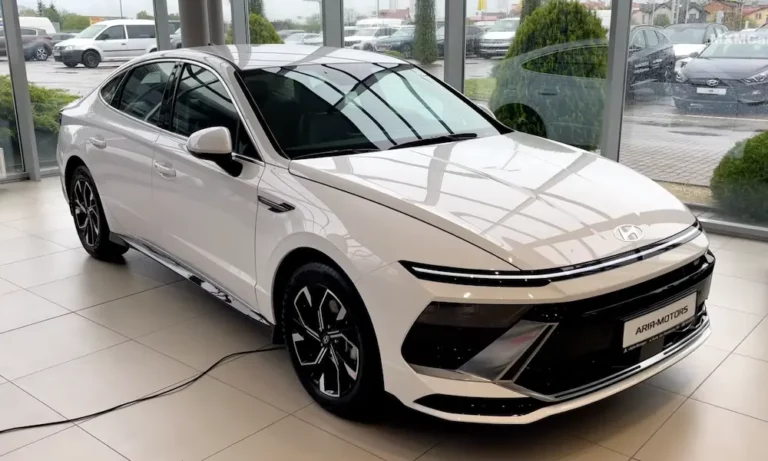
Got a Sonata that clicks, grinds, or does absolutely nothing when you turn the key? You’re probably dealing with a starter problem. This guide covers every generation from 2006 to present, walks you through diagnosis, and tells you exactly what tools and torque specs you’ll need. Stick around — the fix might be simpler than you think.
How the Starter Actually Works
Before you pull anything apart, it helps to know what you’re dealing with.
The Hyundai Sonata uses a permanent magnet gear reduction (PMGR) starter motor. It’s compact, efficient, and built to crank a cold engine thousands of times over its life. Here’s how the main parts work together:
- The solenoid acts as a relay. Turn the key, and it bridges the battery to the motor while pushing the pinion gear forward to mesh with the ring gear
- The armature and carbon brushes spin the motor. Brushes wear down over time — this is one of the most common failure points
- The overrunning clutch lets the pinion engage the ring gear but prevents the engine from spinning the starter once it fires
When any of these parts fail, you get a very specific symptom. That’s actually good news — it means you can diagnose the problem before spending a dime.
Diagnosing the Problem: What That Sound Means
Don’t guess. Listen first.
About 38% of no-start cases come from a dead battery, while the starter itself accounts for roughly 20%. That means half of all no-starts aren’t even starter problems. Here’s how to read the clues:
| Audible Symptom | Most Likely Cause | First Step |
|---|---|---|
| Rapid clicking | Low battery voltage or bad ground | Test battery under load, clean terminals |
| Single loud click | Internal starter failure | Check voltage at the B-terminal during cranking |
| High-pitched whirring | Broken engagement lever (common on 2.4L) | Inspect starter lever before replacing the whole unit |
| Grinding noise | Damaged ring gear teeth | Inspect flex plate through bellhousing access hole |
| Slow, labored crank | High resistance or shorted armature | Run a current draw test with an ammeter |
| Complete silence | Failed relay or dead solenoid | Check the starter relay and S-terminal signal |
The Ammeter Test You Shouldn’t Skip
A current draw test tells you a lot. A starter pulling excessive current while cranking slowly points to worn bushings or internal shorts. A starter that receives a signal but draws zero current has either completely worn brushes or a broken internal lead. Either way, you know what you’re dealing with before touching a wrench.
One more thing to check first: In northern states, road salt corrodes the B-terminal connection and creates resistance that starves the motor. In hotter southern climates, heat soak after a short drive can temporarily prevent starting. Both problems mimic a failed starter but often have simpler fixes.
Hyundai Sonata Starter Location by Generation
Here’s the honest truth — the starter gets harder to reach with every generation.
| Generation | Years | Engine | Starter Location | Estimated Labor |
|---|---|---|---|---|
| NF (5th Gen) | 2006–2010 | 2.4L I4 | Driver’s side, below intake manifold | 1–1.5 hrs |
| NF (5th Gen) | 2006–2010 | 3.3L V6 | Behind block, crowded access | 2–2.5 hrs |
| YF (6th Gen) | 2011–2014 | 2.4L GDI | Driver’s side, intake manifold area | 1.5–2 hrs |
| LF (7th Gen) | 2015–2019 | 2.4L / 2.0T | Driver’s side, top-access often needed | 1.5–2.5 hrs |
| DN8 (8th Gen) | 2020–Present | 2.5L Smartstream | Bellhousing mount, heat-shielded | 2–2.5 hrs |
Generation-Specific Issues You Need to Know
2006–2010 (NF Generation)
The NF Sonata with the 2.4L four-cylinder puts the starter on the driver’s side, tucked under the intake manifold. You’ll access it from below after removing the plastic splash shield (held by 10mm bolts and trim clips). The space is tight, so bring a 12-inch extension and a universal joint — you’ll need both.
The V6 version? That’s a different story. The 3.3L Lambda engine packs the starter behind the block where two cylinder banks compete for space. Plan to remove the air intake ducting and possibly the battery tray just to get leverage on the top mounting bolt. You’ll be working by feel for at least part of it.
2011–2014 (YF Generation): The Broken Lever Problem
This generation has a quirky failure mode worth knowing. On 2009–2013 Sonatas with the 2.4L engine, the starter motor often spins freely but doesn’t crank the engine. It sounds like a failed starter, but Technical Service Bulletin 13-EE-001 points to a broken plastic engagement lever inside the starter assembly — not the whole motor.
Hyundai’s fix: replace just the lever, not the entire unit. This is significantly cheaper, so check for this TSB before buying a new starter. It could save you $100 or more.
2015–2019 (LF Generation): The Loose Terminal Nut
The LF generation brought tighter engine packaging. But the bigger issue here involves TSB 19-EE-007H, which covers 2018 Sonatas with the 2.4L and 2.0T engines. The main terminal nut on the starter loosens over time due to heat cycles and vibration. The result is an intermittent no-start, especially in cold weather.
The fix? Retighten the nut to spec. That’s it. Check this before you buy anything.
| YF/LF Tool Requirements | Specification | Purpose |
|---|---|---|
| Socket sizes | 10mm, 12mm, 14mm | Battery terminals, wiring, mounting bolts |
| Extension length | 12-inch | Reaching between intake runners |
| Ratchet drive | 3/8-inch | Balance of torque and clearance |
| Mounting bolt torque | 36 ft-lbs | Starter-to-bellhousing fasteners |
2020–Present (DN8 Generation): More Steps, Same Result
The eighth-gen Sonata uses a Smartstream 2.5L engine and adds more heat shielding around the starter. The replacement process requires a few extra steps compared to older generations:
- Remove the lower engine under-cover (torque bolts to 5.7–8.6 ft-lbs on reinstall)
- Remove the intake manifold stay bracket (13.7–17.4 ft-lbs on reinstall)
- Disconnect the solenoid M-terminal nut carefully — it only needs 3.7–4.1 ft-lbs and the plastic housing cracks easily
- Record your radio presets before disconnecting the battery — the electronics may need a reset
Also worth knowing for DN8 owners: there’s a known flex plate cracking issue on the 2.5L engine. If you install a new starter and still hear grinding, remove the bellhousing inspection cover and rotate the engine manually to check the ring gear teeth. A cracked flex plate replacement runs $800–$1,800 in labor — catching it early matters.
Hybrid Sonata: It’s a Different Animal
Sonata Hybrid and PHEV models from 2011 onward don’t rely on a traditional starter in the same way. Many use a Hybrid Starter-Generator (HSG) — a belt-driven unit mounted where the alternator typically sits. It starts the gas engine when switching from electric mode and charges the high-voltage battery while driving.
| Hybrid Component | Estimated Replacement Time | DIY Difficulty |
|---|---|---|
| Traditional backup starter | 1.5–2.5 hours | Moderate |
| Hybrid Starter-Generator (HSG) | 2.5–4.5 hours | Advanced |
| HSG serpentine belt | 0.75 hours | Moderate |
Safety protocols you can’t skip on hybrids:
- Remove the high-voltage service plug (usually in the trunk) before any work
- Wait at least 5–10 minutes for the system capacitors to discharge
- Keep the key fob at least 15 feet away — it can wake up the high-voltage system
- Inspect the HSG belt every 60,000 miles for cuts, cracks, or fraying — a snapped belt means no starts and a draining 12V battery
The hybrid system operates at over 270 volts. This isn’t scare tactics — it’s a real electrocution risk. If you’re not comfortable with high-voltage systems, this one’s worth handing to a shop.
Choosing a Replacement Starter
You’ve got three realistic tiers when shopping for a Hyundai Sonata starter replacement:
OEM (Mando or Valeo): These are the factory suppliers. A new OEM unit runs $170–$360 and matches factory specs exactly. Best choice if you’re keeping the car long-term.
Reputable Aftermarket (Denso, Bosch, ACDelco Gold): High-quality alternatives. Denso has a strong global reputation for starters and charging components. ACDelco Gold units are new — not remanufactured — which gives them an edge.
Remanufactured Units (Duralast, BBB Industries): These are rebuilt from original cores with new brushes, bearings, and solenoids. You’ll pay a core charge (around $40) that’s refunded when you return the old starter. Worth noting — new aftermarket starters now cost about the same as reman units in many cases, so the price advantage has shrunk.
Step-by-Step Replacement: Four-Cylinder Models
This process covers most 2006–2019 four-cylinder Sonatas. Always confirm torque specs for your specific model year.
Step 1 — Disconnect the battery. Loosen the negative terminal with a 10mm wrench and move it clear. The B-terminal at the starter is always live — never skip this step.
Step 2 — Gain access. Remove air intake ducting by loosening the worm-gear clamps. If working from below, raise the vehicle with a floor jack rated for at least two tons and set it on jack stands at factory lift points.
Step 3 — Disconnect the wiring. Pull back the rubber boot on the B-terminal. Remove the nut with a 12mm socket and set the cable aside. Press the release tab to unplug the signal wire. On older models, the signal wire may use a 10mm nut instead of a clip.
Step 4 — Remove mounting bolts. Both starter bolts are 14mm. Loosen both before pulling either — this prevents the starter from shifting and binding. Support the starter’s weight (about 9–10 lbs) as you pull the last bolt.
Step 5 — Prep the interface. Clean the battery cable eyelet with a wire brush. Apply dielectric grease to the outside of the rubber boot only — keep it off the actual electrical contact surface.
Step 6 — Install and torque. Thread both mounting bolts in by hand for at least 3–4 turns before using a ratchet. This protects the aluminum transmission case from cross-threading.
| Fastener | Torque (Imperial) | Torque (Metric) |
|---|---|---|
| Starter mounting bolts (14mm) | 36 ft-lbs | 49 Nm |
| B+ terminal nut | 80–105 in-lbs | 9–12 Nm |
| Solenoid S-terminal nut | 3.7–4.1 ft-lbs | 5.0–5.5 Nm |
| Intake manifold stay bracket | 13.7–17.4 ft-lbs | 18.7–23.5 Nm |
| Engine under-cover bolts | 5.7–8.6 ft-lbs | 7.8–11.7 Nm |
| Negative battery terminal | 3.0–4.4 ft-lbs | 4.0–6.0 Nm |
Keeping Your Starter Healthy Longer
A well-maintained starter typically lasts over 100,000 miles. But frequent short trips — like a daily city commute — accelerate brush wear because the motor cycles more often.
The single best thing you can do is keep the 12V battery in good shape. A weak battery forces the starter to work harder, generates excess heat, and degrades solenoid contacts faster. Clean your battery terminals annually and replace the battery on schedule — most last 3–5 years depending on your climate.
For hybrid owners, that 60,000-mile HSG belt inspection isn’t optional. A snapped belt strands you completely and may not throw a warning light until it’s already failed. Build it into your maintenance schedule now and you won’t be caught off guard.