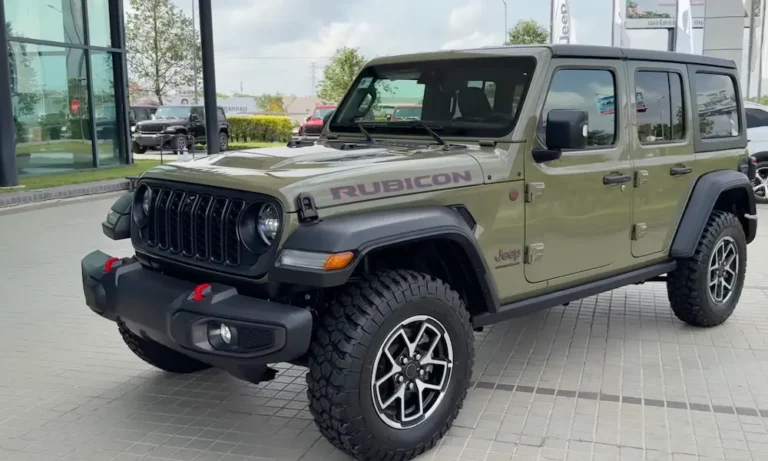
So you want to know what axles your Jeep is rolling on. Maybe you’re planning a lift, swapping gears, or just trying to buy the right parts without guessing. Good news: your VIN holds a ton of clues. Bad news: it won’t tell you everything. This guide walks you through jeep axle identification by VIN, plus what to do when the VIN runs out of answers. Stick with it, and you’ll know exactly what’s spinning under your rig.
Why Your VIN Is Just the Starting Point
Your 17-character VIN tells you a lot. It can confirm your trim, engine, and even hint at your factory axle setup. But it won’t spell out the exact gear ratio or confirm if someone swapped axles before you owned the Jeep.
Think of the VIN as a map, not a photograph. It shows you where to look. For the full picture, you’ll need to combine VIN decoding with a factory build sheet lookup and sometimes a hands-on inspection of the axle itself.
How the 17-Digit VIN Is Built
Every Jeep made since 1981 follows the same 17-character format set by federal regulation. Each section tells a different part of the story.
The First Three Characters Show Where It Was Born
Position one tells you the country. A “1,” “4,” or “5” means it’s American-built. A “2” points to Canada. A “3” means Mexico.
Position two is the maker. Jeep vehicles usually show a “J.” Position three tells you the vehicle type, like an SUV or truck chassis. You can run these through a Jeep VIN decoder to double-check.
Digits 4 Through 8 Hide the Real Clues
This is where axle identification by VIN gets interesting. Positions four through eight describe engine type, weight rating, trim, and body style. The exact meaning shifts depending on your model year and platform.
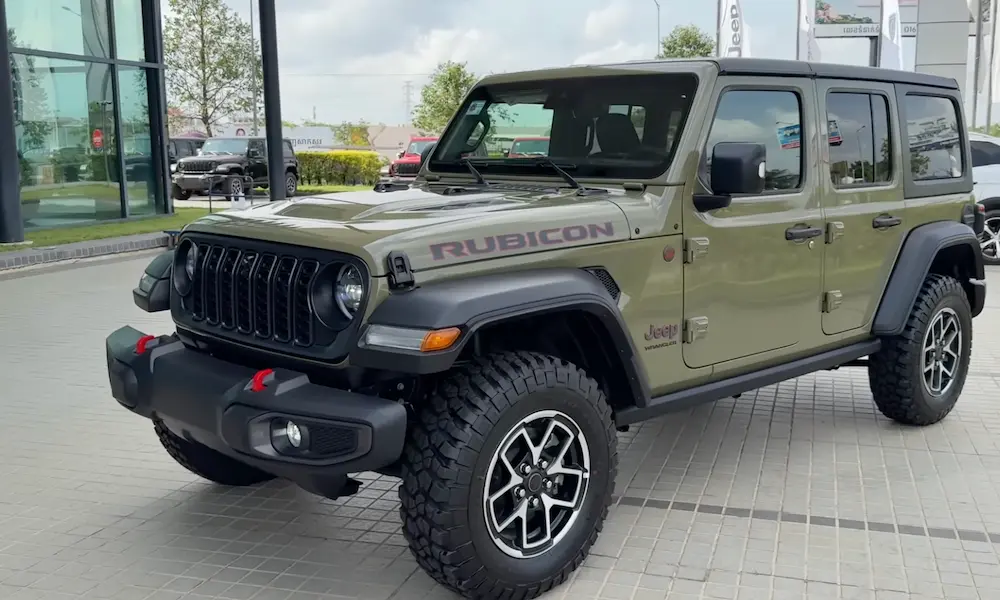
For example, on a Wrangler TJ, a “6” in position six confirms a Rubicon trim. That single digit guarantees heavy-duty Dana 44 axles front and rear, straight from the factory.
Digit 9 Catches Fakes
This check digit runs through a math formula based on the other 16 characters. If it doesn’t match, something’s off with the VIN. It’s mostly there for fraud detection, but it’s a good sanity check too.
Digits 10 Through 17 Track Year, Plant, and Build Number
Position ten is your model year code. Position eleven tells you which plant built your Jeep, like Toledo, Ohio, or Brampton, Ontario. The last six digits are a serial number unique to your vehicle.
Here’s a quick reference for common model year codes:
| Model Year | Code | Model Year | Code |
|---|---|---|---|
| 2010 | A | 2018 | J |
| 2011 | B | 2019 | K |
| 2012 | C | 2020 | L |
| 2013 | D | 2021 | M |
| 2014 | E | 2022 | N |
| 2015 | F | 2023 | P |
| 2016 | G | 2024 | R |
| 2017 | H | — | — |
Note: I, O, and Q never appear. They look too much like 1 and 0.
What Changes By Generation
Jeep’s coding system shifts with every major platform. Here’s a quick rundown of what to watch for.
Wrangler YJ (1987-1995): Early models used position four for engine type. Later models moved engine codes to position eight and used position six for trim.
Wrangler TJ (1997-2006): Position six is your trim key. A “6” means Rubicon, which locks in Dana 44 axles both ends.
Wrangler JK (2007-2018): Position five splits two-door from four-door and 2WD from 4WD. Position six mixes trim and transmission codes.
Grand Cherokee WK (2005-2010): Position five shows domestic vs export and drive type. Position six reveals trim, from Laredo up to the SRT8.
Knowing your platform narrows things down fast. But for the exact gear ratio and differential type, you need one more step.
VIN Decoding Isn’t Enough. Get the Build Sheet
Your VIN tells the story in broad strokes. The build sheet fills in every detail, including the exact axle model and gear ratio installed at the factory.
Old-school build sheets were paper routing tags taped right to the vehicle during assembly. Modern ones live in digital databases forever. You can pull a full equipment listing straight from Jeep’s site using your VIN, or try a third-party tool like iSeeCars’ build sheet lookup for a faster digital pull.
This document will spell out:
- Exact axle models front and rear
- Numerical gear ratio
- Whether you have an electronic locking differential
- Transmission and transfer case pairing
If your Jeep is stock and untouched, this build sheet is basically gospel. But if a previous owner swapped parts, the paper trail and the metal under your Jeep might not match anymore.
No Build Sheet? Check the Axle Tag
When paperwork isn’t available, or you suspect someone’s already swapped axles, go straight to the source: the differential itself.
Dana Incorporated, Jeep’s main axle supplier, has tagged differential covers since the mid-1960s. Look for a small metal tag bolted to the cover using two of the cover bolts. It shows a number, called the Bill of Materials number, that tells you the exact axle spec and gear ratio.
Older tags start with a “6,” followed by a dash and a trailing digit for gear ratio. Post-2004 axles usually start with a “2” instead, but work the same way. You can cross-reference these numbers using resources like Torque King’s Dana axle ID guide.
Lost your tag? No problem. The same number is stamped right into the axle tube. On front axles, check the front face of the long tube. On rear axles, look at the back face of the right-side tube. Grab a scraper, not a wire wheel, to clean off grime without erasing the shallow stamp.
No Tag, No Stamp? Identify Axles by Sight
Sometimes the tag’s gone and the stamp is toast. That’s when you eyeball the housing itself. Cover shape, bolt count, and ring gear size will tell you which axle family you’re dealing with.
| Axle Model | Cover Shape | Bolt Count | Ring Gear Size | Spline Count |
|---|---|---|---|---|
| Dana 30 | Flattened, asymmetrical | 10 | 7.12 in | 27 |
| Dana 35 | Symmetrical, oval | 10 | 7.56 in | 27 |
| Chrysler 8.25 | Oval, flat bottom | 10 | 8.25 in | 27 or 29 |
| Dana 44 | Angular, hexagon-ish | 10 | 8.50 in | 30 or 32 |
| AMC 20 | Perfectly round | 12 | 8.875 in | 29 |
You can also measure the ring gear yourself or count axle splines for confirmation. Sites like RockAuto’s axle ID chart are handy for double-checking measurements before you order parts.
Know Your Jeep Axle Families
Once you’ve narrowed down the model, it helps to know what you’re actually working with.
AMC 20: Found on late-70s and early-80s CJ models. Strong center section, but the factory two-piece axle shaft design is a known weak point. Most owners upgrade to one-piece shafts for durability.
Chrysler 8.25: Used in Cherokees and Libertys. Solid mid-size axle. Post-1997 versions got a bump to 29-spline shafts, closing the gap with the Dana 44.
Dana 30 and Dana 35: The most common factory pairing for decades. Dana 30 up front, Dana 35 in back. Both work fine for stock use but struggle under big tires and hard off-roading, especially the 35.
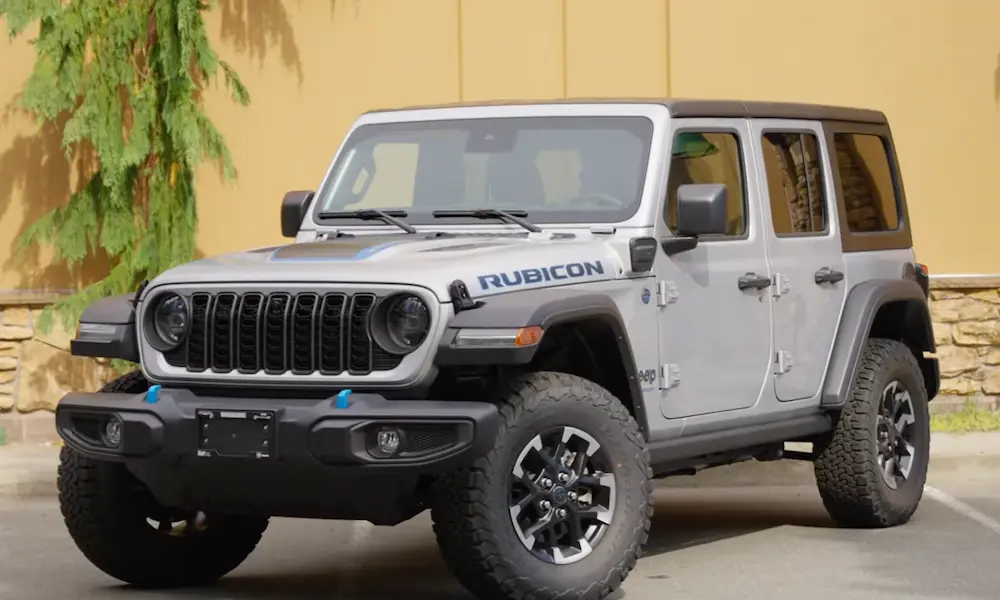
Dana 44 and Super 44: The gold standard. Standard on the Wrangler Rubicon, front and rear. The Rubicon version, sometimes called a Super 44, gets thicker tubes and bigger internals to handle locking differentials.
Aluminum Dana 44 (44HD): Found only in the rear of Grand Cherokee ZJ and WJ models. Lighter for better ride quality, but the aluminum housing flexes badly off-road. Not a great candidate for hardcore trail use.
AdvanTEK series: The modern replacement lineup on JL Wranglers and JT Gladiators. Named by metric ring gear size instead of the old Dana numbers.
- M186: Standard front axle, replaces the Dana 30
- M200: Standard rear axle, replaces the Dana 35
- M210: Heavy-duty front axle on Rubicon and all Gladiators
- M220: Heavy-duty rear axle on Rubicon and all Gladiators
Heads up: AdvanTEK parts don’t swap with old Dana components. The housings are built completely different, so check compatibility before you order anything.
Gear Ratios Matter Too
Once you know your axle, the gear ratio inside tells you how your Jeep drives. It’s the relationship between ring gear teeth and pinion gear teeth.
Lower numbers, like 3.21 or 3.73, are “tall” gears. They’re great for highway cruising and fuel economy, but sluggish off the line and weak for crawling.
Higher numbers, like 4.10 or 4.56, are “short” gears. They punch harder off the line and crawl better over obstacles, but rev higher on the highway. That’s why the Rubicon comes with 4.10s standard, matched to its bigger 33-inch tires.
Watch out for the carrier split. If you’re swapping to shorter gears, you might hit an engineering wall called a carrier split. The differential carrier has a limited range of gear ratios it can physically fit. Jump too far, say from 3.73 to 4.56, and the ring gear won’t reach the smaller pinion. You’ll need a whole new carrier, not just new gears, based on guidance from forums like NAXJA’s gear ratio discussions.
Watch for Computer Glitches After Axle Swaps
Here’s something a lot of DIYers forget. Modern Jeeps run everything through a computer, and that computer expects specific tire size and gear ratio numbers.
Change your gears or tires without updating the software, and you’ll likely trigger a P0734 code, meaning “Incorrect Gear Ratio.” Your transmission might hunt for gears or shift weird, according to CarParts’ P0734 breakdown.
In worse cases, your speedometer reads wrong, your anti-lock brakes get confused, or your traction control fights you on the trail. The fix usually means reflashing the powertrain computer with the correct tire height and gear ratio, either at a dealership or with an aftermarket programmer.
Final Thoughts
Jeep axle identification by VIN gets you most of the way there. It tells you your platform, trim, and often hints strongly at your factory axle setup. But for total certainty, especially on a used Jeep, pair your VIN decode with a build sheet lookup, a physical tag check, or a good old-fashioned eyeball inspection of the differential cover.
Whether you’re planning a gear swap, hunting for replacement parts, or just curious what’s holding your Jeep together, knowing your exact axle saves you time, money, and a lot of guessing at the parts counter.