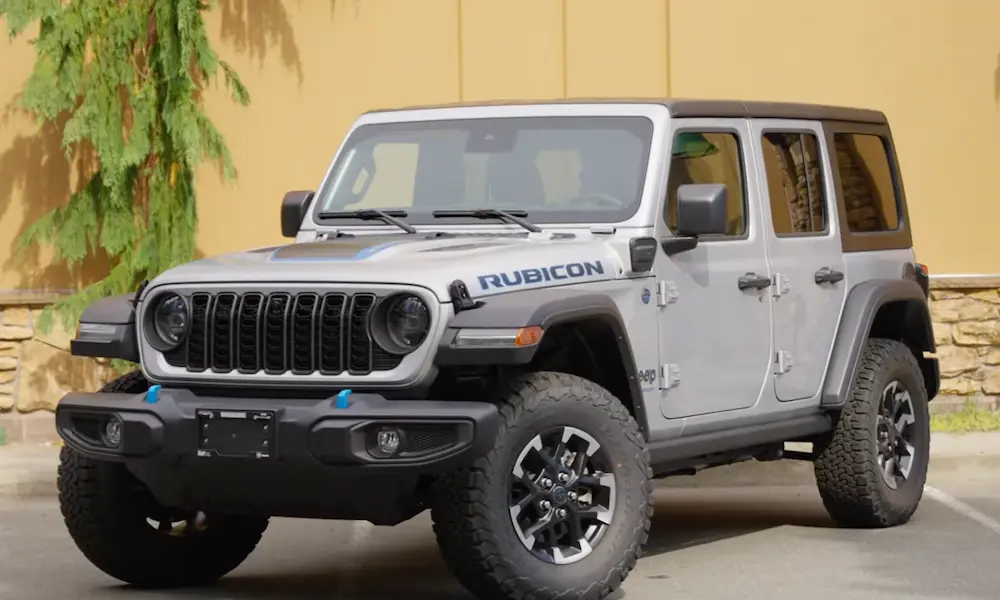
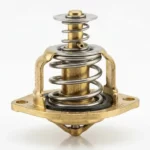
Got a check engine light, weak cabin heat, or a temperature gauge that never moves? Your Jeep Grand Cherokee might have a failing thermostat. The good news? This fix is more straightforward than you think, and you can do it yourself for under $100. Read this guide from start to finish — skipping steps here is how engines get wrecked.
What Does the Thermostat Actually Do?
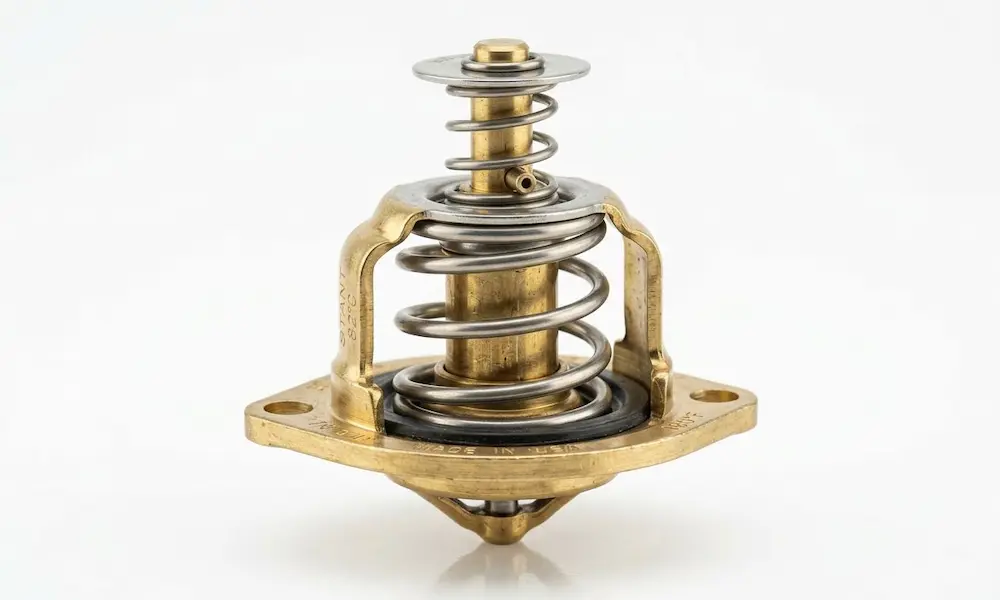
Your thermostat is a small wax-filled valve that controls coolant flow between your engine and radiator. When the engine is cold, it stays shut to help the engine warm up fast. Once things heat up, it opens to let hot coolant reach the radiator.
It’s not fancy, but it’s critical. Without it working correctly, your engine either overheats or never reaches its operating temperature — both of which cause real damage over time.
The 3.6L Pentastar V6 and 5.7L Hemi V8 found in WK2 and WL Grand Cherokees both rely on this same basic principle, but the thermostat location and replacement process differ between the two engines.
How to Know Your Thermostat Has Failed
Thermostats fail in two ways: stuck open or stuck closed.
A stuck-closed thermostat is the dangerous one. Coolant can’t reach the radiator, the engine overheats fast, and you’re looking at warped heads if you keep driving. Pull over immediately.
A stuck-open thermostat is the far more common failure on the Grand Cherokee. It’s sneaky — the engine never overheats, but it never reaches proper temperature either. Here’s what you’ll notice:
- Check engine light turns on
- Weak or cold cabin heat
- Temperature gauge sits low or never reaches the midpoint
- Noticeably worse fuel economy
- Longer than normal warm-up times
That last one matters more than most people realize. Running too cold forces your engine into a rich fuel mixture mode, where extra fuel gets sprayed into the cylinders. That raw fuel washes past piston rings and into your oil — which breaks down lubrication and accelerates wear.
Reading the Diagnostic Codes
Two codes show up most often during a Jeep Grand Cherokee thermostat replacement diagnosis:
| Code | What It Means | Common Cause | Key Symptoms |
|---|---|---|---|
| P0128 | Coolant temp below regulated threshold | Thermostat stuck open | Low temp gauge, poor heat, bad MPG |
| P0118 | Coolant temp sensor circuit voltage too high | Broken sensor or open wiring | Cooling fans running constantly |
| P0117 | Coolant temp sensor circuit voltage too low | Shorted sensor or wiring | False high-temp readings |
P0128: The Thermostat Code
P0128 on a Jeep Grand Cherokee means your engine isn’t reaching its target operating temperature within the expected timeframe. The ECM monitors warm-up speed closely, and if the coolant temperature sensor reports a plateau around 130–160°F instead of the target 200°F+, it stores P0128 and lights up the dash.
To confirm it’s actually the thermostat, use a scan tool to graph live coolant temperature during a cold start. A bad thermostat will show a slow, flat rise that plateaus way below normal. Point an infrared thermometer at the upper radiator hose — if it matches the scan tool’s low reading, your sensor is telling the truth and the thermostat has failed.
P0118: The Sensor Code
P0118 on a Jeep Grand Cherokee is an electrical issue, not a mechanical one. The coolant temp sensor uses a negative temperature coefficient thermistor — higher coolant temp means lower resistance. If the sensor unplugs or internally fails, the circuit reads infinite resistance, which the ECM interprets as -40°F.
The computer’s response? Run the radiator fans at full blast continuously as a safety measure. You’ll hear them constantly, even on a cold morning. A quick bench test with a multimeter confirms the fault — at 68°F, a healthy sensor reads between 2.0 and 4.5 kΩ. Infinite resistance means it’s dead.
Don’t replace the thermostat if P0118 is your only code. You’d be solving the wrong problem.
Plastic vs. Aluminum: Pick the Right Housing
On the 3.6L Pentastar, the thermostat doesn’t sit in a metal housing — it’s molded directly into a composite plastic assembly. The factory plastic works fine initially, but it cracks, warps, and leaks over thousands of heat cycles.
Aftermarket aluminum thermostat housings from brands like Dorman (902-3102HP), Mishimoto, and Allmotorparts solve this permanently. They bolt in exactly like the factory unit, cost $30–$60, and won’t turn brittle after five winters. If you’re already doing a Jeep Grand Cherokee thermostat replacement, the aluminum upgrade is worth every penny — otherwise you’re just replacing a doomed part with an identical doomed part.
Standard vs. Low-Temperature Thermostats
The factory Pentastar thermostat opens at 203°F. That’s the number the entire engine management system is built around.
Performance-oriented options like the RIPP 180°F thermostat open 23 degrees earlier and include a longer piston that increases valve lift from 7mm to 12mm. More coolant flows to the radiator sooner, which helps with heavy towing or supercharged builds.
The catch: install a 180°F thermostat without a tune, and your ECM will see the engine never reaching 203°F, store a P0128 code, and light up your check engine light. A low-temp thermostat requires matching ECM software recalibration — it’s not a bolt-on-and-forget swap for stock vehicles.
Safety First: Don’t Skip This Section
Cooling systems run at 15–18 psi of pressure. That pressure raises the boiling point of coolant well above what unpressurized water can handle. Open a hot system and that pressurized liquid flashes to steam instantly — causing severe burns.
Wait until the engine is completely cold before touching anything. Several hours minimum. If the radiator hose feels warm, it’s not ready.
Coolant is also highly toxic. Its sweet smell attracts pets and wildlife, and even a small amount causes fatal kidney failure in animals. Never drain it onto the driveway or into a storm drain. Collect it in a sealed container and take it to an auto parts store or municipal hazardous waste facility for proper disposal.
Tools you’ll need:
- 10mm and 13mm sockets with extensions and ratchets
- Hose clamp pliers (spring clamp style)
- Calibrated torque wrench (inch-pounds and foot-pounds)
- Plastic trim removal tools
- Needle-nose pliers
- Spill-free coolant funnel kit
- Large drain pan
- Shop rags
Replacing the Thermostat: 3.6L Pentastar V6
The thermostat housing on the Pentastar sits at the top front of the engine block, right where the upper radiator hose connects. Here’s how to replace it:
- Lift and support the Jeep on jack stands. Never work under a vehicle supported only by a floor jack.
- Remove the engine cover by pulling it straight up off its rubber grommets.
- Remove the air intake tube. Loosen the hose clamps at the throttle body and airbox, unplug the Intake Air Temperature sensor, unbolt the center bracket, and set the tube aside.
- Remove the lower splash shield using a trim tool to pop out the push clips.
- Drain the coolant. Remove the radiator pressure cap first, then open the lower drain petcock. Close it once draining stops.
- Disconnect the upper radiator hose. Use hose clamp pliers to slide the spring clamp back, then twist the hose off the housing neck.
- Remove the two 10mm housing bolts and pull the housing away from the engine block.
- Clean the mating surface with a plastic scraper and brake cleaner. No metal scrapers — they’ll gouge the aluminum block.
- Install the new housing with the fresh rubber gasket seated correctly. Thread the bolts in by hand first.
- Torque to exactly 105 inch-pounds — that’s 8.75 foot-pounds. Over-tightening cracks the housing flange or strips the block threads.
- Reinstall the hose, slide the spring clamp back into place, and reassemble the intake tube.
Replacing the Thermostat: 5.7L Hemi V8
The Hemi uses a traditional drop-in thermostat behind a metal housing mounted low on the front of the engine near the water pump. The process looks like this:
- Follow the same safety, draining, and splash shield removal steps as above.
- Disconnect the upper radiator hose from the metal dome housing using hose clamp pliers. Have shop rags ready — coolant will spill.
- Remove the two housing bolts — one is 10mm, the other is 13mm. Don’t mix them up.
- Note the thermostat orientation before removing it. The spring end faces inward toward the engine block. The small jiggle-pin bleeder valve must point to the 12 o’clock position when you install the new unit.
- Clean both mating surfaces completely. Zero gasket residue allowed.
- Install the new thermostat with the spring facing in and the jiggle-pin at 12 o’clock. Place the new gasket on the housing — no liquid silicone sealant unless the instructions specifically call for it. Sealant squeezes inside and clogs the radiator.
- Thread both bolts in by hand, then tighten them alternately — back and forth — to avoid warping the flange.
- Torque both bolts to 18 foot-pounds.
| 5.7L Hemi Fastener | Torque Spec |
|---|---|
| Thermostat housing bolts | 18 ft-lbs |
| Water pump bolts | 18 ft-lbs |
| Intake manifold bolts | 9 ft-lbs |
Bleeding the Cooling System: Don’t Skip This
This is where most DIY thermostat jobs go wrong. Air trapped in the system after a Jeep Grand Cherokee thermostat replacement is a serious problem. An air pocket around the thermostat wax pellet prevents it from sensing coolant temperature correctly — so it won’t open on time, and the engine overheats even with a brand new part installed.
Air pockets near the coolant temp sensor cause erratic readings and cooling fans that run non-stop — a frustrating symptom that’s almost always traced back to an improper bleed.
How to bleed the Pentastar correctly:
- Attach a spill-free funnel kit to the radiator filler neck.
- Open the bleeder valve on top of the thermostat housing using a screwdriver or Allen wrench.
- Pour 50/50 premixed Mopar-approved coolant slowly into the funnel.
- Keep filling until a solid, bubble-free stream of coolant flows from the bleeder valve — no sputtering, no hissing.
- Close the bleeder valve snugly. Don’t overtighten it — stripped threads mean a slow drip every time the system pressurizes.
- Start the engine with the climate control set to max heat, blower on low.
- Watch the funnel. When the thermostat opens, you’ll see the fluid level drop and large bubbles surface. Add coolant quickly to keep the funnel from running dry.
- Run the engine 10–15 minutes until the upper radiator hose is hot to the touch and the cabin vents blow genuinely hot air.
- Once no more bubbles appear, shut the engine off, remove the funnel, and install the radiator cap.
- Fill the overflow reservoir to the MAX line.
For the 5.7L Hemi, the bleeder is often on the water pump body itself rather than the housing. Fill through the thermostat opening first, then top off the reservoir, and follow the same idle-and-monitor process.
Take the Jeep for a test drive afterward. The temperature gauge should settle at the midpoint. If the check engine light returns or the gauge behaves erratically, check for air pockets before assuming the new thermostat is faulty.
How Much Does This Repair Cost?
| Repair Option | Labor Rate | Parts Cost | Total Estimate |
|---|---|---|---|
| DIY (Home Garage) | $0 | $50–$100 | $50–$100 |
| Independent Shop | ~$110/hr | $80–$120 | $250–$400 |
| Jeep Dealership | $162+/hr | $100–$150 | $500–$700+ |
The Grand Cherokee thermostat is accessible, the tools are basic, and RepairPal data shows dealerships charging $500–$700+ for this job. Doing it yourself saves real money, especially when you factor in the aluminum housing upgrade that dealers won’t offer unless you ask.
Frequently Asked Questions
Does driving at high altitude affect my Jeep’s cooling system?
Yes, significantly. At higher elevations — like crossing Colorado mountain passes — atmospheric pressure drops, which lowers coolant’s boiling point. Your pressurized radiator cap compensates by adding back roughly 15 psi, raising the boiling point about 45°F. A weak or improperly sealing radiator cap becomes a much bigger problem at altitude than it is at sea level.
What does the Active Grille Shutter system do for engine temperature?
On newer WL Grand Cherokees, electronically controlled louvers in front of the radiator close during cold starts to trap radiant heat in the engine bay. This works alongside the closed thermostat to speed up warm-up time and cut cold-start emissions faster than the thermostat alone could manage.
Can a clogged heater core look like a bad thermostat?
Absolutely. A clogged heater core blocks hot coolant from reaching the cabin — so you get ice-cold air from the vents, which is the same symptom as a stuck-open thermostat. Use a scan tool to verify the actual engine block temperature. If the engine is running at normal temperature but cabin heat is absent, suspect the heater core, not the thermostat.
Does draining the radiator petcock remove all the old coolant?
No. Draining the radiator removes roughly half the system’s total fluid. The rest stays trapped in the engine block. For a full flush, you need to remove the engine block drain plugs — on the Hemi, they’re on the sides of the cast-iron block near the exhaust manifolds. On the Pentastar, block accessibility depends heavily on whether you have a four-wheel-drive model, where the front differential significantly limits access.