Your Grand Cherokee won’t crank. You’ve already swapped the battery, cleaned the terminals, and it still just clicks. The starter is next on the list. This guide covers everything from diagnosis to torque specs, across every generation — so you don’t waste money replacing the wrong part or stripping a bolt you can’t reach.
Is It Actually the Starter? Check This First
Before you order anything, confirm the starter is the problem. According to RepairPal’s data on Jeep Grand Cherokee no-start issues, 38% of starting failures trace back to the battery, 27% to the alternator, and only 20% to the starter itself.
So rule out the obvious first.
Signs the Starter Has Actually Failed
- Single loud click, then nothing — the solenoid fired but the motor didn’t spin
- Total silence when you turn the key — no crank, no click, nothing
- Slow, labored cranking — engine turns over like it’s dragging through mud
- Grinding when starting — the pinion gear isn’t meshing cleanly with the flywheel
- Intermittent starts — works fine sometimes, fails randomly (classic worn brushes)
Quick Electrical Test Before You Pull Anything
Grab a multimeter. Turn the key to “Start” and probe the solenoid’s “S” terminal. You should see 12 volts. If you do and the starter still doesn’t spin, the unit is bad. If voltage reads low, your problem is upstream — battery, relay, or wiring.
Also swap the starter relay in the fuse box with an identical relay (the horn relay works great for this). It takes 30 seconds and costs nothing.
Know Your Generation Before You Buy Parts
Jeep Grand Cherokee starter replacement isn’t a one-size-fits-all job. The engine you have determines the starter’s location, power rating, and how hard it is to reach. Here’s a quick breakdown across all five Grand Cherokee generations:
| Generation | Years | Common Engines | Difficulty |
|---|---|---|---|
| ZJ | 1993–1998 | 4.0L I6, 5.2L/5.9L V8 | Easy |
| WJ | 1999–2004 | 4.0L I6, 4.7L V8 | Moderate |
| WK | 2005–2010 | 3.7L V6, 4.7L/5.7L V8 | Moderate–Hard |
| WK2 | 2011–2021 | 3.6L V6, 5.7L/6.4L V8 | Hard |
| WL | 2021–Present | 3.6L V6, 5.7L V8, 4xe hybrid | Hard + Hybrid Awareness |
The WK2 is the most common generation on US roads today — and the hardest to work on. Budget accordingly.
Tools You’ll Need
Don’t start this job without the right tools. The WK2 especially will punish you if you try to improvise with a short extension and a prayer.
| Tool | Purpose |
|---|---|
| 10mm, 13mm, 15mm sockets | Mounting bolts and electrical connections |
| 12″ and 24″ extensions | Reaching behind the transmission tunnel |
| 3/8″ or 1/2″ swivel joint | Getting around the exhaust and drivetrain |
| Torque wrench (up to 250 ft-lbs) | Hitting the correct specs |
| Floor jack + jack stands | Safe vehicle elevation |
| Small pry bar | Maneuvering the starter out |
You’ll also want rust penetrant like PB B’laster for older models in salt-belt states, and dielectric grease for the electrical connections on reassembly.
Critical Safety Step: Air Suspension and Hybrid Systems
Quadra-Lift Air Suspension (WK2 and WL)
If your Grand Cherokee has the Quadra-Lift air suspension, this is not optional reading. The system automatically adjusts ride height. Lift the vehicle without disabling it first, and it can try to self-level while the Jeep is on jack stands. That’s a tipping hazard.
Enable Tire Jack Mode before you touch the floor jack:
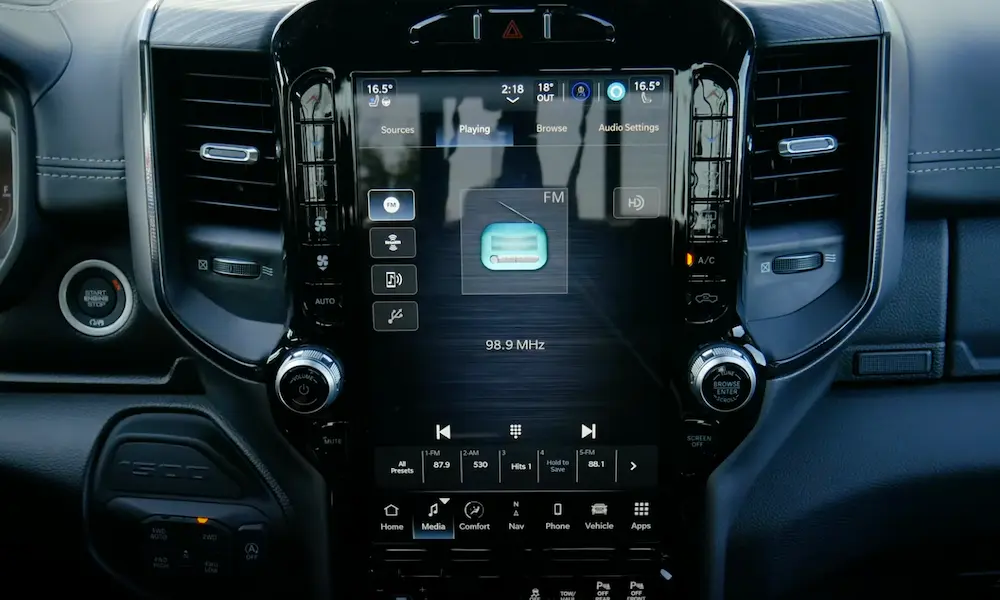
- Go to Settings on the Uconnect screen
- Select Suspension
- Check Tire Jack Mode
Once you’re done and the vehicle is back on the ground, the system resets automatically after driving over 5–10 mph.
4xe Plug-In Hybrid (WL Generation)
The 4th generation and WL 4xe models use a 2.0-liter turbocharged four-cylinder with an integrated starter-generator. The 12-volt conventional starter still exists for the combustion engine, but the orange high-voltage hybrid cabling must not be disturbed. Disconnect the 12-volt battery only, and leave the hybrid system alone unless you’re certified to work on it.
3.6L Pentastar V6 Starter Replacement (WK2, 2011–2021)
This is the most common Jeep Grand Cherokee starter replacement job in shops today. Professional estimates put the labor time at just over 3 hours — and that’s for experienced technicians.
Battery Location and Disconnection
The WK2 battery sits under the passenger seat, not under the hood. Remove the negative terminal first. Skipping this step while working near the positive cable stud is how people end up with burned hands and fried wiring.
The Intermediate Steering Shaft Trick
The 3.6L starter hides on the driver’s side of the engine, blocked by the motor mount and the intermediate steering shaft. Some manuals say to lift the engine off the mount. Don’t do that unless you enjoy unnecessary work.
The faster method: disconnect the intermediate steering shaft. It opens up just enough space to extract the starter.
But there’s one rule you can’t skip:
Lock the steering wheel before you touch the shaft collar bolt. If the wheel spins while the shaft is disconnected, you’ll destroy the clock spring — which controls your airbag and steering controls. That’s an expensive mistake.
Steps:
- Lock the steering wheel using a wheel clamp or the ignition lock position
- Remove the collar pinch bolt on the intermediate shaft
- Push the shaft aside to create a clearance window
Removing the Starter
- Remove the front under-vehicle splash shields (10mm socket)
- Disconnect the main battery cable from the solenoid stud — 13mm nut
- Disconnect the solenoid spade connector
- Remove both 15mm mounting bolts using a long extension snaked through the driver’s side wheel well or from underneath
- Wiggle the starter around the motor mount and out through the front of the engine bay
Installation Torque Specs
| Fastener | Torque Spec |
|---|---|
| Starter mounting bolts | 55 Nm (41 ft-lbs) |
| Positive battery cable (B+) nut | 11 Nm (97 in-lbs) |
| Steering shaft pinch bolt | 33–36 ft-lbs |
Clean the bellhousing mating surface before installing the new unit — a clean ground contact keeps the system running right.
5.7L HEMI V8 Starter Replacement (WK/WK2)
The HEMI starter lives on the passenger side of the transmission bellhousing — the opposite side from the 3.6L. And the exhaust manifolds nearby make heat a constant enemy.
Access and Heat Shield
- Pull the passenger side wheel and inner fender liner first
- On AWD models, you may need to drop the front driveshaft (four 18mm bolts at the U-joint) to clear the extraction path
- Remove the heat shield — three small bolts, with the third located high up and only reachable by hand with a small ratchet
Don’t skip reinstalling that heat shield. A missing shield lets exhaust heat cook the solenoid and motor windings, and you’ll be back doing this job in two years.
Electrical Connections and Removal
The wiring setup mirrors the V6: 13mm nut for the positive cable, spade terminal for the solenoid signal wire. On HEMI models, inspect that spade connector closely — rust and drag on that terminal is a common failure point that gets missed.
Remove the top mounting bolt first (it’s the harder reach), then the lower. Pull the starter forward through the front of the engine bay where the wiring runs.
Legacy Models: ZJ, WJ, and WK
Older Grand Cherokees are generally more accessible, but rusted fasteners can make up for that in time lost. Soak all mounting bolts with penetrant the night before if the vehicle is over 10 years old.
4.0L Inline-Six (ZJ and WJ)
Two 15mm bolts hold the starter in place. On the WJ, the upper bolt is notoriously difficult — a 24-inch extension snaked behind the transmission usually gets it done.
4.7L V8 (WJ and WK)
The 4.7L starter mounts at the bottom of the bellhousing and uses a 1.6 KW Mitsubishi permanent magnet gear reduction motor. It’s straightforward to remove once you’ve disconnected the wiring — two 15mm bolts, 13mm nut on the positive cable.
What’s Inside the Starter (and What Fails)
Modern Grand Cherokee starters are Permanent Magnet Gear Reduction (PMGR) units. A planetary gear set lets a smaller, faster motor produce enough torque to spin the engine over.
| Spec | 3.6L V6 Starter | 5.7L V8 Starter |
|---|---|---|
| Voltage | 12V DC | 12V DC |
| Power Rating | 1.3 KW | 1.2–1.6 KW |
| Gear Ratio | 6.86:1 | 4.91:1 |
| Tooth Count | 9 | 10 |
Inside, brushes wear against the commutator over time. When they wear down or the commutator chars, you get intermittent starts or complete failure. The solenoid handles two jobs — it acts as a high-current switch AND physically throws the bendix gear into the flywheel ring gear. If the bendix doesn’t retract after the engine fires, the spinning flywheel will destroy the starter motor in seconds.
OEM vs. Aftermarket Parts
You’ve got two solid options for Jeep Grand Cherokee starter replacement parts:
- Mopar OEM or remanufactured — guaranteed fitment, available at Mopar’s official parts store. Higher price, zero guesswork.
- Aftermarket brands like Denso or TRQ — Denso actually manufactures original equipment electrical parts for Mopar vehicles, so their units aren’t a compromise.
Avoid no-name remanufactured units with vague warranty terms. A failed starter after a three-hour labor job is a painful and expensive re-do.
What This Job Costs
According to RepairPal’s cost estimator, the average professional Jeep Grand Cherokee starter replacement runs $767 to $1,068, with labor between $462–$677 and parts at $306–$391.
| Generation | Labor (Est.) | Parts (Est.) | Total Range |
|---|---|---|---|
| ZJ (1993–1998) | 1.0–1.5 hrs | $100–$180 | $250–$450 |
| WJ (1999–2004) | 1.5–2.0 hrs | $120–$220 | $350–$550 |
| WK (2005–2010) | 2.0–3.0 hrs | $180–$300 | $500–$750 |
| WK2 (2011–2021) | 3.0–4.5 hrs | $250–$400 | $700–$1,100 |
The WK2 and WL labor costs reflect the steering shaft work, suspension management, and AWD drivetrain obstructions. That time adds up fast at shop rates.
How to Make Your Next Starter Last Longer
A starter should run 100,000–150,000 miles. These things cut that lifespan short:
- Oil leaks above the starter — saturated brushes fail fast. Fix the leak, not just the starter.
- Missing heat shield on the HEMI — exhaust heat degrades the solenoid windings over time.
- A weak battery — a struggling battery forces the starter to work harder on every crank cycle.
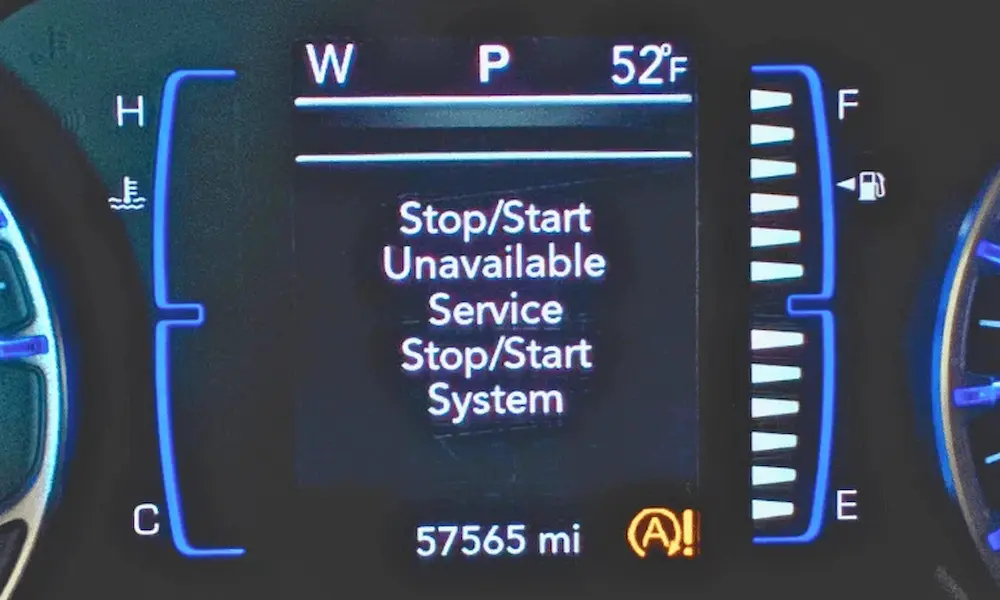
- Auto stop-start systems — these require an AGM battery and a high-cycle starter. Using a standard unit here wears brushes faster than normal driving ever would.
On reassembly, apply dielectric grease to the spade terminal and positive cable stud. It takes 10 seconds and prevents the corrosion that causes the next intermittent failure. Use electronic contact cleaner on the wiring harness connectors before reattaching them.