Finding the right Mercon SP equivalent feels harder than it should be. Ford discontinued the fluid, the shelves are thinning out, and some “universal” replacements could quietly wreck your transmission. This post cuts through the confusion and tells you exactly what to use, what Ford officially recommends, and which products to skip entirely. Read on — your transmission will thank you.
What Is Mercon SP and Why Does It Matter?
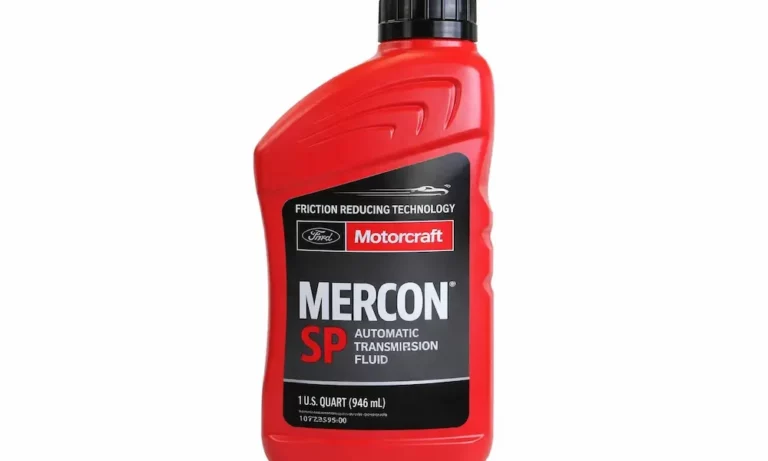
Mercon SP is a low-viscosity automatic transmission fluid that Ford engineered for a specific group of electronically controlled transmissions in the early 2000s. It’s not just any ATF — it’s a precision fluid with tight viscosity requirements and a friction-modified additive package.
Ford officially sold it under part numbers:
- XT-6-QSP (one-quart bottle)
- XT-6-DSP (55-gallon drum)
Here’s why it matters: put the wrong fluid in a Mercon SP transmission, and you’re looking at harsh shifts, shudder, overheating, or full transmission failure. The stakes are real.
Which Vehicles Use Mercon SP?
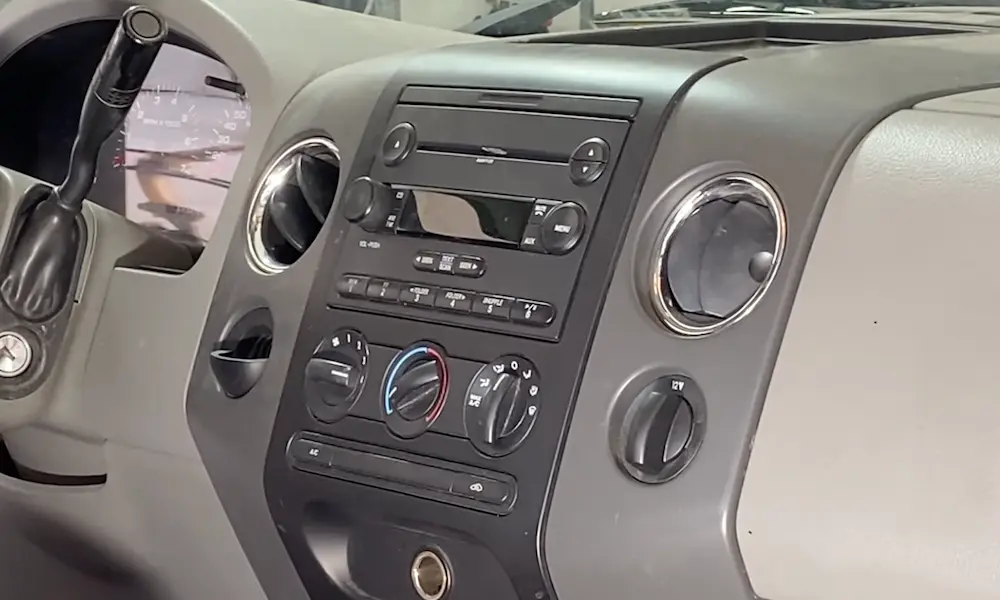
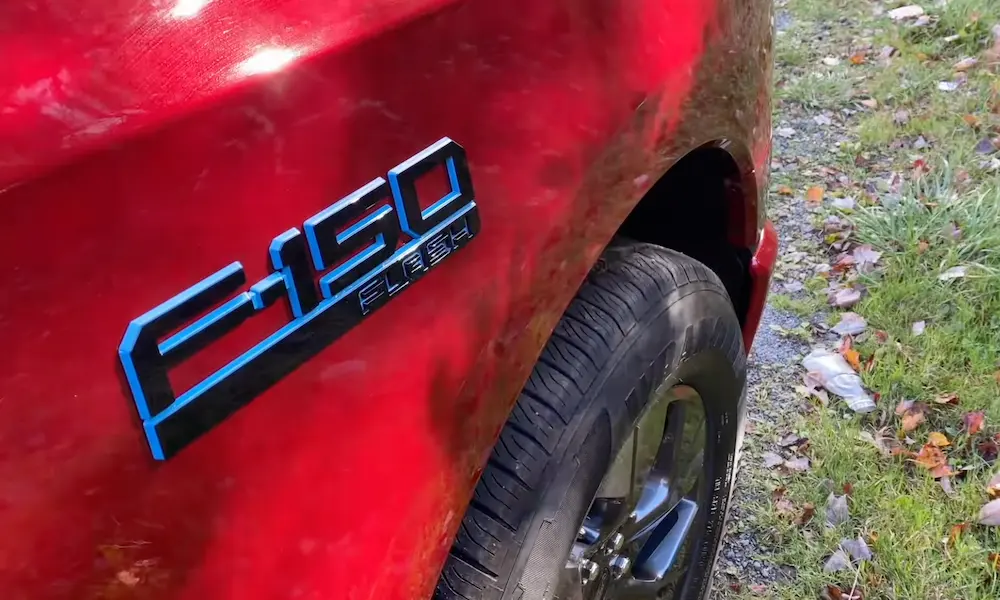
Not every Ford uses this fluid. Mercon SP applies to a small, specific group of transmissions — mostly heavy-duty trucks and luxury SUVs from the mid-2000s.
| Transmission | Vehicle Applications | Years |
|---|---|---|
| 5R110W (TorqShift) | F-250, F-350, F-450, F-550 Super Duty | 2003–2010 |
| ZF 6HP26 | Lincoln Navigator | 2005–2008 |
| 6R60 / 6R75 | Ford Explorer, Mountaineer, Expedition | 2006–2008 |
| 5R110W | Ford Excursion | 2003–2005 |
The 5R110W TorqShift is a heavy-duty beast rated for up to 1,000 lb-ft of torque. Its adaptive shift control relies heavily on consistent fluid friction properties. Feed it the wrong fluid, and the adaptive logic falls apart.
Why Did Ford Discontinue Mercon SP?
Ford stopped manufacturing Mercon SP in mid-2023. After June 30, 2023, production ended. Remaining inventory sold off until it ran out.
This wasn’t a surprise. Ford had been consolidating its fluid lineup for years — moving toward fewer specs that cover more vehicles. According to the MERCON Wikipedia page, the brand evolved from basic motor oil in 1942 through Type F, Mercon, Mercon V, and eventually Mercon SP (released August 2001), Mercon LV (2005), and Mercon ULV (2014). Each step reduced viscosity to improve fuel economy and shift speed.
Mercon SP’s discontinuation was part of that natural consolidation. Ford already had Mercon LV sitting in a compatible viscosity range, so replacing SP with LV made technical sense.
Ford’s Official Replacement: Mercon LV
Ford issued Special Service Message 51909 to address the gap left by SP’s discontinuation. The message is clear: Mercon LV replaces Mercon SP as the service fluid for vehicles equipped with 6R and TorqShift transmissions, including the 6HP26, 6R60, 6R75, and 5R110.
This is the most important document in the Mercon SP conversation. If Ford says use LV, that’s your primary answer.
Can You Mix Mercon LV With Existing Mercon SP?
Yes — Ford explicitly authorizes mixing Mercon LV and Mercon SP in the same transmission. This matters most for 5R110W owners who do partial fluid changes by dropping the pan. Pour in Mercon LV on top of remaining SP, and you’re fine.
Some early 2009 service manuals caused confusion by stating the two fluids weren’t interchangeable. SSM 51909 resolved that conflict. The official answer is: mix freely, use LV going forward.
| Service Situation | Recommended Fluid |
|---|---|
| Complete refill | Mercon LV |
| Top-off only | Mercon LV (safe to mix with SP) |
| Heavy-duty towing service | Mercon LV |
| ZF 6HP26 (Lincoln Navigator) | Mercon LV or ZF-specific equivalent |
Best Aftermarket Mercon SP Equivalents
Motorcraft Mercon LV is the top recommendation, but solid aftermarket options exist too — especially if you’re running a ZF transmission or prefer a specific full-synthetic formulation.
Valvoline MaxLife Multi-Vehicle ATF
Valvoline MaxLife is one of the most popular aftermarket Mercon SP equivalents in the US. Valvoline specifically recommends it for Mercon SP applications, and the numbers back it up.
Key specs:
| Property | Value |
|---|---|
| Viscosity at 100°C | 5.91 mm²/s |
| Viscosity at 40°C | 28.82 mm²/s |
| Viscosity Index | 156 |
| Pour Point | -48°C |
| Brookfield at -40°C | 10,200 cP |
That 5.91 mm²/s viscosity hits right in the Mercon SP target range of 5.5–6.0 mm²/s. MaxLife also includes seal conditioners that help slow leaks in high-mileage Super Duty trucks and aging Explorers.
Castrol Transmax Full Synthetic Multi-Vehicle ATF
Castrol Transmax holds a Ford Mercon LV license, which means it’s an authorized service replacement for Mercon SP applications under SSM 51909. Castrol’s product documentation explicitly lists Mercon SP compatibility.
It offers strong high-temperature oxidation resistance — important for 5R110W transmissions hauling heavy loads in summer heat. It also meets the JASO-1A standard and provides copper corrosion protection for the internal components of ZF-family transmissions.
Red Line D6 ATF
Red Line D6 is built specifically for Mercon SP applications. It’s a lower-viscosity version of their D4 ATF, engineered for improved fuel efficiency and consistent shift quality in the transmissions that SP serves.
Red Line highlights two key advantages for SP applications:
- High-temperature varnish resistance — keeps valve bodies and clutches clean
- Gear-level protection — equivalent to a light-duty gear oil, beneficial for the TorqShift’s planetary gearsets
If you run a work truck that sees heavy towing and heat cycles regularly, Red Line D6 is worth serious consideration.
Ravenol ATF 6 HP Fluid (For ZF Transmissions)
Lincoln Navigator owners with the ZF 6HP26 transmission have a unique situation. The original Mercon SP was technically identical to ZF’s own Lifeguard Fluid 6 — the same fluid BMW and Land Rover used in their ZF-equipped vehicles.
Ravenol ATF 6 HP is produced using high-quality hydrocracked base oils and ZF-compatible additives. It’s marketed as a direct equivalent to Ford Mercon SP (XT-6-QSP) and is a trusted choice for ZF six-speed service.
Another respected option for ZF owners is Liqui Moly Top Tec 1800 ATF, which is frequently recommended by specialty mechanics for its high compatibility with the 6HP family’s electronic controls.
Fluids You Must NOT Use as a Mercon SP Equivalent
This section matters just as much as the list of good options.
Mobil 1 Synthetic ATF — Not Compatible With SP
Mobil 1 Synthetic ATF is an excellent product for many vehicles, but its product documentation explicitly states it’s not recommended for Mercon SP applications. It meets Mercon V and some Mercon LV requirements, but SP is specifically excluded.
Don’t assume “full synthetic, multi-vehicle” means universal. Always check the specific application list on the label.
Products Claiming Both Mercon SP and Mercon ULV
Steer clear of any ATF claiming to satisfy both Mercon SP and Mercon ULV simultaneously. The Australian Lubricants Association has flagged these claims as technically implausible — and Ford agrees.
Here’s why: Mercon ULV sits at roughly 4.5 mm²/s viscosity at 100°C. Mercon SP needs approximately 5.7 mm²/s. A fluid thin enough to meet ULV standards can’t generate adequate hydraulic pressure in an SP transmission. Ford explicitly states that Mercon ULV is not backward compatible with Mercon SP applications.
Mercon V — Wrong Viscosity, Wrong Transmission
This is the most common mistake. Mercon V is a higher-viscosity fluid designed for older transmissions. Motorcraft’s own product documentation is clear that Mercon V cannot be mixed with or substituted for Mercon SP or LV.
Mercon V in a Mercon SP transmission causes:
- Slow, sluggish shifting
- Overheating under load
- Torque converter clutch damage
| Product | Mercon V | Mercon LV | Mercon SP |
|---|---|---|---|
| Valvoline MaxLife | ✅ | ✅ | ✅ |
| Castrol Transmax | ✅ | ✅ | ✅ |
| Red Line D6 | ❌ | ✅ | ✅ |
| Mobil 1 Synthetic ATF | ✅ | ✅* | ❌ |
*Mobil 1 LV compatibility varies by label version — SP exclusion remains consistent.
How to Check Fluid Level in Mercon SP Transmissions
Most transmissions using Mercon SP don’t have a standard under-hood dipstick. The 6R60 and 6R75 service manual outlines a specific procedure you need to follow for accurate readings:
- Run the engine at 600–750 RPM in Park
- Use a scan tool to confirm transmission fluid temperature is 80–85°C (175–185°F)
- Remove the fluid level indicator, wipe it clean, and reinstall it
- The fluid level must fall within the crosshatch mark on the indicator
- If low, pump fluid into the fill hole until the correct level is reached
Getting the temperature wrong during a check skews your reading. Overfilling causes foaming. Underfilling lets the pump draw air. Both destroy shift quality and can damage internal components.
Service Intervals for Mercon SP Transmissions
The 5R110W and 6R series transmissions often work hard — towing, hauling, desert heat, and city stop-and-go cycles. For these vehicles, a service interval of every 30,000–50,000 miles is a safe target for fluid and filter changes.
Modern full synthetics are resilient. Fleet trials on Las Vegas taxi cabs showed that synthetic ATF maintained 83% of its original oxidation inhibitors even at 180,000 miles. But given how demanding these transmissions run in real-world conditions, don’t push past 50,000 miles between services.
Your Mercon SP Equivalent Checklist
Before you buy anything, run through this quick check:
- ✅ Product explicitly states Mercon SP compatibility or holds a Mercon LV license
- ✅ Kinematic viscosity at 100°C falls between 5.5 and 6.0 mm²/s
- ✅ Application guide confirms use in Ford 5R110W or 6R series transmissions
- ❌ It’s not Mercon V, Mercon ULV, or Type F
- ❌ It doesn’t make dual SP + ULV claims (automatic red flag)
The landscape around Mercon SP has changed fast, but the path forward is clear. Motorcraft Mercon LV is the authorized replacement. Valvoline MaxLife, Castrol Transmax, Red Line D6, and Ravenol ATF 6 HP round out a solid list of aftermarket options. Pick the right one, follow the service interval, and your transmission will keep running strong.