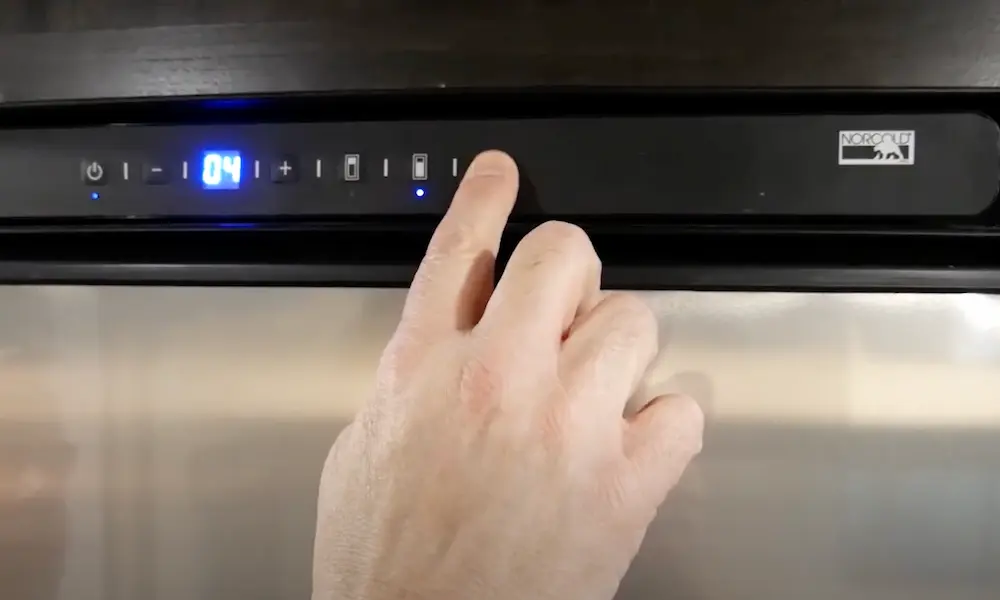
Ever glanced at your RV refrigerator display to find mysterious blinking lights or cryptic codes? You’re looking at your Norcold refrigerator’s way of telling you something’s wrong. Understanding these codes can save you from spoiled food, unnecessary repairs, and even potential safety hazards during your travels.
Let’s decode these messages and get your refrigerator cooling properly again.
What Are Norcold RV Refrigerator Codes?
Norcold refrigerators are smart enough to diagnose their own problems. When something goes wrong, they display fault codes through flashing lights or digital readouts on the control panel. These codes point to specific issues ranging from minor concerns (like a door left ajar) to serious problems requiring immediate attention.
Think of these codes as your refrigerator’s version of a check engine light—a heads-up that something needs your attention.
Why Understanding These Codes Matters
Knowing what your Norcold refrigerator is trying to tell you offers several advantages:
- Prevent food spoilage by addressing cooling issues quickly
- Save money by fixing simple problems yourself instead of calling a technician
- Avoid further damage to expensive components
- Maintain safety by addressing potential fire hazards
- Reduce travel disruptions by troubleshooting problems efficiently
Common Norcold Refrigerator Fault Codes Explained
For Gas-Electric Absorption Models (N6/N8, 1200/1210, 2118 Series)
No Lights or Display
If your refrigerator display shows nothing at all, check your power supply first.
Quick Fix: Verify you have 12V power at the refrigerator and check that the 5 amp fuse hasn’t blown. Many power issues come from loose connections or blown fuses.
“Sr” or “S” Code (Single Flash Every 3 Seconds)
This code indicates flame sensing problems. Your refrigerator tried to light but couldn’t confirm a flame was present.
Quick Fix: Inspect the spark electrode gap (should be 1/8-3/16 inch) and check the board ground connection. Many Sr codes appear during rainy weather due to moisture affecting the flame sensor.
“dc LO” Code (Two Flashes Every 3 Seconds)
Your refrigerator is telling you the battery voltage is below 10.5 volts.
Quick Fix: Check your battery charge level and look for power drains. Often, an undersized power cord or weak campground power causes this issue. Try reducing electrical load, switching to LP gas mode, or adding an energy management system.
“LI OP” or “L1 OP” Code
This is one of the most serious codes and indicates the high-temperature recall box has triggered. This safety device prevents potential fire hazards.
Quick Fix: First, check for proper ventilation. If everything looks normal, you can try resetting with a magnet at the “RESET” point. Persistent trips indicate overheating that requires professional attention.
“No FL” or “F” Code
This code appears when the refrigerator fails to light on LP gas.
Quick Fix: Check your propane supply (tank level, open valve), and inspect for spider webs in the burner tube. Make sure the gas solenoid isn’t sticking and that the electrode is clean.
For 12-Volt Compressor Models (N8DC/N10DC, N15DC, N20DC)
“E1” or “E2” Code
E1 indicates a problem with the fresh food compartment thermistor, while E2 points to the freezer thermistor.
Quick Fix: Check for loose connections at the control board. You can test the thermistor with a multimeter—it should read approximately 10kΩ at 77°F. If readings are off, replacement is necessary.
“E3” Code
This indicates battery voltage issues, either too low (under 10.4V) or too high (above 15V).
Quick Fix: Voltage problems are often caused by inadequate wiring gauge. If you see this frequently, upgrade to 10 AWG wiring and verify proper voltage at the board.
“E4” Code
The door has been detected open for more than two minutes.
Quick Fix: Check door alignment and the magnetic reed switch. Sometimes ice buildup on the gasket prevents proper closing. You can silence the beeper temporarily by pressing the CAB button.
Resetting Your Norcold Refrigerator After a Fault
Most Norcold refrigerators will need a proper reset after displaying error codes. Here’s how to do it correctly:
- Turn the refrigerator completely off
- Disconnect 12V power and/or unplug from shore power
- Wait 10-15 seconds for the control board to fully discharge
- Reconnect power
- Turn the refrigerator back on
- Select your desired operation mode
For the high-temperature “LI OP” code, you’ll need a specific reset procedure:
- Keep the refrigerator powered on
- Hold a strong magnet at the “RESET” target on the recall box until the LED light goes out
- Restore proper ventilation around the refrigerator
Preventing Future Error Codes
These proactive steps can help prevent many common Norcold fault codes:
- Ensure proper ventilation around your refrigerator at all times
- Park level when running the refrigerator (within 3 degrees of level)
- Check battery health regularly and maintain at least 12V for proper operation
- Clean burner assembly yearly to prevent obstruction
- Inspect door seals for proper closure and replace worn gaskets
- Avoid powering the refrigerator in hot environments over 90°F
- Dry the recall box after heavy rain before powering up
- Verify converter DC ripple is less than 50mV to avoid false trips
Specific Troubleshooting Tips by Model
Norcold N6/N8 Series
These units use optical boards with flashing LED patterns. The most common issue is the flame sense circuit fault (S or Sr code). Check both the electrode gap and clean any corrosion on ground connections.
Norcold 1200/1210 Series
These larger refrigerators commonly show “NO AC” codes when shore power has issues. Verify AC voltage at the refrigerator is between 108-132V. The heating element should read approximately 42-50 ohms when testing with a multimeter.
Norcold 12V Compressor Models
The N15DC and N20DC are particularly sensitive to wire gauge and length. The most frequent issue is E3 voltage codes from undersized wiring. Many owners have resolved this by upgrading to 10 AWG wire.
Decoding the Diagnostic Display
This table summarizes the most common fault code indicators you might encounter:
| Code | Appearance | Meaning | First Steps |
|---|---|---|---|
| Sr/S | Single flash every 3s | Flame sensor issue | Check electrode gap, clean connections |
| dc LO | 2 flashes every 3s | Low DC voltage | Test battery, check connections |
| LI OP/L1 OP | Text on display | High-temp safety trip | Check ventilation, reset with magnet |
| No FL/F | Text on display | No flame detected | Check LP supply, clean burner |
| E1/E2 | Digital display | Thermistor failure | Test/replace temperature sensor |
| E3 | Digital display | Voltage issue | Check wiring gauge, battery state |
| E4 | Digital display | Door open too long | Check alignment, magnet position |
| AC HE/H | 3 flashes every 3s | AC heater failure | Test heating element, check connections |
Advanced Troubleshooting Tools
For persistent issues, these tools can help diagnose Norcold refrigerator problems:
- Digital multimeter – Essential for testing voltage, resistance, and continuity
- Strong magnet – Needed for resetting the thermal switch in the recall box
- Propane pressure gauge – Helps verify correct LP pressure to burner assembly
- Ammeter – Measures current draw of heating elements and other components
Power Supply Issues and Your Refrigerator
Many Norcold fault codes trace back to power supply problems:
- Shore Power Fluctuations: Can trigger “NO AC” or “AC LO” codes
- Battery Voltage Drops: Lead to “dc LO” messages, especially when furnace or other high-draw appliances run simultaneously
- Converter Issues: Poor filtering can cause voltage ripple that triggers false “dc HI” codes
Use an EMS (Electrical Management System) to protect your refrigerator from these power issues.
When Your Cooling Unit Is the Culprit
If you’ve worked through all the electrical troubleshooting but still have cooling issues and “LI OP” codes, your cooling unit might be failing. Signs include:
- Yellow powder residue around the cooling unit
- Ammonia smell near the refrigerator
- Gurgling sounds that persist for hours
- Refrigerator works fine when level but fails on even slight inclines
When these symptoms appear alongside fault codes, it’s usually time for a cooling unit replacement or a new refrigerator.
Making Sense of Mixed Messages
Sometimes your Norcold will flash different codes intermittently or show different codes depending on operating mode. This typically means:
- Multiple issues exist simultaneously
- A primary problem is causing secondary failures
- Intermittent connections are creating false readings
Address each code systematically, starting with power supply issues, then gas system problems, and finally sensor/control board concerns.
Preparing for Service Calls
If you need professional help, make your service call more effective by:
- Recording the exact code pattern and frequency
- Noting when codes appear (during startup, after running for hours, etc.)
- Documenting temperature readings when problems occur
- Taking photos or videos of the fault display
- Having your refrigerator model and serial number ready
This preparation can save diagnostic time and cost during professional service.
Avoiding Dangerous DIY Fixes
While many Norcold issues can be user-repaired, avoid these dangerous practices:
- Bypassing the thermal switch or recall box
- Modifying gas pressure regulators
- Jumping circuits on control boards
- Operating with known cooling unit leaks
These shortcuts can create fire hazards or ammonia leaks that endanger you and others.
Understanding your Norcold refrigerator codes gives you the power to address problems quickly and safely. With this guide, you can confidently troubleshoot most issues and know when professional help is truly needed. Keep it handy during your RV adventures for quick reference when refrigerator trouble strikes.