Thinking about buying a Prius or worried your current one’s battery might be on its last legs? You’re probably wondering how many miles you can squeeze out of that hybrid battery before shelling out for a replacement. Let’s cut through the confusion and give you the real numbers, plus what actually affects your battery’s lifespan.
What’s the Actual Prius Hybrid Battery Life Expectancy?
Here’s the straight answer: most Prius hybrid batteries last between 100,000 and 200,000 miles, or roughly 8 to 15 years. The sweet spot where most owners need a replacement? Somewhere between 100,000 and 150,000 miles.
But here’s the thing—that’s a pretty wide range. Some batteries kick the bucket around 75,000 miles (though that’s rare), while others keep chugging past 200,000 miles like champs. It all depends on how you treat your car and where you drive it.
Think of it this way: your Prius hybrid battery isn’t like a light bulb that works perfectly then suddenly burns out. It gradually loses capacity over time, kind of like your phone battery.
Breaking Down the Numbers
| Mileage Range | Years | Likelihood |
|---|---|---|
| 75,000 miles | 7 years | Rare (harsh conditions or neglect) |
| 100,000–150,000 miles | 8–10 years | Most common replacement window |
| 200,000+ miles | 15+ years | Possible with great care and mild climate |
Most Prius owners fall right in that middle category. If you’re hitting 100,000 miles and your battery’s still going strong, you’re doing something right—but start planning for an eventual replacement.
What Actually Affects How Long Your Battery Lasts?
You can’t control everything, but these four factors make the biggest difference in your battery’s lifespan.
Climate Matters More Than You’d Think
Hot weather is your hybrid battery’s worst enemy. If you’re parking in Arizona summers or Texas heat, expect your battery to degrade faster. The chemical reactions inside speed up when it’s hot, wearing out the cells quicker.
Cold weather? It’ll make your battery sluggish and less efficient during winter, but it won’t kill it as fast. You might notice reduced performance when it’s freezing, but that’s temporary. The battery bounces back when it warms up.
People in temperate climates—think Pacific Northwest or mild Midwestern areas—regularly report batteries lasting 12+ years. Lucky them.
Your Driving Habits Make a Difference
Gentle, consistent driving helps your battery last longer. The Prius loves:
- Steady highway cruising
- Gradual acceleration
- Regular use (sitting unused is actually worse)
What hurts battery life:
- Constant stop-and-go in heavy traffic
- Aggressive acceleration and braking
- Lots of short trips where the battery never fully cycles
- Letting your Prius sit for weeks without driving
If you’re an Uber driver putting on serious miles with regular use, your battery might outlast someone who only drives 5,000 miles yearly with lots of short trips. Weird but true.
Maintenance Isn’t Optional
Your Prius has cooling fans that keep the battery from overheating. When those get clogged with dust or fail, your battery suffers. Regular maintenance means:
- Keeping the hybrid system’s cooling fans clean
- Following Toyota’s service schedule
- Addressing warning lights immediately
- Getting periodic battery health checks
Skip this stuff, and you’re asking for early battery failure.
Newer Models Have Better Tech
If you’ve got a newer Prius, you’re in luck. Recent models use lithium-ion batteries instead of the older nickel-metal hydride (NiMH) packs. These newer batteries typically offer better durability and efficiency.
Plus, Toyota’s gotten better at battery management systems over the years, which helps extend life.
Warning Signs Your Battery’s Dying
Your Prius won’t leave you completely stranded without warning. Watch for these red flags:
Fuel Economy Takes a Nosedive
If your MPG suddenly drops from your usual 50+ to the low 40s or worse, something’s wrong with the battery. You’re relying more on the gas engine because the hybrid system isn’t pulling its weight.
Dashboard Warning Lights Show Up
That “Check Hybrid System” message or the dreaded red triangle? Don’t ignore them. These are your car’s way of screaming that the battery or hybrid system needs attention.
Weird Battery Charge Behavior
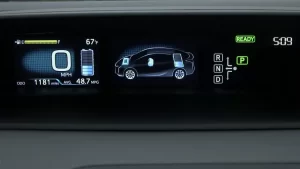
If your battery indicator jumps from full to empty and back again like it’s possessed, you’ve probably got failing cells. Healthy batteries show smooth, predictable charge patterns.
Less Power When Accelerating
Notice your Prius struggling to merge onto highways or hesitating during acceleration? The battery might not be delivering enough power, forcing the gas engine to do all the work.
Engine Runs Constantly
A healthy Prius switches smoothly between electric and gas power. If your engine’s running all the time—even at stoplights or low speeds—your battery’s likely struggling.
Loud Fan Noises From the Trunk
Hear the battery cooling fan working overtime? It’s trying desperately to cool a failing battery that’s generating excess heat.
What About the Warranty?
Here’s some good news: Toyota stands behind their hybrid batteries with solid warranty coverage.
For 2019 and Older Models:
- Standard warranty: 8 years or 100,000 miles
- California and CARB states: 10 years or 150,000 miles
For 2020 and Newer Models:
- All U.S. models: 10 years or 150,000 miles
Toyota extended the warranty nationwide in 2020, which tells you something—they’re confident these batteries last. If your battery fails within warranty, Toyota replaces it at no cost.
Outside warranty? You’re paying out of pocket, but you’ve got options.
How Much Does Battery Replacement Actually Cost?
Let’s talk money. Replacement costs vary wildly depending on what route you take.
| Battery Type | Cost Range | Warranty | Best For |
|---|---|---|---|
| OEM (Toyota) New | $2,000–$4,500 | 8–10 years | Maximum reliability and longevity |
| Aftermarket New | $1,500–$3,000 | 1–3 years | Budget-conscious with decent quality |
| Refurbished | $800–$2,000 | 1 year or less | Tight budget, short-term fix |
| DIY Kit | $1,000+ | Varies | Mechanically skilled owners only |
These prices include labor at most shops. Dealerships charge more than independent mechanics, but you get Toyota-certified techs and genuine parts.
Should You Go Cheap or Spring for OEM?
Here’s my take: if you’re planning to keep your Prius for years, bite the bullet and get the OEM battery. That longer warranty matters. You don’t want to replace a $1,500 refurbished battery again in two years.
But if you’re thinking about selling soon or just need a few more years from your older Prius, a refurbished or aftermarket battery might make sense financially.
Skip the DIY route unless you really know what you’re doing. These batteries pack 200+ volts. One wrong move and you’re looking at serious injury or death. Not worth saving a few hundred bucks.
Hot vs. Cold: Climate Impact Breakdown
In Hot Climates (Arizona, Texas, Florida):
- Expect battery life closer to 8–10 years
- Chemical degradation accelerates in heat
- Park in shade when possible
- Keep the cooling system pristine
In Cold Climates (Minnesota, Montana, Maine):
- Batteries last longer overall (12–15 years possible)
- Winter efficiency drops temporarily
- Battery bounces back when temperatures rise
- Long-term degradation slows down
In Temperate Climates (Pacific Northwest, Mid-Atlantic):
- You’ve hit the jackpot
- Expect the longest battery life
- Optimal conditions for hybrid systems
- Many owners report 200,000+ mile batteries
If you can’t control where you live, at least you can control maintenance and driving habits.
How to Make Your Battery Last Longer
Want to squeeze every possible mile from your hybrid battery? Follow these tips:
Drive It Regularly
Batteries that sit unused degrade faster. Even if you work from home, take your Prius out for a 15-minute drive weekly. The battery needs regular charging and discharging cycles to stay healthy.
Keep the Cooling System Clean
Those hybrid battery cooling fans are in your trunk area. Check them every few months. Clean out dust, pet hair, and debris. A clogged fan means an overheating battery.
Don’t Ignore Warning Lights
That “Check Hybrid System” light isn’t a suggestion—it’s a warning. Addressing problems early prevents small issues from becoming expensive failures.
Stick to the Maintenance Schedule
Toyota knows their cars. Follow their recommended service intervals. Your hybrid system gets checked during these visits, catching problems before they snowball.
Monitor Battery Health
Pick up an OBD-II scanner (they’re like $25 on Amazon). These little devices plug into your car and can show battery health metrics. You’ll spot declining performance before it becomes obvious while driving.
Avoid Extreme Temperatures When Possible
Park in garages or shaded areas during summer. Your battery will thank you. In winter, parking in a garage helps too, keeping the battery warmer and more efficient.
Real Owners, Real Numbers
Don’t just take my word for it. Actual Prius owners report impressive battery longevity:
Some taxi and Uber drivers rack up 200,000+ miles on original batteries. The constant use actually helps—these cars do exactly what they’re designed for.
Batteries failing before 100,000 miles? Pretty rare. Most owners cruise past warranty coverage without issues. The typical story goes: “Hit 120,000 miles, noticed fuel economy dropping, replaced battery, good as new.”
One owner in Portland reported 15 years and 180,000 miles on the original battery. Another in Phoenix needed replacement at 95,000 miles after 8 years. Same car, different climates, totally different results.
What Happens During Replacement?
Curious about the actual replacement process? Here’s what goes down:
A certified tech will disconnect the high-voltage system (crucial for safety), remove the rear seat and trim panels, disconnect the old battery pack, lift it out (it weighs about 100 pounds), install the new battery, reconnect everything, and run diagnostics to ensure proper function.
The whole job takes 2–4 hours at a shop that knows what they’re doing. Dealerships might take longer but they’ve done thousands of these.
After replacement, your Prius drives like it did when new. Seriously—owners consistently report it feels like getting a brand new car. The improved acceleration and fuel economy are immediately noticeable.
Should You Worry About Battery Life When Buying Used?
Shopping for a used Prius? Smart move, but check these things:
Ask for Maintenance Records
Has the previous owner followed the service schedule? Do they have records of hybrid system checks? Good maintenance history suggests longer battery life ahead.
Get a Pre-Purchase Inspection
Pay a mechanic $100–150 to scan the hybrid system and check battery health. They can tell you if you’re buying someone else’s problem.
Check the Warranty Status
If the car’s still under the hybrid battery warranty, you’ve got a safety net. A 2016 Prius in California? Still covered until 2026 or 150,000 miles.
Factor Replacement Cost Into Your Budget
Buying a 2012 Prius with 140,000 miles? It probably needs a battery soon. Price that into your offer. If the seller wants $8,000, counter with $6,000 knowing you’ll spend $2,000–3,000 on a battery.
The Bottom Line on Prius Hybrid Battery Life Expectancy
Your Prius hybrid battery will likely give you 100,000 to 150,000 miles of solid service, maybe more if you’re lucky with climate and diligent with maintenance. That’s 8–10 years for most drivers.
Yes, replacement costs sting—but think about it this way: what other car component lasts 10+ years and 150,000 miles? Your transmission, engine, and everything else needs maintenance and eventual replacement too.
The Prius remains one of the most reliable cars on the road precisely because Toyota got the hybrid system right. These batteries don’t fail suddenly or catastrophically. You’ll get warnings. You’ll have time to plan and budget.
Want to maximize your battery life? Drive regularly, maintain the cooling system, watch for warning signs, and don’t live in Phoenix (kidding—sort of). Follow these basics and you’ll likely exceed the average lifespan.
And when replacement time eventually comes? You’ve already saved thousands in gas money compared to a conventional car. The math still works in your favor.