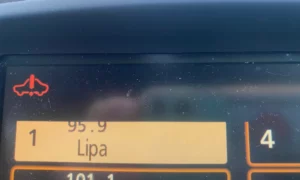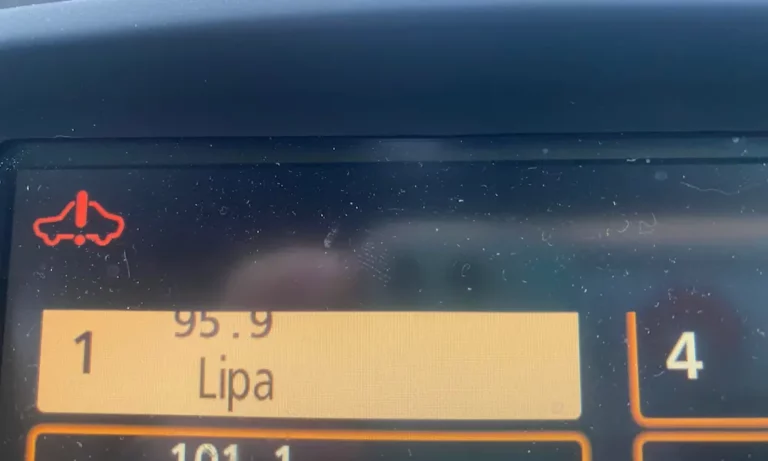
Ever glanced at your Prius dashboard and felt your heart sink at the sight of a glowing red triangle? You’re not the only one facing this mysterious warning signal. That intimidating red triangle with an exclamation point—sometimes dramatically called the “red triangle of death” by Prius owners—is actually your vehicle’s master warning light. It’s trying to tell you something important about your hybrid’s health.
What Does the Prius Red Triangle Warning Light Mean?
The red triangle in your Toyota Prius serves as a master warning indicator that lights up when the vehicle’s onboard systems detect a potentially serious issue. Unlike other specific warning lights, this triangle is a general alert that something needs attention—and usually sooner rather than later.
When this warning appears, it’s typically accompanied by:
- Additional warning lights on the dashboard
- A message on your multi-information display
- Sometimes an audible beeping sound
- Possible reduction in vehicle performance
Your Prius may enter what mechanics call “limp mode”—a self-protective state where performance is reduced to prevent damage to expensive components. This can manifest as sluggish acceleration, limited electric operation, or in worst-case scenarios, a complete shutdown.
Common Causes of the Red Triangle Warning
1. Hybrid Battery System Problems
Hybrid battery issues are among the most serious (and potentially expensive) causes of the red triangle warning. When your hybrid battery pack starts failing, you’ll often see diagnostic codes P0A80 (“Replace Hybrid Battery Pack”) or P3000 (“HV Battery Malfunction”).
Signs your hybrid battery might be the culprit:
- Fuel economy dropping dramatically (below 40-45 MPG)
- Hybrid battery cooling fan running constantly
- Engine running more frequently than usual
- Poor acceleration and reduced electric power
Most Prius hybrid batteries last 8-10 years or 100,000-150,000 miles before degrading enough to trigger warnings. When multiple cells fail simultaneously, the red triangle is your car’s way of saying it’s time for serious attention.
2. Inverter Cooling System Failure
A surprisingly common cause of the red triangle warning is failure of the inverter coolant pump. This small but crucial component circulates coolant through the inverter system to prevent overheating of your hybrid’s power electronics.
When this pump fails, you’ll often see:
- Error code P0A93 (“Hybrid Inverter Cooling System Performance”)
- No visible coolant movement in the inverter reservoir
- Air conditioning that works intermittently or not at all
- In severe cases, loss of power steering and braking assistance
The inverter coolant pump is located near the driver’s side headlight and can typically be replaced for between $40-$400 depending on whether you do it yourself or pay for labor. Many Prius owners find this repair resolves their red triangle warning immediately after the system is properly bled of air.
3. 12-Volt Auxiliary Battery Issues
The humble 12V auxiliary battery can cause big problems when it starts to fail. This battery powers your Prius’s computer systems and accessories, and when it degrades (especially in vehicles over 5-6 years old), it can trigger the red triangle warning.
Signs of 12V battery problems include:
- Battery voltage reading below 12V during testing
- Significant voltage drop when electrical systems are under load
- Communication errors between vehicle modules
- Random activation of various warning lights
Testing your 12V battery should be one of your first diagnostic steps when troubleshooting a red triangle warning, as it’s a relatively inexpensive fix that resolves many electrical gremlins.
4. Engine Oil Level Issues
Something as simple as low engine oil can trigger the red triangle warning in your Prius. When oil levels are insufficient, hard acceleration, sharp turns, or sudden stops can cause momentary loss of oil pressure that activates the warning system.
Look for these oil-related symptoms:
- Red triangle appearing during specific driving maneuvers
- Warning beeps accompanying the triangle
- Normal operation between warning episodes
- Oil level near or below the minimum mark on the dipstick
5. Basic Maintenance Oversights
Before panicking about expensive repairs, check these simple issues that can trigger the red triangle:
- Loose gas cap (triggering emissions system alerts)
- Open doors or unlocked trunk while in drive mode
- Low coolant levels in either engine or inverter systems
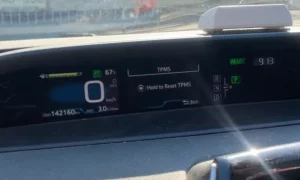
- Tire pressure monitoring system faults
How to Diagnose the Prius Red Triangle Warning
Using Professional Diagnostic Tools
For accurate diagnosis, you’ll need tools capable of accessing the Prius’s hybrid systems:
- Toyota Techstream Software: The official Toyota diagnostic platform provides the most comprehensive access to all vehicle modules and can clear codes that standard OBD-II scanners can’t reach.
- Dr. Prius Mobile App: This smartphone application works with compatible Bluetooth OBD-II adapters to provide hybrid-specific diagnostics, including battery cell analysis.
- Professional-Grade Scanners: Tools like the Autel MS909 can access hybrid systems and provide detailed diagnostic information.
DIY Diagnostic Process
If you’re troubleshooting yourself, follow this step-by-step approach:
- Retrieve Trouble Codes: Connect a hybrid-compatible diagnostic scanner to the OBD-II port located under the dashboard on the driver’s side. Record all codes before clearing them.
- Check Basic Systems: Verify fluid levels, inspect the gas cap, and ensure all doors are properly closed.
- Test the 12V Battery: Use a multimeter to check the auxiliary battery voltage both at rest (should be above 12.4V) and under load.
- Inspect the Cooling System: Check both the engine and inverter cooling systems for proper fluid levels and circulation.
- Monitor System Data: Use a scanner to observe live data during operation, looking for abnormal readings in battery voltage, coolant temperatures, or pressure readings.
Repair Solutions and What They’ll Cost You
Hybrid Battery Replacement
If your diagnosis points to a failing hybrid battery, you have several replacement options:
| Battery Type | Cost Range | Warranty | Pros & Cons |
|---|---|---|---|
| Remanufactured | $1,000-$1,800 | 1 year | More affordable but shorter lifespan |
| New OEM | $2,300-$2,600 | 4 years | Maximum reliability, factory specs |
| Aftermarket New | $1,500-$2,200 | 2-3 years | Good middle ground option |
Labor typically adds $500-$1,000 to these costs. Many hybrid specialists offer mobile installation services that can save money compared to dealership repairs. Some owners opt for cell-by-cell reconditioning services that can be more cost-effective for older vehicles.
Inverter Cooling Pump Replacement
Replacing the inverter coolant pump is one of the more straightforward and cost-effective repairs:
- OEM pump cost: $80-$150 for the component
- Labor time: 2-4 hours depending on access method
- Total repair cost: $200-$500 at independent shops
The repair process typically involves removing the front bumper and headlight assembly for optimal access, though experienced mechanics can sometimes perform the replacement from above with specialized tools.
12V Battery Replacement
A new auxiliary battery costs $100-$200 plus minimal labor. This simple repair often resolves multiple warning lights simultaneously and should be considered preventive maintenance after 5-6 years.
Preventive Maintenance to Avoid the Red Triangle
Monthly System Checks
Perform these simple checks monthly to catch issues before they trigger warnings:
- Check the inverter coolant reservoir for proper flow and level
- Monitor your fuel economy for sudden decreases (often the first sign of hybrid battery degradation)
- Test 12V battery voltage using the built-in diagnostic mode
- Verify proper operation of all cooling fans
Climate Considerations
Your environment affects your Prius’s systems:
- Extreme cold accelerates 12V battery failure
- High temperatures stress hybrid battery cells
- Prolonged parking without operation weakens battery systems
If you live in an area with temperature extremes, more frequent monitoring is recommended.
Professional Maintenance Schedule
Include these items in your maintenance routine:
- Replace inverter coolant every 100,000 miles
- Have a hybrid battery health assessment annually after 8 years
- Schedule complete system diagnostic scans during regular maintenance
- Replace the 12V battery proactively every 4-5 years
What to Do When the Red Triangle Appears
Immediate Steps
If your Prius displays the red triangle warning while driving:
- Pull over safely as soon as practical
- Check obvious issues: oil level, coolant level, loose gas cap
- If continuing to drive is necessary, avoid high speeds and minimize air conditioning use
- Document any additional warning lights or messages before clearing codes
Temporary Fixes
These emergency measures may provide temporary relief but don’t address underlying problems:
- Disconnecting the 12V battery for 2-3 minutes to reset systems
- Adding engine oil if the level is low
- Ensuring all doors and trunk are properly closed
Remember that these are only band-aid solutions. The warning will likely return if the root cause isn’t addressed.
Understanding Long-Term Implications
The Prius red triangle warning system is designed to protect expensive hybrid components from catastrophic failure. Ignoring this warning can lead to:
- Stranding situations where the vehicle enters a protective shutdown
- Increased repair costs as minor issues develop into major ones
- Potential safety concerns with braking and steering systems
- Significantly reduced fuel economy and performance
Early intervention is crucial for preventing minor issues from escalating. The difference between a $40 coolant pump and a $2,500 hybrid battery replacement often comes down to how quickly you respond to the initial warning signs.
When Selling or Buying a Used Prius
For Sellers
If you’re selling a Prius that has experienced red triangle warnings:
- Provide documentation of all repairs and diagnostic results
- Be transparent about any recurring issues
- Include service records showing regular maintenance
For Buyers
When purchasing a used Prius:
- Request a hybrid battery health check from a qualified technician
- Test drive the vehicle in various conditions (highway, city, hills)
- Use a hybrid-compatible scanner to check for stored codes even if no warning lights are currently displayed
- Verify service records for coolant system maintenance
Remember that proper maintenance history is often more important than mileage when evaluating a used hybrid vehicle’s condition.
The red triangle warning in your Prius doesn’t have to mean disaster. With proper diagnosis and timely repair, you can address the underlying issues and get back to enjoying the exceptional efficiency and reliability that made the Prius famous in the first place.