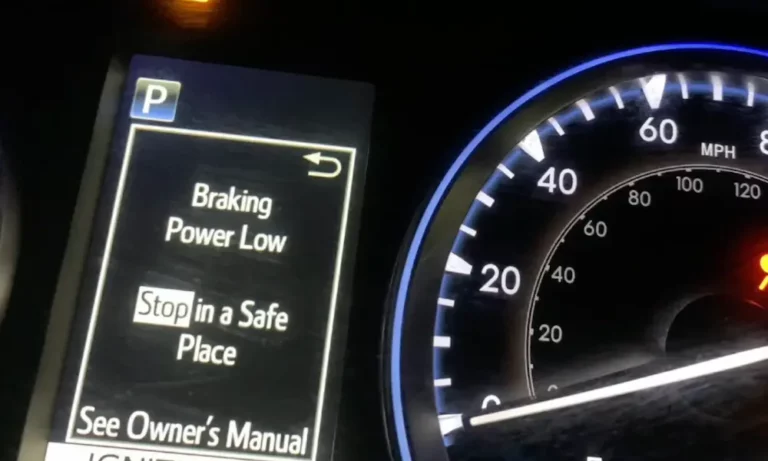
Is your Toyota displaying a “Braking Power Low” warning? This critical safety alert shouldn’t be ignored. When this warning appears, your vehicle’s brake assist system isn’t functioning properly, meaning you’ll need more effort to stop your car. I’ll walk you through what causes this issue, how to diagnose it, and the most effective solutions to get your Toyota braking safely again.
What Does “Braking Power Low” Actually Mean?
When your Toyota flashes this warning, it’s telling you the system that helps you apply the brakes isn’t working correctly. Your brakes still function, but you’ll notice:
- A much stiffer brake pedal
- Significantly longer stopping distances
- Multiple warning lights on your dashboard
This issue is particularly common in Toyota hybrid models like the Prius, Highlander Hybrid, and Camry Hybrid, which use complex electronic braking systems rather than traditional hydraulic ones.
Modern Toyota vehicles rely on power assistance to make braking effortless. When this assistance fails, you still have mechanical braking capability, but you’ll need to push much harder on the pedal to stop – a potentially dangerous situation in emergency braking scenarios.
Main Causes of Toyota’s Braking Power Low Warning
1. Weak or Dead 12V Battery
A weak 12V battery is the most common culprit behind this warning, especially in hybrid Toyotas. When battery voltage drops below optimal levels, the electronic brake assist systems can’t function properly.
Hybrid vehicles are particularly vulnerable because:
- Their 12V batteries discharge faster than in conventional vehicles
- Cold weather reduces battery capacity significantly
- Electronic systems constantly draw power, even when parked
Many Toyota owners report seeing this warning during startup when electrical demands are highest. A simple battery issue can trigger numerous warning lights and safety system failures simultaneously.
2. Vacuum Pump Failures
Toyota issued a significant safety recall (NHTSA Campaign 21V-890) affecting 227,490 Camry sedans from 2018-2019 model years due to vacuum pump failures. The Consumer Reports recall notice explains that the vacuum pump’s vane cap can break prematurely, causing sudden loss of brake assistance.
Signs of vacuum pump problems include:
- Extremely hard brake pedal
- Engine stalling when brakes are applied
- Hissing sounds during braking
3. Brake Booster Malfunctions
The brake booster multiplies the force you apply to the brake pedal. When it fails, you’ll immediately notice:
- An extremely stiff brake pedal
- Increased stopping distances
- Possible hissing noises when braking
Both vacuum-operated and electronic boosters can fail, with symptoms appearing gradually or suddenly.
4. Brake Actuator Failure in Hybrid Models
This is a particularly common and expensive problem in Toyota hybrids, especially Prius models from 2004-2015. The brake actuator assembly is responsible for:
- Regulating brake fluid pressure
- Enabling regenerative braking
- Providing smooth transitions between friction and regenerative braking
When it fails, Hometown Hybrids reports that drivers experience:
- A buzzing sound every 15 seconds
- Multiple warning lights (ABS, VSC, brake)
- Loss of regenerative braking capability
How to Diagnose Toyota Brake Power Low Problems
Step 1: Check Your Battery First
Since battery issues are the most common cause, start here:
- Test the 12V battery with a multimeter (should read 12.6V when off, 13.7-14.7V when running)
- Look for corrosion on battery terminals
- Check for loose connections
Important: Standard voltage readings can be misleading. A proper load test is essential, as batteries can show normal voltage but still fail under load conditions.
Step 2: Listen for Unusual Sounds
Different braking system problems create distinct sounds:
| Sound Type | Likely Culprit | Common in Models |
|---|---|---|
| Buzzing every 15 seconds | Brake actuator failure | Prius, Highlander Hybrid |
| Hissing during braking | Vacuum leak or booster failure | Most Toyota models |
| Clicking from engine bay | Vacuum pump issues | 2018-2019 Camry |
| Grinding when braking | Mechanical brake problems | All models |
Step 3: Check for Related Warning Lights
The “Brake Power Low” warning rarely appears alone. Look for these companion warning lights:
- ABS (Anti-lock Brake System)
- VSC (Vehicle Stability Control)
- Check Engine Light
- Brake warning light
Multiple lights usually indicate an electrical system issue or brake actuator failure.
Toyota Brake Power Low: Solutions and Costs
Battery Replacement: The Simple Fix
If your 12V battery is the culprit, replacement costs typically range from $150-400 depending on:
- Vehicle model (hybrids usually require special AGM batteries)
- Whether you DIY or use professional installation
- Battery quality and warranty
Many Toyota owners report that a simple battery replacement resolves multiple warning lights simultaneously. Proper battery maintenance is crucial for hybrid owners.
Vacuum System Repairs
If you own a 2018-2019 Camry affected by the vacuum pump recall, Toyota will replace the pump for free. According to NHTSA documentation, this repair prevents potentially dangerous brake assist failures.
For non-recall vacuum system repairs, expect to pay:
- $200-800 for vacuum pump replacement
- $50-200 for vacuum hose repairs
- $300-1,000 for complete brake booster replacement
Brake Actuator Replacement: The Expensive Fix
If your hybrid Toyota needs a brake actuator replacement, prepare for a significant investment:
- $1,200-3,000 depending on vehicle model
- Higher costs for dealership service
- Possible additional repairs for related components
Some owners attempt temporary fixes like motor brush replacement, but these rarely provide lasting solutions.
Model-Specific Toyota Brake Power Issues
Toyota Prius (2004-2015)
Second and third-generation Prius models are notorious for brake actuator failures with these symptoms:
- Pump cycling every 15 seconds
- Persistent buzzing sounds
- Multiple warning lights
The C1256 error code commonly appears during diagnostic scanning, indicating brake actuator failure. This repair typically costs $2,000-3,000 at dealerships.
Toyota Camry (2018-2019)
If you own a 2018-2019 Camry, check if your vehicle is included in the vacuum pump recall by visiting Toyota’s recall site or NHTSA’s recall page.
Signs your Camry needs this repair include:
- Sudden loss of brake assist
- Multiple warning lights
- Hard brake pedal
Toyota Highlander Hybrid
Highlander Hybrids commonly experience brake actuator problems similar to the Prius, but with some differences:
- Higher repair costs ($2,500-3,000)
- More complex integration with AWD systems
- Additional diagnostic challenges
Preventative Maintenance to Avoid Brake Power Issues
Regular Battery Maintenance
To prevent most “Brake Power Low” warnings:
- Have your 12V battery tested annually
- Replace hybrid vehicle batteries proactively every 3-4 years
- Keep terminals clean and connections tight
- Consider a battery tender for vehicles used infrequently
Battery problems cause most electronic braking issues, so this simple maintenance saves thousands in potential repairs.
Brake System Inspection
Regular brake system checks should include:
- Visual inspection of brake fluid level and condition
- Testing brake pedal feel and responsiveness
- Listening for unusual sounds during braking
- Professional diagnosis at the first sign of braking changes
Don’t ignore subtle changes in braking performance – they often signal developing problems.
Prompt Attention to Warning Signs
Early intervention saves money. If you notice:
- Unusual braking behavior
- Warning lights
- Strange noises during braking
The Dangers of Driving With Brake Power Low
When your Toyota displays this warning, understand the safety implications:
- Stopping distances may increase dramatically
- Emergency braking becomes more difficult
- Multiple safety systems may be compromised simultaneously
While you can still physically stop the vehicle, the extra effort required could be dangerous in emergency situations. Think of it like losing power steering – the system still works, but requires significantly more force to operate.
Tips for Safe Driving Until Repairs Are Made
If you must drive with the “Brake Power Low” warning:
- Increase following distance significantly
- Begin braking earlier for all stops
- Apply more pressure to the brake pedal
- Avoid high-speed driving when possible
- Get to a repair facility as soon as possible
The mechanical brakes will still function, but you’ll need to adjust your driving style to compensate for the loss of power assistance.
Finding the Right Repair Solution
For accurate diagnosis and repair of Toyota brake power issues:
- Start with Toyota dealerships if your vehicle might be under recall
- Consider hybrid specialists for Prius and hybrid models
- Get a detailed diagnostic report before authorizing expensive repairs
- Ask about refurbished parts for brake actuator repairs (can save $500+)
The complexity of modern Toyota braking systems requires specialized diagnostic equipment and training. While independent shops might offer lower labor rates, dealerships and specialized hybrid repair facilities often provide more accurate diagnosis.
Final Thoughts on Toyota Braking Power Low Warnings
The “Braking Power Low” warning in your Toyota should never be ignored. While the most common cause is a simple battery issue, the warning can also indicate serious brake system failures that compromise safety.
By understanding the causes, symptoms, and repair options, you can make informed decisions about maintaining your Toyota’s braking system. Whether you’re driving a Prius, Camry, or Highlander, addressing brake power issues promptly ensures your vehicle remains safe and reliable for years to come.
Remember: your brakes are your vehicle’s most important safety system. When Toyota tells you braking power is low, listen carefully and act quickly.